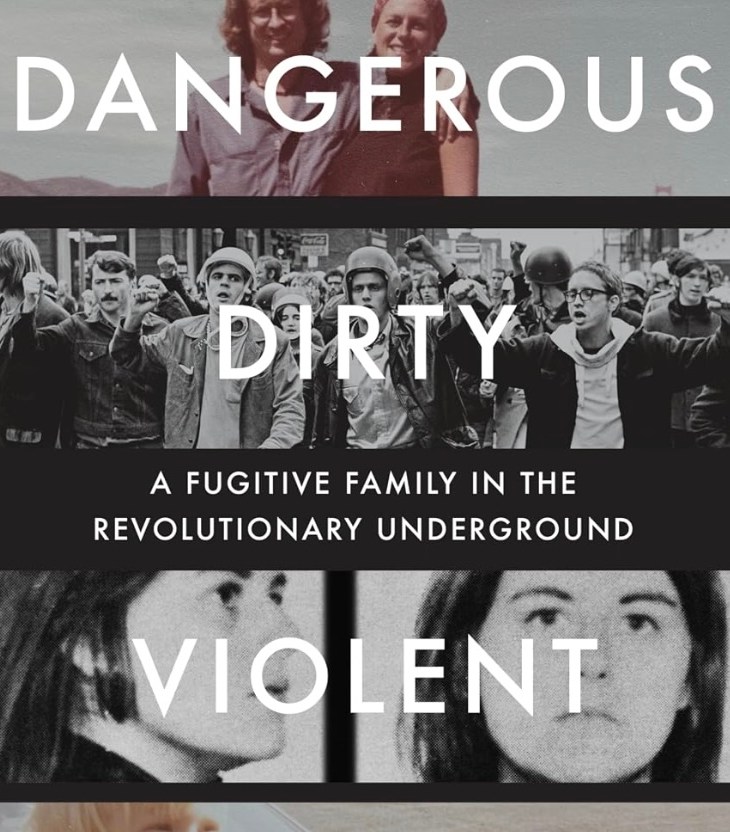
Much more than a litany of tribulations, this book deconstructs the persona that Carrell and women going back to the beginning of Mormonism have been forced to create to endure its grinding mortifications. Unlike most of these women, Carrell extricates herself, but not without a lasting emotional trauma.
(reviews)
Tag: writing
Just announced as a finalist for the Forward INDIES Book of the Year 2025, The Plan of Chicago marks Pearce’s foray into publishing a full collection of fiction under his own name—though he’s a ghostwriter by trade and has penned over twenty nonfiction books.
(reviews)
To read Södergran’s work today is to easily contextualize her voice within a feminist discourse, but it also defies being so neatly categorized. What makes her poems feel timeless is exactly their resistance to any niche delineation of time’s cultural productions.
(reviews)
The poems refuse to dramatize feeling when intimacy is already present, letting proximity, stillness, and ordinary action carry the weight. Moments of connection are often pared down rather than heightened. After intimacy is established through shared gestures—errand talk, side-by-side movement, unremarkable speech—“Greenlight” concludes simply: “Nothing much happened.
(reviews)
This identity transformation, and the inherent tensions of being a mother-writer, inform the poet’s search for a medium that can contain the impossibility of it all. Its pulsing, chimeric quality is reflected against, and through, the structure and constraints of poetry.
(reviews)
So much of Jillian’s life nowadays feels perfectly fine with Mark. Their one disagreement is what they should’ve done about Hannah. Mark thinks they were too lenient, too oblivious along the way. He always brings up the Halloween when Hannah had just turned sixteen. There were signs back then.
(fiction)
They who love so lawlessly your laws cannot contain them. They who sacrifice so willingly you are willing to sacrifice them.
(nonfiction)
I went to the lakefront at sunrise, but the beach and
sky were empty, and my dear friend
was not there.
(poetry/Palestinian Voices)
in my city, two fallen en route
to a market, eight more
at an intersection
of a hospital, ice
in their cheeks, hair, lips as if
they said goodbye
(poetry)
One of the famous Iranian rug patterns is the Tree of Life, in which the tree is often located on the vertical symmetry line of the carpet. The tree symbolizes the connection of earthly beings to the heavens.
(poetry)
I WhatsApp my cousin on his jubilee. He was born the day after the Yom Kippur War started, and here again: rockets, hostages, my aunt fainting. Can we celebrate anything without a backdrop of mourning, or—unlike the other day in Ukraine—even mourn, not adding at the memorial half a village to the slain?
(Ukraine)
Anesthesia for the moment. Anesthesia for the pain. The anesthesiologist’s line: “Don’t worry, you won’t remember this when you wake up,” is precisely what worried me. I didn’t remember. What else had I missed?
(nonfiction)
this sharpness
of ritual burns
toward expiation, but
the body kindles
(poetry)
The problem was that each believed themselves to be a good person. Ethical, if not moral. And yet here they were on a bench not talking about the thing that existed between them.
(fiction)
Nausea knocked around my empty stomach with nothing to temper it. This woman looked just like the Wikipedia image of Edith Wharton I fell asleep to. Was I seeing pixels come to life? No. I needed to get a healthier sleep schedule now that Ramadan was over, it was clearly affecting my brain.
(fiction)
“We see these policemen over here…” The intersection above them was lined with uniformed police in crowd control gear. “…surrounding our demonstration. They say they’re here to protect and serve, but who are they protecting? Who are they serving?”
(fiction)
“I think that the beauty of Blackness and Black people is that we code-switch all the time. We just know how to talk depending on where we are and to whom we’re speaking, so I don’t think about it too much when I’m writing, but I do think about who’s going to be on the inside of the stories and who’s going to be on the outside,” Amina Gautier tells ACM.
By seventh grade students often work with percentages, fractions, probability and proportional relationships. Math looks different at our Long Covid house. We practice for survival, not standardized testing. What percentage of a medication is metabolized by the liver? By the kidneys? What fraction of the pediatric population gets well?
(nonfiction)
The latest in our FORTHCOMING series of excerpts from new and recent books:
Anika had, Leo knew, a harder time in the uprising than he did. She was working as a junior reporter at the morning Szabad Nep when the soldiers came, not a good place to be. She hid in the storeroom behind a trashcan for three hours listening to the shots, the clatter of shell casings on the linoleum.
(fiction)
The way I’d savor, lovesick, a stricken voice preserved on tape as if in amber. The way I banked those messages. Playing them over and again as proof that once, I had made him care. Echo of skin and moisture and shine and shame. Power diminishing with repetition.
(nonfiction)
The collection’s opening salvo asserts this tension in a whiplash, maximalist mad dash. Stories steer their readership past one visceral image after another: burnt oil engines, boiled feet, metallic screams, and fast food mutilations.
(reviews)
Look! Look! Look! The dance
of these albatrosses in a sea, heaviness
like the iceberg of a frozen era!
(poetry)
There was another reason why I opted not to become a doctor like my daddy. He was the only pediatric urologist in town, so he left for work before I woke, shuttled between two hospitals throughout the day, and returned home after my bedtime. Unbeknownst to me, when he would come to give me a goodnight kiss while I was fast asleep, I’d stick out my tongue at him.
(nonfiction)
The boy in the black carriage listens.
Solo in flight the starlings have no message.
They fly. He listens.
(poetry)
The book takes a historical view of global conflicts — namely World War II and the Cold War — and Lamantia’s reactions against the imperial war machine, both in the United States and within globalized systems, emerge as a precursor to the apocalyptic themes often present in Western poetry.
(reviews)
I like art best when its artifice dissolves. Pull back the curtain: It’s me, looking sheepish. Which me is almost irrelevant: I’ll answer to any name you call. Surrendering is only erotic when what you’ve held inside too long has named you. Made you its shape.
(nonfiction)
Danielle Steele’s Going Home, Alice Munro’s Dear Life. Richard Bach’s Jonathan Livingston Seagull. Ali flips open a moldy Farsi translation of The Three Musketeers, his eyes landing on “All falsehood is a mask” just as a slip of paper glides down onto the library’s patchy carpet.
(No Place is Foreign/fiction)
the opening of a cut grape
the butterfly
if it were to lightly rest upon the extremity of the grape
and pretend to drink
if it wasn’t drinking
what was to be done then?
I would have to
improve how well I see, with these eyes
improve how well I hear sounds
and so, employing my hands
I noticed
the smallest of movements
(translations)
The latest in our FORTHCOMING series of excerpts from new and recent books:
After descending into the basement, you act as if you never went, as if you have no idea what the basement really is or what happened there. Even though you left the girl you once were in the basement, you spent the rest of your nights pretending it didn’t happen.
(fiction)
When my father measured women in percentages, I learned to chart myself like livestock—head, pelvis, torso. Yet the red horse leaned his warmth into me, the chickadees sang, and the body refused to stay math. Years later, back home, I discover what love weighs when you stop counting.
(fiction)