
All photos taken by Claire W. Zhang
In my defense, I don’t think anyone would have stayed sane if they’d gone through what I went through, but here goes: Just as I was packing for my flight back to the United States from China for the first time in seven years, my hometown was hit with a two-month lockdown due to the pandemic spread–four, if I include the adjacent months, when all mail services and in-and-out-of-town activities were halted, with mandatory daily COVID screenings imposed on all citizens. I always told my friends in America that the lockdown was for four months to gain extra sympathy points. Besides, the American idea of a two-month lockdown bore no resemblance to the reality in China. All facilities—grocery stores, schools, office buildings—were shut down except for hospitals and power plants. All the exits of residential compounds were blocked with barricades and rattlesnake fencing. No one was allowed out of their buildings except to get deepthroated for the daily COVID test. The government negotiated fixed-price “veggie packs” and “meat packs” with suppliers, who delivered in bulk to each compound. Volunteers or low-level officials handed them out at the gate, which one person per household was allowed to pick up. The food was substandard, priced at a premium, and justified by “scarcity.” A zombie town would’ve had better amenities than ours. We bought our food by coordinating group orders through text messaging on our smartphones. Those who didn’t have smartphones could suck their own dick.
“All this,” I said to an American friend when he FaceTimed me for our unfinished school project, “all this was because we discovered three cases in our town of 600,000 people.” “Six hundred thousand?! And you told me you were from a small, underdeveloped town in China!” That was not the point I was trying to make, but at least he could see the absurdity of our government’s reaction to this COVID-to-non-COVID ratio. He eventually stopped bitching about minor details and told me he’d miss me and that he’d find a new teammate to take over my part. After he heard that my dad was stuck in another city, he reminded me to take good care of my mom. Right, he was always a mama’s boy. I swallowed my complaints along with my fear that my US student visa would expire. These concerns were petty and selfish. I told him I was doing very well at taking care of my mom, making sure I put three meals on the table. Food was everyone’s biggest concern at the time.
To achieve that, I kept on top of eighteen group chats almost every waking second. With my ex-Wall Street (intern, though) negotiating skills, I bargained with the cabbage dealer, persuading him to make small-batch deliveries to our compound when we couldn’t meet the minimum order requirement. From an unauthorized supplier, I procured a square of hotpot soup base—a rare find during quarantine—which I picked up from behind a removable brick next to an inconspicuous hole in the exit fence. The maneuver recalled the way I’d once scouted for acid in Brooklyn’s Maria Hernandez Park. I even tried to throw a three-pound steak over two fences to the neighboring compound. Why? I’d bought the steak from a guy at a ten percent markup who’d bought it from another guy with a twenty percent markup after breaking a ten-pound piece into retail portions, who’d gotten it from a butcher. Only afterward did I realize we couldn’t possibly eat that much. Without meaning to, we’d built a pyramid scheme. And my cheap ass refused to be the one left holding the steak. In one of the group chats, I resold it to a guy with two teenage sons, not realizing he was from the neighboring compound, meaning two barricades stood between us, divided by a road. That night, I executed the best throw of my life—exceeding my high school P.E. record—and the frozen steak landed squarely in the middle of the road. “I’m sorry!” I yelled, “I’ll refund you!” The guy yelled back, “Fuck it, you did good, girl!” He backed up a few steps and bounced over the barricade like a professional pole vaulter. At that exact moment, a powerful beam of light flashed at us from the street lamp, as if we’d been caught smuggling cocaine across the US-Mexico border. It also set off the newly-installed broadcast system that was connected to surveillance cameras, triggering a pre-recorded male voice: “Do not cross the barricade! Do not cross the barricade! Crossing the barricade is subject to a fine or up to three months in jail!” I nearly fainted, but my neighbor sprinted to the steak like he didn’t hear a thing. He snatched up the meat, kept running towards me, tossed a plastic ball over the fence (narrowly missing my nose), and ambled—frolicked, truly—back to his side. I picked up the ball and fled the scene. A few seconds later, the broadcast warning went silent, and the beam of light vanished. As I walked up the stairs, I opened the toy gacha ball, which contained a twenty-yuan bill. Possibly for my inconvenience.
My mom was not part of these black-market activities. She wasn’t required to show up for work at the hospital because she was only months away from retiring as a doctor. Her most common activity was looking at her phone in bed. I was always on my phone, too, in the same bed, but I believed I was doing something useful. When I confronted her, she would show me her screen and tell me her patients were reaching out to her and that she needed to reply, but as soon as I turned away, she would start watching fear-mongering videos that spread misinformation and conspiracy theories: “Why did the U.S. athletes who participated in the 2019 Wuhan Military Games make conspicuous visits to wet markets?” “The lab leak isn’t just a theory—but whose lab?” These videos somehow downplayed the ways in which the government’s COVID policies were disrupting our lives more than the disease itself.
Two weeks into quarantine, she began to dry heave regularly. She’d never liked the taste of pork or chicken, and now she resisted beef, too. She insisted on doing the cooking, although she ate very little. I was convinced that those videos were to blame. I raised my voice: “I don’t know why you would watch that trash! You’re an educated woman, not to mention a doctor! Why do you have to torture me like that?”
And she would reply flatly, “You’re torturing me and you don’t realize it.”
It took me another week to understand that she was showing symptoms of depression. She had suffered from it before: A medical accident from three years before—one that wasn’t her fault—had been the main cause. But everyone had assured me that she had been fully cured by Xanax and Ativan. I thought she would never relapse, especially now, with my presence and company. I was cocky like that. I am her only daughter, after all. But I wasn’t enough. I, alone, wasn’t enough to make her happy. Maybe I had always known this. But I’d never before felt it. I mean, of course my mom alone wasn’t enough to make me happy because I could only be happy if I were back in America and doing all the profound things I was set to do. But now the situation was reversed and I just found it hard to believe that my mom had her own America. It was exactly like when I found out my laolao was my mom’s mom, too, only after my laolao’s passing away. And I didn’t know what her America was. Neither did she. Several times I heard her toss and turn in her dreams, muttering hoarsely, “Where are you going?” After she woke up, I’d ask her what she had dreamed of, and it was always the same: Some faceless guy robbed her and ran away, and somehow she felt anxious, almost worried, about the robber’s well-being. I used to believe that faceless guy was me. But it could have been anyone.
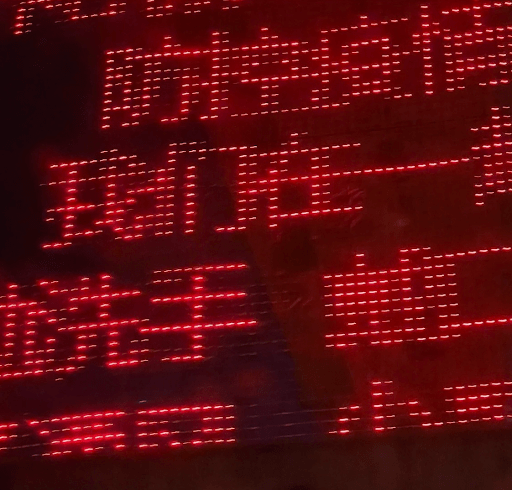
Our living situation gradually worsened. At first, we were tested every three days, but soon, we were awakened every morning by government-assigned community workers chanting, “Come on downstairs and get tested!” It was a pre-recorded message similar to the midnight fence-crossing warning; the difference was that it was spoken with our regional accent and would get stuck in my head like “All I Want for Christmas Is You.” The announcement sounded throughout our colony of buildings from seven to eleven EVERY morning until all four hundred eighty-three residents of the compound were lined up next to the garden and tested. It was the most crowded I’d ever seen that space. People hadn’t been able to gather like that since probably 1989.
The response kept escalating, even though the COVID situation did not. The number of daily cases had been consistently fluctuating between zero and fourteen, never exceeding that range, but there were also never fourteen consecutive days with no new cases—the condition required for quarantine to end. My mom pointed out that the numbers didn’t add up from an epidemiological perspective.
“Did you take epidemiology in med school?” I asked.
“I forgot most of it,” she said, “but I’m a doctor. If I say it doesn’t add up, you listen.”
Fair.
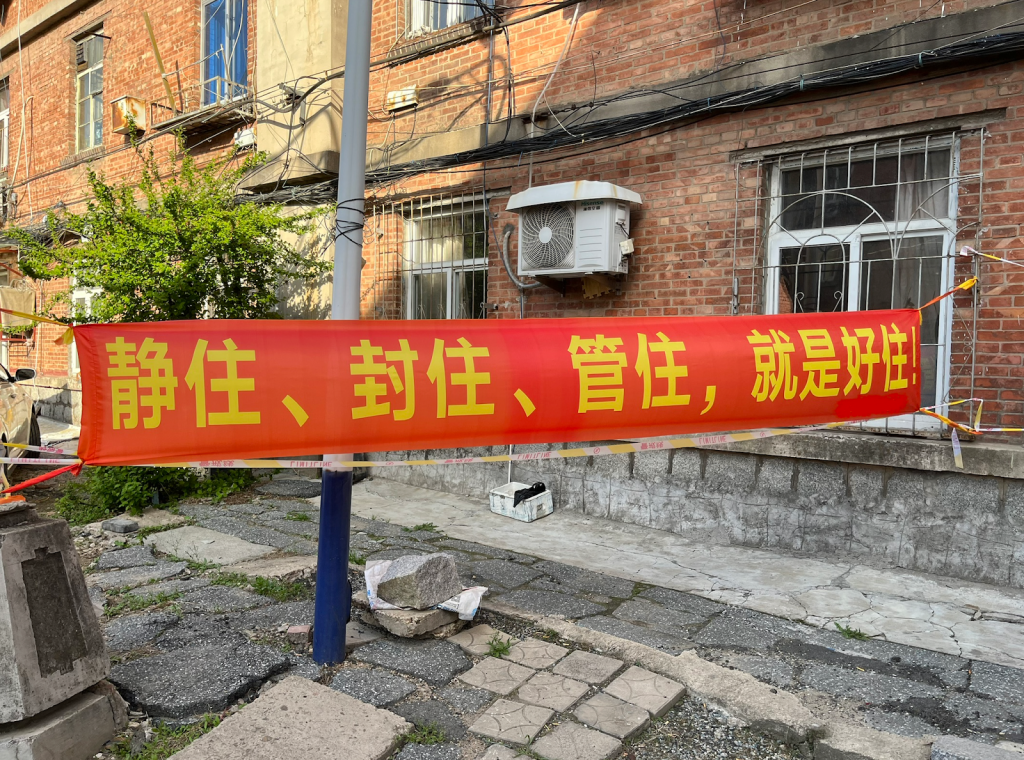
That afternoon, we were allowed a rare recreation period in the compound garden, under a new rule assigning time slots by apartment unit. My mom and I had picked up a few bottles of mineral water from the secretly-open bodega tucked beneath our building. On our way back, I spotted a propaganda banner that read something along the lines of, “Quiet life, locked down life, controlled life, that’s a good life!” I laughed out loud—not at the message itself, but at the way it was delivered: clunky, tacky, slapped together in awkward fonts. Of course I took a photo. We millennials are always on the lookout for Instagram story material. But I didn’t notice the police officer approaching from behind.
“Delete your photo,” he ordered.
I turned to see the most offended, twisted expression I’d ever encountered.
“Why?”
“You were being disrespectful.”
“I was just taking a picture. What law says I can’t?” My chest burned. Phrases like human rights, freedom of speech, democracy, scrolled through my mind like stock tickers on the glowing screens in Times Square. I stepped away from my mom, who tried to hold my wrist—maybe to stop me from escalating.
The officer changed tactics. “Who told you that you could leave your building? Which building are you from? What’s your apartment number?”
“We’ll go back right now, officer—” my mom started, but I cut her off.
“It’s our assigned outing time,” I said. “We have every right to be here!”
He looked me up and down, clearly searching for an excuse—any excuse—to make trouble. My mom still held on to me, even though I had no intention of getting any closer to the sour heat of his breath. His eyes dropped to the bottled water in my arms.
“Where did you get these?” he asked, his tone darkening.
I couldn’t answer.
“I can take you in for unauthorized transactions during a national emergency.” He reached for my wrist, and all the grand vocabulary—democracy, freedom—suddenly disappeared from my mind. My mom’s hand slipped off—but a second later, her other hand took over. She stepped in front of me like a shield and said with unshakable authority: “Go. I’ll handle this.”
She turned to the officer, her tone suddenly smooth, even diplomatic.
“We’re sorry if we offended you, officer. You’ve done an incredible job keeping us safe, and we should’ve shown more appreciation. Look, I’m a doctor. We both work to keep our citizens safe during this difficult time. Please forgive my daughter. She’s been anxious from the long quarantine and took it out on you … ”
I ran back toward our building, the bottles of mineral water still swinging in a sweaty plastic bag at my side. I knew the officer probably just wanted to scare me. He had no real grounds to arrest me. But we had to appease him. Stroke his ego, smooth over his pride. Because I couldn’t risk an arrest. I couldn’t leave a record. My chances of getting back to America would be in great jeopardy, not to mention everything else in my life. What would leaving a record mean in China? I didn’t know exactly, but had my suspicions. So I ran—cowardly, selfishly—leaving my mother to handle him.
The morning after the incident my mom was called in to work on-site shifts. I didn’t believe the two events were related—but still. Mom was very worried about me: “Who’s gonna cook for you?” As if I’d survived on the morning dew on wildflower petals during my ten years living abroad. She quickly packed a cute little suitcase and left home. All our neighbors watched her roll by while they waited in line for their daily poke. Her suitcase wheels produced a droning sound. Someone had been given permission to surpass the barricades and walk gently into that good no man’s land.
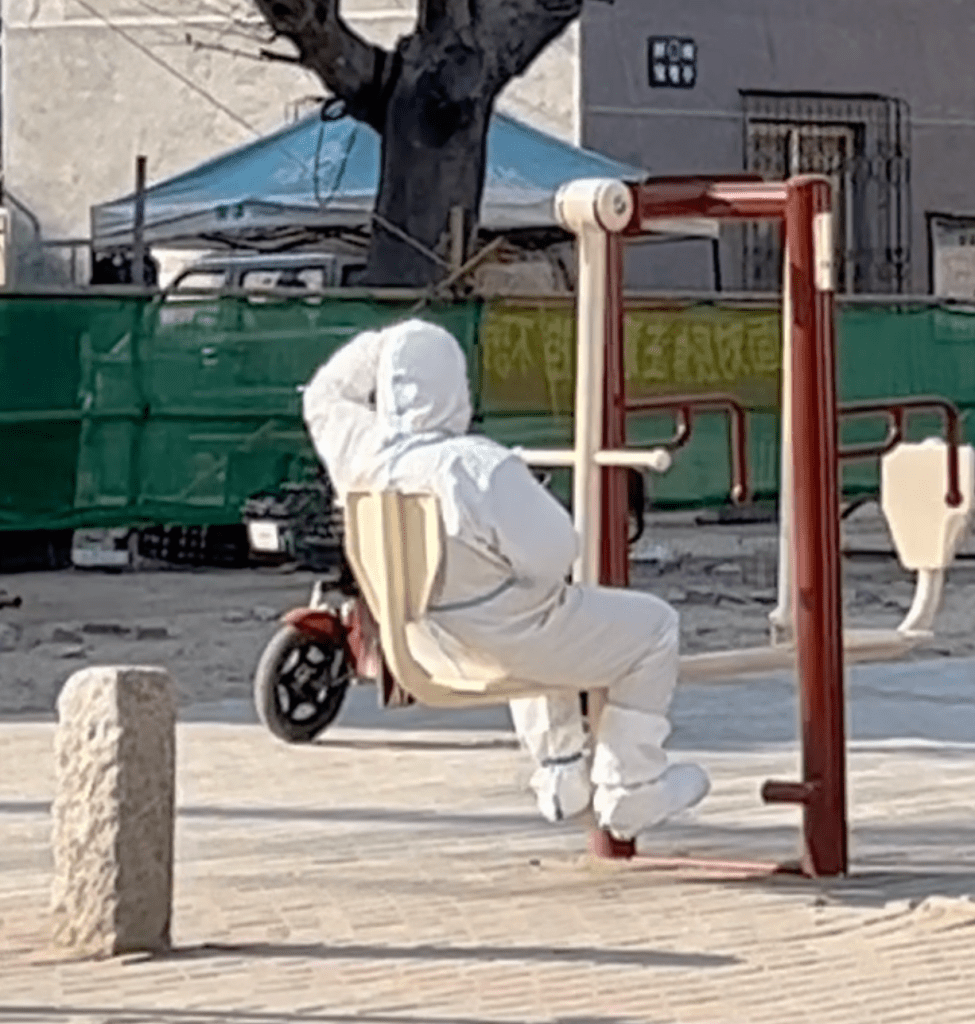
The day after Mom’s departure, I did not get out of bed. I didn’t feel the need. I had plenty of food, even some surplus. I stopped looking at my eighteen group chats and started scrolling through Chinese subreddits that I hadn’t known existed, looking for “real news.” Reddit was not legal in China. I used IP-switching tools to avoid government surveillance. On those subreddits, I watched Shanghai sing. I watched Ruili cry. I watched my town rage. We were enraged but still we obeyed. I couldn’t stop watching. The more I watched, the more certain I was that the source of my feeling of paralysis was this country: How could I, or anyone, live in such a place? I wanted to go out and protest, but I knew a protest wouldn’t do a thing. Oh, my American friends. They wouldn’t understand that certain governments simply do not believe in protests. The Americans would be convinced that they’d protest anyway. They’d encourage me to be the martyr that they surely would be in my situation. If things got worse, maybe they would even protest on my behalf. And here I was, still shaken from my almost-arrest. I guess I was annoyed by the fact that I owned too much privilege to risk losing it for a protest, but not nearly enough to have the power to make it all stop. I wished that I were the mayor of my town—or anyone in real power—or even the wife of someone in power, so I could knock myself into reality, knock my powerful husband into reality, and knock anyone taking advantage of the situation into reality. The reality being that this quarantine was bullshit, and I wanted to acknowledge it without fear of consequences. That, I thought, would be faster and far more effective than any protests here—at least in this small, remote town on China’s Northeastern border. Unfortunately, I was none of that. I was ridiculed in one of the local group chats for daring to request a local government briefing on the food allocation process: “Let’s just follow whatever the compound leader says, miss. What do you know?” I guess fuck me for not even being a compound leader—the smallest unit of government-appointed power. So I just lay there, slept sixteen hours a day, and spent most of the remaining hours wailing. In between, I rolled my eye crust into balls and catapulted them into the air. Sometimes, Mom would send me selfies with her coworkers in full hazmat suits. She told me she was happy and not too busy. I’d reply with a smiley emoji while holding a piece of eye crust.
One morning I once tried to boycott mandatory COVID tests as a small gesture of resistance, but the first day I didn’t show up, I got a text message that same night warning me that there would be consequences. It didn’t say what the consequences would be. The second day I didn’t show up, they called my mom, and my mom, of course, called me. So for the next couple of days, when I was neither sleeping nor wailing, I must have been standing in line, waiting for my COVID test. On a Chinese rad-fem lesbian subreddit, I wrote, “Wouldn’t y’all want a girlfriend with nips as sensitive as the Chinese government?” I got so many likes that I had to delete the post the next day. Even that sub was being watched. The moderator said that if you’re not physically abroad, any speech against the Chinese authorities may expose you to the risk of being doxed. I didn’t want to be doxed. I just wanted to be angry. I quit Reddit and opened my Chinese social media accounts. There, all words were reformatted into memes, little squares of funny animal GIFs. They didn’t expose me to risks; they also didn’t allow me to be angry. Memes were never angry, even if they sometimes could be political. You can’t be angry when the format itself isn’t angry, can ya?
I lay in bed for days. Waking up to a setting sun was the worst feeling, like the whole day had been fast-forwarded into another night wide awake with self-doubt, then into another day of nothing. One day I stared out of my six-story-high window and started forming thoughts. I had been depressed before but had never had these thoughts, because I believed I was too precious. I was going to become the exclusive concert photographer of The Strokes at Madison Square Garden, or whatever. But now, watching the sun sink, I felt less angry, more inconsolable; less precious, more expendable. I thought I’d arrived at the truth and I felt at peace with this truth. I longed to embrace the sun outside my window. I didn’t know if my thoughts were really my thoughts or the result of random brain chemicals. Then I decided they were just the same thing. I hadn’t known that human bodies could be self-destructive. I thought they were at best self-defensive. I couldn’t explain. I couldn’t stop crying. My muscles wouldn’t stop aching. My phone wouldn’t stop buzzing.
I picked up the phone. It was my dad. For the past decade he’d been working in a city that was five hours away by plane. He asked if I was eating well. Again with the food. Sometimes I think Chinese people live only to eat. Everyone believes that as long as you have an appetite, you are good—which I couldn’t deny, because I hadn’t eaten much in days. I realized that he might be onto something with his stupid food questions, and I hated him for it. I hung up the phone. He kept calling. I looked out the window, noticing the sun had completely set behind the forest of buildings. No one would see me if I jumped. They might hear me land, though, given that my weight had not dropped a pound despite my not eating. I thought that would be the only good thing to come of quarantine—you know, losing weight. Chinese girls live to lose weight. The weight loss didn’t occur, just as my jumping out of the window did not. Mom came home.
At first, I heard keys jiggling in the keyhole. Then a thud as her handbag fell to the floor. Panicked steps. She called my name and turned on the bedroom light. My eyes were glued shut with eye crust; I hid my face underneath the blanket. My arms fizzed like electricity and my legs stood still like ice. I wanted to say, “Why did you come back?” but I felt I was only producing sound bubbles, as if I were under the sea. She said she asked for special approval, claiming that I had an emergency stomachache. “Your dad told me to come back home immediately,” she said. She stood by the door, panting. It wasn’t until then that I remembered: I may have told my dad I didn’t want to live anymore. People usually don’t take such words seriously because “Jump already or don’t waste our time” was the prevalent attitude. I thought I was just being whiny, but after all, I was talking to my dad.
I said it again, now, to my mom: “I don’t want to live anymore,” still with my eyes shut, feeling performative and cheeky because, by the time I said it, the thought had already passed. I said it for the sake of it. My mom jumped into the bed and held me as if she were holding down a ticking bomb, not knowing which color of wire to cut. It made me want to burst into laughter. I smelled hospital on my mom and felt secure and less amused since that was how she’d smelled when I was little. She said, “It’s OK, Mama’s here,” in a small voice. I could finally open my eyes.
The two of us lay in bed, briefly holding hands until I let go, my hand clammy. I blathered, cussed, and even howled a little. Mom listened. Dad also joined remotely via phone call for a very long time—I might have, at one point, when I was yelling, told my mom that my dad was failing me and that he needed to hear what I had to say.. I guess I was upset because he never joined me in cursing the people in power, which I believed should be our daily mission. This, to me, was evidence that he didn’t love the family enough and wasn’t committed to protecting us, as he claimed to be. I made him swear that he hated what’s-his-unspeakable-name. The one sitting on the throne. He wouldn’t say it. ”What good would it do?” he asked, adding that our phone call might be monitored. I insisted that he declare his hatred. I don’t remember if he did, in the end. I also made him admit that he was wrong and that he needed to kneel down and apologize.
My mom said it was enough. I thought it was enough, too. I wasn’t even sure what I wanted him to apologize for. Maybe for being away all the time. But I was away all the time too. And the punishment did not match the crime. Though I kept being mad at him as if my adolescent rebellion had just kicked in, which, to be fair, never did until now that I was thirty. I stayed angry for so long that my mom had to go to the bathroom twice in the middle of my outburst. I don’t know how my dad coped with it on top of everything he was facing, including a now supposedly fat prostate.
Finally I realized I wasn’t mad at him at all. Dad had never mattered. Not that he didn’t matter, but he was Dad and would always be just Dad. A daughter could resent her father for any number of good reasons, but rarely would she resent her mother for the same reasons. I only resented Mom for not having the right words for all her pain while I suffered from a hyper-awareness of everything around us—everything except what was happening to her. I believed everyone should have the language to explain themselves the way I did at length in a therapist’s room in the US, be it accurate or not. My mom did not have it. She knew me, yes, but she knew me in a witchy way, not a scientific way. Ironic, considering the fact that she treated leukemia for a living. My dad was much better with language, so I attacked him to not feel like I was punching the air. But all he said was “Sorry, sorry, sorry.”
After Dad hung up, I kept talking. I didn’t know what to do with the silence. I said, “I just can’t stand it when people see the absurdity but fail to see the solution.”
Mom asked, “What would be the solution?”
I said, “Take it to the street and shit.”
Mom asked, “What good does it do? Do you not know the aftermath of Tian’An Men Square?”
I said, “Someone has to do it.”
Mom said, “Not you.”
I said, “I wish it was me.”
Mom said, “I wish it would help.”
I said, “Chinese citizens in America have done it. I saw it on the foreign internet.”
Mom asked, “Did it help us?”
I said, “No, I guess not, but some college students in Shanghai did it, too. They didn’t have slogans—just a piece of white paper, you know, to represent censorship.”
Mom asked, “You think people here will understand your smart metaphors?” She chuckled, then said, “Did it at least help you feel better to see what these other Chinese people did?”
“Of course.”
Then I said, “No, not at all. On the contrary, it made me feel worse.” I took a breath, and asked, “Mama, do you not understand why I’m always sad?”
“Tell me then.”
“A couple of things, but mainly, I don’t think I am a very good person.”
She just sighed.
My feet felt cold. My toes inched sideways and found her thighs. She opened them and I lodged myself in between. As our skin touched, her blood vessels seemed to branch down into my ankles, and everything turned to hot chocolate. We had always been one.
My town eventually came out of quarantine—not because we fulfilled the requirement for fourteen consecutive days with no new cases, but because a video went viral. It was of a cop pulling a Neymar, feigning a fall during a conflict with a young woman who was attempting to rush her dad to the hospital without a permit. The cop pushed the young woman to the ground. Seeing his daughter hurt, her dad—a sick old man—tried to slap the cop in the face. The cop slowly twirled from the impact of the old man’s hand. Like Swan Lake. The cop fell. Sitting on his bottom, he excitedly asked his partner, “Did you get all this [with the bodycam]? Come closer and make sure you get this.”
The video was reposted repeatedly across all platforms, briefly making the front page before entirely disappearing. Two days later, the barricades came down. To the people from my town, that young woman was a hero. She had pulled a Neymar, too. She had turned the tide, escalated the ridiculous situation, and freed our town. I didn’t know how to explain all this to my American friends. Not really. But it felt like wisdom—ours alone. A sad, absurd wisdom we earn when we’ve run out of choices and still find a way through.
The day after the barricades came down, I taped a piece of white paper to our kitchen window. It didn’t do anything. It looked more ridiculous than brave, hanging there on an empty pane. But I liked the way it looked.
✶✶✶✶
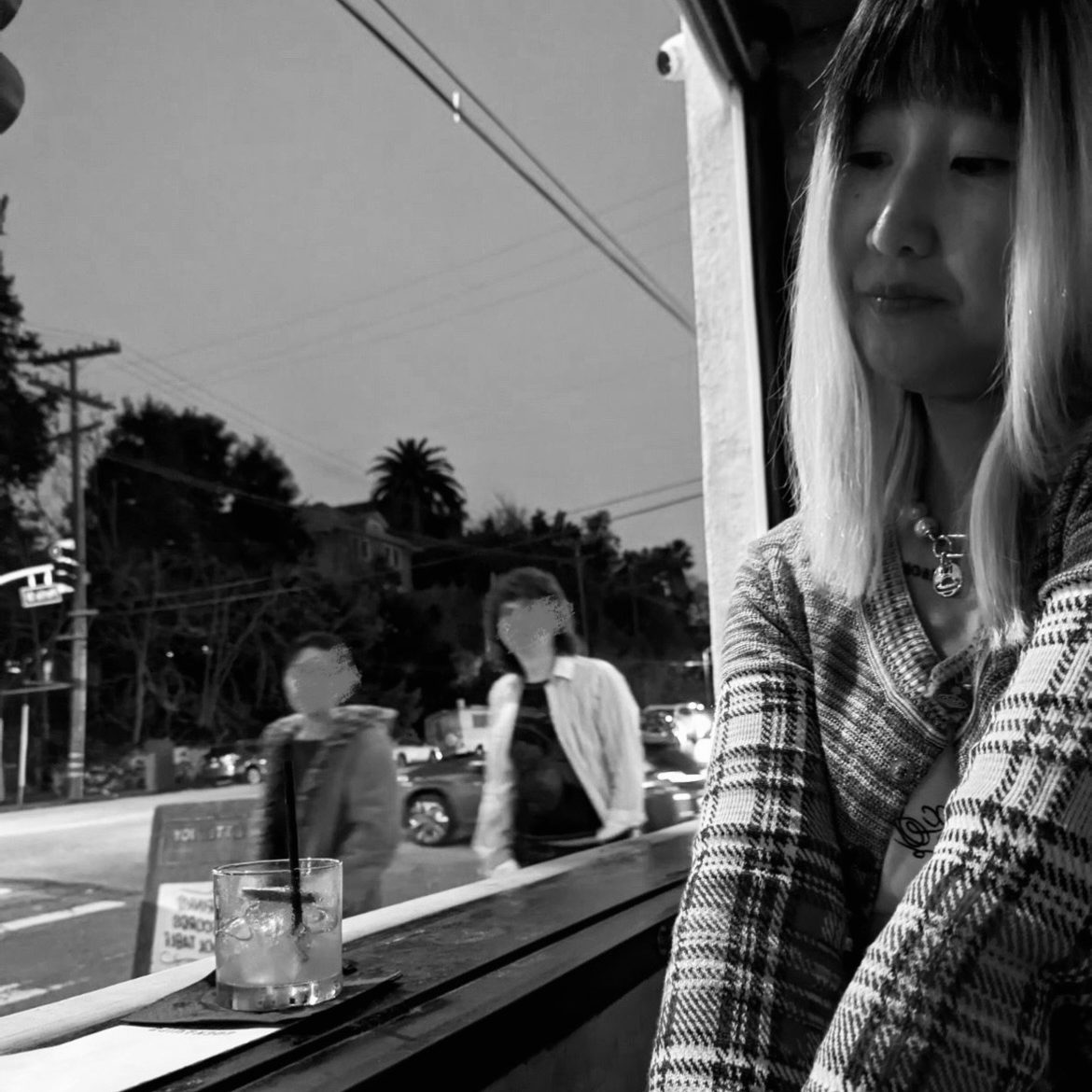
Claire W. Zhang was born on the border between China and North Korea. A short story writer now based on Long Island, she has contributed to the Pinch, Hobart, Third Coast, Maudlin House, Another Chicago Magazine, New World Writing Quarterly, and elsewhere. She edits fiction at The Baltimore Review and holds an MFA from Pratt Institute.
✶

