After a long hospitalization, my father returns home to die on January 2025’s coldest day—the Thursday after Orthodox Christmas. The packed snow on the steep, gravel driveway leading to his house is a slick, icy sheet…
Tag: writer
The latest in our FORTHCOMING series of excerpts from new and recent books.
there are trees. A tall one
that has shed all its leaves,
has its roots in my heart.
One, still bright with red
and orange, touches
the great loves of my life,
while a spruce, evergreen,
keeps me shamelessly naive.
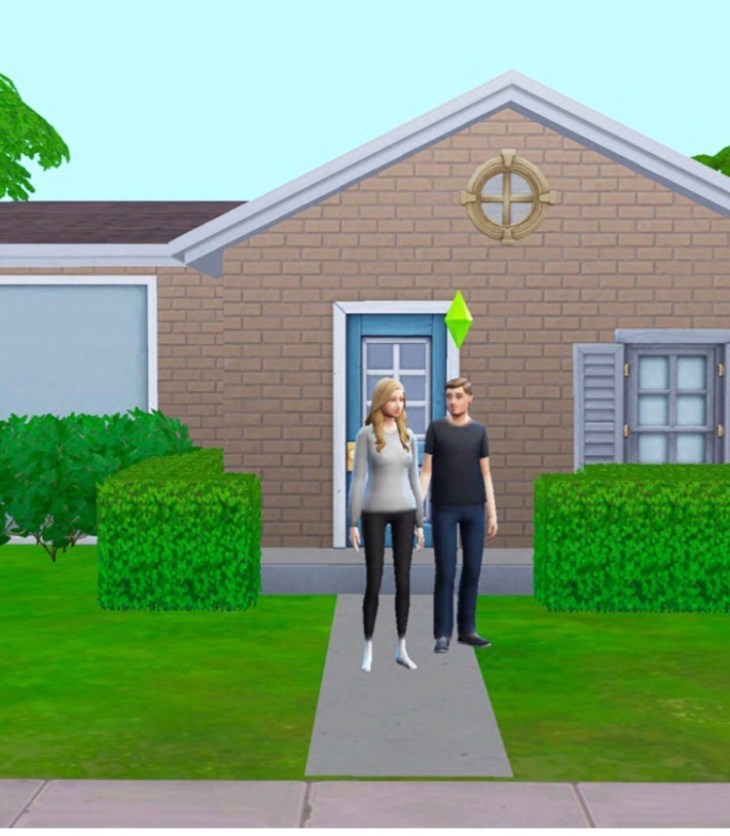
And in the immediate aftermath of the divorce, Real Adam understood that if ever there were a time to start again—to remake himself—it was now. Among friends, I took to calling my new experience Life 2.0. Like a software update.
(nonfiction)
Lamb’s ears plucked where
the stairs are, prairie
grass, steeple here, and
dandelion bends,
(poetry)
Angela was wearing her dress with the lowest neckline, which also luckily had pockets so she could keep her phone on and hidden and I could hear what was happening. That’s important—dresses having pockets. To women, I mean. That’s the kind of healthy relationship Angela and I have. I pay attention to which dresses have pockets.
(fiction)
The latest in our FORTHCOMING series of excerpts from new and recent books:
The mirror on the wall was a tall oval, and her head was not. She got closer. Her nostrils dotted the center. She tried a smile, as she had seen ladies do. No good. There was nothing looking back from the glass but the round head of her, the hair plain and dark.
(fiction)
I give her kisses, I wrap her up in my arms, and she relaxes a bit. I tell her how her hair falls just like mine. I know what it needs, I have spent years learning what it needs. I have spent each waking moment learning how to nourish her. Must I spend a lifetime proving that I can?
(fiction)
How long is a piece of string when all we’ve got is scissors?
(poetry)
Remains, remnants, in print only, a death mask; just as dead
But in another place. Taxons without Lazarus. Facts
Some data has confirmed. You, among the dead,
(poetry)
Calypsee is the fictional setting of Ryan Habermeyer’s novel, Necronauts. Told through a series of ninety-five obituaries, Necronauts explores what it means to live in a religious community that seems to quell hope and how those outside that faith can still find something to sustain them.
(reviews)
Smoke Drifts contains both free verse and poems that follow a formal architecture, including several of Anjuman’s ghazals, a centuries-old tradition that Uzbek writer Hamid Ismailov describes as “a universal poetic form,” like the European sonnet, found in literary cultures from Turkey to India.
(reviews)
Newspapers make the best
umbrellas, the rain erases
them. Fascinating philosophies
in my head-hunch over litter,
digging for shit
when there is already so much
on the surface.
(poetry)
Ahmed carefully layers Nigerian cultural practices into the poem’s emotional architecture. “Where I come from, silence is how you mourn a man without gray hairs”—the line invokes a northern Nigerian Muslim sensibility. It also hints at the Nigerian pattern of losing young men to violence, religious conflict, insurgency, and conscription.
(reviews)
We seven spent most of our days preparing ourselves for the war that we were sure we would soon see. Broomsticks became rifles and stones became grenades and we practiced clearing rooms of imagined enemies in the sanatorium.
(nonfiction/Ukraine)
My first uprooting took place in 1998. It was autumn in Jamaica, and putting those words together in a sentence feels as strange as I felt when I lived there. When I was six years old, my parents pulled my younger brother and me from the suburban township of Maplewood, New Jersey and relocated us to the coastal city of Kingston, Jamaica.
(nonfiction)
father’s Chevy
station
wagon nostalgia
weekend I am
always in
service to
my failed
marriage’s cream-
colored
cashmere
sweater
(poetry)
Sears Tower stands fast and solidly flies. Over its base no statues try to beautify the essence of its vim: a skeletal trajectory, a bold learp of blackest metal/glass reaching, soaring higher and higher
(poetry)
Daniel Rachel frames an argument about how spectacle can override ideology and historical awareness. In doing so, these examples endorsed showbiz over ideology, but what else is new? There has never been an entertainer who didn’t want to mesmerize.
(reviews)
Sometimes, silence is the way oppression learns to speak fluently in every language. When we were told to sit still, we didn’t just lose movement—we lost voice.
(nonfiction)
My sister is going on a limitless journey
Those flying blue atoms above us
Penetrating our hearts exactly like darkness
(poetry)
this, the poem i cannot
return to
this, the wholehearted
downpour
(poetry)
I don’t know how to hold onto the warmth of the image of Ray picking up the kids, dappled in sunlight, with the statistics of suicide that run through my mind as I think about Lizzie.
(nonfiction)
it was a hundred thousand miles safely tucked away
had been years since its teeth had tasted the lock of his mouth
when they murdered him
it didn’t break no it vibrated
changed from key to tuning fork
death does that you know
(Palestinian Voices)
One morning I once tried to boycott mandatory COVID tests as a small gesture of resistance, but the first day I didn’t show up, I got a text message that same night warning me that there would be consequences. It didn’t say what the consequences would be.
(nonfiction)
Much more than a litany of tribulations, this book deconstructs the persona that Carrell and women going back to the beginning of Mormonism have been forced to create to endure its grinding mortifications. Unlike most of these women, Carrell extricates herself, but not without a lasting emotional trauma.
(reviews)
Just announced as a finalist for the Forward INDIES Book of the Year 2025, The Plan of Chicago marks Pearce’s foray into publishing a full collection of fiction under his own name—though he’s a ghostwriter by trade and has penned over twenty nonfiction books.
(reviews)
To read Södergran’s work today is to easily contextualize her voice within a feminist discourse, but it also defies being so neatly categorized. What makes her poems feel timeless is exactly their resistance to any niche delineation of time’s cultural productions.
(reviews)
The poems refuse to dramatize feeling when intimacy is already present, letting proximity, stillness, and ordinary action carry the weight. Moments of connection are often pared down rather than heightened. After intimacy is established through shared gestures—errand talk, side-by-side movement, unremarkable speech—“Greenlight” concludes simply: “Nothing much happened.
(reviews)
This identity transformation, and the inherent tensions of being a mother-writer, inform the poet’s search for a medium that can contain the impossibility of it all. Its pulsing, chimeric quality is reflected against, and through, the structure and constraints of poetry.
(reviews)
As an act of space-making, Dandelion is a forum for Bainbridge to let memories reverberate and echo across a “sprawling archive of emotions.” And speaking of archives (and archivists), as a stylist, Bainbridge’s writing deserves comparison with the rhythms and cadences of Carmen Maria Machado.
(reviews)