
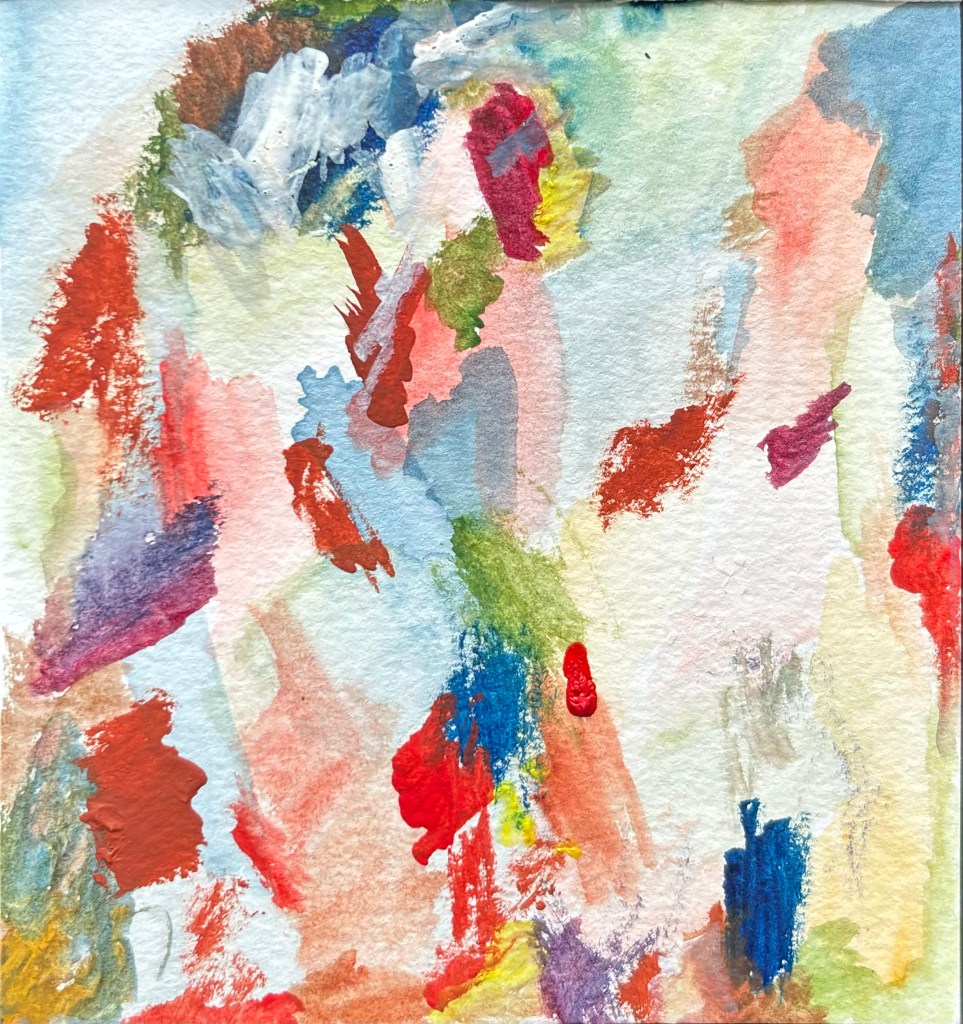
✶ 2026 Nominee: Best of the Net
My mother’s roots extend deeply beneath the soil of Kingston. They spread into patterns, marking important moments in her life. When she sets foot onto the island, her spine stands as straight as the tree trunk of the Blue Mahoe, and her shoulders broaden like they are green leaves and hibiscus flowers.
She always asserted that Jamaica was her home. Yet her birth certificate says otherwise. Unlike my mother, my roots can never find stable ground. I am seen as an invasive species in every ecosystem I transport to. I strive to take root in my surroundings, across several continents, languages, and climates. I long for the soil where I can plant myself.
My first uprooting took place in 1998. It was autumn in Jamaica, and putting those words together in a sentence feels as strange as I felt when I lived there. When I was six years old, my parents pulled my younger brother and me from the suburban township of Maplewood, New Jersey and relocated us to the coastal city of Kingston, Jamaica.
We exchanged tree-lined streets sheltering colonial homes and cul-de-sacs teeming with soccer moms hauling their children in minivans for vibrant commercial districts bursting with mango trees, and street vendors navigating between car traffic, selling pepper shrimp and bottled coconut water. On the island, the sun cast a permanent yellow glow on everything it touched, illuminating buildings painted in shades of yellow, blue, red, and green. The smell of allspice, Scotch bonnet peppers, bananas, pineapples, sweat, and exhaust fumes mingled and permeated the air. The sounds of Kingston rivaled the vibrancy of its scents and infrastructure. When we drove through the crowds of people and past market stands, the music on the radio faded into the background as the voices of men yelling, children laughing, women talking, and trucks honking drowned out any sound inside the car.
I found myself in a loud world, given no rulebook for replanting myself on an island where being anything other than boisterous seemed odd. I knew that while here, I needed to change form. I searched for home here, to find my place among the West Indian Mahogany trees of Hispaniola and to assimilate into my surroundings. The first part of my physical body I would try to integrate would be my taste buds. My breakfast of scrambled eggs and bacon would be a thing of the past. The new standard was ackee and saltfish, a dish that my brother absorbed without hesitation while my taste buds and the new flavors mutually rejected each other. My struggle with eating oxtail and callaloo was short-lived, as my insistent groans to my mother about how much I missed American food—which for me meant mac ‘n’ cheese and any bright-colored, boxed product adorned with cartoon characters on the front and a healthy dose of added sugar—pushed her to cave in.
Despite my palate failing to find a place among the melting pot of bold spices, I tried to anchor myself in other ways, searching for a web of roots I could connect to. I sought refuge in primary school, embedding myself in social circles where being understood would be as effortless as sending signals in a sacred language. It was within the walls of learning the alphabet and times table that I would discover my presence here was seen as foreign. My attempts to decode the hidden social cues of Caribbean friendship circles were met with resistance as my New Jersey accent betrayed me. I heard questions from my classmates daily.
“Why do you say water like that? It’s pronounced we-ter, not wa-der,” they said, laughing, as they ran to the other side of the playground, leaving me alone to repeat and pronounce the words in my head until I could hear the difference in enunciation. I was officially classified as an alien species. Forming symbiotic relationships proved more difficult than I imagined. I ended up making only one friend, and the singular thing we had in common was a shared name.
I clung to schoolwork, telling myself it was a safe bet since my English and math workbooks couldn’t reject me. However, my discomfort grew as the language barrier between my teachers and me became a problem. Every day after school, my mother asked how school was, and I huffed as I ran my hands through my hair.
“I can’t understand anything, Mummy. Everyone speaks Spanish,” I whined.
My mother laughed and corrected me, saying, “No, they don’t speak Spanish. They’re speaking Patois.”
The years went by as I struggled to blossom on the island and shed myself from the seasonal afterglow of the Northeastern US and acclimate myself to Jamaica’s unchanging weather. Jamaica’s weather was stubborn. Its heat gripped every season, refusing to make way for the light breeze of fall or the cool air of a winter’s night. I missed the smell of bonfires on November nights and the sight of decomposing leaves creating a mosaic of yellow, orange, and red on the sidewalks.
I declared to myself that if I couldn’t fit into this place, I would make this place fit into me. I gave up on wrestling with the island to accept me. I created rituals that reminded me of something familiar, like pleading with my mother for my puffer jacket when the calendar marked October. I walked through the hallways of our house, the lining of the coat sticking to my skin, as I was determined to nest within its warmth no matter the temperature. My mother’s gentle teasing about the heat went unanswered as I wrapped myself in this armor of memory.
My only solace was our family weekend trips through the dense, green mountains of Portland Parish, where we flocked to the discreet beach of Frenchman’s Cove. I sat on the shore as waves washed over my toes, and I imagined that if I could not be a tree here, maybe I would be like water, belonging nowhere but existing everywhere. Moving like the oceans, lapping the shores and coastlines of the Caribbean islands, touching the East Coast of North America, extending down to the northern and eastern coasts of South America, unfolding out to West Africa, and meeting the jagged rocks of Europe. Or maybe I could be like the Rio Grande, flowing from the Blue Mountains out to the coast.
As I was coming to terms with my place on this island, my second uprooting happened. After three semi-friendless years, my parents brought me the best news I could have wished for.
“We’re moving back to the US,” they told me. I felt a wave of relief wash over me. My mind began to race with fantasies of returning to my birthplace and forgetting my temporary stay in this strange land.
“Back to New Jersey?” I asked them.
“No, to Florida,” they replied.
I had no relationship with Florida, and the only thing that came to mind was our family holiday to Disney World. Still, I welcomed the idea of being close to the “happiest place on earth,” the prospect of making real friends and of setting foot on my homeland where I would feel native to the land.
Several months later, I was extracted from bauxite soil, like a mineral unearthed from the earth, and carried along the Florida Current on a warm ocean stream that connects the Caribbean to Florida. We landed in South Florida, where time moved at a snail’s pace. Had I not seen the superhighways, parking lots, shopping malls, and swarms of grandparents holding their canes, I would have believed the plane never left Jamaica. Exiting the airport, we were met with the same blanket of heat and shaded by palm trees identical to the ones I left behind. I was uncertain about how this new place would accept me, but I knew the most challenging part about assimilating was out of the picture. At least I could understand everyone here—we shared the same language—and I was back in my birthplace. Here, I imagined laying the foundation of my life and rooting myself in Miami limestone, just as the cypress trees of the Everglades dig their roots deep into the earth.
Taking root in my new school started off easily. Schoolwork was a breeze, and teachers praised me for what they considered courteous behaviors, manners I learned from my time conforming to life in Jamaica, such as sitting at my desk with my hands clasped, standing when a teacher walked into the classroom, and writing in cursive. I relished being called a teacher’s pet. It felt like a reward for years of feeling unwanted. At the same time, my friendship circle remained small with a singular me. Attempts to find community were met with subtle rejection, marked by faces gawking at the occasional Jamaican lunches I carried to school and classmates turning their backs to me as I sat alone in the corners of the classroom. I was plagued by the same rot that prevented me from inhabiting Jamaica. Something about me was inherently different, preventing me from fitting in, and it didn’t matter where I was. I would always be viewed as other.
It was the fall of 2001 when my mother decided it was time we moved on from the residential enclave of Monarch Lakes in Miramar, Florida. Except this time our migration was different. Our family was a microforest of four trees, until we were unearthed from the subtropical climate of Fort Lauderdale to the springs of Central Florida, leaving our forest with just three. Our new house welcomed a new congregation of trees, a new family. With my father gone, having begun another life and created another family, I was cocooned in a canopy of transformation as the structure that made my family whole shifted alongside my environment. When it came to the weather, there wasn’t much for me to adapt to in the city of Winter Springs besides adjusting to the increase in Spanish moss dangling from oak trees, and black bears and alligators roaming the edges of man-made lakes.
Weary from searching for a permanent place to feel at home, I knew that to endure living in this new place, I needed to do my best to plant myself and blend in among the evergreen oak trees slouched along the sidewalks of our neighborhood. I laid the foundations for a new self here and vowed to remove anything that distinguished me from the rest. I altered the way in which I spoke, eradicating traces of any accent I may have had, imagined or otherwise.
I adjusted the way I referred to my mother, no longer calling her by the affectionate Jamaican title “Mummy” but by “Mom.” My school lunches would be inconspicuous, making sure not to draw further attention to myself. I laughed along with friends who made fun of my mother’s hybrid Patois-British accent to assure them that I was not strange like that but akin to them. This time I learned from my past mistakes. To survive where I don’t belong, I needed to hide the strange and unusual parts of myself. I spent my teenage years mimicking the spaces which I occupied, settled and unsettled at the same time. I was there but not of there.
After seventeen years of living on two continents, in numerous cities, and in dozens of homes, my heart still wishes for a place where I could feel like my mother does when she is in Jamaica, the steadiness of her voice when she calls the island her motherland. While my lineage stems from the island, the island does not stem from me. My origins have branched and split into different paths, diverging from their beginnings. I imagine this branching began with my mother’s birth in London. She was brought into this world bearing a birthmark in the shape of Jamaica on her ankle. My grandmother believed this was a sign that the island was calling her home. Perhaps that beacon to return home stopped with my mother, and there is no place calling me home.
✶✶✶✶
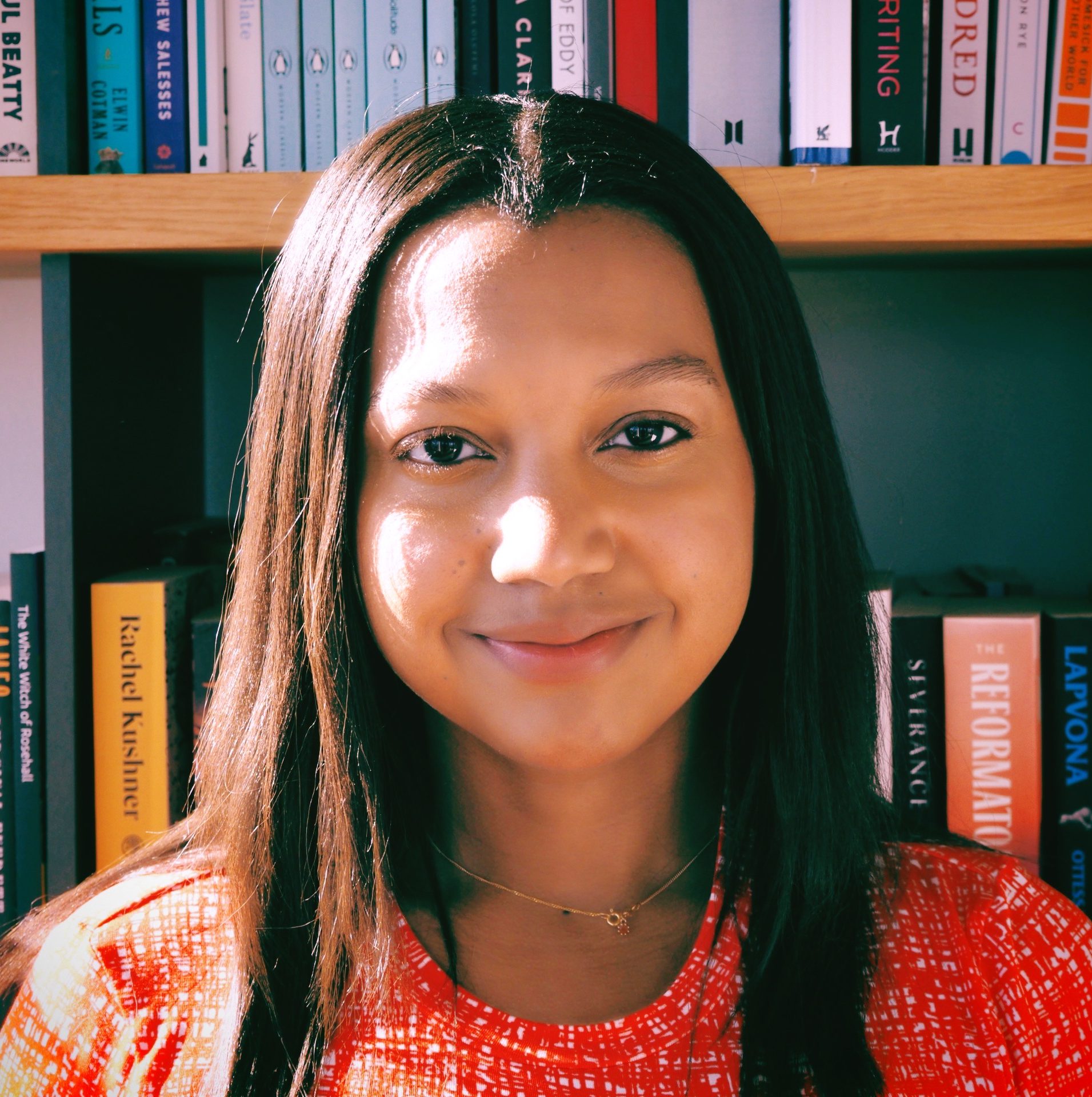
Ashley Thompson is a writer who currently calls Chicago home. Her work has appeared in The Chicago Review of Books, The Chicago Reader, Alliance Magazine, and Common Ground Magazine. She is on the Associate Board of StoryStudio Chicago and is currently studying Creative Writing at the University of Oxford.
✶
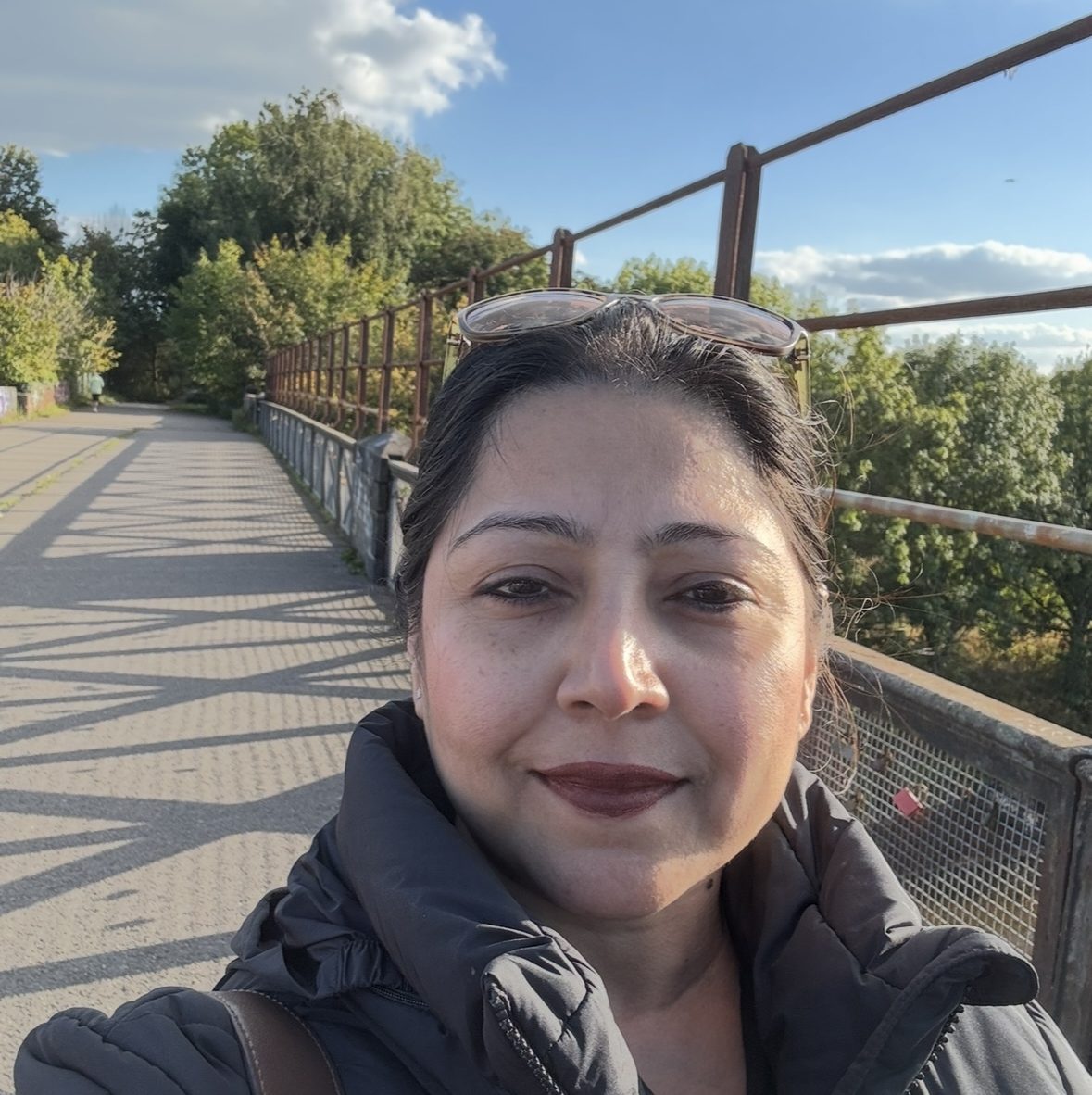
Mary Tina Shamli Pillay is an abstract painter and writer based in India. Her art, poems, and fiction have featured on BBC Radio, Kitaab, The Mean Journal, Blink-Ink, Borderless Journal, The Chakkar, Madras Courier, The Pine Cone Review, The Literary Times Magazine, The Punch Magazine, Shooter Magazine, Ink In Thirds, Artist Talk magazine, The Hemlock Journal, The Penn Review, Chestnut Review, Inscape Journal, and Another Chicago Magazine among others. Her art has been showcased at exhibitions and collected internationally. She is passionate about painting, writing, cats and food. Find her on Instagram @marytinashamlipillay.
✶

