
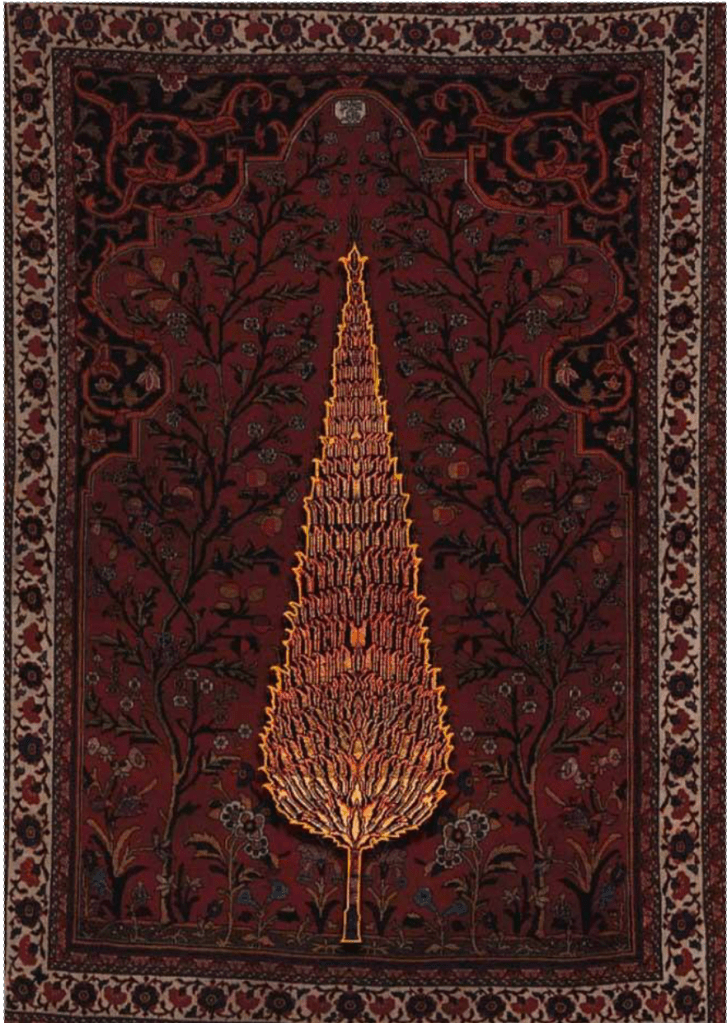
Tree (of Life)1
when April blossoms
weave a pattern of clouds and wind
put twining stems in stems in stems in
the lambs have reclined
and their drunken eyes are reflecting sweet taste of fresh grass
shearers are collecting spring-wool
shearers are collecting spring-wool
knots are beaten by Daftah² and a hook knife³
has cut silk yarns and fingers
together
an incomplete cypress on the loom⁴
goes up and gets closer and closer
to the sky
when it arrives
falls on the ground
✶
1One of the famous Iranian rug patterns is the Tree of Life, in which the tree is often located on the vertical symmetry line of the carpet. The tree symbolizes the connection of earthly beings to the heavens.
2The daftah (or comb) is beaten up and down along the warp in order to secure the knots and maintain the uniformity of the weft.
3The hook knife is partly used to hook onto the yarn between the warp threads, and also to cut the yarn afterwards.
4A loom has two poles with perpendicular strings attached to both sides in a looping pattern, which are used to weave the rug’s foundation.
✶✶✶✶
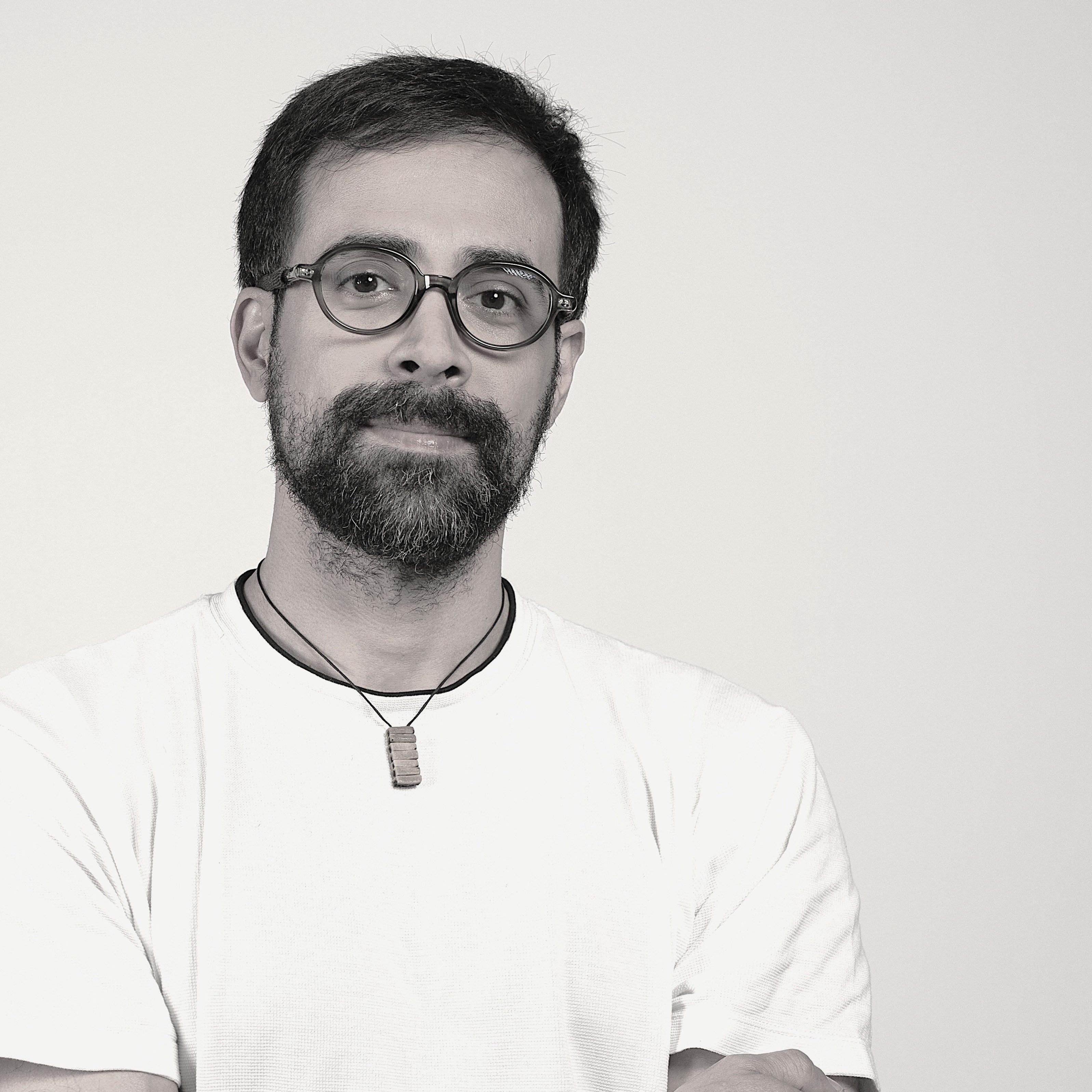
Ali Asadollahi is an Iranian poet, translator, and editor based in Tehran. He holds an MA in Persian Language and Literature from the University of Tehran and is the author of six books of Persian poetry. Over the past two decades, his poems have appeared in numerous leading Iranian literary journals, where he has also served as poetry editor for several publications. A permanent member of the Iranian Writers’ Association (est. 1968), he has received several literary awards, including the Iranian Journalists’ Poetry Prize and the Young Poets’ Book of the Year Award, both in 2010. His poetry and translations have appeared in Denver Quarterly, Epoch, Hayden’s Ferry Review, Modern Poetry in Translation, Consequence, and The Los Angeles Review, among others.
✶

