
Natural Selection
✶ 2026 Nominee: Best of the Net
After the elimination of all worthless specimens
There arose at last a species able to feed on empty packages
Of potato chips, that gladly watched ads about hemorrhoid creams
And transmissions of the latest riots on Mars.
This species loved to take walks with its neighbor on a leash
And learned to reproduce by liking on Facebook.
It fell in love with both gorgeous pixels and the morning smog.
And God, in His own happiness, never got involved.
Dobór naturalny
Po latach eliminacji bezwartościowych osobników
Powstał wreszcie gatunek który odżywiał się opakowaniami
Po czipsach, z przyjemnością oglądał reklamy
Maści na hemoroidy i transmisje z zamieszek na Marsie
Uwielbiał spacery z sąsiadem na smyczy
Rozmnażał się wirtualnie przez lajkowanie
Kochał dorodne piksele i poranny smog
Na szczęście Bóg nie miał z tym nic wspólnego
Body Control
The body would prefer to be astral or cosmic
That it would not smell or be in pain
But unfortunately its form is material, made of protein
Containing a bounty of openings and chambers
Through which it communicates with the world splendidly
And even has its own mahout to tend its every desire—
To bathe and feed it, to clean and mend its tusks—
But the caretaker is not at ease in this world
Which is why he demands the body pitch in as well
Who luckily has enough well-developed senses
That it never fails to point out water and nourishment
But every so often it goes berserk
And slips away from all control
It injects all sorts of liquids, starts to speak in tongues
And becomes infected with French syphilis or English rickets
Disrupting discotheques or buses filled with children
It dreams of ascension into heaven
Willing to make itself more rounded in order to lift like a balloon
But it undergoes the pull of gravity and marvels
At its own squished limbs and twisted spine—at pain
But other times it takes umbrage
It sheds pounds to dematerialize
It even offers up its guardian to the predations of the world
A guardian who each night tries to slip away in secret
He’s had enough of the limits of physiology and a lowly creature’s view
But even so, these two must find a way to live in peace
The handler and the body’s little me
Ciało i poganiacz
Chciałoby być pewnie astralne albo kosmiczne
Żeby nie śmierdzieć i nie boleć
Niestety jest zupełnie materialne, białkowe
Posiada rozmaite otwory i jamy
Przez które doskonale komunikuje się ze światem
Ma też swojego kornaka, który je pielęgnuje –
Kąpie, karmi, czyści i plombuje ciosy
Dozorca słabo orientuje się w tym świecie
Dlatego też żąda od ciała pomocy
Na szczęście ma ono dobrze rozwinięte zmysły
Bezbłędnie wskazuje wodę i pożywienie
Co jakiś czas wpada jednak w amok
Wymyka się spod kontroli
Wlewa do wnętrza różne płyny, mówi językami
Zaraża się chorobą francuską, amerykańską
Rozrywa się w dyskotece lub autobusie pełnym dzieci
Marzy o wniebowstąpieniu
Przybiera postać kulistą, aby upodobnić się do balonu
Doświadcza grawitacji
Dziwi się zmiażdżonym kończynom, wykrzywionemu kręgosłupowi – boli
Innym razem obraża się
Chudnie, żeby się zdematerializować
Pozostawia opiekuna na pastwę wrogiego świata.
Co noc kornak znika ukradkiem
Ma dość monotonnej fizjologii i żabiej perspektywy
A jednak, muszą żyć w zgodzie
Poganiacz i jego brat mniejszy – ciało.
✶✶✶✶
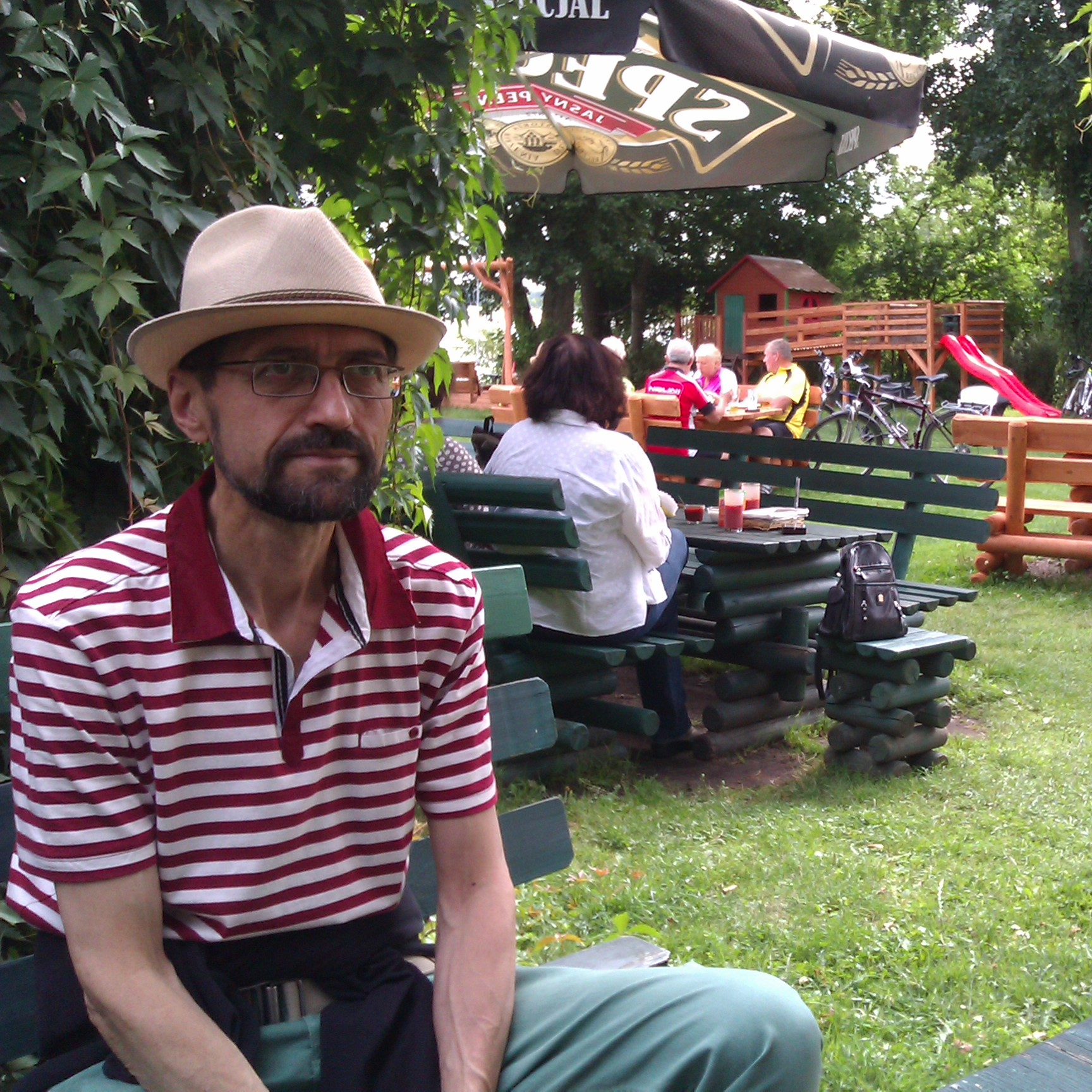
Born in Gdańsk in 1953, Tadeusz Dziewanowski was involved in Polish street theater as both a writer and performer during the 1970s, and was a co-founder of the Gdansk-area creative group, Tawerna Psychonautów (The Tavern of the Psychonauts) in the 1980s. More recently, he has been a poet and translator from English. His first book of poetry, Siedemnaście tysięcy małpich ogonów (Seventeen Thousand Monkey Tales), appeared in 2009, and his poetry, reviews and translations from English have appeared regularly in the Polish literary journal Topos. In the U.S., Daniel Bourne’s translations of his poetry have appeared in Plume, including in their bilingual collaborative poetry project “A Journey Between the Lands” featured in Plume‘s January 2015 issue, as well as appearing in the International Poetry Review, Able Muse, Packingtown Review, Shot Glass Journal, Mobius, Whistling Shade, Sow’s Ear Poetry Review, and the sci-fi poetry journal, Star*Line.
✶
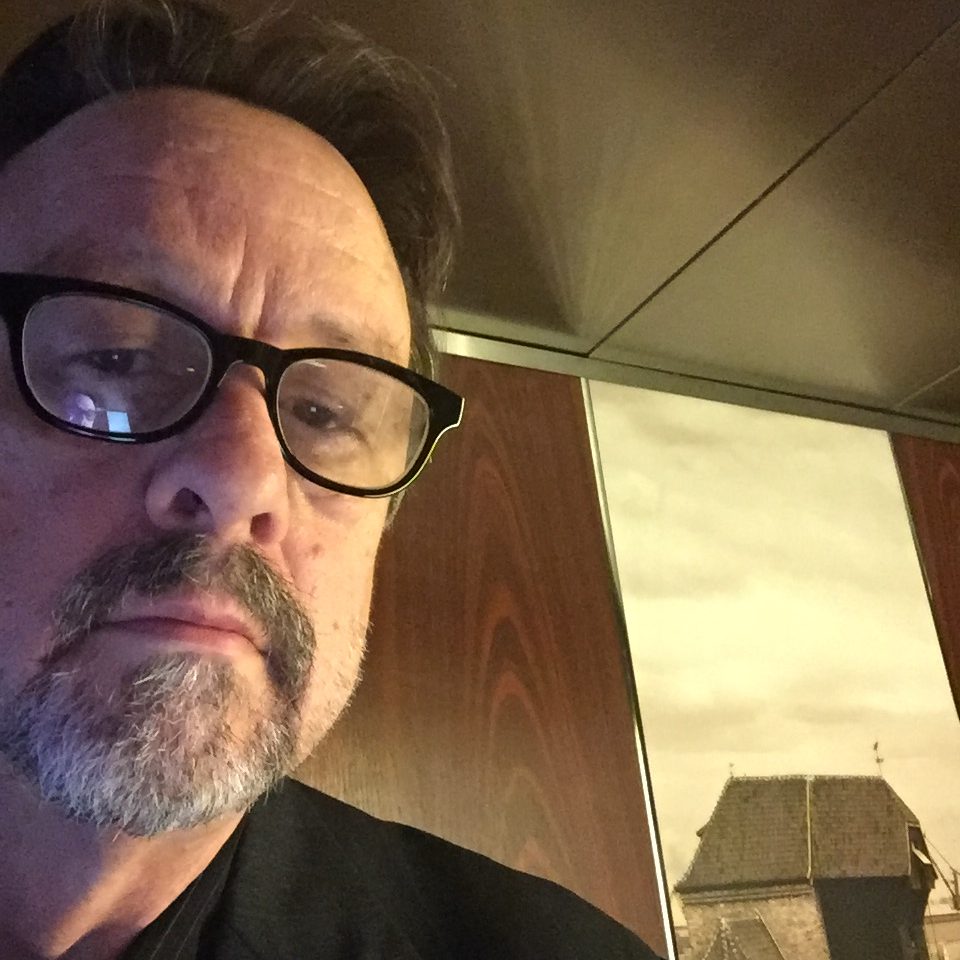
Daniel Bourne’s books of poetry The Household Gods, Where No One Spoke the Language, and Talking Back to the Exterminator. His poems have also appeared in Another Chicago Magazine, American Poetry Review, Ploughshares, Boulevard, Guernica, Conduit, Salmagundi, Indiana Review, Rhino, Shenandoah, Field, Michigan Quarterly Review, Beloit Poetry Journal, Plume, Yale Review, and others. Professor Emeritus of English at The College of Wooster, since 1980 Bourne has also lived in Poland several times, including in 1985-87 on a Fulbright for the translation of younger Polish poets, and most recently in 2024. A collection of his translations of Polish poet Bronisław Maj, The Extinction of the Holy City, appeared in 2024, and his translations of Maj, Dziewanowski and other Polish writers have appeared in Another Chicago Magazine, Field, Colorado Review, Partisan Review, Plume, Prairie Schooner, Salmagundi, Puerto del Sol and Virginia Quarterly Review.
✶

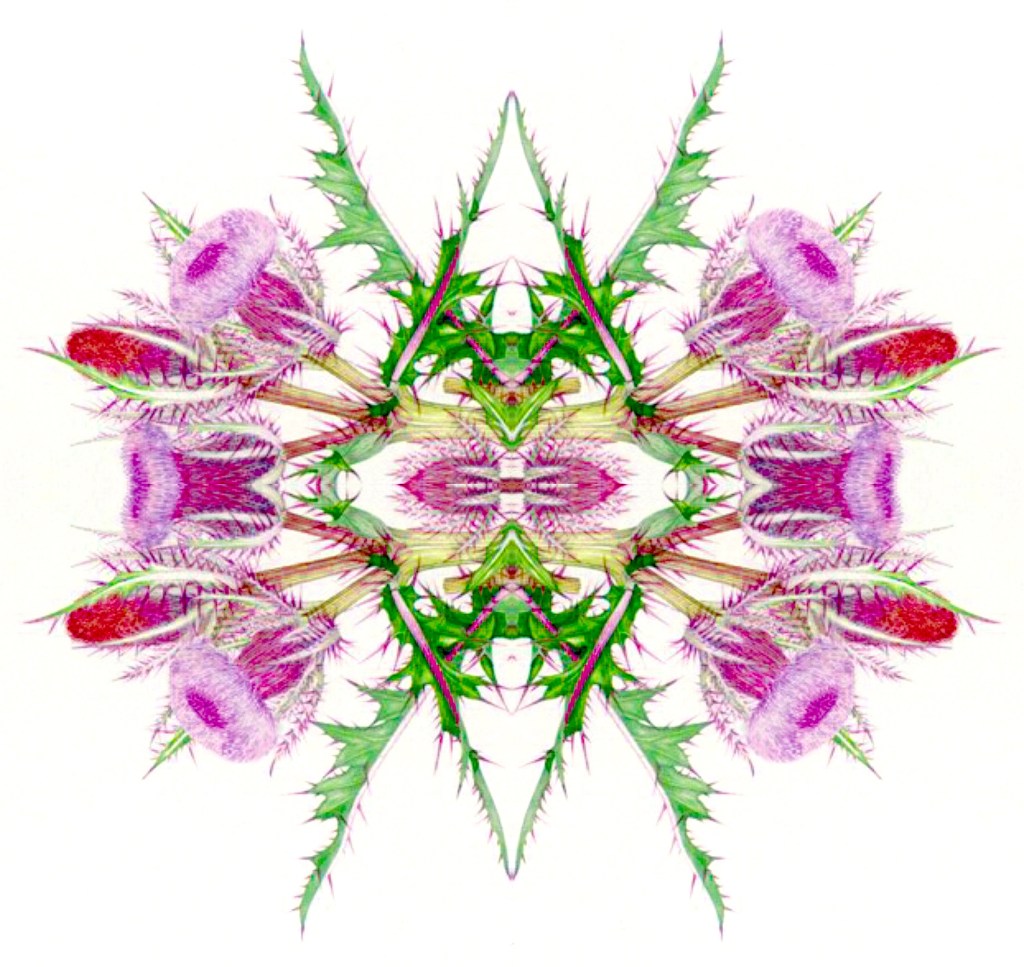
Bill Wolak has just published his eighteenth book of poetry entitled All the Wind’s Unfinished Kisses with Ekstasis Editions. His collages have appeared as cover art for such magazines as Phoebe, Barfly Poetry Magazine, Ragazine, Cardinal Sins, Pithead Chapel, The Wire’s Dream, and Phantom Kangaroo. His collages and photographs have appeared recently in the 2020 Seattle Erotic Art Festival, the 2020 Dirty Show in Detroit, the 2020 Rochester Erotic Arts Festival, the 2018 Montreal Erotic Art Festival, and Naked in New Hope 2018.
✶
Whenever possible, we link book titles to Bookshop, an independent bookselling site. As a Bookshop affiliate, Another Chicago Magazine earns a small percentage from qualifying purchases.

