
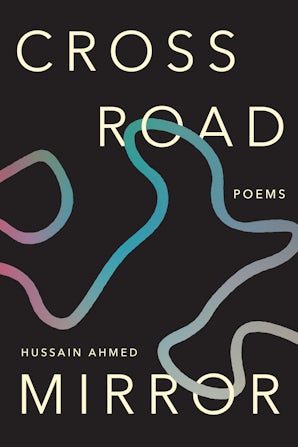
In Crossroad Mirror, Hussain Ahmed extends his reputation as one of the most attentive chroniclers of Nigerian memory, grief, and migration. His work enters a long-standing tradition of poets who wrestle with the layered burdens of personal and collective history—a trend that can be seen in the emotional exactness of Christopher Okigbo and Ezenwa-Ohaeto, the meditative clarity of Niyi Osundare, and the migration-shaped elegiac tone of Gbenga Adeoba, Warsan Shire, and others.
What distinguishes Ahmed’s contribution is his ability to fuse the intimate with the geopolitical, turning the spaces of family, language, and interior thought into apertures through which national wounds become visible. In this way, Crossroad Mirror broadens the field of Nigerian poetics by insisting that the private and the national are inseparable. Ahmed extends the conversation on how poetry can witness violence without spectacle and articulate belonging within a world marked by continual leaving, further demonstrating his control of image, his acute ear for silence, and his intimate engagement with the histories of displacement that shape contemporary Nigerian life.
In “Incantation for Leaving,” he situates departure as something haunted by the voices of the dead. The poem opens with an unsettling paradox: “It gets better from here, say / the dead, who must remain silent / in solitary re-living of memories.” This tension between speech and silence reflects the Nigerian condition of cyclical violence, where the dead—victims of insurgency, communal conflict, migration by sea, or state brutality—are a disturbance that shapes how the living understand absence. The line mimics the false assurances given in the face of catastrophe, a rhetoric familiar in Nigeria’s political landscape where suffering is routinely minimized by official optimism.
The poet extends this critique through the image of the battered trumpet that must be “scrubbed / of its rust, and maybe painted / to hide its deficiency.” The trumpet could be read as the state, or the nation’s narrative of resilience—always polished, always cosmetically renewed, though structurally decaying. In the Nigerian context, where institutions are frequently refurbished rhetorically but not repaired materially, this metaphor is evidence to that.
More intimately, the poem articulates the psychic cost of leaving, especially migration forced by violence. The statement, “Leaving never gets better,” counters the popular myth that departure offers immediate relief. For many Nigerians, migration is survival, and survival carries a certain type of guilt; thus the speaker turns to the confession, “the guilt of what is / hidden in its blue,” possibly invoking the Mediterranean Sea, where thousands of African migrants have perished.The allusion to drowning is explicit earlier when the speaker observes, “A boy who survives drowning says / the sea is saltier than it looks.” This line reads both literally and metaphorically, in the sense that the saltiness is the bitterness of exile. The poem ends with physical exhaustion and spiritual depletion:
Leaving never ends—for now,
I rest my tired wings
and lubricate my tongue
with the filtrates of soiled prayers
Ahmed fuses bodily fatigue with spiritual erosion; even prayer is “soiled,” suggesting a loss of purity or faith in the redemptive ability of ritual. The wings evoke birds, migration, and fragility; they are tired because flight is perpetual. Here, he captures a distinctly Nigerian emotional layout whereby the departure is continuous and a lifelong burden. This is well explored in “Monologue in a Library” through memory, and more intentionally through family and intergenerational fracture. The poem is set amid “Piles upon piles, books in foreign languages, / their titles concealed by dust.” This scene mirrors the condition of colonial aftermaths in Nigeria, where knowledge systems are lost.
The father figure used in this poem, Baba, becomes a vessel of fading memory: “This man did not remember what stories lay / in the brown pages of his own library.” This forgetting represents the nation’s collective amnesia surrounding events such as the Biafran War, military dictatorship, and the violence of the present. Baba’s failure to recall “who I was / or why I had refused to laugh at his jokes” signals the intergenerational rupture caused by displacement and trauma.
Ahmed carefully layers Nigerian cultural practices into the poem’s emotional architecture. “Where I come from, silence is how you mourn a man without gray hairs”—the line invokes a northern Nigerian Muslim sensibility. It also hints at the Nigerian pattern of losing young men to violence, religious conflict, insurgency, and conscription. The speaker notes that when one breaks the silence, “you tell his children / their father had joined the army; you tell lies in his wake.” This lie is a protective fiction, but also a metaphor for the narratives that families construct to shield children from the brutal truth of conflict.
The poem’s emotional climax comes in Baba’s dreams, “in different languages we don’t understand.” In Nigeria, where multilingualism is cultural reality, a shift in dream-language signals alienation. It suggests that trauma has pushed Baba into an interior linguistic world beyond communal reach. The poem closes with a revelation: “No one wants him to know what happened, but / he is regaining his memories from the images on the wall.” Memory, here, becomes a slow and painful resurrection. Photographs, often the only archives families possess, restore what negligence and wordlessness tried to bury.
The poem “Fence: An Abecedarian,” which is structurally looser than the traditional abecedarian but thematically rich, begins with a memory of place: “A mile from where I once spent a night, / bees lodged beneath a bald cypress.” The specificity of trees, bees, and distance suggests a landscape both foreign and familiar, a hallmark of migrant consciousness. The speaker admits the city is one he knows “but not too well / to dream about its blue sky with eyes closed.” This liminal belonging captures the migrant condition and is familiar enough to imagine, distant enough to remain unreal.
The poem then shifts toward grief and displacement: “Every cloud is shaped like a mausoleum / forged from cotton candy.” Clouds, normally symbols of softness or transcendence, are now repositories of the dead. This image connects to the reality of some communities in northern Nigeria where violence has produced mass death and mass burial. The sweetness of “cotton candy” clashes with the heaviness of “mausoleum,” creating a metaphor for how trauma infiltrates even the gentle parts of life.
The poet ties memory to material markers when the speaker states, “I climb slowly and read the names / jostling to remain legible on the signs.” The jostling names evoke gravestones or memorial plaques, suggesting a cemetery or landscape marked by loss. Like Nigeria’s conflict-ridden regions where grave markers are quickly eroded or hastily written, these names struggle against erasure.Ahmed engages Nigeria’s generational wounds, migration, violence, familial fracture, silence—and reimagines them in a language that is tender and sharp. His work refuses easy closure. Crossroad Mirror stands as a significant contribution to Nigerian poetry and offers readers a mirror that is cracked but luminous, reflecting the complexity of a nation defined by both departure and return.
✶✶✶✶
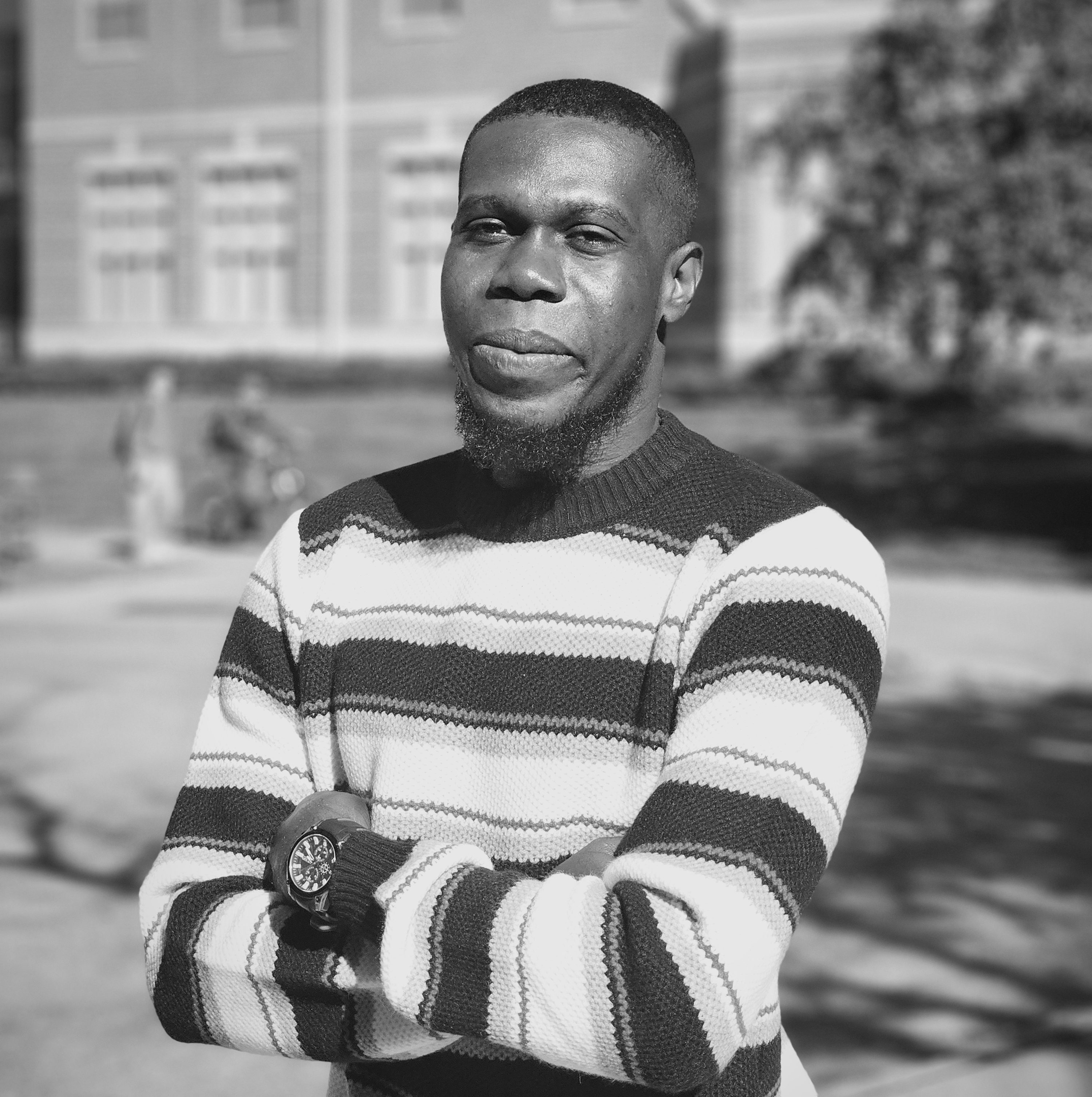
Chinụa Ezenwa-Ọhaeto lives in Lincoln, Nebraska. He won the 2018 Castello di Duino Poesia Prize (Italy) and the 2022 Special ANMIG Poetry Prize (Italy), organized by the Centro Giovanni e Poesia di Truiggio. In 2023, he was a runner-up in the Sparks Poetry Competition atMemorial University (Canada) and in the African and African-American Studies Program Contest hosted by University of Nebraska–Lincoln’s Institute for Ethnic Studies. He is the author of The Naming (Nebraska Press, 2025). His works have appeared in Joyland, Poetry Ireland Review, Oxford Poetry, Massachusetts Review, and The Republic.
✶
Whenever possible, we link book titles to Bookshop, an independent bookselling site. As a Bookshop affiliate, Another Chicago Magazine earns a small percentage from qualifying purchases.

