
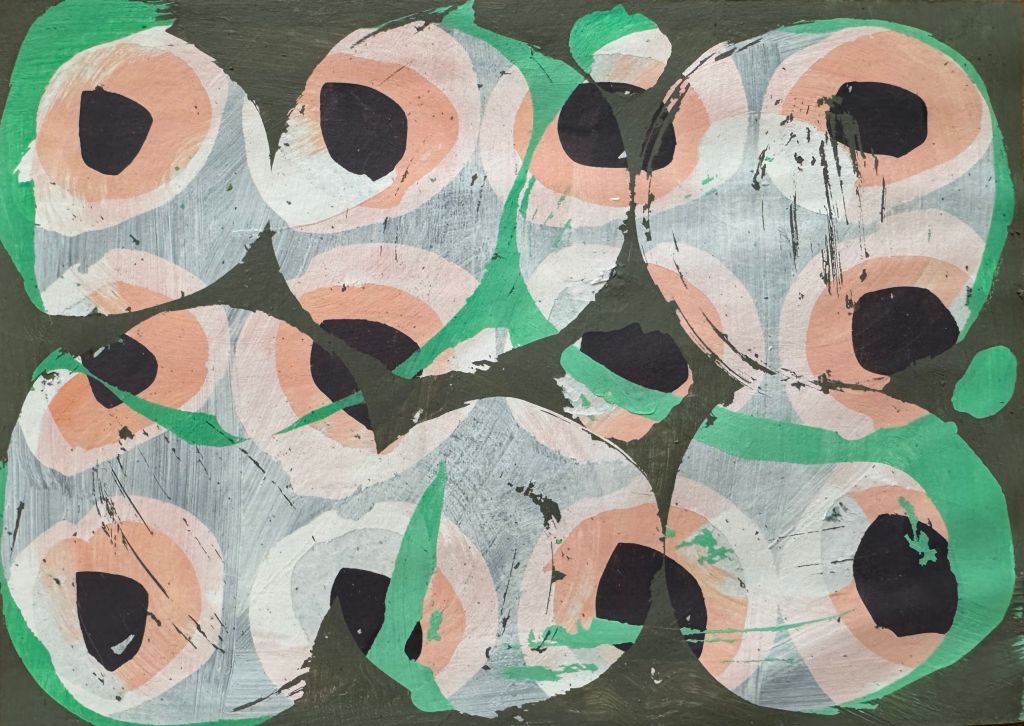
THE REBELLION OF TREES
Rebellion is hard labor for the trees;
It’s fraught with liberation from the roots.
For all their curves, the trunks are not to blame
If suddenly they buckle when they hoist
Too boldly upward their tremulous crowns.
Though strong, the branches aren’t always able
To easily resist the wind. Besides,
The forest won’t stand up for any single tree,
Each tree is ultimately on its own.
There is but one thing they can do together:
Rustle their leaves, weep in the rain.
Even the lightning chooses only one
Tree when it strikes, and not the weakest one.
The ax that man deliberately wields
Always seeks out the strongest tree to hack.
When trees decide the time’s ripe to rise up,
When they take off and leave the wretched earth,
The sufferer of people’s greedy habit,
And undertake the move to a new planet,
Where they’ll be free to rustle peacefully
Without the terror of wildfire and saw,
They’ll only have to come to an agreement
On how and when to leave unnoticed by
The foe, and—crucially—whether the birds
Can come along, for they would miss the trees,
And may—who knows—clutch at the twigs and trunks
Making it nigh impossible to fly,
Or, on the contrary, might take the trees
To some godawful hole and leave them there . . .
And that’s when discord will consume the forest,
Oaks pulling this way, birches pushing that way,
And aspens bickering with everyone,
Or maybe they don’t even have a language!
Yet, rising up requires a common language,
A mother tongue, a common native tongue,
And somehow none has sprung among the trees.
But never mind the trees, for people, too,
Make empty noises and forget their roots
And cannot even stand their ground when they
Don’t have a common language, let alone
Rise up, mount a rebellion like the forest
That’s lost in daydreams under gentle rain.
ВОССТАНИЕ ДЕРЕВЬЕВ
Восстание деревьев—тяжкий труд,
Чреватый избавленьем от корней.
Стволы всей кривизной не виноваты,
Что начинают гнуться, если слишком
Возносят к небу трепетную крону.
И ветви не всегда способны ветру
Легко противостоять. К тому же лес
Не встанет на защиту дерева, оно
В любом лесу предельно одиноко.
Одно лишь можно совершать совместно:
Шуметь. И плакать под дождем.
И даже ищет молния одно
Единственное для удара, и при этом
Отнюдь не слабое. Людской топор
Намеренно высматривает сильных.
Когда деревья вздумают восстать,
Взлететь, чтобы покинуть эту землю—
Страдалицу от хищности людей,
И улететь на новую планету, где
Возможность будет мирно шелестеть,
Не ведая пилы или пожара,
Им надо будет только сговориться,
Когда и как, чтоб не заметил враг,
И главное при этом—брать ли птиц,
Которым неуютно без деревьев,
И кто их знает, вцепятся они
В кору и ветви, как тут улететь?
Или, напротив, унесут на крыльях
Куда-то не туда, и бросят там же . . .
Вот тут-то лес погрязнет в разногласиях,
Когда дубы считают так, березы этак,
Еще осины молвят поперек,
А может быть им вовсе нечем молвить!
Для заговора надобен язык,
Родной и общий, общий и родной,
Он у деревьев как-то не сложился.
Да что деревья, если даже люди
Шумят впустую, забывая корни,
Без общего родного языка
Даже стоять не могут на своем,
Не то чтобы воспрянуть, словно лес,
Который размечтался под дождем.
✶✶✶✶
Vyacheslav Kupriyanov, born in Siberia in 1939, is a poet, fiction writer and translator from German and English (Rilke, Brecht, Whitman, and others). He is considered one of the free verse trailblazers in Russian post-war poetry, both as a practician and a theorist. Kupriyanov has published a dozen books of poetry and won many literary prizes, including the Bunin Prize (2010). His writings have been translated into many languages, including some English translations.
✶
Dmitri Manin is a poetry translator working between Russian and English. His English translations have been published in journals (Delos, Asymptote, Metamorphoses, Cagibi and others) and anthologies, in particular, two recent anthologies of Russian antiwar poetry Disbelief (Smokestack) and Dislocation (Slavica), as well as the Best Literary Translations 2024 anthology (Deep Vellum). His book-length translation of N. Zabolotsky’s Columns (ARC Publications) was shortlisted for the Northern California Book Awards and ALTA First Translation Prize. He also co-edited and co-translated Firefly in a Box: An Anthology of Soviet Kid Lit (UPM).
✶

Elizabeth H. Wilson is a self-taught artist who works in acrylic, fiber (needlepoint), and upcycled materials (cardboard, fabric). Art has been a lifelong avocation, but an injury four years ago forced her to temporarily step away from her work as a psychologist, and art became the central focus. In her artwork, she creates abstract shapes hinting at underlying—unseen—structures. She has exhibited in six juried shows in the past year in Massachusetts and New Mexico. Instagram: @ehwilson_art
✶
Whenever possible, we link book titles to Bookshop.org, an independent bookselling site. As a Bookshop affiliate, Another Chicago Magazine earns a small percentage from qualifying purchases.

