
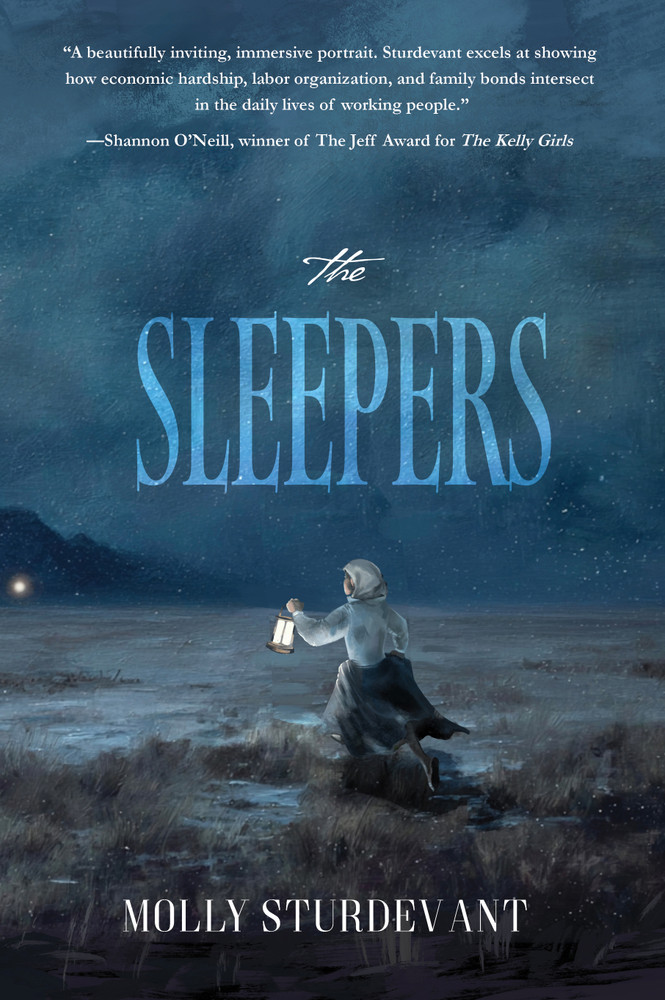
“The Sleepers,” Regal House Publishing, September 2026, 311pp.
Note from the author:
Against so much current advice, the novel is mostly written in a roving third-person limited omniscient voice. I love writing this way. Every character does their own thinking and story-telling (except for my insertions of mini-reflections on winter and/or altitude), and so, it’s a kind of wild ride through the years 1893-1896 in Leadville, Colorado. The book narrates the lives of miners’ families living on East 6th Street, where they were organizing to evolve beyond smaller labor clubs into a Western Federation of Miners local. Meanwhile, silver crashed in 1893, they became the Cloud City Miners Union in 1895, and under intense pressure, called a strike in 1896. I researched this historical progression through original Pinkerton spy reports held in the union archive. As someone who grew up in Colorado and always wondered why all the recreation and mountain towns were so prohibitively expensive, and why Colorado history focuses on about 2 or 3 very rich people, I saw answers unfolding as I did this research, which was also tied to the construction of the Irish Miners’ Memorial in Evergreen Cemetery. Thus, it is historical fiction, but with a deep commitment to labor history and economic justice for real people.
✶
Thursday, June 29, 1893 Harrison Avenue Leadville, Colorado
Frances Honora Byrne scanned the crowd swelling around her. Felt like all fifteen-thousand residents, minus three-thousand men under- ground, were competing for a place on the sidewalk. Smells of cigars and armpits drifted under a sky of blue so bright it hurt. She shaded her eyes with her hand and looked west. No amount of parade-goers could obscure the view of Mount Elbert. From where Frances stood, holding little Eddy Kelleher’s hand, the biggest mountain in the western territories looked one-inch tall. Its fresh, untouched spindrift was white in the summer sun.
Frances held up her fingers as if to measure the beast mountain, then plucked it out of its range and set it in the palm of Eddy’s hand. It wasn’t funny this time. The kid tugged on her sleeve. She squatted low to the ground and let him climb on her shoulders. She staggered up, holding his ankles. Someone stepped on her foot. She tightened her grip on Eddy’s boots, and wanted a third hand just to get tobacco from her pocket.
Overnight, the smelter flumes on the south edge of town had produced a contrail of oiled fog. Every window in the bank’s top story reflected the iridescent stripes. Fran peered between the bass drums collecting in the middle of the street to see who was there, posturing on the bank’s stone staircase. Three men: debt collectors, in their usual jackets and black ties. One of them was William Skewes. He pulled his hat off and scratched his head. He was looking for someone. His beard moved as he surveilled the crowd from left to right. He loosened his tie, same one he always wore. His jacket had deep pockets, and in one of them, Fran knew, he kept a tablet of notices of fiscal delinquency: printed on octavo sheets, black ink, in orders of twenty count.
The drum major raised up a mace and the snares rattled like a slow fuse. The brass section roared past, followed by the fire company and its racks of bells. Eddy kicked and bounced, taking Fran’s hair with him. She swiveled him down to her hip. When the Knights of Labor came into view, the crowds stepped off the sidewalks to march alongside. Fran kept pace until they got to the broad intersection of Fourth and Harrison.
She ducked out on the other side of the street, dropped the kid down in the grass. Behind a scraggly pine, she took her time with a cigarette. Eddy lifted up the lowest branch.
“Is that him?” he said, aiming at Will Skewes square in the chest.
“Don’t point.” Fran tapped her ash and kept her eyes fixed on the toe of her boot. She was an ordinary height, but a very full width. Blending in, mostly. She covered her head with the shawl that had been loose on her back.
“It’s him, coming down from the bank, look—”
“Don’t stare, Eddy.”
“He comes knocking on your door, I’ve seen him.”
“And then he goes away, doesn’t he.”
Her monthly payment had been a small thought until now. She set to work trying to shrink it back down. She’d mind Eddy for another half- hour then return him to his mother, who would be done with the hotel sheets by then. She could then go back down to Harrison Avenue to work through the afternoon. Given the look on Skewes’ face, through the evening. She ran the numbers: fifteen cents per hour, cash not a bank note, at least until eight p.m., with a bonus for equipment repair as long as Peter Doyle was able to get the parts, and she’d have it. She’d be ready for Skewes’ visit by morning.
Little Eddy Kelleher managed to get up in the scraggly pine just high enough to see the crowd edging toward a stage, where hulking slabs of granite were being lowered into position for the hand-drilling contest.
Leadville was a miners’ city, not so much a woman’s city, or at least, no one had ever put two women on a stage to race at their work until the fastest was covered in prize money and fawning fans. Fran dragged the cursing boy the long way home, the way that avoided the bank, the way that had them climbing up the alley between east Sixth and Seventh, sloshing through the deep muhly grass in Starr’s Ditch, scattering gravel at the level crossing on Hazel.
They emerged breathless on the corner of upper east Sixth Street. Fran sent Eddy sulking home. Agnes Kelleher was out front. She waved a diaper in Fran’s direction then pinned it to the line. Another neighbor lugged a tub to the road and emptied it into the dry dirt. Fran walked through the gush up to the last house in the row, to its tiny front porch. There was a small sack under the flowerpot, just like Peter Doyle said there’d be. Its contents clattered. Her own home, a house almost in miniature, was as green and yellow as it ever was, directly across from the Doyles. She went in and saw that Mary Byrne was asleep. She stepped out quietly, before the woman could wake and announce another memory Fran needed to hear before it disappeared again.
Agnes pulled aside the knickers she was pinning and gave Fran a look. Fran waved her off. There was no time to explain. She passed by the Kelleher’s lawn and took a chunk of cake from Agnes’s outstretched hand. The cake had coffee bits in it, and the grind was pleasant as she chewed. But the Kearney’s barn was loud. Someone had given Davy Kearney a harmonica, and his nearly dead dog was busy disapproving.
By the time Fran was halfway back down the hill toward Harrison, a snare and fife corps was eking out a new march. Fran knew the tune, a good tune. If she were a singing type, she’d do it now. If she were an idealogue, or had no payments due, she might even skip work and go hear the political speeches. But there’d be lots of drama there. That, and eye contact. No good.
She chewed the crumb cake and savored the last bite. It would be no good at all, to join a crowd full of feeling, no. There would be placards and emotions. Petitions. Shouts. Gestures of every sort. She had no interest in any of that. She wiped her fingers on her skirt. Better working alone, best to be responsible. Capable and quiet. A pin holding the neighborhood together.
In the reflection of the windows of McCarthy & Moore’s shoe emporium, Fran pretended to admire the display: it was a pair of ladies’ boots with pearl eyelets all the way up the side and rabbit-hide trim at the top. Who in her right mind would give up money for those—she turned to see if anyone had heard her think it. Well, whoever she was, she’d not be getting far at all, not with that wee nubbin heel. Fran preferred the men’s used boots on her two feet, same as every day. She observed her blouse and tucked it in. The old linen was fresh enough, but it was no longer bright. She pulled the waist of her black wool skirt to return the buttons to the back, where they were supposed to stay. Why the garment always shifted around her big middle when walking downhill, she couldn’t explain, but she didn’t care about clothes, or fashion, or getting far. There was nowhere else beyond Leadville that Frances Byrne had ever been. There was nowhere she would go. She would not leave this town, and would absolutely not be escorted out of it in Will Skewes’ wagon, not a hope.
The job-print shop was one door down from McCarthy’s, with bright red pilasters in front and displays of her work in the window. She whapped the door open with one hip and shut it with the other. She would stay put. Stay absolutely put. Work. Whoever works hard, will make it. Isn’t that what they’re always saying? She gave herself the luxury of a long sigh.
Every smell of ink and heavy paper embraced her like a family might. The entire print shop could fit inside the foyer of the Herald’s building. But excellence requires no magnitude, she knew.
The mirror on the wall was a tall oval, and her head was not. She got closer. Her nostrils dotted the center. She tried a smile, as she had seen ladies do. No good. There was nothing looking back from the glass but the round head of her, the hair plain and dark. And the wide waist where her fists now rested were as hospitable to a corset as a feral cat to a herding dog. So be it. Cigarette between her lips, Fran wound up her hair and secured it with a pen. She tied her shopman’s apron on and reviewed her list of orders. Her tally of charges per customer was cal- culated by hand, neatly, to the quarter cent. There could be no surprises now, no changes. Not to math, metal, or prices. If everything held up, by dawn tomorrow, old Will Skewes could sod off for another month.
First thing: fix the Chandler and Price. Fran dumped the ratchet and screw out of the sack Peter Doyle had left for her. The shiny parts clattered across the drafting table. She picked up the screw and inspected it.
The shop was empty of people, full of parade noise. She preferred it this way, empty, though it didn’t seem right that Yost was never there.
She had not told John Yost of her plan to repair the shoddy work his Denver mechanic had done to this machine. It occurred to her now, as she lit a fire in the stove and set an ink jug on the rack, that it might be an easier fix than she’d thought, given what she’d started yesterday.
The next step would just be to synch the flywheel revolutions with the speed of the ink rollers. She thumped them gently. The rubber was well-maintained, but when she lifted the ratchet pawl, it skipped about two beats on the ill-fitting connector the donkey mechanic had put in.
She wiggled the cold metal. He’d used an ordinary bolt, wrong size with soft threads, then gone too far on the other end. The scamp would turn any wingnut all the way to Sunday given the chance. Leave it to a man to touch one part and call it a day. She undid the donkey’s work and started over, following the function of each interrelated piece to the next so the tension was optimal the whole way through. The right amount of loosening. Oiling. Cleaning. She got under the press and raised the cog on the flywheel. The rods and springs she had retooled yesterday gleamed. She reset the pawl and stood up.
As one would with an infant or a prized horse, she pet it, running her hand along the iron surface of the flywheel, then across the clean ink plate. She pushed the heavy wheel away from her and pumped the foot treadle. The machine, nearly the size of herself standing, gave no resistance to the adjustments.
The wheel was whirring, rotating, steady. She stopped it, and got the ink. She poured, and drew color across the plate. The rollers were rich with it, lathering up and crackling the ink’s tiny bubbles in their path. She fit the chase with an old sample, then dropped in a blank sheet and pulled it out once it received the image. Very good.
She started with the simpler, monochrome surgeons’ certificates. Then she cleaned the plate and poured out a magenta ink. At arms’ length, the first hotel menu she produced looked good. An inch from her eyes, it still looked good.
Outside: sun climbing, and a round of applause. Another Sousa march. From somewhere, a tin whistle, setting its small but high melody on top of everything else.
A half-hour into her work, that same noise quit.
Dead quiet, and it had not been since dawn.
Light flickered at the shop windows as two men sprinted down the sidewalk. The telegrapher from the station ran past the shop, clutching a long roll of paper that flapped behind him like a tail.
There was no fire bell, no hospital bell, no music, and in the town’s sudden silence all the warmth and exactitude she’d mustered in the last few hours rushed out.
She turned and listened for the cast-iron bells’ dreaded signal from the mines: the triple clang on repeat meaning men were dead. She heard nothing but her machine’s whirring flywheel and the heavy clack of the iron plates.
The next slam of the plates took two fingers clean off: pointer and middle. When the plates opened, one side pulled skin from the bones. The floor rose and sank under her legs. Something came up her throat when she screamed, her belly turning at the sight: pale nuggets of bone were visible, pink as raw poultry, blood ponds blossoming. She reached for a rag with her other hand to cover it.
It hurt most on the inhale. Her options were few: get to the post-office to ring Doctor Blose and rack up a debt, or scream for a carriage to Saint Vincent’s, then owe the sisters.
The pain flooded into unaffected places: thighs, ears, thoughts. The irrational paths lit up a panic on top of the pain, fecking heavy fucking printing-press machine plates shit. She wrapped her saturated hand in a second layer of cloth and kicked open the door.
On the street corner, a pair of skinny women gave her a look. The deputy’s whistle stopped them all in their tracks. A black cab Fran had never seen was ushered through the signal. Its horses were curried and sleek; sunlight bounced off their flexing hides. The curtains at the pas- senger’s side were buckled shut. A mounted officer followed behind, his duster cocked to the side, revolver in full view. A red drop of blood colored the dirt. Another hit the toe of Fran’s boot. She stepped into the street before the deputy could signal again.
The post office was wedged too full to move. She had seen the post- master Ed Lehane make a telephone call once before, but now it was his wife Hattie at the counter, holding the black cone, reading from a narrow strip of paper. “No whole dollars!” she yelled. “It says, sixty-two and one-eighth cents!”
Stuck in the back of the room, Fran held up her red, wrapped hand. Hattie Lehane saw and swung a rolled-up newspaper at the next cussing man in line, cranked her phone, and asked for 131.
Outside, Fran sunk down to the sidewalk planks. Her round legs were spread out, ankles thick over the top of the boots. Everyone was looking, gawking at her exposed knees, her bloodied rag. Their eyes got big with assumptions of the worst sort.
Fran had to work to breathe both ways, in and out. She tried to get her head above the pain with a new focus: how that phone worked.
How did Hattie Lehane’s voice get in that wire, then travel up the side of the building into one of those tall posts, to Dr. Blose’s ear?
Pain shot through her arm, down her ribs. She looked up. All along Harrison Avenue, each telephone pole had eight horizontal bars at the top—she counted them, which was almost like breathing—and each of these tall posts, she strained to see, had a row of eight green-glass insulators. Exactly eight. However they worked began with a sound, she thought, until she heard nothing at all.
Eyes open, a man in black was crouched down by his portmanteau. It lay open across the boardwalk like a flayed fish. The man hovered over Fran’s hand. She felt good, as if levitating, on a fine vapor. His tools were silver. Silver was good. A little brown bottle lay empty by his tools. Bottles were good. Fran felt no sensation in either arm. She watched him wrap bloodied tools in a cloth and lay them in a bag.
“I can’t pay you now,” she said. Her tongue was big, soft, like cheese. She clucked it back to life. Thoughts belonging to the light of day com- peted with the strange dark gravity of the medicine. “But I will.”
“Intime.” The doctor spoke as if he were being kind, but it was clear he belonged to a class of people who believed time gave instead of taking away. As if money were a matter of faith. Fran laughed out loud at the notion. “Well, I’m working,” she said, “and what’s going on?” She scanned the hovering oglers. Hattie Lehane was among them.
“You can stop talking now,” the doctor said. “I will not stop.”
Hattie and the doctor yoked Fran’s arms around their shoulders.
“I’m fine.” Fran pulled, but they had her tight. They hauled her to a black carriage with high wheels.
“Calm yourself, Frances,” Hattie said. The herd of spectators nosed in for a closer view.
“What!” Fran hollered. “Go’way, eejits!”
“Frances—”
“They’ve nowhere to be? Not a word of this on Sixth. I have until tomorrow I think, Monday at the most.”
“I’ll find Jenny, to help you out, soon as I can.”
Hattie gestured to Blose. He slapped the reins to the dashboard and the carriage jerked forward.
“Hattie!” Fran yelled, but Hattie was gone.
✶✶✶✶
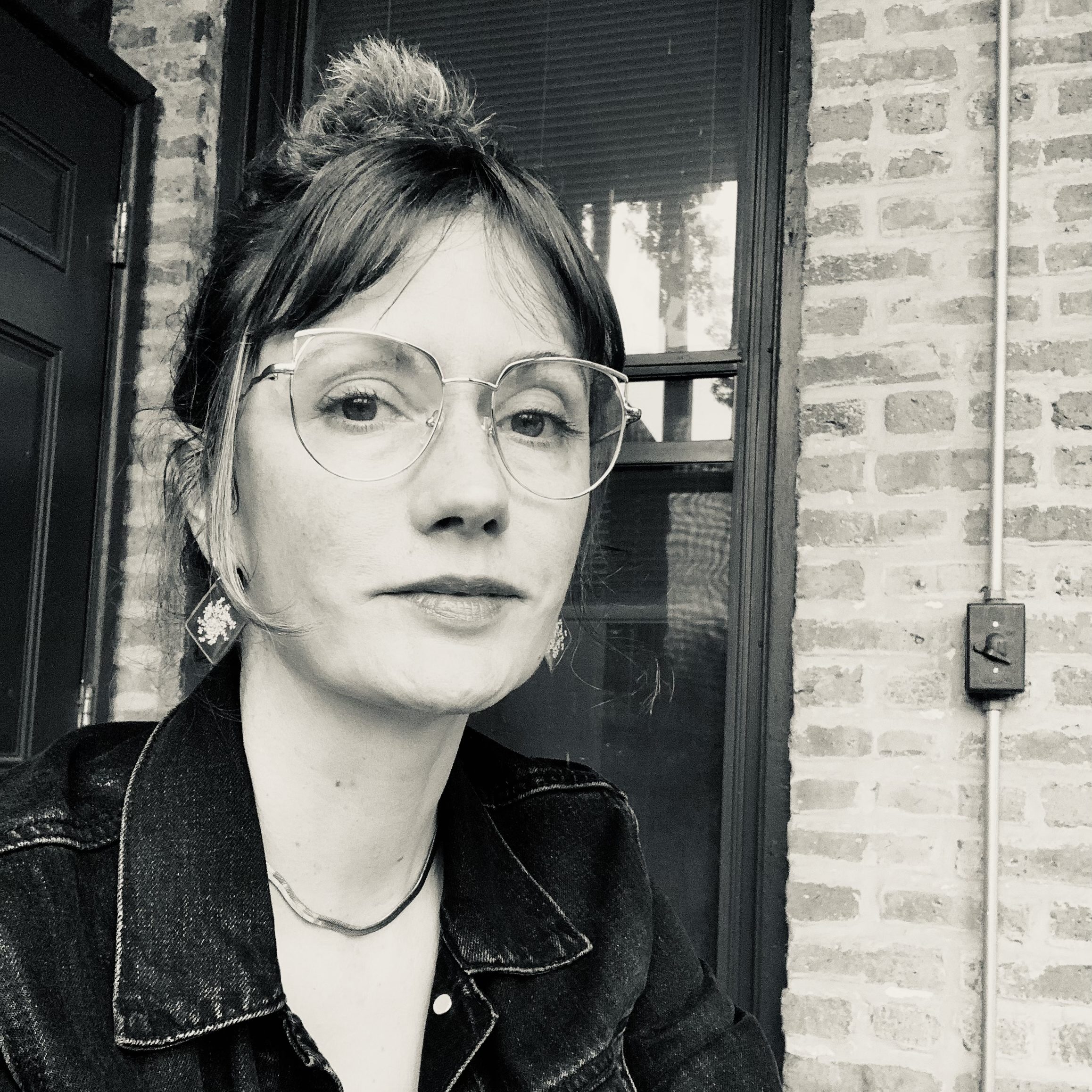
Molly Sturdevant’s writing has appeared in Orion Magazine, After Hours Press, The Dark Mountain Project, Crab Creek Review, Poetry Northwest and numerous other places. Nominated for Best of the Nets and Pushcarts, her work has also been a finalist for the Montana Prize in Fiction and Chicago’s Mary Blinn Prize in Poetry. Her debut novel The Sleepers, brings to life the true story of a 19th century labor strike in Leadville Colorado, researched onsite in Leadville and in the WFM union archives held in the Rare and Distinctive Collections at the University of Colorado, Boulder. She is currently working on a second novel about the Labor Wars in Telluride, CO at the dawn of hydroelectric power, 1898-1915. Her work has been acclaimed for a deep sense of place, insights into the intersection of technology and economics, and a poet’s sensibility for landscape and voice.
✶

