It is in this bed, after all, our bed, that I have most exposed myself, that I have been both sick and happy: secure, protected, and yet in the next moment, utterly, existentially alone. In a real dark night of the soul, Fitzgerald writes, it is always three o’clock in the morning, day after day.
(nonfiction)
Author: Another Chicago Magazine
It all seemed too much to successfully handle, but there was nothing else to do.
(nonfiction)
It isn’t genteel to point out, but spit can be beautiful. It’s an ordinary beauty—the parabola, the clearly practiced skill.
(nonfiction)
You won’t find much radical analysis in contemporary fiction: Trump is stupid, rude, a racist, and a misogynist; his election was a completely unsuspected usurpation of both a deserving candidate and the norms that bound an imperfect but fundamentally good country together.
(review)
“Each inch of the park is designed to trick visitors into thinking they’ve left New York for a Parisian garden, the Catskills, Wonderland, or that they are themselves Henry Hudson discovering Manhattan,” David Andrew Stoler writes of Stephen Wolf’s book on Central Park.
(review)
“Growing Up With Brothers Meant Machines–”
“My Grandmother’s Candy Jar”
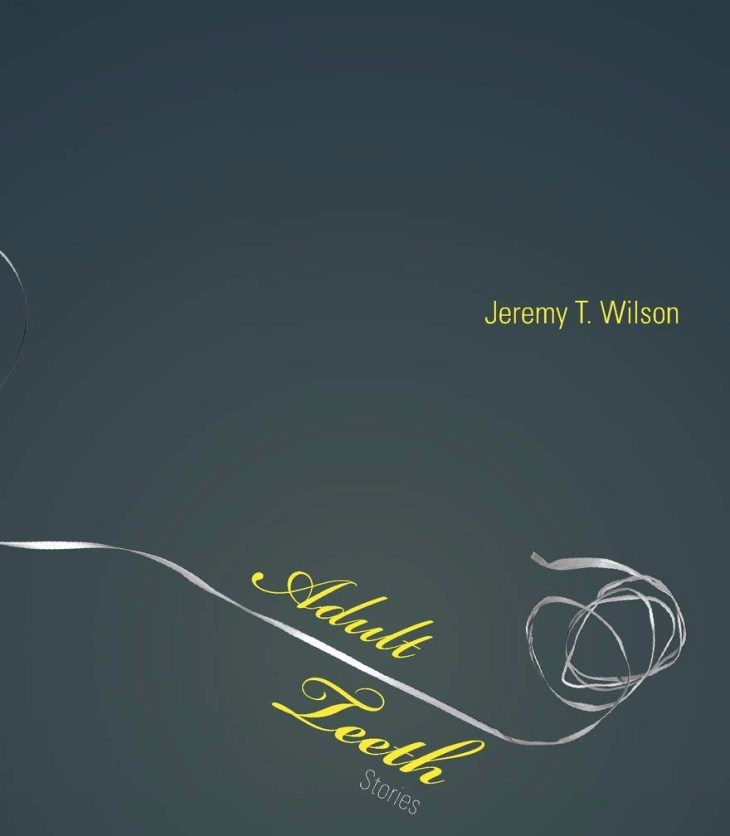
“Jeremy T. Wilson shares Victoria Patterson’s gift for creating empathy for initially unlikable characters whose destructive and compulsive behaviors hurt themselves and those closest to them,” Laura Johanna Waltje writes.
(review)
On 17 July 1936, the day the Spanish Civil War broke out, W. H. Auden arrived, by milk cart, to Hólar. He spent the morning inspecting the wooden carvings in the local church. Their violence shocked him.
When he returned to his hotel for lunch, he found the staff busily preparing for the arrival of a small party of Nazis.
(The Loop)
Religious, you say? What’s religious? And when there are so many shades, so many tones and semi-tones of religious, who really qualifies as merely religious and who, as a nut job?
(fiction)
Addressing one of the US’s true emergencies, five former mayors told Chicago how they had reduced the murder rate in their cities.
(The Loop)
It’s 1957 and I remember it this way . . .
(The Loop)
Whenever I heard “Michael Cohen” it was if it were a name not my own.
(The Loop)
Welcome to ACM issue #56! This is our second online issue, and the second and last issue where we release all the genres at the same time. After this, we will send out individual pieces into the world.
I made no friends in Granada, which seemed natural enough to me. I read though. Oddly enough it was then I became fascinated by the American Civil War.
(fiction)
Hell, he probably looked like Michael, himself, who had taken plenty of girls home from plenty of parties, too – horny, hopeful; no shame for him in that – but had backed off if they said no, and just said goodnight.
(fiction)
It’s always interesting to hear the term “free market” used in The New York Times, as well as other major media outlets. It’s rarely, if ever, done in a negative sense.
Birds on a Wire
There’s an image I saw somewhere online: two or three dozen blackbirds are perched up on powerlines. All are on the highest powerline except for one; on the bottom wire, there’s a lone blackbird smack in the middle. A caption reads, “Who did you notice more?”
Sometimes pain blunts my memory of myself.
For no reason I can remember I happened to glance uphill to my left.
Tell jokes about “minorities” to “minorities” to show you’re “down.”
More and more, in late winter especially, I have the feeling that I am dying—or, to put it more accurately, that the best of my life has happened and my decline has begun. And this is a bitter feeling—wrong, too, I hope.