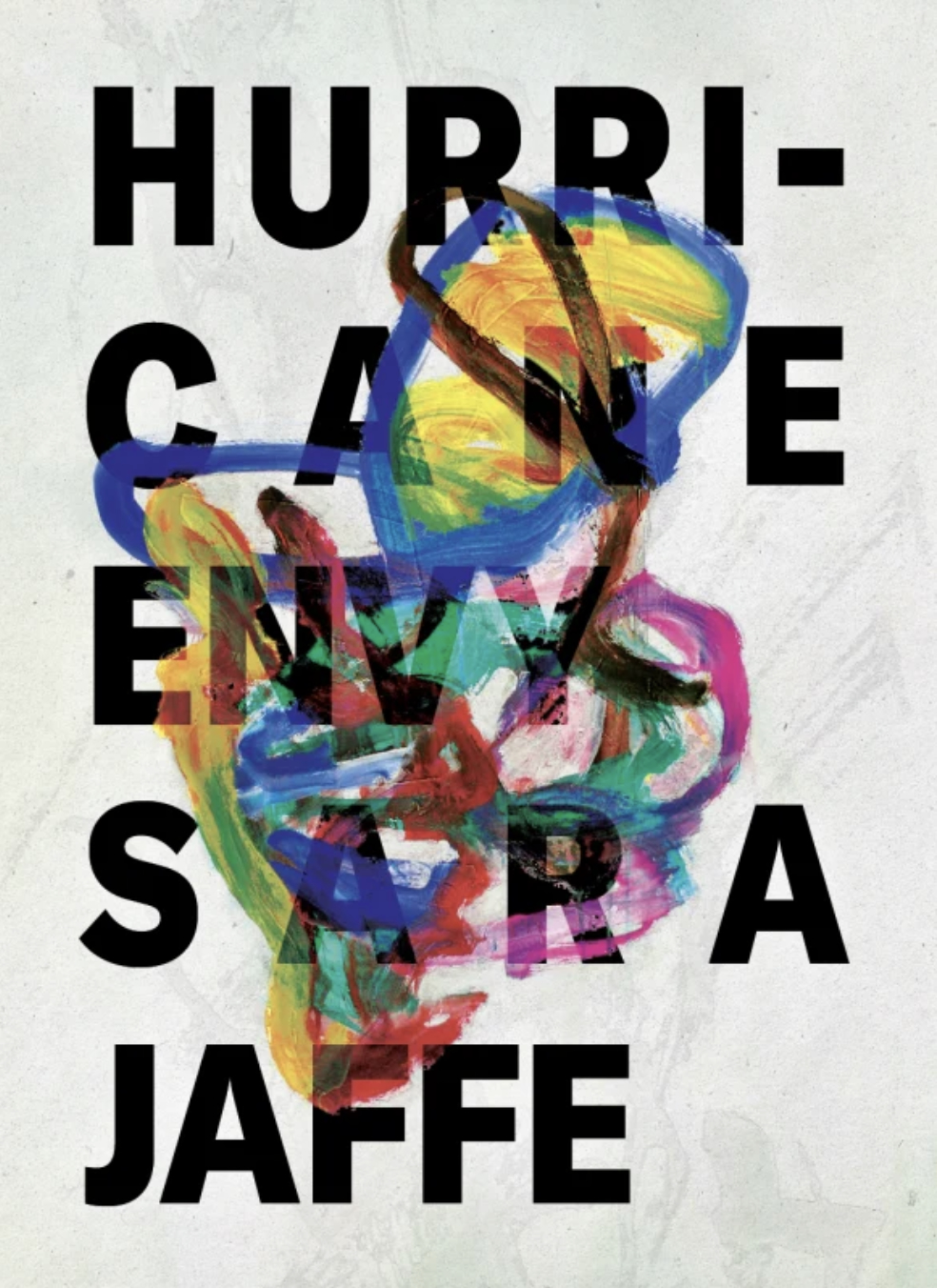
“Hurricane Envy,” Rescue Press, 2025, 188 pp.
If desire drives a story, it’s the sideline struggles and obstacles that keep things interesting. They show us that the biggest barrier to getting what we want is usually ourselves, something Sara Jaffe’s first short-story collection, Hurricane Envy, invites us to ponder.
Jaffe’s characters are dreamers who see the big picture, always searching for more. The author of the novel Dryland (Tin House Press), multiple fellowship recipient, and co-founding editor of the chapbook-publisher New Herring Press, Jaffe is unflinching with her prose and self-aware narrators. There is always something just out of the purview that her characters can’t quite obtain or harness.
The book’s title is derived from the story “Stormchasers,” in which a couple that moved cities constantly compares the two places while trying to establish a routine. They admit to having “hurricane envy” as they realize that a coming storm won’t really impact them, despite their preparations. The couple can acknowledge the “selfishness—the self-centeredness, the poor-me-ness” of hurricane envy, as well as the freedom to choose a new city to live in—and to hate that city because it doesn’t yet feel like home. They live in the balance and privilege of choice, while those actually experiencing loss from a hurricane—the characters mention Haiti in the story—don’t have the same luxury.
As the couple attempts to build something new, Jaffe pinpoints how provisional and imagined connection can feel: “Our real friends were in B__, but in P__ there were people who were, if not like our real friends, then like friends we could imagine having.” The story contains surprising pauses where Jaffe draws back the curtain to reveal the formal device at work. “This is the search for a word in the form of a story,” she writes, later adding, “This is a search for a word for a feeling and the feeling means loss, measured in water rising.” She seems to say, all this came from a search for a way to express, a way to make meaning out of an experience that seems ineffable.
This self-reflection mirrors the couple’s own restless wanting, reinforcing the collection’s broader concern with fervently pursuing desires and discovering inadvertent self-obstruction in the process.
What do we do with hurricane envy exactly? Those feelings we know we shouldn’t have but have nonetheless. Must we admit and denounce them? Other characters in the collection grapple with similar questions and with lives that didn’t turn out as they had planned. Jaffe’s narrators chase things and make mistakes, their desires always transparent—a refreshing part of reading her work.
Music also plays a big role in these lives, as it does for Jaffe, who was the guitarist for the post-punk band Erase Errata and drew inspiration from that experience when co-editing The Art of Touring (Yeti Publishing). In “Ether,” Ada, a bookstore employee, hears a song on the radio during a shift that she can’t stop thinking about, and months later as a DJ, she wants to find it: “The song was a perfect version of something, though the thing it was a version of wasn’t perfect itself. That precarious balance of shamble and structure was what made the song work.”
Many of the narrators—and most of us, really—could be described as a precarious balance of shamble and structure, with our desire to make sense of circumstances that are largely out of our control.
In “Ether,” Ada wants to create the perfect version of herself through the songs she chooses to play: “It wasn’t about whether anyone in the room was paying attention to the specific songs Ada played, if they’d heard or heard of any of the songs before, but about the shell the songs built for her, or the coat, the skin, the way she wore them.”
The collection continues to explore how music can be an identity. In another story, “Earth to You,” Helen wants to learn to play guitar, but when she meets a musician who needs a drummer, she switches to drums, no question. It’s more about being in the band, being a part of it, than it is about playing. She became interested in the guitar after hearing that same musician from the street through their open window, a sound that “pinned her in place: volume, distortion, more shards than song.”
As in that story, Jaffe’s narrators are often women and/or queer, and she quietly reveals the inequalities in the dynamics of traditional roles and expectations. Mothers are expected to be selfless, round-the-clock caregivers, while perfectly balancing everything else, including work. A man with a stroller is applauded, while a woman with a stroller is either ignored or criticized for any imperfection. Jaffe expertly reveals these dynamics in stories like “Today’s Problems,” which features a mom who’s working at a café, pondering how artist-mothers continue their work while trying to raise kids. She becomes distracted by a dad with his daughter and feels “everyone in the café effectively reaches out their hands to high-five him for his selflessness,” while she is battling guilt for taking time for herself.
In “Baby in a Bar,” a new mother brings her baby into a bar, a place that was once somewhere to relax and had a “sense of timelessness.” But a man haunts her; she feels him following her, questioning whether she is really her baby’s mother. She wasn’t the one who gave birth to her and her partner’s baby—but then, neither are men in heterosexual relationships. And how often are they championed, not interrogated, when out on their own with their children? Jaffe uses these two stories in particular to demonstrate how mothers are usually the ones with anxious interior monologues—we may get in our own way, but pressures and expectations come at us from everywhere, all the time.
In Hurricane Envy, Jaffe writes with conviction to uncover what drives and destroys us. Her endings are thoughtfully abrupt, leaving space in the ether for our own continuations. Her stories become sort-of sanctuaries, helping us interrogate how we make meaning in seemingly ordinary circumstances, untidy lives.
✶✶✶✶
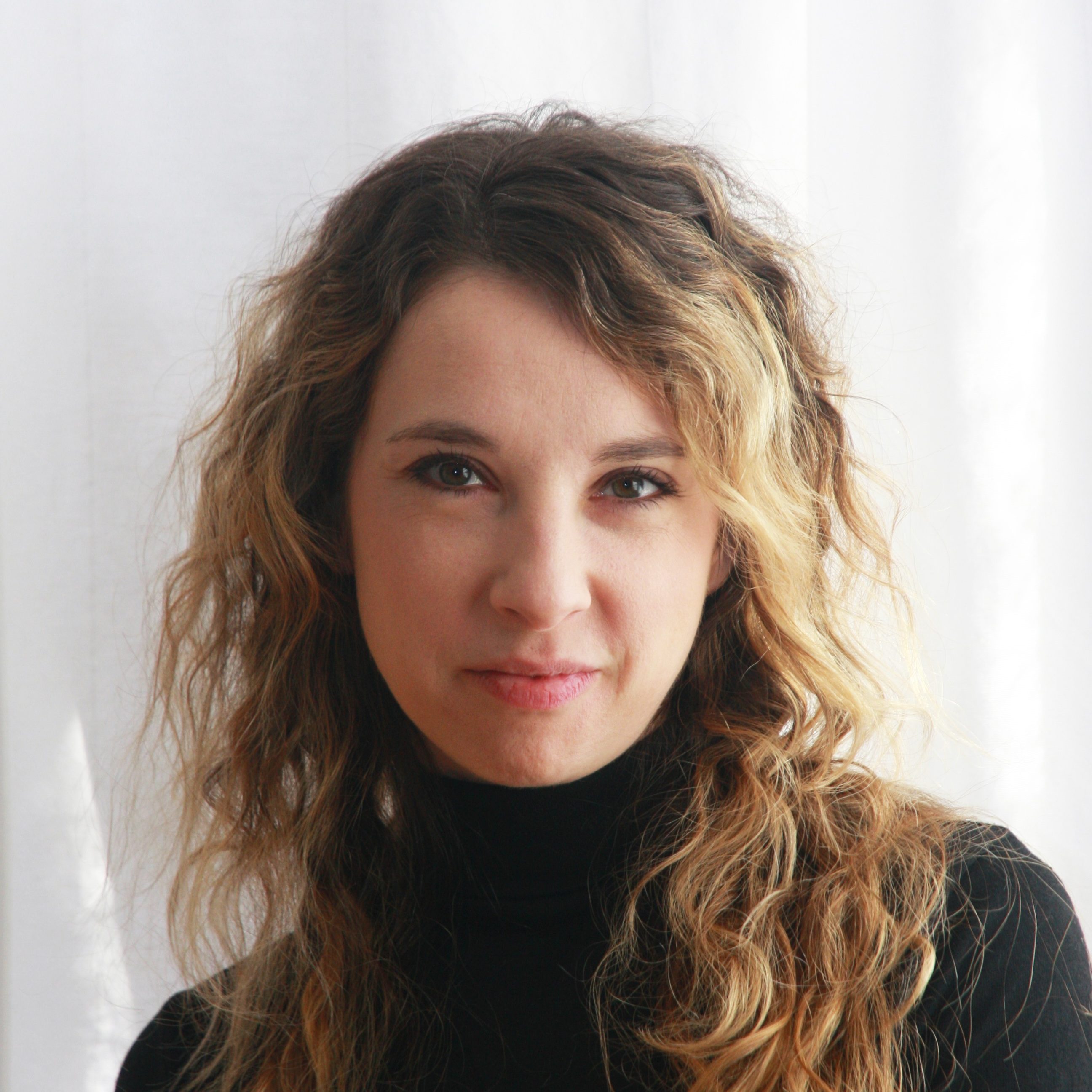
Meredith Boe is a Pushcart Prize–nominated writer and poet. Her short prose collection What City was a winner of Paper Nautilus’s 2018 Debut Series Chapbook Contest, and her creative work and critique have appeared in Sad Girl Diaries, Passengers Journal, Newfound, Chicago Reader, After Hours, and elsewhere. She contributes to The Chicago Review of Books and The Pickup.
✶
Whenever possible, we link book titles to Bookshop, an independent bookselling site. As a Bookshop affiliate, Another Chicago Magazine earns a small percentage from qualifying purchases.
 Another Chicago Magazine