
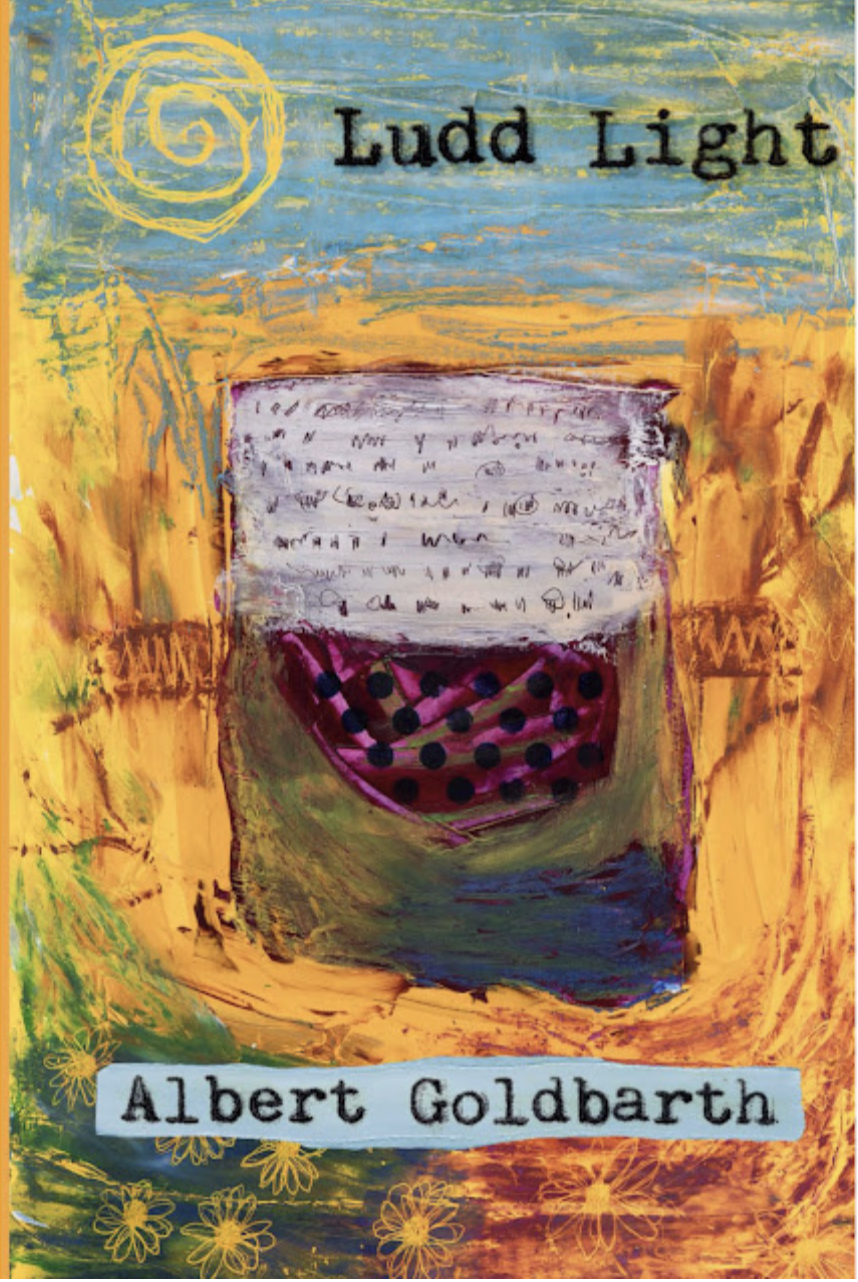
“Ludd Light,” Loose Dog Press, 2025, 70pp.
I once ran a reading series in which I sometimes worked with booking agents who, I learned, had nicknamed me “No cell phone Bob.” When the contracts asked for a cell phone number, I wrote “N.A.” This went on through 2008, until, at the Kansas City airport, I received the poet Mary Jo Bang, whose plane had landed late. She didn’t use an agent then, and as we walked down the concourse, she said she wished she’d gotten my cell phone number in case we missed each other.
“I don’t have a cell phone,” I said, with not a whiff of self-consciousness. Ms. Bang looked up at me, the two of us having just met, and said, “What’s the deal with that?”
I like people who are straightforward without being condescending, sarcastic, or mean-spirited. The late poet Michelle Boisseau, a close friend, had that quality; when my now wife and I ran into her at a restaurant once, we thought it would be exciting to tell her we’d just gotten engaged. “Well,” she said, “it’s about time.”
Mary Jo Bang seemed to say the same to me that day, intuiting my dilatory nature. It’s about time. “Someone in your line of work needs a cell phone,” she said. Okay. I went out and bought an iPhone 3, having no idea it was anything more than a mobile phone.
“Every day we move ahead,” writes Albert Goldbarth in “The Burden of Modernity,” a poem from Ludd Light, “by eating science fiction / and producing archeology.” For most of us over the age of 12, it seems, some beloved artifact of life or some process for managing our days has hurried its way into obsolescence. “The book, the god, the child,” Goldbarth writes, and yes, “gas-lamped shopping arcades in Paris,” as perhaps we’d expect.
“Ludd” in the title refers to the eighteenth-century personage Ned Ludd, who smashed some knitting frames and came to inspire a movement in which followers destroyed looms for replacing traditional weavers. Now, the term “Luddite” labels any lad or lass hostile to new technology. “The poems don’t ask, Luddlike,” Goldbarth writes in his introduction, “to lift a cudgel. But they are filled unashamedly with nostalgia—or call it fondness—for things that are passing out of our lives.”
The poems conjure historical and essential artifacts, from “Before Refrigeration” to “Beckoning DigiSex,” and people, too, such as Darwin walking on mountains above the sea, and the poet’s grandmother, whose life “began in Kitty Hawk / and ended in Sputnik.” The tone includes not a simper of lachrymosity for some mythic, ideal time. “The poems included here,” Goldbarth’s introduction continues, “are meant to elegize.”
Of particular affection for this poet, and notoriously so, is his typewriter—perhaps the IBM Selectric he cites in his essay included in the book, “The Lemmix,” reprinted from 1995, or perhaps the massive manual Underwood seen in his author photo—either of which he uses to produce impeccably typed manuscripts without, as far as this editor has seen, so much as a schmear of Wite-Out fluid or shade of correction tape. He’s good.
Goldbarth is not alone among writers who eschew computers, at least for composing new work, but he is the most notable. As an editor for New Letters magazine and BkMk Press, I received manuscripts by mail fresh off the typewriter platens of the late Paul Zimmer and Donald Hall, among others. Pulitzer Prize winner Philip Levine once panicked in my presence when he briefly misplaced his fountain pen, a Parker 51, which he relied on to compose poems.
The title’s pun, Ludd Light, suits these writers, not because most are necessarily anti-tech or too dense to figure out how to use a word-processing program, but they—including the famously prolific Joyce Carol Oats, who shocked an audience I was part of recently by saying she writes all her works longhand—prefer the slower pace and tactility, perhaps the familiarity, of older forms of composition.
This discussion, as it appears on paper or back-lit screen, would not matter at all were it not for the prosodic skill found in the poems of Ludd Light themselves. A Goldbarth poem can be short, but readers may notice his longer ones, such as “Change,” running a mere page and a half but with long lines and the surprisingly concise opening, “Everything does, and must”—and on we go, as poet David Wojahn has blurbed on the back cover, with his sense of “associative wildness.”
To keep readers steady in “Change,” Goldbarth offers a handy refrain, “I’m old enough,” placed as the final phrase of stanzas one and three, forming open stanzas. The refrains come just close enough together to offer us footholds for stepping stanza to stanza across the rushing flow of images: the neighbor girl, age 5; the Roman poet Ovid; a knife; Geiger counters; and so on, through neighborhoods gentrified and decayed. Through it all, we trust that this poet’s singular vision will lead somewhere meaningful, and it does; the refrain occurs again at the center of the fourth and final stanza:
I’m old enough
to have suffered the bodies of friends—too many—
cancerously altered into otherbodies.
Bringing us to the core of what Wojahn correctly identifies as this poet’s “stance of moral seriousness”; this poem and others track toward concern for human beings, which Goldbarth never forgets, as in his previous book, History (and Pre-): “no stone was a stepping stone,” goes the first line of the poem “Song: Until There Were People.” Until there are people, directly, nothing really matters. In the poem “Child with Flower, 2011,” Goldbarth celebrates a seven-foot-tall, “scraggle-headed” sunflower, which, of course, doesn’t mean anything, he says, “unless a person stands beside it.”
Until I married Lisa, I never would have thought of keeping a saddle on a stand in the living room, but there it is, not because a horse is better than a Toyota, but solely because Lisa has a fondness for her late horse, Chief, and her first horse, Honey, and the saddle logged a lot of miles between them and the outdoors, in nature, at a slow pace. Sometimes I see her standing beside it.
The truth is, I had a fine system for staying connected to my guest writers before an iPhone 3 settled into my shirt pocket. I tracked flight numbers and delays and weather conditions, often asking counter people for news. There were still pay phones at the airport then, which I used to call up my office voicemail; my coworkers always knew where I was and would take a message. As Goldbarth affirms in “Wrist Beep”:
Once there weren’t even cell phones,
hard though it is for a twenty-something
to credit that—but I remember those days,
and we communicated fine.
Yes, we were fine. I did not look forward to being constantly available, on call, but I did, as we all do—I mean almost all—get used to it.
✶✶✶✶
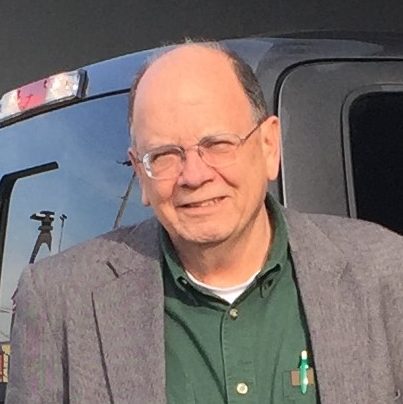
Robert Stewart’s book of personal and critical essays, A Way of Happening, is due from Serving House Books in spring 2026. His latest book of poems, Higher, won Prize Americana. He is a former editor of New Letters magazine.
✶
Whenever possible, we link book titles to Bookshop, an independent bookselling site. As a Bookshop affiliate, Another Chicago Magazine earns a small percentage from qualifying purchases.
 Another Chicago Magazine