
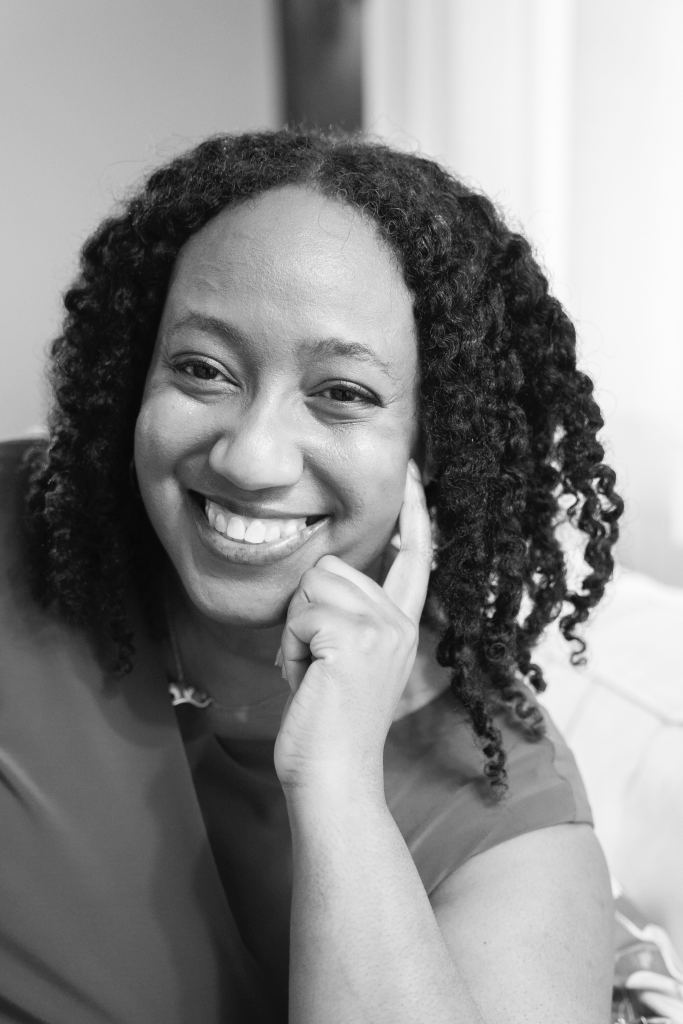
Amina Gautier is a prolific short story writer, with her fiction appearing in AGNI, The Iowa Review, The Kenyon Review, Los Angeles Review, North American Review, Pleiades, TriQuarterly, and elsewhere. Her latest collection, The Best That You Can Do, explores Black and Afro–Puerto Rican diasporic experiences, spanning from the Civil Rights era to the twenty-first century. Families tethered to places they haven’t seen since their youth, places they feel deeply connected to yet have never visited, and places they’d rather—if they had any say in the matter—soon forget.
We spoke about the role nostalgia and summer played in her stories; liminal spaces, hive minds, and the art of the short story, which Gautier has, by this point, down to a near science.
This interview has been edited for length and clarity.
Franchesca Viaud: I feel like nostalgia is almost like its own character. It plays a prominent and significant role in the text collectively as a whole. What power does it have for you? How do you wield it in these stories? Thinking of nostalgia from a craft perspective, what does it bring to a narrative?
Amina Gautier: It adds perspective and psychic distance. There’s a big difference between writing a story from the point of view of a child in the present tense, as they are experiencing moments, versus writing a story that remembers or recaptures a moment from childhood, with the perspective of a mature adult who knows the world isn’t like that anymore and that those moments are worth recapturing.
How do you think about code-switching in your work—or is that even something you consciously consider? While reading this collection, I found so much that resonated deeply even though I didn’t grow up in these particular communities, these particular places; there’s this undeniable familiarity. So I guess my real question isn’t whether code-switching shows up here—because I don’t think it does—but rather: How do you resist the impulse to cater to a different kind of reader, a, shall we say, whiter one? Or is that something that never even crossed your mind?
I think that the beauty of Blackness and Black people is that we code-switch all the time. We just know how to talk depending on where we are and to whom we’re speaking, so I don’t think about it too much when I’m writing, but I do think about who’s going to be on the inside of the stories and who’s going to be on the outside. And I think about that in relation to the audience—like the people reading—but also to the characters as well. There are characters who struggle to acquire a language that some members of their family speak and others don’t, and it leaves them excluded in certain ways. Like in “Buen Provecho,” the two siblings want to learn Spanish, but to do so is to inflict trauma onto their mother, right? So there are reasons to sometimes stay on the margins.
But also, as a writer, thinking about what language you are going to use and when is something that is always on my mind. Hopefully it’s always on other writers’ minds as well—that dialogue and language are a tool. So even if we’re not moving from a standard form of a language to a dialect, we’re still always changing the way we speak. We speak one way to our family members; we speak a different way to our bosses, our teachers; we speak a different way when we want to acquire something, when we want somebody to do something for us; we speak a different way when we want to get away from someone. So that’s something that I talk about in workshop with my students: What do we want the language to accomplish? And what kind of diction or syntax or sentence structure do we need to use to make that happen? So I think those are two things that are happening simultaneously: a sort of cultural awareness and code-switching, and then also language as action—how to use language to get the thing the character wants.
I think that’s interesting because, I guess I never really thought about code-switching as a positive or something that could be inherently positive. I’ve always thought of it as something borne out of necessity—a kind of do-or-die, adapt-to-the-circumstances type of situation—where it’s borne out of a survival instinct. But I’m intrigued by this beauty of code-switching, as you called it. It’s a half-formed thought here, but what does that mean to you? What role does it serve? How can it help or hurt? Or, more specifically, help?
I mean I think that it’s not something that everyone is going to come to a consensus on, right? Because it can be traumatic, it can be beautiful, it can be comforting. And it depends, I think, also, on which version of language people are using first. For me, I think of it as beautiful. I think of it as kind of like wearing a uniform all day at school. You come home, you put your home clothes on, your play clothes. You relax. So I guess that’s one of the reasons that I think of it that way. But historically it’s meant different things to different people. So if we’re thinking about it like somebody who’s right-handed being forced to be left-handed then there’s violence and trauma attached to it. You must do this in order to fit in, in order to be accepted. But I think we can also think about it as being biculturally lingual—if that’s a phrase—this sort of flexibility.
I feel like the world strives every day to flatten us, and is ever resistant to the idea that there is a variety and nuance within Blackness. And yet, stories like the ones in this collection—about diaspora, about being between—speak to this slipperiness of identity, and again, feel deeply familiar, even if the specific details differ. I think that’s true for so many Black and brown Americans, no matter where their people hail from. Your characters often inhabit those liminal spaces—emotionally, geographically, culturally. How do you navigate that liminality on the sentence level? What are the challenges in writing characters who are always between, who never quite fit, who are always both and neither?
OK, this sounds like a cop-out, but I guess I don’t think of it as a challenge because that’s just my life. I’ve always felt like I’m between spaces. I’m not a child of divorce, but I grew up in two households at the same time. I lived in one part of Brooklyn—in Brownsville—Monday through Friday with one set of relatives, and I lived in another part of Brooklyn—in East New York—Friday through Sunday with another set of relatives. And I just went back and forth up until the time I was in high school, when I went to boarding school, which is another sort of in-between way of living.
You’re in New England for the school term, and then at home in the summers, you’re back in Brooklyn. And when we go to college we’re in that in-between space again. There’s just always this back and forth. Even right now I live in two cities: I live in Miami, and I live in Chicago. To me it just kind of feels normal. So, I wouldn’t say it’s a challenge to navigate it, but one of the things I’m always interested in when navigating those spaces is the assumptions being made on both sides—that Blackness can be monolithic.
It’s not just non-Black characters who are making those assumptions in my stories. In the story “We Ask Why,” the mother is basically saying that’s why her relationship with her husband didn’t work, because she just felt like all Black people were the same. But a Black man from an island has a different way of looking at the world than a Black woman from inner-city New York. She says, “I thought he was Black,” and he is, but just not Black like me. So sometimes the characters are flattening each other as well, and I think that is more of a challenge to play with. There’s colorism within our own group, and that’s worth studying and writing about as well. We don’t need a white character or a white gaze to be interested in our relationships with each other.
Blackness and Latinidad are often framed in opposition in American culture. Your stories refuse that binary, that Us vs. Them mentality-trap. How conscious are you of writing into and against those assumptions?
It’s something that’s always on my mind. I’m Gen X—I’m forty-eight, so I am a kid from the late ’70s, early ’80s, where African American and Latino cultures were fused in New York. So think about the birth of hip-hop and breakdance. You have African Americans, you have West Indians, and you have Latinos. And people didn’t know who was who. People were like, “Is this guy Latino or Puerto Rican or light-skinned Black? We don’t know. Is this girl Black? Is she Puerto Rican? We don’t know.” There was just this mixing of people there. So then leaving New York and living in other parts of the country, where things were more separate, was eye-opening. As a kid in New York I never had to tell people that I was African American and Latino. They just looked at me and just knew. And then I leave New York and people are looking at my last name and everyone’s like, “Oh, you must be French,” and, “You must be Haitian,” and I’m like, That’d be really cool, but I’m not, sorry. And people having this idea about which one are you and why are these two things together? And I’m like, That’s just how it was.
So it felt to me like summer in these stories becomes its own kind of character—those sticky, sprawling days rife with possibility and child-like wonder. You are able to capture that full and complex feeling so acutely in these pages. Why do we linger there so often? What does summer allow you to explore narratively? What is it about the season that lends itself so well to the themes of diaspora and fractured families?
I just artistically, emotionally, and psychologically associate summer with freedom, with freedom from limitations. And it’s because as a kid, summer is the one time you’re not in school. And if you were poor, people were not sending you away to summer camp, so it’s the time when you can actually do whatever you want. Vacation means you get to sleep in late or you get to play with your friends all day. And I loved summer break, and as a kid, I was like, I need to find an adult occupation that will allow me to have summer vacation every year. Hence, professor, right?
And this idea that without summer vacation, without that break, that you’re just doing the same thing over and over and over again. And obviously any break, it could be winter break, could be spring break—any type of break from the norm, I think—is helpful for people to think about their creative possibilities. But I do think artistically about what you can do with different seasons in your stories: how characters will react to space and time and weather. So a lot of the stories with children as narrators or protagonists are set in the summer season so that they can also be free of the confines of their apartments, that they can be outside, which would not be possible during inclement weather.
I feel like people who don’t experience seasons will never fully understand or grasp the joy that is a summer in the Northeast. When you spend eight—no, truly nine—months out of the year in the coldness, misery, and drab, those three months we really ball out. And it’s a beautiful thing year after year, truly.
And it’s also a moment artistically in the collection for anticipation. You have characters who are looking forward to their summer break, expecting to do certain things, and then a parent comes in and says, “Nope, you’re not going to Coney Island,” “You’re not going to Puerto Rico for the summer.” There are stories in there like “The Tide Returns” and “We Ask Why” where children’s summers are sort of co-opted or appropriated by adults. Especially in New York and Brooklyn during the ’80s—at least in my neighborhoods. I had a lot of friends who had parents or relatives from the Caribbean, and so instead of being sent to summer camp or something like that, they would be sent to stay with their relatives on various islands so their parents could still work.
The quote that really stood out to me, that I think very accurately embodies the text as a whole, is: “There is an inheritance, another entire language inside their heads waiting to be awakened, a language lying dead upon their tongues that you cannot call to life. This is what you want for them—to be all the pieces of themselves.” One thing that really struck me is how so many of the characters in this collection are striving—trying to regain something that’s been lost, whether it’s a relative, a language, a culture. An ongoing effort to stitch all these parts of themselves into something whole, with varying degrees of success. The collection as a whole feels deeply rooted in the experience of cultural loss—of not fully knowing the place or the language of your lineage. How personal is that theme for you?
I mean, it’s personal for me because I have—well, my grandfather had six kids: the first three with my grandmother, who are African American and Puerto Rican, and then another three with his second wife, my abuela—I call my Puerto Rican grandmother abuela. We didn’t grow up in my household in Brooklyn speaking Spanish because my mother and my two uncles did not, but my grandfather’s other siblings were in New York and in Connecticut, and they spoke Spanish. So you go hang out with them on the weekends and pick up little bits, but you don’t realize in your own home that you’re missing something until you see the rest of your family using it. It’s personal in that way, but as an artist, it’s bigger than that. This is what’s happening on the surface for these characters. But as Black people—whether we’re Black in the US or in other parts of the diaspora—that cultural loss has happened to all of us. We may not have the tools or the resources to dig back enough generations to find out. Well, I guess now people are using 23andMe but I’m not sending my DNA to…
No, literally no, never.
So we can sort of say, OK, well, I’ve got relatives from these islands, etc., or relatives that came from the South, but we all suffer from cultural loss. We don’t have the tools to excavate, to find out who we were or what we were before we crossed the Middle Passage. If we were Wolof, or if we were Ghanaian, if we were Kenyan, if we were Ethiopian, then what would those languages be? So I was just thinking about characters who had something a little closer to the surface, who had that opportunity to do that cultural and linguistic excavating and recouping, and reasons why some of them would want to, while others would choose not to. Because as a real person, not a character, you would think it’s a no-brainer! If you have access to do this and so many other people don’t, go for it. But it’s not that easy.
And also, a lot of—well, I don’t like to use generalizations, but—a lot of times when we talk about language in the US, language is typically portrayed as something that you learn through school. Where language—whether a secondary or tertiary one—is treated as something discrete, I want to explore language as something that is part of a family, something attached to people. Therefore, the decision to acquire it or not acquire it is not just a matter of study. If there are people in your family who feel that they have been wounded by that language, how would it feel for them to hear you speaking it? That goes beyond just taking it in class, where we sort of learn that language is something for tourism, not something for family. So that’s where the inheritance part comes from, if that makes sense.
Something I noticed is there’s this kind of hive-mind energy in some of the stories, where the voice speaks for a group rather than just one person, and it felt really effective—like a chorus of memory or history. It gave the narration this eerie, almost trance-like feel, like we’re inside the shared consciousness of a family or a people. I’m curious how intentional that was for you. What does the collective “we” allow you to access or say that a single narrator maybe can’t? What draws you to that kind of voice?
I love non-traditional points of view. I love second-person, and I love first-person plural, and once I knew that this was going to be a collection of very short fiction—I mean, not every piece is technically flash, but there are no stories more than 2,500 words in this collection, so very short fiction—once I knew that all the stories were going to be brief, I felt that I had the freedom to experiment and innovate with point of view. First-person plural might not work in a twenty- or thirty-page story, because the “we” could become tedious and annoying.
Also, when I think about childhood—of course, I don’t want to speak for other people—I think about childhood before puberty as having the potential to be an ungendered or non-gendered or non-binary space or queer space, where, until parents or external people start imposing their gendered expectations on children, there is very little difference between boys and girls. In this collection, the first-person plural is frequently used with kids, especially with siblings, so you don’t really know if they are a brother and a sister. You don’t necessarily know which one is telling the story because what’s more important to them is that they’re just siblings and not which one is the boy and which one is the girl. So I wanted to play with that.
I just remember being a kid, there’s a certain age where you just put everybody in the tub, you know? No boy or girl, just take your bath. My family didn’t care if I played with “boy toys” or “girl toys” or whatever. I had Star Wars, I had Barbie. That stuff came from other people, from outside, saying, “Put her in pink,” and blah blah blah blah blah. Until that, you’re just a kid. I ran around with my male cousins and my female cousins; we played dolls, lit firecrackers, jumped on top of everything, wrestled, and fought—it was just being a kid. So the first-person plural is to queer the idea of childhood before adolescence.
I’ll admit, I’m someone who almost exclusively writes short stories, and yet I don’t necessarily gravitate toward reading collections—almost never do. So, as someone so prolific in the form, I’m curious: What is it about the short story that keeps calling to you? Especially in an industry that tells writers, time and again, there’s no space or appetite for it. What does the form offer you that the novel doesn’t? Why do you keep coming back to it? How did the process of writing or editing this collection differ from your previous books?
Well, I love short stories. I’m addicted to the epiphany. You get it from short fiction. I don’t have anything against the n-word—which for me is “novel,” not the other n-word. I think that my chance of getting disappointed is higher when I read novels. There are just so many of them that start off strong and then hit the sixty percent mark and just trail off, and I’m like, where’s my epiphany? Where’s my moment? It’s not here, and I just gave you three days of my life and I kind of want it back. With short fiction, because there is less of an appetite for it, you have to work harder to get it published. As long as I’m looking for it in the right spaces and the right journals, I feel that my chances of reading something good are much higher because of the competitiveness involved with getting short fiction published. Like how when people exercise and get endorphins: when I read or write short fiction and get that epiphany, that’s my version—an artist’s version—of endorphins. I just remember being assigned short fiction as a teenager or adolescent and some of the stories I read then I still love to this day.
I think what I like about short fiction—and I guess it can happen in novels as well—but the short stories I like are about observation and about characters noticing things or failing to noticing things, like Toni Cade Bambara’s “Gorilla, My Love” or Katherine Mansfield’s “Bliss” or Baldwin’s “Sonny’s Blues” or Jamaica Kincaid’s “Girl.” They’re all about moments where people are trying to get someone else’s attention and failing to do so or people not noticing what’s right in front of them. You have five, ten, twelve pages to look at something as closely as possible, to not dismiss it, to not skip over it. You have an opportunity to be still and pay attention, which is what I want to do. That’s what I love and that’s what I want to do.
But, like, why—how, why did I become attracted to it? That’s my reason for why I keep doing it, besides the fact that it gets me high or whatever. I think that African American literature specifically needs a Black woman who’s prolific in the short story. Because other than me, there isn’t an African American woman who’s published more than 100 stories. Historically, we think of Zora Neale Hurston, Dorothy West, when we think of black women writing numerous short stories. Whereas when we think of short fiction written by African American men, there’s so many people. There’s Percival Everett, there’s John Edgar Wideman, there’s James Alan McPherson, there’s Charles Chesnutt, Paul Laurence Dunbar. Historically, there are numerous African American men who are prolific in the short story but not too many—or two or three—African American women where we can say this person published over thirty stories or this person published over fifty. I think the field or the canon needs me.
I’m curious, as someone who’s so prolific in the genre, what makes the perfect short story? What is it about the art or the craft that you have to pay close attention to that maybe you wouldn’t think about if you’d been exclusively a novel writer? How do you approach it differently?
I’ve been doing some n-word hate, but there are obviously a lot of beautiful, beautiful novels, and I do like them. But I think right now the other thing that I feel works well—that the short story can do, and maybe poetry as well, I don’t want to leave the poets out of this—is that it can just capture a moment more quickly, and you can keep pace with the time. Especially now that things are moving so much faster, novels feel so definite or definitive to me. You want me to read X-hundred pages and then really believe that by the end, this is really where these characters are and that they’re going to stay there? And I feel like when I read short stories, I’m just kind of slicing into a moment in somebody’s life. Because of these circumstances, this is who they become in this moment, but if I check in on them two years later, they may have evolved and they may be different people. I just find it hard to believe what the novels want me to believe, because I don’t think people are like that anymore. People are like, “Now I’m a vegetarian,” and two years later, “Now I’m eating lamb.” People have moments in their life that don’t seem to last very long.
That’s fair. It’s almost like the long-form strips life of its possibility. Or strips people of growth, of expansion, or, inversely, the possibility of it all. I’ve never thought of it in that way, but I like it.
I just don’t buy the idea of such permanency. I don’t believe that premise of definitiveness, although I do believe that premise was previously true. I just don’t believe that it’s true now.
Oh, interesting. You think that we, as a people, have changed so inherently or innately in that way that we can only live in the transience; we can only live in the in-between or the intermediate?
I mean, I think that social forces, technology, and the way we as people are constantly aware of being on display—we’re frequently self-editing, changing what we’re going to say to get likes, approval, and this and that. We’re constantly reinventing ourselves in a way that I just don’t think we were previously doing as frequently. Maybe we were doing it every twenty, thirty years, and now we’re doing it every six months. I don’t see how the novel can keep up with that, you know?
✶✶✶✶
Amina Gautier is the author of four award-winning short story collections, At-Risk, Now We Will Be Happy, The Loss of All Lost Things, and The Best That You Can Do. Her most recent collection The Best That You Can Do (Soft Skull/Catapult Press) was awarded the Midwest MLA Book Award, an International Latino Book Award, a Silver IPPY Award, a Florida Book Award in Fiction Silver Medal, a Chicago Writers Association Book of the Year Award Honorable Mention (Runner-Up); and was Longlisted for The Joyce Carol Oates Prize and The Story Prize. For her body of work, she has received The Chicago Public Library Foundation’s 21st Century Award, the PEN/MALAMUD Award for Excellence in the Short Story, and the Blackwell Prize.
✶
Franchesca Viaud holds a BA in English Literature from Boston University and an MFA from UMass Amherst. She is the managing editor for Another Chicago Magazine, the assistant editor for The Massachusetts Review, and a content editor for The Adroit Journal. Originally from Boston, she manages a bookstore in Dorchester’s Little Saigon.
✶
Whenever possible, we link book titles to Bookshop, an independent bookselling site. As a Bookshop affiliate, Another Chicago Magazine earns a small percentage from qualifying purchases.
 Another Chicago Magazine