
TRANSLATOR’S NOTE
Chantal Maillard was first published in Spanish in 1988; since then she has published around fifty books, between poetry collections, essays, and diaries. The excerpt that follows is from The Complexity of Compassion (Galaxia Gutenberg, 2019), which she classifies as a book of fragments and thoughts, essay and drama, centered on the topic of compassion, particularly as it is reflected by the myth of Medea. The last of the three sections of the book takes the form of a three-act play.
✶
ACT TWO
Medea
The Woman
Us
DAY ONE
The sound of waves. Light. Rhythmic. Far off, the silhouette of a woman. She walks unsteadily on the rocky ground. Occasionally she bends down, picks up a stone, stands, and lets it fall.
MEDEA: And then there’s that woman. I’d say she’s old, judging by the way she walks hunched over, were it not for her clear voice, tormented but clear. She’s spent weeks—or years—trying to reach me. She doesn’t sit near the boat. She doesn’t speak to the emptiness. She waits. Sometimes she stares at me, as if she knows me well, and says, “I have killed my children.” She’s disturbing. I don’t know if she thinks she’ll find in me some complicity for her misfortune, which alleviates the pain of existence for some, or if she’s sought me out for forgiveness. Making comparisons is a comfort to those who want to diminish the significance of their deeds. “I have killed my children, Medea!” she says repeatedly. I don’t play such games. Mankind suffers so many misfortunes and has such capacity not to face them head-on, such ignorance and pride, such greed, such cowardice. I’m too familiar with their ills. I have no pity for them. But suddenly the wind begins to blow from the west: the scent of tall grass, of buds warming in the first rays of the sun, that scent no voyage has ever erased from my memory…
I didn’t care to hide the disdain I feel for those who are unable to take responsibility for their actions, so I replied. “What do you know of killing a child!” I shouted. And in my voice, I heard the tremor of the hereafter, which terrifies anyone who approaches me.
The woman went away, hanging her head. Ever since, I see her going back and forth over that rocky ground like a condemned soul. She walks in circles, making a pile of stones and pebbles. Sometimes I hear her sing a tune, always breaking off in the same place.
The woman has stopped moving. She tilts her head. She has a stone in each hand. She drops them. She approaches. She stops alongside the boat. She doesn’t say a word.
MEDEA: What do you know of killing a child!
The woman remains silent. Medea stares at the gulls’ footprints in the sand. Then at that gaunt, trembling body.
MEDEA: Do you know what it’s like to kill what you love? Do you?
THE WOMAN (quietly, sorrowfully): I know of bile that embitters awakening, of rust that corrodes the trachea, of ice that freezes the bowels.
The shadow of the cliff shrinks quickly. The light becomes more intense. Medea notices the woman’s wet clothes, her skeletal hands, the timidity with which she leans against the boat.
MEDEA: Did you use violence?
THE WOMAN: By omission.
MEDEA: What weapon did you use, what potion?
THE WOMAN: Absence.
MEDEA: Were you exiled?
THE WOMAN: I exiled myself… The walls were so high. High, so very high. I couldn’t breathe. The children were playing outside. Or they were sleeping. I’m not sure… White pegs for the white laundry, blue pegs for the blue… The house sounded empty. The walls began to grow…
MEDEA: From what I can see it’s your soul that’s been pierced, your body that’s worn out.
THE WOMAN (in a whisper): Enough! It hurts too much…
MEDEA: What hurts?
THE WOMAN: Remembering.
MEDEA: Then why have you come?
THE WOMAN: I want to know you.
MEDEA: You want to know what became of me. You want… to understand me? You think all crimes have their motive. The reason for the offence makes forgiveness possible, is that it? Yet myths are so clear: the poison, the rope, the sword… action and its consequences. Cause and effect, and punishment, of course. All crimes are offences and once we pay the price, we’re redeemed. That’s what the Greeks thought. That’s what your people think. They say penance exonerates us, reestablishing order among the righteous in the herd. Is that what you’ve come in search of, exoneration? Someone more despicable than you, you thought. Someone whose guilt is unquestionable. Someone capable of the most heinous crime. Someone to compare yourself to. Comparison employs a simple rule of logic. Did you think that would save you from yourself? Too easy, don’t you think? Too simple. Consider this: there was no redemption for me. And you know full well that the worst sentence is the one that remains unknown, unrecorded, unpublished.
The woman bows her head. The waves form foamy little whirlpools on the lichen at her feet.
MEDEA (sarcastically): Or perhaps you’ve come to forgive me?
With a slight movement of her finger, Medea makes the woman lift her head. She stares deep into her eyes. Such obscurity, such loss… She almost takes pity on her, vacillating for an instant, but then she straightens up.
MEDEA (livid): I need no forgiveness. Your pity means less in my world than the slime of some mollusk floating in seafoam.
DAY TWO
MEDEA: What are you come in search of?
THE WOMAN: Forgiveness.
MEDEA: Who blames you?
The woman has followed her to the entrance of a cave in the cliff. She has slumped against the wall and slides to the ground. She doesn’t dare enter, and she does well not to. To enter would be to trace in reverse the path of the lava that throws itself into the sea desperately seeking moisture, like anything that burns. In order to enter, she knows she must find a way to burn below the ice.
MEDEA (impatiently): The guilty are all enslaved. The guilty are held accountable by an authority that establishes norms. Who is your dictator, the one who dictates norms and holds you accountable? Who blames you and oppresses you?
THE WOMAN: They. He… All of them. I don’t know.
Perhaps it’s the darkness in the cave. Someone whispers into the hollow of a tree. The new believers speaking into the ear of an emissary. Every cave is an open ear and sometimes, for a select few, it is a whispering mouth. The woman whispers, the passage guiding her unsettling voice to Medea.
THE WOMAN: So many things went wrong. Bad decisions channeling water to the swamplands. How to go back? To find the light, that light that shimmered on the seas of yesteryear? How to undo mistakes, oversights, mistaken beliefs? If only one word or one gesture could return things to rights. So the pain of others wouldn’t hurt us so deeply, in this solitude become heavy with death.
This morning marked another year. I set a candle before his image—a single candle, as always. His eyes so sad, so empty. So full of fear, of nothingness. Such profound, unreachable nothingness. He carried death inside him and I dragged it out of him. How could I not realize, when I carried my own, galloping death within me, a death I was also deaf to? I should have kept it company, riding it down the mountain to the abyss, but they stopped me. And he took my place, paying the price for my life—this life I have not wanted ever since. The enormous claw in my chest squeezing ever more tightly. See how he holds me more closely now than he ever did in life. That is his power. This is my wound.
Since then I’ve been bicephalous, my head split in two, like Parmenides described the lost, unable to tell whether I’ve done something or stopped doing it, so I try to do it again, just in case, or don’t, just in case, absorbed by the ideas spinning in my head, trying to get them to make sense, put them in rational order, over and over again, this way and that, until they lose their essence, their fragrance, all traces of their origin. It’s the same with faces that blur and fade, no matter how much I want to remember them. Bicephalous, my mind, trying to smell old scents when it’s far too late.
My neck and its vertebrae no longer support the cavity of my mind. I dodge projectiles. Day and night. They come from all directions. Sometimes from inside me. They hum and explode with deafening sounds or hiss like frightened cats. That’s how I perceive them. They say that when you perceive you vibrate on the same wavelength as another being. They say that birds have higher vibrations than we do. But what do I know of that.
No matter how I try I can’t vibrate as quickly—or slowly?—as you dead do.
MEDEA (talking to herself): The body and tears. Yes. Outside, fog, everywhere. No dawns. No world other than aching bones, water overflowing within. And the hazy clarity that makes one thing indistinguishable from the next. Yes, I know the sensation well.
Like a dam holding back the sea, the moment the routines that sustain you are interrupted, anxiety arrives to drink from your tracks. Bringing back old impressions, reformulating and rebuilding them, you find your feet in the slime, in its fertile, dark consistency. Body wounded by shrapnel yet at war with itself, fleeing in terror, running from the source of the pain within. Or freezing to contemplate the wound, trembling, reviewing the causes, the order of events, in futility.
Deep, deep down in the conscience a dream links to another dream in the same way one grief invokes another, occasionally renewing itself, strengthening the knots that prevent energy from flowing.
The cup that is not drained in wakefulness must be consumed below, in the world of sleep, or beyond.
Medea’s voice has not reached The Woman, who, not hearing her, continues to speak.
THE WOMAN: I didn’t see it. I imagined it. Every time I see it in my mind’s eye, I’m overcome with vertigo, the same pressure in my chest, continuing down to my stomach, and then panic, panic about that inevitable, endless moment. Such panic. Taking over my body each time I speak of it, each time I think of it, each time that image-thought appears and restarts the sequence. Over and over again… We should never speak of it. Some things should remain unspoken.
MEDEA (addressing us): She’s right about that. When things are spoken it creates images. And images feed the mind. If you feed it too many it becomes fat, devouring images, converting and perverting them—that’s its hobby—combining them a thousand different ways to create stories. That insist on being believed. Never believe them! Rather, counter them. The truth of one story versus the truth of another. Stories are held together by their coherence. Not truth: coherence. The solid framework of logical relationships between the elements of a story τò εἰχós: verisimilitude, as they said in Athens.
Truth is recognition. Truth is duplicity. Truth and falsehood are two sides of the same fold, the convex and the concave, the light and the dark. Neither truth nor falsehood mean anything, except with regard to language and promises. As far as the heavens are concerned, the distinction was never necessary. Stories were valid in their own right. The wisdom offered by the realm of myth is more extensive and clearer than the flat logic of mirrors.
An image is a perverse place. It captures things that ought to disappear. An image freezes, stopping time. Stopping us.
It’s unwise to return to tread paths that have been closed off, or to recall the faces of those who are gone.
The woman stands up. She lifts her head to feel the caress of the salt breeze on her face. She hears the steady, deaf sound of small waves entering tiny caves at the foot of the cliff. The greedy call of the gulls. She hesitates, considers leaving. But Medea summons her.
MEDEA: Who blames you?
THE WOMAN (stammering): I. I blame myself.
MEDEA: Who must forgive you?
THE WOMAN: I must.
MEDEA: And who is “I”?
ACTO SEGUNDO
Medea
La mujer
Nosotras
PRIMER DÍA
El sonido de las olas. Leve. Rítmico. A lo lejos, la silueta de una mujer. Camina, insegura, por el pedregal. De vez en cuando se agacha, recoge una piedra, se endereza, la deja caer.
MEDEA: También está esa mujer. Anciana, diría, por su forma de andar encorvada, si no fuera por la voz tan clara, atormentada pero clara. Lleva semanas –o fueron años– tratando de acercarse a mí. No se sienta al lado de la barca. No le habla al vacío. Espera. A veces me mira fijamente, como si me conociese bien, y dice: «He matado a mis hijos». Me desconcierta. No sé si pretende hallar en mí esa complicidad en la desdicha que atenúa, en algunos, el malestar de la existencia o si acude a mí buscando exculparse. La comparación es un ejercicio cómodo para quien busca disminuir el alcance de sus actos. «¡He matado a mis hijos, Medea!», repite, una y otra vez. No suelo prestarme a estos juegos. Tantas son las desdichas del ser humano y tanta su incapacidad para hacerles frente, tanta su ignorancia y su altivez, su codicia, su cobardía. Me son tan conocidos sus males. No siento lástima por ellos. Pero, de repente, el viento cambió a poniente: aquel aroma a hierba crecida, a espigas calentándose con los primeros rayos de sol, ese aroma que ningún viaje logró borrar de mi memoria…
No quise reprimir el desprecio que siento por quienes no son capaces de asumir sus actos, así que respondí. ¡Qué sabrás tú de lo que es matar a un hijo!, exclamé. Y percibí en mi voz ese temblor de ultratumba que atemoriza a quienes se me acercan.
La mujer se alejó, cabizbaja. Desde entonces la veo recorrer el pedregal como un alma en pena. Camina en círculos, amontona cantos rodados. A veces, la oigo entonar un canto, al que siempre interrumpe en la misma nota.
La mujer ha dejado de caminar. Ladea la cabeza. Lleva una piedra en cada mano. Las deja caer. Se aproxima. Se detiene a un lado de la barca. No pronuncia palabra alguna.
MEDEA: ¡Qué sabrás tú de lo que es matar a un hijo!
La mujer guarda silencio. Medea contempla las huellas de las gaviotas en la arena. Luego, aquel cuerpo enjuto y estremecido.
MEDEA: ¿Sabes acaso lo que es matar a aquello que amas? ¿Lo sabes?
LA MUJER (tristemente, en voz baja): Sé de la hiel que amarga el despertar y del óxido que corroe la tráquea y del hielo que atrapa las entrañas.
La sombra del acantilado va menguando con rapidez. La luz cae más intensa. Medea observa la ropa mojada de la mujer, sus manos descarnadas, la manera que tiene de apoyarse tímidamente en la barca.
MEDEA: ¿Has ejercido violencia?
LA MUJER: Por omisión.
MEDEA: ¿Qué arma utilizaste, qué pócima?
LA MUJER: La ausencia.
MEDEA: ¿Te desterraron?
LA MUJER: Me desterré… Eran tan altas las paredes. Altas, tan altas… No pude respirar. Los niños jugaban fuera. O estaban dormidos. O no lo sé… Las pinzas blancas para la ropa blanca, las azules para la ropa azul… La casa sonaba a hueco. Las paredes crecían…
MEDEA: Según puedo apreciar, es tu alma la perforada; tu cuerpo, el que se agota.
LA MUJER (en un susurro): ¡Calla! Duele demasiado…
MEDEA: ¿Qué duele?
LA MUJER: Recordar.
MEDEA: ¿A qué has venido entonces?
LA MUJER: Quiero saber de ti.
MEDEA: Quieres saber de mí. Quieres… ¿comprenderme? Todo crimen tiene sus motivos, piensas. Hallando la causa la ofensa puede perdonarse, ¿es eso? Y son tan diáfanos los mitos: el veneno, la cuerda, la espada. La acción y sus consecuencias. Causas, efectos, y el castigo, por supuesto. Todo crimen es una ofensa y el pago nos redime. Así pensaban los griegos. Así piensan los tuyos. El pago nos exculpa, dicen, restablece en el corral el orden de los justos. ¿Es eso lo que has venido a buscar, una exculpación? Alguien más condenable que tú, pensaste. Alguien de cuya culpabilidad nadie dude. Alguien capaz del crimen más abyecto. Alguien con quien poder compararte. La comparación es el ejercicio de una simple regla lógica. ¿Piensas que tal cosa te pondrá a salvo de ti misma? Demasiado fácil, ¿no te parece? Demasiado simple. Piensa: no tuve redención. Y sabes muy bien que la peor condena es la que no se promulga, la que no se conoce, la que no se escribe.
La mujer baja la cabeza. Sobre el liquen, en torno a sus pies, las olas forman pequeños remolinos de espuma.
MEDEA (con sarcasmo): ¿O acaso has venido a perdonarme?
Con un leve gesto del dedo, Medea la obliga a levantar la cabeza. Hunde sus ojos en los suyos. Tanta opacidad, tanto extravío. A punto de apiadarse, vacila un instante, luego vuelve a enderezarse.
MEDEA (airada): No necesito el perdón. Tu piedad es menos apreciable en mi universo que la baba de un molusco en la espuma del océano.
SEGUNDO DÍA
MEDEA: ¿Qué vienes a buscar?
LA MUJER: El perdón.
MEDEA: ¿Quién te culpa?
La mujer ha seguido sus huellas hasta el umbral de una cueva abierta en el acantilado. Se ha dejado caer contra la pared. No se atreve a entrar, y hace bien. Internarse es seguir el camino inverso de la lava cuando se lanza hacia el mar con el ansia de humedad que tiene todo lo que arde. Para internarse sabe que debe hallar la manera de arder bajo el hielo.
MEDEA (con impaciencia): Todo culpable es un esclavo. Todo culpable rinde cuentas a un soberano que establece las normas. ¿Quién es en ti el dictador, el que dicta las normas y te exige rendir cuentas? ¿Quién te somete con la culpa?
LA MUJER: Ellos. Él… Todos. No lo sé.
Tal vez fuese la oscuridad de la galería. Hay quien pone la boca en el agujero de un árbol y susurra. Los nuevos creyentes hablaron al oído de un emisario. Toda cueva es un oído abierto y, a veces, sólo para algunos, una boca que susurra. Ella susurraba, y el túnel guiaba hasta Medea su voz destemplada.
LA MUJER: Tantas cosas se torcieron. Decisiones erróneas encauzaron las aguas hacia los lodazales. ¿Cómo volver atrás? ¿Cómo volver a hallar la luz, aquella luz que rielaba sobre el mar de antaño? ¿Cómo borrar los errores y las falsas creencias, el descuido? Si tan sólo una palabra o un gesto pudiesen devolver las cosas a su más correcta dimensión. Para que no nos duela tanto el dolor del otro, en esta soledad cargada ahora de tanta muerte.
La pasada madrugada, hizo un año más. Puse una vela ante su imagen –una sola vela, como siempre–. Tan tristes sus ojos, tan vacíos. Cuánto espanto en ellos, cuánta nada. Cuánta profunda, inaccesible nada. Llevaba dentro la muerte y la sacaba a golpes. ¿Cómo pude no darme cuenta, yo que llevaba en mí otra muerte galopando, a la que tampoco oía? Debí acompañarla, debí cabalgar con ella monte abajo hacia la sima, pero me detuvieron. Y él partió en mi lugar, pagando el precio por mi vida –y yo sin ya quererla desde entonces–. Dentro del pecho, aquella enorme garra apretando más y más. Mira por donde me tiene más cerca ahora de lo que jamás me tuvo en vida. Ése es su poder. Ése, mi hierro.
Yo, desde entonces, cabeza dividida, bicéfala, como Parménides decía que andan los descarriados, sin saber si hice tal cosa o si dejé de hacerla y volviéndola a hacer, por si acaso, o a no hacerla, también por si acaso, ocupada por ideas que revolotean y a las que trato de dar seguimiento, racional seguimiento, por lo que vuelvo a ordenarlas, las ordeno una y otra vez de una y otra manera, hasta que pierden su esencia, su fragancia, el rastro en el que reconocemos lo que las origina. Así los rostros ausentes que, de tanto querer rememorarlos, terminan por difuminarse. Bicéfala, la mente, queriendo olfatear viejos aromas cuando ya es tarde.
Ya no sostiene el cuello –sus vértebras– la cavidad de mi cerebro. Esquivo proyectiles. Día y noche los esquivo. Vienen de todas latitudes. A veces de más adentro. Zumban y se estrellan con un ruido sordo, o resoplando como gatos asustados. Así es como lo percibo. Dicen que percibir es vibrar acorde con la estela de otro ser. Dicen que los pájaros vibran más alto que nosotros. Pero qué sé yo de todo esto.
Por mucho que lo intente, no logro vibrar tan rápido –¿o es tan lento?– como hacéis los muertos.
MEDEA (hablando para sí): El cuerpo y las lágrimas. Sí. Fuera, la niebla, ocupándolo todo. Sin amaneceres. Sin mundo salvo los huesos doloridos, el agua desbordando en las entrañas. Y esa claridad brumosa en la que nada se diferencia de otra cosa. Sí, conozco bien esa sensación.
Apenas se interrumpe la rutina que la contiene como un dique al mar, la angustia aparece y va, directa, a abrevarse en las huellas. Recupera las viejas impresiones, las reformula, reconstruye, y los pies vuelven a encontrar el limo, la fértil consistencia de lo oscuro. Cuerpo herido de metralla que lucha contra sí mismo y corre, despavorido, huyendo de aquello que dentro de sí le hiere. O que se inmoviliza y tiembla contemplando la herida, repasando las causas, sus secuencias, inútilmente.
Abajo, muy por debajo de la conciencia, un sueño enlaza con otro sueño de la misma forma que un duelo apela a otro duelo y, a veces, lo reanuda, reforzando los nódulos que obstaculizan el paso de la savia.
El vaso que no se apura en la vigilia ha de apurarse abajo, en el abajo del sueño, o más abajo.
La voz de Medea no ha llegado a la mujer, que prosigue su discurso sin haberla oído.
LA MUJER: No lo vi. Lo he imaginado. Cada vez que la escena imaginada se repite, la misma sensación de vértigo me atraviesa, la misma presión en el esternón, prolongándose en el estómago, y el pánico, el pánico ante el irremediable, inabarcable instante final. Ese pánico. Ocupando mi cuerpo cada vez que lo digo, cada vez que lo pienso, cada vez que la imagen-idea aparece y reinicia la secuencia. Una y otra vez… No ha de decirse. Algunas cosas no han de decirse.
MEDEA (dirigiéndose a nosotras): En eso acierta. Todo lo que se dice forma imagen. Las imágenes son el alimento de la mente. Si se le suministran demasiadas engorda, la comedora de imágenes, y las convierte, las pervierte –ése es su pasatiempo–, las combina de mil maneras para formar historias. En las que hay que creer. ¡Nunca hay que creer! Antes bien, neutralizarlas entre sí. La verdad de una historia con la verdad de otras. La verdad no: la coherencia. Cada historia se sostiene gracias a su coherencia. El buen entramado, la consistencia de las relaciones, τò εἰχós: su verosimilitud, como dirían en Atenas.
La verdad es reconocimiento. La verdad es doblez. Verdad y falsedad son el haz y el envés del mismo pliegue, lo convexo y lo cóncavo, lo claro y lo oscuro. Salvo en la palabra dada y en lo que al lenguaje corresponde, ni verdad ni falsedad tienen sentido. En lo que respecta a los cielos, nunca fue necesaria. El relato bastaba para ser eficaz. Más amplio, más evidente, el saber que se ofrece en el espacio mítico que la lógica plana de los espejos.
La imagen es un lugar perverso. En él se detiene todo aquello que ha de irse. La imagen suspende el curso, lo entorpece. Nos entorpece.
No es bueno volver a hollar los caminos que se han cerrado, ni recordar el rostro de aquellos que se fueron.
La mujer se ha incorporado. Levanta la cabeza para recibir en el rostro la caricia del viento salado. Escucha el sonido rítmico y sordo de las olas pequeñas adentrándose en las diminutas cuevas, al pie del acantilado. El grito ansioso de las gaviotas. Duda. Piensa en alejarse. Pero Medea, en ese punto, la convoca.
MEDEA: ¿Quién te culpa?
LA MUJER (balbuciendo): Yo. Yo me culpo.
MEDEA: ¿Quién ha de perdonarte?
LA MUJER: Yo.
MEDEA: Y ¿quién es «yo»?
✶✶✶✶
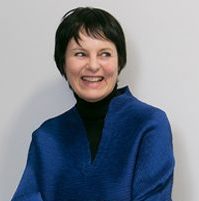
Chantal Maillard was born in 1951 in Brussels, and at thirteen moved to Spain. Since 1988, she has published nineteen collections of poetry, sixteen collections of essays, and eleven books she classifies as journals. Her enigmatic work has made her a literary phenomenon in the Spanish language and a source of inspiration for new generations of poets and artists. Maillard’s writing cannot be easily categorized; she has been slowly transcending genres, from the tetralogy of her diaries to the hybrid forms of her latest books, in which she fuses poetry, essays and theater. Her work has been translated into English, French, Dutch, German and Italian. She has collaborated on interdisciplinary projects with national and international artists in the visual and performing arts as well as film and music.
✶

Samantha Schnee is the founding editor of Words Without Borders. She began translating Chantal Maillard’s work four years ago. Her translation of Carmen Boullosa’s Texas: The Great Theft (Deep Vellum, 2014) was shortlisted for the PEN America Translation Prize, and she was the recipient of a 2023 National Endowment of the Arts Literature Fellowship to translate Boullosa’s novel El complot de los románticos. Schnee also received a 2024 fellowship from the American Academy in Berlin, where she translated Basque author Irati Elorrieta’s award-winning debut novel, Luces de invierno. Other translations include Laia Fabregas’s Landing (HispaBooks, 2016), Jeannette Clariond’s Goddesses of Water (World Poetry Books, 2022), and her first co-translation, with Will Morningstar, of Mariana Travacio’s All That Dies in April (World Editions, 2025).
✶

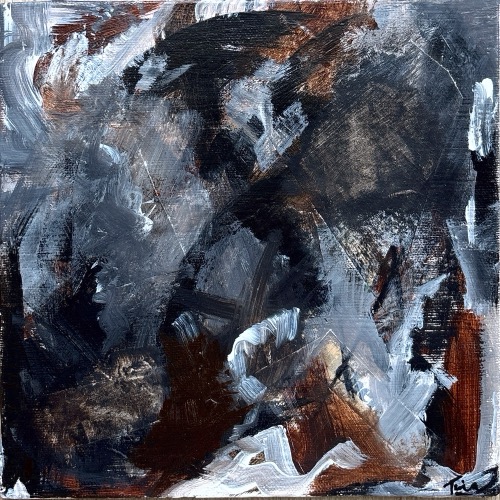
Mary Tina Shamli Pillay’s poems, fiction and art have featured on BBC Radio, Kitaab, The Mean Journal, Blink-Ink, Borderless Journal, The Chakkar, Dusk Magazine, Madras Courier, The Pine Cone Review, The Literary Times Magazine, The Punch Magazine, and forthcoming in Shooter Magazine (cover art), Ink In Thirds (art), Chestnut Review (art), and Artist Talk magazine among others. She is passionate about writing, art, cats, and food. Find her on Instagram @marytinashamlipillay.
✶
 Another Chicago Magazine