
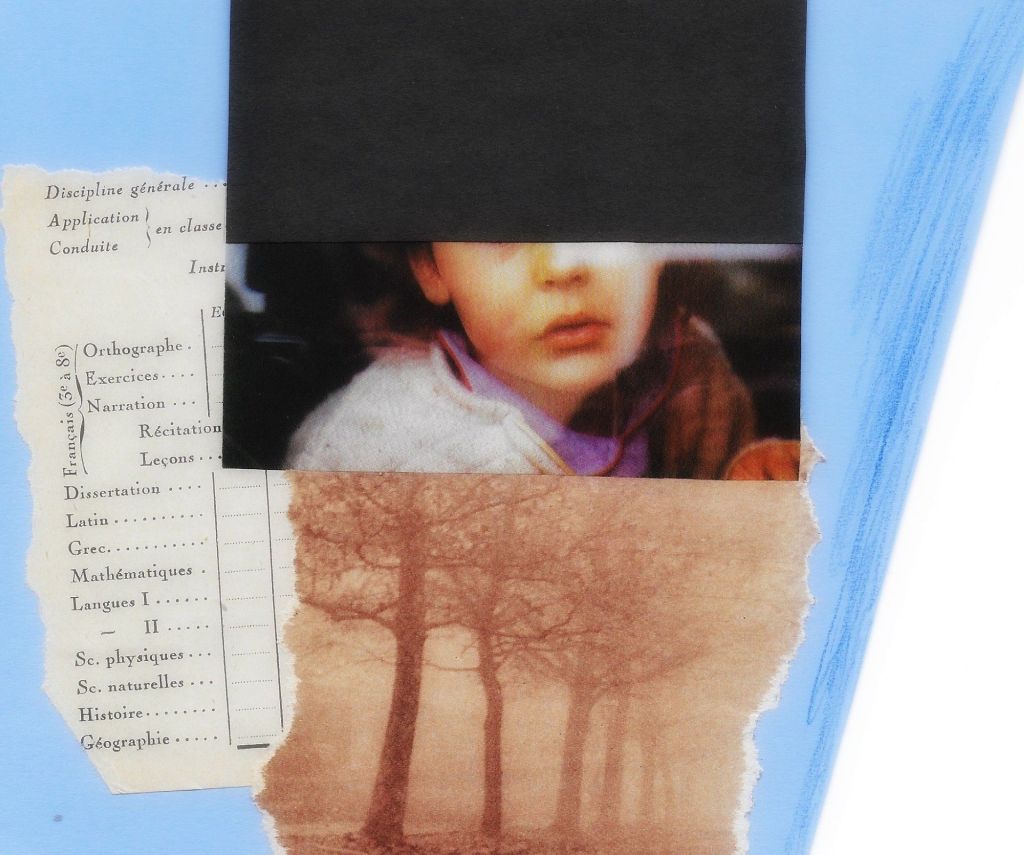
“Perhaps home is not a place but simply an irrevocable condition.”
― James Baldwin, Giovanni’s Room
I watch my mother walking and I see that she’s in pain. The determined set of her jaw, the distant look in her eyes. She is both focused on the present moment and trying to escape it.
She has wanted to see the Notre-Dame cathedral for so long. It is her second time in Paris, where I’ve lived for seven years. During her visit last year, in the fall of 2024, the cathedral was still closed and undergoing repairs, so my parents took a taxi over just to see the exterior. As she walked along the sidewalk, in front of a statue of Charlemagne, she fell over a cracked and uneven part of the pavement. It took a stranger and my father to help her up.
Now, my mother is stronger. Arriving at the cathedral, she grins like a child on Christmas morning. She happily sits with my father in a pew, turning her head in all directions, marveling at the intricate stained glass and the vaulted ceilings towering above her. She finally has a diagnosis—a severely fractured vertebra, most likely caused by a car accident thirteen years ago. Although she had no obvious injuries after the accident, she experienced pain which progressively worsened, and which she has just been living with since then. During my parents’ first visit to Paris, my mother’s pain was so obviously acute that my father and I insisted she see a doctor and forced her to stop avoiding it. “I can live with the pain,” she replied, but we didn’t want her to have to.
Back home in Pennsylvania, her impaired mobility is not as disruptive in my parents’ car-dependent suburban life. When they visit me in Paris, where we walk or bike almost everywhere we go, it is obvious. When my mother walks, she lurches unsteadily. She can’t walk more than several minutes without wincing in pain. At seventy-five years old, my mother is not at the peak of her physical health, but I hate seeing her so fragile, so debilitated.
With her new diagnosis, she was eligible for twelve sessions of physical therapy through Medicare after thirteen years of pain. Two sessions per week, over six weeks. If she missed a session, she couldn’t reschedule. She’d just lose it.
Incredibly, the sessions helped. She completed them last spring, and the momentum they provided carried her through a more active-than-usual summer. During my parents’ previous visit, my mother could walk down our street and around the block but not across the boulevard to the market that, for me, is just five minutes away. This fall, she crosses the boulevard, walks to the market, and completes a fifteen-minute loop while only pausing a few times. Her vertebra is still fractured, but her muscles now better support her and help her walk farther with slightly less pain.
On one of our walks in my neighborhood, we come across my physical therapist’s office. In France, women receive ten sessions of postpartum physical therapy for pelvic floor recovery after childbirth as standard care. After giving birth to my daughter last year, I paid nothing. If needed, I could have requested more. I later learned that this type of care isn’t usually offered in the US after childbirth.1
When I was pregnant, my partner asked if I’d feel more comfortable going home to the US to give birth.
“Fuck no,” I replied.
Turning forty while pregnant is an incredible feeling, an enormous fuck-you to society’s conceptions of fertility, femininity, and desirability. I had wasted so many fertile years not thinking about having children, but now I was Benjamin Buttoning into motherhood. I felt like a magical creature.
A year and several months later, my body is still not how it used to be before pregnancy. My breasts are smaller, which I like, but after months of engorgement they’re markedly deflated, which I don’t like. My C-section scar is barely visible (“Elle est magnifique,” each doctor said about it at my postpartum checkups), but she has a twin, a smiling wrinkle creased into my skin below the extra weight I now carry between my pubic bone and my belly button. My arms are strong from carrying my baby. My ribs are still flared out widely on my right side.
My partner and I debate having a second child, but I am hesitant, and much of my hesitation comes from my fear that a second pregnancy will wreck me, physically. I’ve finally recovered from pregnancy, from childbirth, and from everything after. I feel stronger than I have in a long time, and I don’t want to give this up.
If I have a second child, will it destroy my health? Will my bladder prolapse out of my collapsed pelvic floor? Will I wince in pain every time I walk more than ten steps, like my mother? These are questions I can’t answer.
When we fly back to the US to see my parents, we fit perfectly in a row of three seats.
When we take the train in France, we sit in a square of four seats, and it feels like something is missing.
In my previous life, before moving to one of the most touristic destinations in the world, I was an academic. I spent years mentally preparing myself to live in a small college town in the South, the Midwest, or on the West Coast: someplace people wouldn’t actually know how to locate, but I could describe as an hour’s drive from Charlotte, or from Chicago, or from San Diego.
The idea of living in a small town wasn’t awful. I grew up in a nothing-special suburb of the poorest big city in America; I could absolutely deal with living in a cute college town with few restaurants and only one movie theatre. The scarier idea to me was to be trapped somewhere, to lack mobility, to lack options.
Now I feel that I have so many options, and I worry that I am not taking advantage of them. I worry that I don’t deserve them. I worry that I am afforded greater opportunities than so many people who need them.
This includes my family. If my sister lived in my current country, my family wouldn’t have to worry that her autism will no longer be considered a genuine condition, that budget cuts and funding changes will eventually render her ineligible for Medicaid and the state waiver that covers her health insurance, residence, and support staff that are necessary for her daily care.
If my parents lived here, they wouldn’t have to worry that their Medicare premiums, copays, and deductibles will steadily increase each year, that the doctors they want to see are out of network, or that there’s a three-month wait for the next available specialist.
If my parents lived here, they wouldn’t have to worry about all the time they don’t have with their daughter and granddaughter. They wouldn’t miss out on a relationship they waited decades to experience.
“We honestly thought this would never happen,” my father said when I called my parents to tell them I was pregnant.
What I am coming to terms with is that I am growing older and so are my parents. They seem to do so at an exponential rate. In the six or so months we typically spend without seeing each other, the more wrinkles emerge, the grayer their hair, the fewer memories easily retrieved. They are more and more tired. I feel more and more guilty.
What I am coming to terms with is that I will possibly miss their death(s). A number of sudden and awful events could occur—a heart attack, a stroke, a fall down the stairs, a slip on ice. I won’t be there.
I think of my daughter, with two passports and a mother who will be eighty when she is forty. I have essentially created the potential for her to experience the same predicament I’m currently living in—a mother to worry about, the possibility of living an ocean away and holding guilt and grief.
How far away from me will she be when I am old? How much will I miss her, how much will I long for her to be closer, and how often will I have to bite my tongue to stop myself from asking her to come home to me? How much of my happiness will I have to sacrifice to allow her to live her own life?
I have booked our tickets for our next visit home. It is about three months from now. When we arrive, it will be eleven months from the last time we were there. It doesn’t feel like nearly enough time together.
My partner and I discuss moving back to the US, just for a year or two, in the most abstract of terms. It doesn’t seem like a realistic decision for so many reasons.
Soon after arriving in my adopted country, I met a woman a few years older than I who said she’d moved here a couple months earlier with her family. That’s so sweet, and a little weird, I thought. I had assumed she meant her parents, when in fact she meant her husband and two children. The idea of starting a family of my own felt more foreign to me than living in a foreign country. Now, I have my own family, a family I’ve created, and a life we are building together.
In so many ways, I am lucky. I have a beautiful and healthy child. No one in my family is starving, nobody is living in a war zone, and everybody sleeps in a warm bed in a warm home. My parents, although not in great health, are at least alive and not mortally ill in their mid-to-late seventies. I have had them in my life for four decades.
And yet, it doesn’t feel like enough.
For many years, I was deeply angry with my parents. I didn’t agree with the way they took care of my sister, with the way they took care of their home, with the way they took care of themselves. We would go weeks at a time without speaking; we neglected to tell each other about significant life events.
With enough time and reflection, I eventually stopped being angry enough to want to change our relationship, and I focused on repairing things. I started taking my mother to lunch weekly when I knew I’d be leaving but didn’t know how to tell her. I tried to make it up to her in advance. And when I finally told her, she said, “But I’ve really enjoyed having lunch with you.”
Now we text almost every day, but we see each other only twice a year.
How do I compare universal healthcare and generous unemployment and living without the persistent fear of a school/mass/targeted shooting against my parents witnessing my child speak her first sentences, for my child to better know my sister, for her to spend time with half of her family without an imminent departure always looming?
Is there even a comparison?
I cannot anticipate the events that occur in a world that are beyond my control and sometimes beyond my comprehension. I will live in my body forever, but I can only decide some things that occur within it. And I, perhaps, cannot go home again, to things and people I know and understand, but I will continue to think about what it might look like if I did.
✶
1 Henneberg, Christine. “A Modest Proposal to Save Mothers’ Lives.” The Atlantic, November 1, 2023.
✶✶✶✶

Tabitha Wurster is a creative spirit with multiple graduate degrees. She was born in the poorest big city in America (Philadelphia), a city many people seem to hate, and now lives in one of the most touristic destinations in the world (Paris), a city many people romanticize.

JC Alfier’s (they/them) poetic sensibilities run astride backroads and marginal regions, toward the déclassé—those haggards of rural and urban loneliness. They are the author of The Shadow Field (Louisiana Literature Press), and their work has appeared in Faultline, Fugue, New Delta Review, New York Quarterly, Notre Dame Review, Penn Review, River Styx, and Vassar Review. Their collage art is influenced by photo-artists Toshiko Okanoue, Francesca Woodman, Deborah Turbeville, and Katrien De Blauwer. Like Saul Leiter, they love imperfections, unguarded moments, and the belief that the real world has more to do with what is hidden than what is open.
✶
Whenever possible, we link book titles to Bookshop.org, an independent bookselling site. As a Bookshop affiliate, Another Chicago Magazine earns a small percentage from qualifying purchases.

