
Jillian thinks of her one-and-only affair as a palate cleanser in the middle of her twenty-two- year marriage. It’s her secret, something Mark doesn’t ever need to know about. Something their daughter, Hannah, surely need never suspect. The affair had lasted only a week during a warm, New Jersey spring when their daughter was sixteen and acting out. What Jillian remembers most vividly about the affair is slipping naked into a cool pond with her lover and feeling like she was leaving all the complications of her life strewn on the shore along with her clothes. The inky water had swirled around her shoulders, and she’d wrapped her legs around her lover’s waist. When she got home from that pond, from that weekend idyl, life had reasserted itself. Once again, she was back to the place where she and Mark had no idea how to corral their wayward daughter.
As a child, Hannah had been boisterous and unafraid. “There’s another spider in the tub,” she might shout and then get a bit of toilet paper to scoop it up, set it free outdoors. My little ragamuffin, Jillian affectionately called her, because she often ran around with at least one of her two braids loose, her shoes untied. The summer Hannah turned seven, they rented an RV and went on a road trip to Canada. Their first night there, Hannah was furious at them for dragging her away from her best friend, Belle. Jillian had tried to reason with her that it was just for two weeks, that Belle would be waiting for her when she got back, but Hannah had broken down in tears. Maybe this was the loneliness of any only child, Jillian had wondered and dragged her daughter onto her lap, kissed her damp cheek, promised her that they’d make s’mores that evening. This had done the trick, and after an early dinner, they’d walked the RV park, looking at the guests poking at their campfires, bending over their portable propane stoves. They’d breathed in the smell of grilled frankfurters and the frying fish that had probably been caught straight from the campground’s lake. In some of the bigger RVs, they could see the bluish light of televisions, and they’d wondered to each other why anyone would bother to watch Friends while camping, and they’d felt good knowing that they’d spend the rest of the night sitting by their own campfire, eating gooey s’mores, admiring the stars.
After that night, they’d settled into a pleasant routine at the RV park. They would take out a canoe from the campground’s dock, Hannah sitting in the middle, with Mark at the back and Jillian up front, all their noses covered with zinc oxide. They’d rowed about the lake with their fishing poles cast into the still water that reflected the cloud-dappled blue sky. When Hannah got bored and wanted to swim, they’d rowed toward the bank, plowed through the reeds to slurp up onto the mud. Hannah hadn’t minded her feet sinking into the ooze and would wade out until she was deep enough to dive into the water. What a pleasure to sit on a sun-warmed boulder and watch their daughter breaststroke through the sun-gilded water. One of these afternoons, Mark’s hand had slipped over Jillian’s on the rock, their fingers had intertwined. It was all good, Jillian had thought, which felt like a reverie. After all, a year before this, she’d told Mark that she wanted to get pregnant again. Yes, she was forty-two, but they had secure jobs at the university and wouldn’t Hannah love having a younger sibling? Mark had been dubious. Their life was fine as it was: why tempt fate? But he’d agreed. And right away she missed her period. But she wasn’t pregnant. A few months later, she missed another period, felt testy and overheated. It was perimenopause. One child it would be.
So much of Jillian’s life nowadays feels perfectly fine with Mark. Their one disagreement is what they should’ve done about Hannah. Mark thinks they were too lenient, too oblivious along the way. He always brings up the Halloween when Hannah had just turned sixteen. There were signs back then. She was dating a seventeen-year-old who was a tight end on the football team, already muscular with a protruding forehead under his crewcut, who hit opponents so hard they called him Smack. On the field, he’d do a little endzone dance where he’d give out boisterous high fives to his teammates—smacks.
Jillian had tried to put her foot down: no dates with Smack. Hannah was too young, too impressionable, although this had been a hard position to defend. Her daughter was not a naive nymph drawn to an older, streetwise boy. She was as far into it as he was. Jillian had found a pot pipe in Hannah’s denim jacket when she threw it into the wash. And on that Halloween, Hannah had snuck out her bedroom window long after the trick-or-treaters had called it a night; they’d only discovered Hannah was gone when a bat flew in her bedroom’s cracked-open window, banged around their daughter’s empty room until Mark used a broom to scoot it back outside.
Jillian had realized then that they were on the losing end, and so she’d asked her daughter, her sixteen-year-old daughter, if she was sleeping with Smack. Hannah had shrugged, and so they’d gone to the doctor who prescribed birth control pills. When they pulled into their driveway, her daughter jumped out of their car and ran into Smack who was leaning against his beat-up Honda. Hannah had kissed him good and hard right in front of her.
It was when Hannah showed up at their breakfast table with bruises on her right forearm that things kicked into high gear for Jillian. “How did you get those?” she’d demanded, pointing her cereal spoon at the fresh wounds. Her daughter wore a green turtleneck with the sleeves pushed up, had her hair pulled back into a loose bun. She’d yanked the sleeves down to her wrists and asked, “Do we have any more Cheerios?”
But then, the next day, she broke up with Smack. Jillian had been more relieved than she’d even let her know. She’d felt it showed good sense on Hannah’s part, showed that she’d not put up with any nonsense. After this, Hannah stayed single, mostly hung out with Belle, who had a shy boyfriend who didn’t seem to mind when Hannah tagged along on their dates. It was in May of that year that Hannah’s guidance counselor requested a meeting with Jillian and Hannah to talk about Hannah’s poor attendance rate. “What attendance rate?” Jillian had asked over the phone.
“We’ll talk in person,” the guidance counselor had said.
Apparently, Hannah kept missing her two classes—anthropology and French—after lunch. The problem was not her homework, which she kept up on, nor her performance on the tests, which was surprisingly good — it was that she simply didn’t show up once a week. “Repeated Tuesdays she’s not here,” the guidance counselor had said, looking straight at Jillian. “Is there something she’s doing after lunch on those days?”
“Not that I know about,” Jillian had had to admit. “Hannah, why are you skipping Tuesday afternoons?” She’d felt blindsided—for months she’d been lulled into complacency by the fact her daughter was no longer dating Smack.
“I don’t know.”
“Well, what are you doing on those days?” A part of her didn’t want to know.
“It’s no big deal. I just go into the city and wander around. We never have tests or even quizzes on Tuesdays.”
“But why?” Jillian had felt her stomach tighten. It was a forty-five-minute train ride from their town into Manhattan.
“I told you: I don’t know.”
That night Mark was more furious with Hannah than Jillian had ever seen him be. “You can’t cut classes! What about college?” His face was red, one fist digging into the palm of his other hand. “And you don’t even have a reason for doing it! ‘I don’t know why,'” he mimicked her voice. “How is that an excuse? An explanation?”
“I didn’t say it was.” Hannah had stared him straight in the eye, unintimidated, and this made something clench inside Jillian—clearly, they no longer had control over their daughter, if they ever had.
“You go up to your room and write an explanation to me and your mother about why you’ve been doing this. I want to know exactly what you do in the city and why you go there. There’s got to be a reason. I want a full explanation.”
“There isn’t one, though,” Hannah had said and grabbed her laptop, headed for the stairs.
“You don’t just go to the city for no reason. Think on it and write it down right now, young lady.”
How absurd for him to call her young lady, as if they were parents in a 1950s sitcom, as if this would all be neatly resolved! Jillian could hear Hannah slam her door upstairs, the squeak of her desk chair over the old floorboards.
I go to the city because our town sucks, she texted them. They stared at the text, each on their own phones. They were both professors; it had never before been a question that their daughter would be a dutiful student, college-bound.
It was two weeks later, on a Tuesday, that the New York City police called to say that Hannah had been arrested in Macy’s for shoplifting. The next day, Jillian went back to meet with the guidance counselor, this time by herself. “What am I supposed to do, Mr. Brownstein?” Jillian had asked.
“Call me, Greg.” He sipped from a coffee mug with a whale drawing on it. His curly hair looked like pencil shavings, and he stroked his trimmed beard. “I am deeply concerned by this turn of events.”
“Me, too,” Jillian whispered.
“Your daughter has a .375 grade average, extracurriculars with the photo club. She should’ve been a shoo-in for college.”
“Should’ve?”
“She’s only sixteen, a juvenile. Her record will be sealed and colleges don’t generally run criminal background checks. But I’m worried about the trajectory she’s now on.”
Jillian had leaned back in her chair. Everything felt tilted on its side. What, indeed, was Hannah’s trajectory right now? It didn’t look good, that’s for sure.
Greg shoved his unruly hair to the side, took another sip from his whale coffee mug. “No one technically needs to know about any of this. She does her community service, and nothing will be on her record. But that doesn’t negate the fact she shoved a dress into her purse and tried to leave the store.”
Jillian nodded. She had a vision of the dress—a black strapless number, size eight with a price tag dangling from the designer tag. If Hannah had wanted a dress like this so much, she should’ve told them. Or maybe it was a strappy green number with sequins down the side. Jillian didn’t know; she simply did not know.
“We’ve got the ‘what,’ the ‘where,’ the ‘when,’ the ‘how,’” Greg said. “We just don’t know the ‘why.’ Why did Hannah do this? Why did she go to Manhattan and risk so much?”
“I honestly don’t know.” Jillian began to cry. She couldn’t stop herself.
Greg grabbed a box of Kleenex from his desk, shoved it over to her. She took a tissue, blew her nose. “What did we do wrong?” She snuffled.
“It’s not necessarily a matter of wrong or right. Hannah made a clear choice to do this. We just don’t know why. Maybe you can ask her tonight. Maybe then we’ll get some insight.”
What Hannah texted them that night: The little black cocktail dress was perfect. I wanted it. You would never buy it for me. Ipso facto, I took it.
The next morning, Jillian phoned Greg to tell him what her daughter had said.
“Was she right?” he asked. “Would you not have bought it for her?”
“I don’t know what it looked like, but if it was some sexy little cocktail shift, probably not.”
“I see.”
“We want her to have what she desires—within reason, of course. . . ” Here, Jillian drifted off, could not think of what else to add. She waited for Greg to say something, but only heard what sounded like him taking a sip of his coffee. She needed him to make clear to her if she was on the right path with Hannah, if her boundaries were—had been—defensible. If their boundaries were defensible. She thought of a night when Hannah was still dating Smack and announced that they’d be going to a party in his neighborhood across town, that she’d be spending the night at his house.
“Like hell you are!” Mark had bellowed.
This was before the appointment with the doctor for birth control pills, although they’d been suspecting the teens were sexually active, somewhere, somehow. Jillian had stared at her daughter, then her husband, felt like her brain was calculating a difficult math problem. At the party, they would probably drink. Smack lived nearby. They could walk to his house. Otherwise, he’d have to drive her here back home. But sanctioning a sleepover? She’d stared at the two of them, unable to decide what to say.
“Like hell you are!” Mark had repeated.
“Wait, wait, whoa,” she’d said. “Let’s slow down here. I’d rather know she’s safe; no drinking and driving.”
“I’ll pick you up at the party,” Mark had said reasonably.
“Nope.” Hannah shook her head. “Not gonna happen.”
“Then you’re staying home,” Mark had said. “Go up to your room and phone him that you’re not going to the party.”
They had stayed up, listening for any sound from her room that might indicate an escape. At one, Jillian, unable to sleep, had creaked open her daughter’s door. The window was open, the bed empty. Stupid tree, she’d thought, staring out the window at the elm with its welcoming branches and brown leaves lit by a crescent moon.
Mark had said that night that some teens get rebellious and it was just a battle. That’s the word he’d used, a battle, and Jillian had thought of herself girded in knight’s armor, shield held up, defensive.
Over the following days and weeks, Hannah seemed to move always a step or two ahead, then take one backwards. She brought home a report card with all As and Bs, and then came stumbling in the door reeking of beer. She picked up trash for her community service, then missed both of her Tuesday afternoon classes, probably to go back to the city.
“What are we supposed to do?” Jillian asked Greg on the day she’d made an appointment to meet with him alone.
“Where is she getting her train fare?” he asked.
“We cut off her allowance ages ago, so I don’t know. Maybe Belle, maybe some other kid…” She wrapped her arms around herself. She gazed at Greg’s calendar on the wall. It had a photo of a snowy mountain range. One day was marked off with an X. What did that signify? She felt the red X drawn over her own understanding of her daughter. What was Hannah up to? All of a sudden, she was crying. Sobbing, really.
“Oh dear, hang on now.” Greg handed her the Kleenex box.
“I don’t know where she’s getting the money.” She rubbed at her eyes. “It could be from anywhere, from anyone!” She felt on the verge of hysteria. Who was paying Hannah and for what?
✶✶✶
Occasionally, Jillian thinks back on the start of her affair with Greg. She remembers how he’d comforted her that afternoon in his office, how he’d reassured her that not all was lost, that Hannah had been maintaining good grades, that she could still go off to college, that this was just a terrible, misbegotten phase. “She’ll be okay in the long run,” he’d promised her while she’d sobbed. At some point, he’d gotten up, gone around his desk to wrap an arm over her shoulders. “There, there, she’ll be okay,” he’d murmured, and his words had lodged in her heart. He was the one promising her that there was a way forward, and in that moment, he’d felt like her savior. As she’d gazed at him, she’d thought he even looked like Jesus with his golden-brown, wavy hair and beard. She’d reached out, touched his cheek. He’d looked startled at first, but as she kept her fingers against his skin, his eyes had softened.
It turned out he was newly divorced (the red X on the calendar being the day it was finalized) and rather depressed. She’d fallen apart in his office and he’d felt desperately needed for the first time in a while. They were helping each other in their own way and thus, there was something tender about the whole affair. In fact, “affair” felt like the wrong word. What they shared was something sweet rather than illicit. For her, it had nothing to do with Mark. When Greg took her to the pond in town to skinny dip, it was a cool spring dawn. Five days later, her daughter got picked up for selling MDMA at school.
✶✶✶
Every week now, they visit her in juvie, keep the conversation trivial, jokey. Sometimes Jillian thinks of Greg, of the misplaced faith he’d had in Hannah’s good grades, her potential. After one visit, Mark says “Do you remember how she used to cheat at Candy Land?” and Jillian recalls how Hannah had dog-eared the most valuable root beer float card. But all children break game rules; that was no red flag.
✶✶✶
Now, having done six months of juvie, Hannah comes home chastened. “This is so good,” she says about the meal Jillian has made. “I love our bathroom,” she tells them. “You have no idea how gross it was back there.”
And then she receives an acceptance letter from a small, upstate college. She’d written her application essay on the theme of lessons learned the hard way, and none of them can quite believe this vibrant burst of good news. Jillian goes to Target, buys a frame for the letter, props it up on her bedside table. Soon after, Hannah starts dating a twenty-one-year-old named Phillip. He’s a wannabe actor, who lives with his rich parents on the Upper West Side. He’s a polite teetotaler, handsome with the kind of long, wavy hair that secretly reminds Jillian of Greg. On weekends, Hannah takes the train into the city to be with him. This they allow because if it isn’t Phillip, it’d be some other boy who might be worse, and Hannah is going to go to college; she is getting her life back on track.
On graduation night, the four of them go out to Westy’s Barbecue for a celebration dinner. Over a plate of ribs, Hannah announces that she won’t be looking for a summer job locally, that she and Phillip will be in Manhattan until college starts.
“I don’t think so.” Mark wipes his mouth with his napkin, color rising to his cheeks.
“You can’t stop me,” Hannah says. “There’s no point in even trying.”
They all grow quiet, taking in this truth.
On the day of Hannah’s departure, Jillian reminds her that she’s promised she’ll text them every day and will phone once a week at minimum. After Phillip’s Subaru pulls away from their curb, she’s glad Mark reaches for her, wraps his arms tight around her shoulders. Hannah has been hired to work as a hostess at a place called Cafe 24 in the Village; Jillian bought her three skirts for the job, some new blouses. After a while, Mark’s grip loosens. “Go inside?” he asks. There are so many things she wants to say to him. She wants to conjure up memories about Hannah, to share these scenes with the only other person on earth who will also remember them. But there’s no real point; their daughter is gone. They go back into the empty house. She busies herself in the kitchen, taking out a big pot, some carrots and onion from the fridge to make a comforting vegetable soup. She hears Mark go into his study, probably to grade papers. Upstairs there’s Hannah’s bedroom, the closet and dresser emptied of her clothing. It is too quiet. Jillian puts on NPR and peels a carrot.
✶✶✶
Three months later, Jillian takes the train into the city. She’s cancelled her classes for the day and has not told Mark or anyone else where she’s going, and so it feels illicit, like those times she secretly drove over to Greg’s apartment to make love. She gets off at Grand Central and takes a taxi down to Greenwich Village. She doesn’t tell the driver the exact address, just asks him to let her off around 8th Street; anywhere he can pull over will do. She gets out of the cab into a swarm of pedestrians. She must move swiftly now, as if she’s certain of where she’s going. Oh, she knows the address of Cafe 24, but she’s not ready to just show up there unannounced, not yet.
What she wants is a cup of hot tea to settle her nerves, and of course, right up the block there’s a Starbucks. She feels almost frail as she makes her way to the coffee shop. Everyone around her seems to have so much more drive, such purpose, while her own inclination to come here is shrinking by the moment. Hannah has not texted nor written for two months. The last communication was to let them know she’d decided to defer college for at least a year, that she’s in an off-off-off Broadway experimental theatre piece, that the director and Phillip both think she has great promise. On her Facebook page, she has changed her residency status to New York City, has posted a photo of her and Phillip walking arm-in-arm.
Jillian pushes open the Starbucks door, gets into the long line, estimates it will take at least a half hour to get her tea. She turns abruptly around, goes back out the doors into the throbbing city energy. Nothing, she thinks, will settle her nerves except to see Hannah in person, to embrace her, to feel that she’s real and that there’s still love between them. Jillian moves into the parade of pedestrians flowing down the sidewalk and thinks of the many angry, then frantic, then sad emails sent by both herself and Mark. None of them got a response. Jillian cannot stand the silent treatment for one more second, so she straightens her shoulders, strides down 8th Street towards Cafe 24.
Outside, the restaurant has some tables set up with pink tablecloths, most of them occupied. The brick building itself has floor-to-ceiling window panes that are tinted just enough to reflect back the outdoor diners. Jillian stands behind a lamp post as if this will shield her from her daughter’s gaze should Hannah come outside to seat people at one of these tables. Just inside the two large glass doors, her daughter is probably standing with an armful of menus, ready to welcome anyone who comes in from the street. Jillian watches a busboy walk out carrying a sweating silver water pitcher. He fills the glasses of a couple who have both ordered salad. Jillian licks her lips, wants to stride right up to the restaurant’s doors, swing them open, and go up to the hostess desk. She wants to look Hannah in the eyes and say, I love you; I miss you. Instead, she touches the lamp post’s slick, black-painted surface, feels certain that this will only make things worse—Hannah doesn’t want her showing up here during work hours, staking out the place. Suddenly, the glass doors open and her daughter walks out, guiding a party of four to a table. Jillian tries to shrink behind the light post, all while sucking in the sight of her daughter—Hannah looks just like herself with a loose bun, wearing a short, black skirt and white blouse that she’d bought for her. Oh, but is that a new tattoo on her forearm? Yes, it is. A panther, Jillian thinks, although she’s too far away to be certain. Her daughter sets down menus for the patrons, smiles at them, and turns to go back inside, all fluid efficiency. Jillian opens up her phone, tells Siri to call Cafe 24, Manhattan. The restaurant phone rings and then Hannah’s voice says, “Hello, Cafe 24, can I help you?”
Jillian grips the phone, stares at the restaurant’s glass doors. Yes, yes, you can help me, she wants to say but instead snaps her phone closed. She rests her cheek on the lamp post, indifferent to the many hands that must’ve touched it. She opens her phone and hits redial.
“Why are you calling me here?” Hannah demands. They must have caller ID.
“I’m in the city. Right outside. I need to see you. Not now, when you’re done with your shift.”
“I don’t want to see you.”
Jillian clenches the phone, says in a rush, “But your father’s sick, very sick.”
There’s a long pause before Hannah says, “He is? From what?”
“No, not really. I just need to see you.”
“Why would you say something like that to me?”
“I don’t know.” Except she does and it worked—she’d heard the concern in Hannah’s voice; her daughter still cares. “I want to apologize. We’ve been wrong to be angry with you, with your decision. I can’t bear not hearing from you.”
“I’ve got to go.” And she hangs up.
Jillian stands there, arms at her sides. Her daughter is so close now, just through those glass doors. And she decides she’ll simply wait here until Hannah’s done and gets off her shift. She will go up to her and suggest they get a coffee, just a simple coffee. And Hannah will agree because there had been real worry in Hannah’s voice, hadn’t there? Surely love burbles inside her just under the surface, like rich black petroleum, something ancient, primordial. For her part, Jillian thinks that she’s tried hard to be a good mother, but clearly, she’s failed in many small ways that have added up over time. She gazes at a bit of Scotch tape stuck to the lamp post, probably used at one point to hold up a flier of some kind—a missive to passers-by to go to a garage sale or see a band play at some off-the-beaten-track dive bar. Life, she thinks, is really the parent, jostling and challenging you. A mother is almost as helpless as the child in this world, an anxious bystander who tries to throw out bits of learned wisdom like lifelines, some of which might prove useful, while others get tossed angrily aside. Jillian slips her phone into her purse and wishes she’d worn more comfortable shoes. She tells herself it can’t be all that long before Hannah’s shift ends, and she gets to try once more to set everything right.
✶✶✶✶
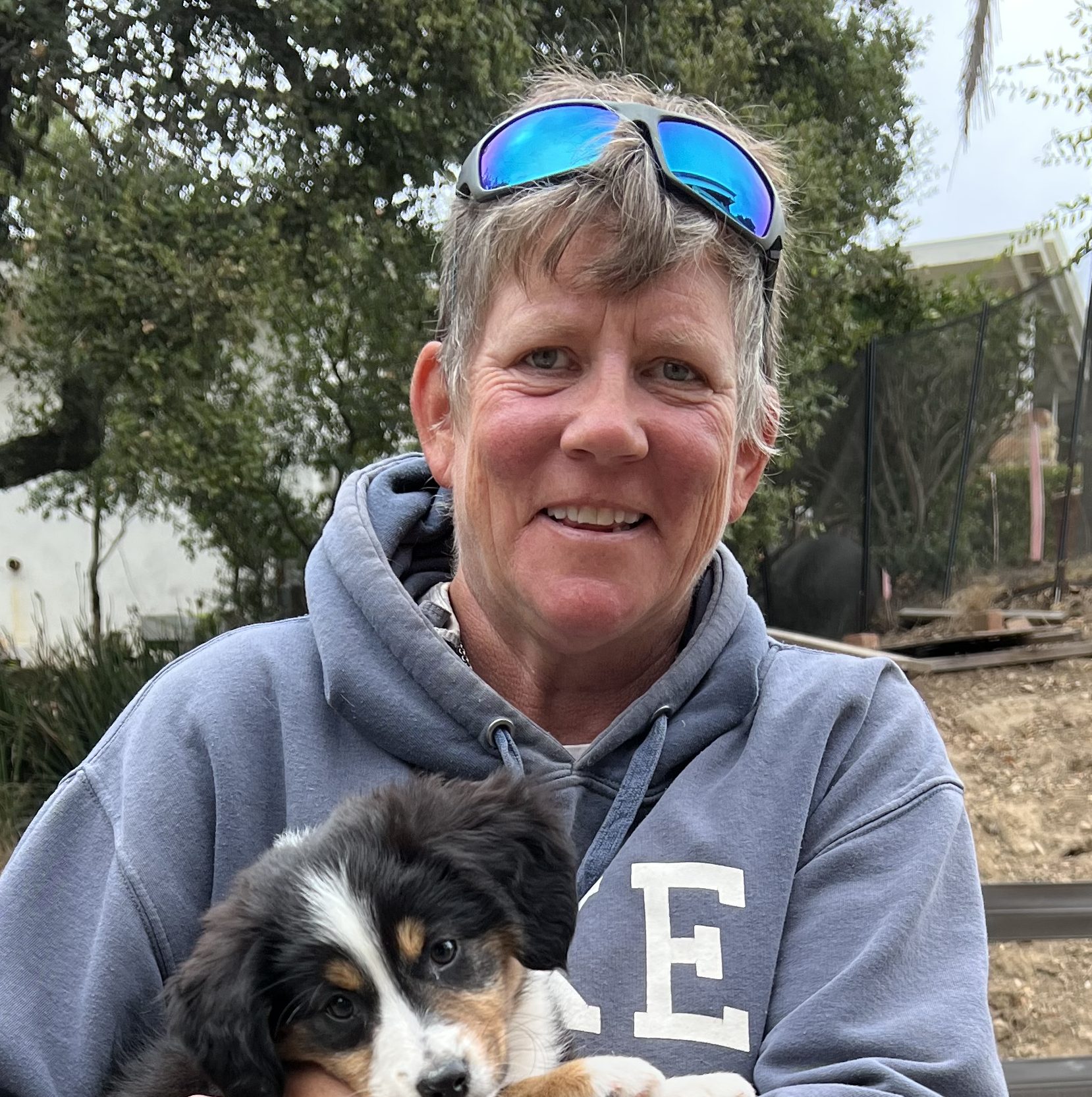
Laurie Lindop holds an MFA in Writing and Literature from Bennington College. She’s published eight non-fiction books with Lerner and The Starving Artists Survival Guide with Simon and Schuster. Her short fiction has been accepted by The MacGuffin, Third Street Writers, and Tupelo Quarterly among others.
✶

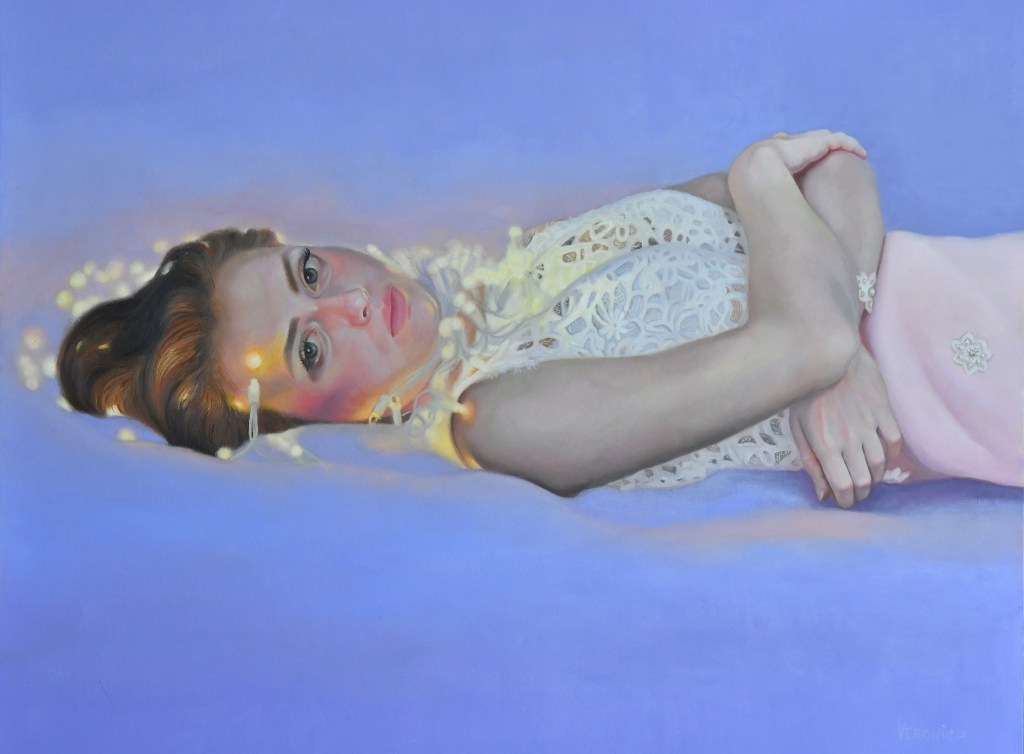
Veronica Winters is a Russian-American artist and teacher. She is the author of The Colored Pencil Manual and How to Color Like an Artist. Her art and writing have been published in numerous magazines and books, including Strokes of Genius, Leisure Painter, Colored Pencil Magazine, the Guide to Artists, American Art Collector and International Artist Magazine. She works in her studio in Naples, Florida.
✶
Whenever possible, we link book titles to Bookshop, an independent bookselling site. As a Bookshop affiliate, Another Chicago Magazine earns a small percentage from qualifying purchases.
 Another Chicago Magazine