
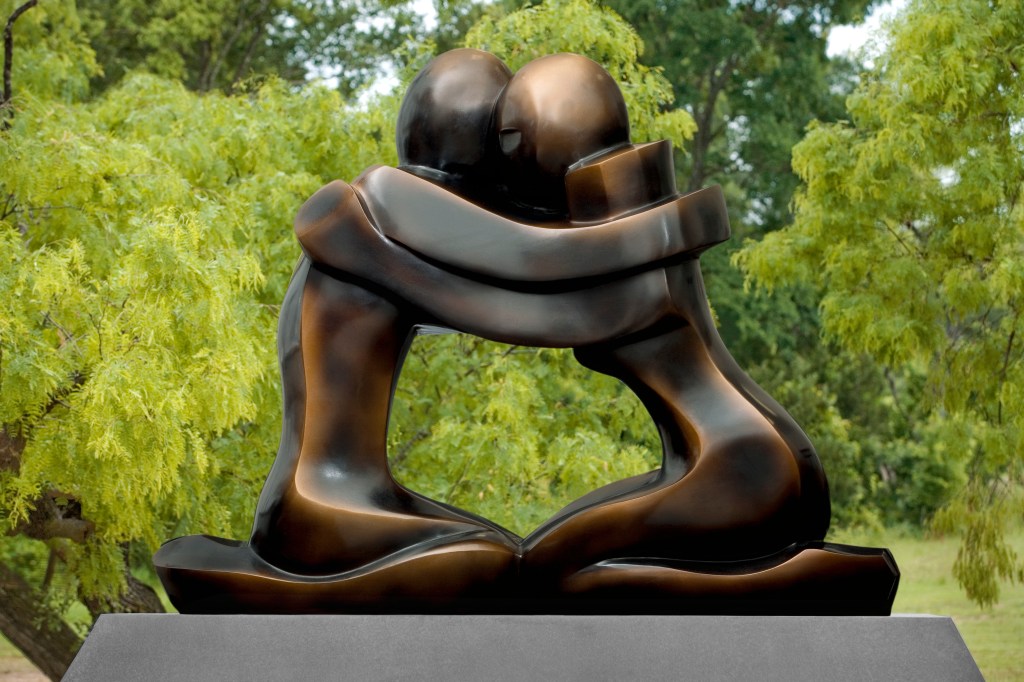
Before the affair, they often found themselves in the same place at the same time. Their children went to the same school, and each had season tickets to the ballet. They liked each other’s company — chatting when after-school activities kept their children late, or during intermissions when their spouses were in line for drinks. That fall, as they stood with the other parents under a stand of Ginkgoes, she impulsively reached out and brushed a few yellow leaves from his green sweater. As she touched him, he held her gaze and the unspoken need that had been inside of him moved into her. Stepping closer, he mentioned that he enjoyed walking in a certain park. Undoing the wool scarf she wore in lieu of a coat, she nodded and mentioned that the trees were particularly beautiful in that park. With her throat now bare, it became possible to see the hot pulse of her heart in the long expanse of her neck.
The park ran along the Mississippi. She didn’t know it at the time, but his office overlooked the park, and so when she’d stepped out of her station wagon and onto the pebbled trail, he’d been watching her. She tugged at the hem of her skirt and pulled the tops of her tall boots up over her knees. People said she dressed well. Often they’d speak of it in a condescending way — saying she made the most of what God (or rather her grandmother) had given her. This was to say she was plump. That day, she wore what she thought of her superhero outfit: a long coat, short skirt, and tall boots. As a concession to practicality, the boots had a low heel. The fear of appearing foolish, of having misunderstood their conversation, pushed at her like the strong wind blowing up and over the bluffs.
At least it was a beautiful day. Bright but cold enough to keep most people off the paths. The sun was glorious as it glinted off the wide river that was running high from the week’s previous rain. She practiced what she’d say if she saw him and then resolved not to speak unless he spoke first. Lately she’d had this feeling that she was the Ship of Theseus — appearing as she always had to everyone around her but made up of entirely new parts. It had everything to do with turning forty-five and nothing to do with it.
Ahead of her, an older woman with an unleashed dog strode across the grass. The dog, a terrier of some sort, came toward her, but was called away before she could touch it. Behind her, he said her name, “Ellen.”
How quickly she’d come to know the timbre of his voice. She kept walking, unsure of what to do, or how to explain her presence. A small green bench sat near the edge of the bluff, and she crossed to it without looking back. She sat and breathed hard as if she’d sprinted. He sat next to her. They looked across the river to the wide floodplains of Arkansas as they spoke, not turning any part of their bodies toward each other.
“I knew you’d understand what I’d meant.”
“Archer.” She said his name because she liked the way it felt in her mouth.
He wore lambskin gloves. “If anyone sees us, or if it comes up, I’ll say that we ran into each other, and then I invited you to the office for coffee to talk about the team dinner.”
She was the team parent in charge of all the small things that kept a middling high school girls soccer team afloat. His daughter was a freshman and played striker. Her daughter, a senior, occasionally started in the goal. Listening to him, it seemed that he’d already imagined them together. The story he spun was plausible, although not as suffused with innocence as he supposed.
“I think about you. About us?” she said, and then her courage faded. “But there’s nothing between us, is there?”
“Nothing,” he said, but his voice sounded wistful.
The problem was that each believed themselves to be a good person. Ethical, if not moral. And yet here they were on a bench not talking about the thing that existed between them.
He stood, as if to leave, but she reached for his hand, squeezing it. Then, pulling off his glove she interlaced her fingers with his. “Stay.”
“There are other ways to do this,” he said.
She pulled him back down onto the bench next to her. “This is more than nothing.”
“Tell me what to do,” he said.
How surprised she’d been when he spoke those words. In her everyday life in the ballet’s costume shop, in her own home, she took orders from everyone else. But here he was giving her permission to be in charge. Later, she’d consider how this abdication allowed him to blame her for their affair. But that day on the wooden slat bench, an image of him between her legs arrived so forcefully to her mind that she felt as if it had already happened.
“Take me back to your office,” she said, pressing her thigh into his, her arm into his. He let out a small moan and tightened his grip on her hand. A man jogged past, and they waited for him to move out of view before standing.
It was a short walk to his office. He owned his own graphic design firm, which was housed in a mixed-use development that was named after the dairy that had occupied the space for a hundred years before the gentrification of their city began. They made small talk as they walked — discussing primarily the vinyl signs he’d volunteered to design and have printed for the girls who would be graduating that year.
Plausible deniability, she thought.
Once they were in the elevator, she pushed him against the wall, undid the top buttons of his plaid shirt, and slipped her hand under the flannel. They were the same height.
“More,” he said. His eyes were the color of a gray rock held underwater.
She pushed her fingers through his thick chest hair, found his nipple and pinched it hard between her thumb and index finger.
“Yes,” he said.
The elevator doors opened and then closed before they were composed enough to exit. They laughed, which felt right. It was as if both agreed that everything that was about to happen was supposed to unfold exactly as it had, as it would. After a moment, they found the right button and the doors slid open again revealing a long wall of exposed brick.
His office took up an expansive corner on the northwest section of the top floor. It was large with three tall windows overlooking the riverside park. A white sectional divided the working space. He crossed to the kitchenette while she drifted toward the window. She heard him pour two glasses of something, and then he spoke nervously about how he’d been thinking that maybe they shouldn’t do what they’d come up here to do.
“I love my wife,” he said, handing her a glass of what smelled like gin.
She sipped it. “My favorite.”
“I know. You said something about how it reminded you of the mountains where you grew up.”
“How well you listen,” she said. Inside she split into two versions of herself. The one who everyone knew closed her eyes and stepped back. The one she was becoming opened her eyes and found a voice she hadn’t used before. “None of this is about them. This is for us.”
She finished her gin, took the ice from the glass, and told him to take off his shirt. “It’s stupid. The way you dress. Too much flannel. Too many Patagonia vests. Like Peter Pan. A boy afraid to be a man.”
“I never thought about it.” He folded his shirt and placed it on a chair. His chest was magnificent. Broad and covered in silky dark hair. She ran the ice around his nipples until they hardened. His cock pushed against the fabric of his Dockers. She wondered what it would look like.
“I’ve never had an affair,” she said in her ordinary voice.
“Me neither,” he said, unbuckling his belt. There was a pleading in his voice that sent a rush of heat through her body. Whatever was between them pulsed and the lights in the room flickered. She pictured the two of them like Tesla coils drawing energy from the air itself.
She recovered her second self. “Did I say you could do that?”
He froze, and she watched him twitch. She took his belt and then looped it around his neck. He dropped to his knees. Looking out the middle window, she saw her gray car and the back of their bench. She tightened the belt. Leading him like a dog, they moved to the sectional where they fucked, her on top. Because they were new at this type of sex play and to each other, it ended quickly, but with each fully satisfied.
They sat for another hour, drinking a second glass of gin and talking about the small complexities of their mundane lives. She told him about the capes she was in the process of sewing for the ballet’s new production of “Dracula.” He tried to explain a corporate branding package. They even talked about the soccer posters, should anyone have seen them together. At one point, he’d said he was glad they’d done it, gotten it over with, as if it were a one-off.
She slapped him. “We’re not finished.”
He rubbed his cheek, which was reddening. “We’re not,” he echoed.
The affair made her ravenous for her husband. Although it was still her old self, the submissive one who showed up in their bed. She’d gotten married right out of college, and for the last twenty years, he’d proved to be an excellent companion. Her friends often remarked, with envy, on his support of her career, and his parenting skills. They had three children — all girls. He worked in the front office of the professional sports franchise in their mid-sized city.
Before the affair, she would’ve said they were happily married. What was wrong between them felt too trivial to acknowledge. She often worked nights — especially when the company had a new ballet in production. Her husband had started training for a triathlon, which had meant their weekend chill time had been swallowed up by long bike rides, and even longer runs. Most mornings, he left for YMCA to swim before she’d even opened her eyes. The two children at home had overlapping schedules, and so while she was at the soccer field, he was watching the jazz band perform. There wasn’t anything wrong.
She and Archer talked about their marriages and their children. His own wife, going through an early menopause, had stopped sleeping with him. They were in therapy. There was talk of a separation once their youngest child was in college. The older one was in medical school. Ellen said her therapy was listening to “Rumors” on vinyl.
“Stevie Nicks,” she said, “is God.”
There were rules. For the sex (which mostly involved permissions and escalations) and for the logistics of the affair. No phones, no texts, no social media of any kind. Nothing that might show up on a credit card statement. They avoided patterns and discovered a dozen secret places to play out their fantasies. Arrangements to meet were often made in a code they’d developed for the times their paths crossed in their ordinary lives. She’d run into him at Sprouts and he’d work a day of the week into their chitchat.
Did she catch that episode of “Ted Lasso” on Tuesday?
She’d respond by mentioning a number. No. She’d been finishing the tenth iteration of a jacket for Van Helsing.
And so, in this way, they confirmed and changed plans throughout the fall and winter—meeting once or twice a month.
In January, she was asked to go to Florida to oversee the costumes for an experimental dance company. The director had seen the “Dracula” performance and wanted something as suggestive for the company’s interpretation of a section of “Anna Karenina.” This type of consulting had happened occasionally in the past—mostly when small companies and large grants combined forces. At Archer’s office in late December, she started to think about the possibilities this trip presented.
She untied his ankles, which had been strapped to the legs of the small square table in his kitchenette. He turned to face her and held his bound hands out and then kissed her gently while she unwound her scarf from his wrists. They held each other for a moment and listened to their heartbeats slow. Then he excused himself to the bathroom.
“I’ve been thinking,” she said over the sound of running water.
He leaned out of the bathroom and winked at her. “About what?”
“Florida,” she said,
“It’s a state.” He came out of the bathroom wearing his boxers. “I’m still shaking.”
She held his chin in her hand and kissed his nose. “You should be.”
“It’s like taking communion. You empty me out.”
“I’ll be there for a week.” She took the false bottom out of her oversized purse and began to pack away the toys she’d brought. “Completely unsupervised.”
“Unsupervised,” he said.
She kept quiet and watched as he realized what she’d been asking.
“I can try,” he said. “No promises.”
“No promises,” she said.
Stepping through the doors into the main area of the airport, she saw a sign with her name on it. Looking at his face, she smiled. It was as if the universe had blessed their union. She’d worn heels on the plane (actually, since they’d started sleeping together, her heels had gone from kitten to stiletto) and when she leaned in to kiss him, she had to reach down for his face. The kiss in public felt more illicit than anything they’d done yet. She breathed him in. “You’re here,” she said.
“We’re here,” he said, taking her hand.
As they walked to his rented car, she gave him her schedule and they arranged to meet in the lobby of his hotel for dinner. He dropped her off and she asked the desk clerk for two keys. In her room, she stripped down to her panties and stood in front of the window. She wanted people to see who she was becoming. She pressed herself against the glass as she came and then tucked her underwear into her purse.
At the offices of the dance company, she showed her designs. Confidence exploded from her fingertips as she spoke. When the head dancer questioned the color of the ingenue’s entrance number, she let the room go silent several minutes before answering with a long quote from an artist she and the director had bonded over. Then she asked to go to the performance space where showed them how the fabric would change as she danced through the lighting cues.
The artistic director, originally from Scotland, was tall. He took her by the arm on the way back up to the meeting space and told her how much he admired her work.
“My husband,” he said, “would fall in love with you.”
They went through the next day’s schedule of fittings, and then she was on her way back to the hotel.
At dinner, they ordered a bottle of expensive champagne. “Everything’s on me,” she told the waiter and then asked for two dozen oysters and the best black caviar they had. Across the table, Archer reached for her hand and turned it palm up on the table. Slowly he traced the delicate lines in her palm.
“This could be our life,” he said.
“It couldn’t,” she said, but inside her desire liquified as if it were blood. They’d moved into dangerous territory.
“This,” he gestured to her and then back at himself, “makes me feel more alive than anything I’ve ever done. Than anything I’ll ever do. I’m myself when we’re together. I keep thinking about what would’ve happened if we’d met earlier.”
The waiter arrived and poured a small portion of the champagne into a glass for Ellen to taste. She nodded her approval, and he filled their glasses.
She raised hers. “To fucking someone else’s spouse.”
He blinked and then clinked his glass with hers. She regretted saying it. For the first time, she’d felt scared about the consequences of what they were doing. A woman seated near them glanced over and frowned. Ellen wondered what she’d heard. The goddamn world had become so performative.
“Last year, my friend’s husband cheated on her. Well, no that wasn’t right. He had an emotional affair with a woman at work.”
Archer shook his head. “Men don’t have emotional affairs.”
“I know,” she said. “He confessed because he wanted her permission. Had gotten on some Reddit thread where the consensus was you could have an affair as long as you did it ethically.”
“Ethically?” He sipped his champagne.
“Meaning the spouse had to agree. Ethical Non-Monogamy. There’s a goddamn acronym.”
“It’s not an affair then,” he said. “Or. I guess it isn’t cheating.”
She finished her glass of champagne. “But here’s the thing. Without an affair, you don’t get ‘Anna Karenina’, or ‘Lady Chatterley’s Lover’, or ‘The Awakening.’”
“Those don’t end well for the women.”
“I’m trying to say I don’t feel guilty about this.”
His eyes dropped to the table. “We haven’t hurt anyone yet.”
“I’ll be back,” she said, rising. Before going to the restroom, she leaned down and tucked the panties she’d stashed in her purse into Archer’s lap. She brushed her breasts against his back as she whispered instructions into his ear. Standing, she passed by the woman who had glared at them earlier.
“Nobody’s perfect,” she said as she walked by her table.
In the bathroom, she looked the same. An unremarkable woman with a strong jawline dressed in a way that accentuated the heft of her too big for her frame body. There was a lot of color in her cheeks. She took her phone out of her purse and texted her husband a picture she’d taken earlier at the dance company. He hearted the picture. To her three girls she sent a photo she’d taken of the beach.
When she returned to the table, she saw Archer trembling with anticipation.
“You haven’t said anything about the jacket.”
She’d noticed right away that he’d dressed differently for this trip, but she’d wanted to make him ask for the compliment. Reaching across the table, she ran her fingers over the lapel of the linen jacket.
He cleared his throat. “I took your advice.”
Moving her hand across his chest, she traced the deep vee of his black t-shirt. “I like it.”
“You remind me of the first woman I slept with,” he said.
She picked an oyster up and tipped the shell into her mouth, so the briny delicacy slid down her throat. Then spooned caviar onto a thin cracker. “I’ve only ever slept with one other person.”
“I didn’t realize,” he said. Under the table, she placed his hand on her bare thigh. He swallowed.
It was hard to explain. How she’d been religious and how young she’d been when she met her husband. “I didn’t know all the ways you could be with a person before you.”
They ate the oysters slowly. Trading stories. She learned more about the first woman, who had been his music teacher.
“I didn’t know you sang,” she said, picturing him as he must have been at sixteen.
“She taught me this,” he said, and turned her arm so that the inside of it faced up. He slowly kissed along the inside of her forearm and then ran his tongue along the inside of her elbow. It made her want to devour him.
“What do you want me to teach you?”
“To be a good boy,” he said.
They’d never slept next to each other before. At the hotel, their game took on new dimensions. They agreed on a safe word. He talked about what he wanted her to do. It was as if he’d been reading her mind. The hardest part for her was letting him please her with his touch, lips, and mouth until she came. Usually she hated this part, hated feeling like it took her too long to orgasm — that her husband was just doing this because he owed her.
She’d picked up a small whip, and when he slowed down at the wrong moment she used it. Both came quickly and at roughly the same time. While he waited to recover, she kissed every welt on his shoulders, on his back, and worried that his wife would find the marks, even hidden as they were among his thick hair.
He smiled at her when she voiced her concerns. She doesn’t touch me like you do. He picked up the whip and looked at her. She nodded and turned her bare back to him. The sting was so quick and so delicious. It made her understand why he liked it.
“Will he see that?”
“Maybe,” she said. “But it’s different with him.”
“Better?”
“Careful,” she said, and lay back in his arms. She’d tried to explain the difference to herself and couldn’t. It was as if Archer had woken her up. The whole rest of the time she’d been sleepwalking.
“Aren’t we happily married?”
“We are,” he said. “Just to other people.”
She straddled him and looked into his eyes — they changed color. Tonight, they were more gray than blue. She put her nose to his nose and stared at him without blinking. This is us moving from sex to love, she thought.
When she craved him, she drove to their park and sat on the bench. He wasn’t always in his office, or rather he wasn’t always available, but if he was, he’d sit next to her, and they’d say true things to each other before going to his office. Once inside, she’d stuff her panties in his mouth and duct tape his hands behind his back.
In April, the park erupted in chaos. Bulldozers and orange cones and construction tape roped off and cut through the paths. There was a new vision of what the park should become. It was to be stripped bare and remade. The parking lot where she parked was to become a basketball court. It had been almost two months since they’d last met. This was the third day in a row she’d come to the bench. It embarrassed her how much she needed him.
She’d tried with her husband to be a little bit in control — had been the aggressor, stayed on top, but it wasn’t the same. The energy, the way they drew it out of the air when they were together. It had never been like that with her husband. And maybe that was alright. Maybe that was the way it was with most people.
It was unseasonably cold. She wore wool tights underneath her tall boots. She stood to leave, looking for a long moment at the river, which was as low as it had ever been. There were entire islands exposed that hadn’t been above water since before the earthquake changed the path of the river. He was at her car when she got there. He wore a flannel shirt and that stupid puffy vest. She wanted to punch him.
His glasses had fogged. He took them off and wiped them. No, she realized he was crying.
“I love you,” she said.
“I need to stay married,” he said.
Her insides felt as if she were a collapsed tin can. All of the confidence, the bravado fell off her like the Ginkgo leaves. She blinked, took a step toward him, and then stumbled as the heel of her boot snapped off when it encountered the unevenness of the asphalt. She fell face first into the curb and came up with a busted and scraped face. In a moment he’d scooped her up. Had she never known how strong he really was? He carried her the short distance to the building and into the elevator. It’s okay, he was saying. It is all going to be okay.
She held her scarf to her face and cried hot tears that were mostly about the pain in her nose, in her cheek. He put her on the sectional and ran warm water in the sink. Coming back with a first aid kit, warm water, and a towel. While he gently cleaned up her face, he talked to her about them, about his wife.
“She knows.”
Ellen turned her head.
“Not about you specifically, but that there’s someone else. We’ve been. Well, in therapy and there’s. I’ve been made to understand that I was wrong. You shouldn’t have started this with me. We’re in the wrong. I needed to give my wife a chance first.”
Ellen had come to the opposite conclusion. What she’d been intending to tell him was that the last six weeks had been the longest of her life, and that they deserved to be happy, really happy, and that sex was part of it but that it was more than that. She watched him as he moved back and forth between the sink and as he applied the Neosporin and gently tested her nose.
She loved him, but it wasn’t going to be enough. There would be a last time. There would be a goodbye. She reached for him and whispered as much into his ear. She said she wanted it to be real one time. They undressed each other slowly. They matched their breath, legs wrapped around each other sitting upright, arms wrapped around each other, the same height at the same pace. When his breath quickened, she slowed and then caught up with him, the two of them held their eyes wide open dying their little death together.
The remodeled park connected to a bike trail that went across the river and into the flatlands of Arkansas. Shortly after it reopened, she and her husband biked from their house through the new park. It was almost unrecognizable. She turned down the bike path and saw a bench that had a familiar view of the river. Now it was near the basketball courts. Slowing, she could see that a small black plaque sat at the base. Her husband had started down toward the path to take them across the bridge, and so she followed him, glancing quickly up and over her shoulder and the wall of windows on the old warehouse.
On the first nice day of fall, she left her house at lunchtime with a copy of a European novel (Americans never wrote about affairs anymore) and made her way to the bench. On the plaque was a quote from her favorite novel: “We can’t behave like people in novels, though, can we?”
She understood that for the rest of her life she would find time to sit on this bench and wait.
✶✶✶✶
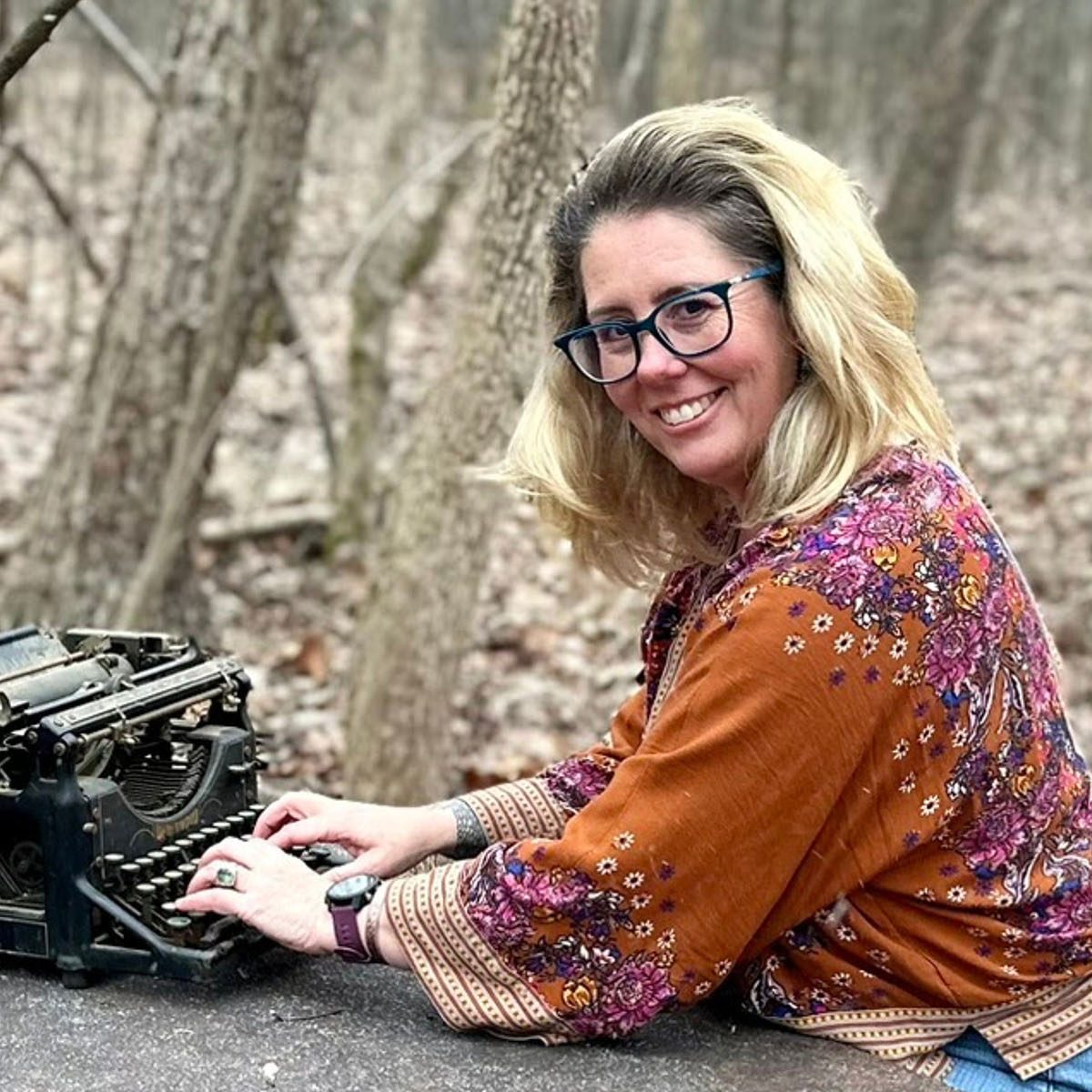
Courtney Miller Santo writes essays, novels and short stories. Her work appears in Best American Essays 2024, Los Angeles Review, Swing, The Missouri Review, New Letters, Third Coast and elsewhere. HarperCollins published her debut novel, The Roots of the Olive Tree, and its successor, Three Story House. She teaches at the University of Memphis, and is the Editor-in-Chief of the Pinch.
✶
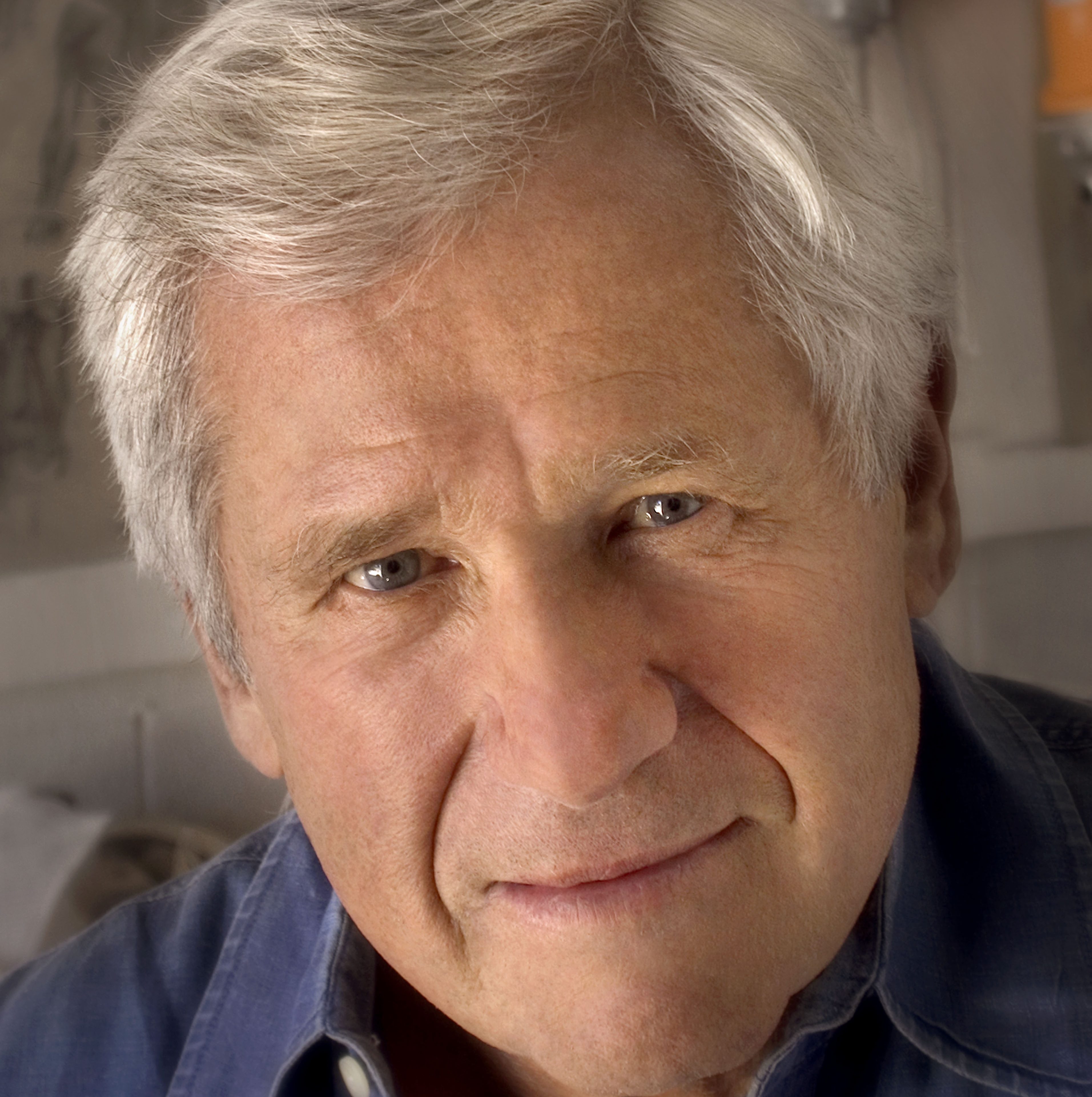
Born in Buffalo, New York, Mark Yale Harris spent his childhood enthralled in a world of drawing and painting. Though honored for his creative endeavors, he was encouraged to pursue a more conventional career. After finding conventional success, the artistic passion that existed just beneath the surface was able to present itself. Harris began sculpting and has since created an evolving body of work in stone and bronze, now featured in public collections, museums, and galleries worldwide, including Hilton Hotels, Royal Academy of London, Marin MOCA, Four Seasons Hotels, and the Open Air Museum – Ube, Japan.
✶
Whenever possible, we link book titles to Bookshop, an independent bookselling site. As a Bookshop affiliate, Another Chicago Magazine earns a small percentage from qualifying purchases.
 Another Chicago Magazine