
Translator’s Note:
These verses are taken from Anja Utler’s 2023 book Es beginnt: Trauerrefrain, which we have translated as So the Day Begins: Grief Refrain. The first part of the book consists of 209 syllabic quatrains based on the haiku form, each of which has “So the day begins” as its first line. This structure offers strictures within and against which themes of disintegration, power and powerlessness, relation and alienation, push, spurred by the repetitive, unbearable but somehow unending work of mourning. The second part of the book is an essay in which Utler describes the context within which she wrote these verses – specifically, the intense mourning she experienced when Russia invaded Ukraine and the imperative to accept this mourning as a crucial element of life alongside, close to but not part of, the violence of war.
✶
So the day begins.
All that was visible is
visible again.
No visible disruption.
So the day begins.
Whiskered carpet sweating flat
as if pressed under
plastic; knives too dull to slice.
So the day begins
and the laws of nature hold.
My water boils the
way it always does; sun.
So the day begins.
Galaxy circles its hole.
My finger dents the
dough. A ball plops in the grass.
So the day begins
from every side. Wall and light.
The cosmos beyond
expands, it explodes.
So the day begins:
sharp-edged and shiny; keeps flesh
within its limits.
Nothing drains away at will.
So the day begins:
searchlight; flesh cannot repel
it, drinks; partakes; that
never hurt before.
So the day begins
with Big Bang light; no way to
penetrate its skin.
No tool can pierce it.
So the day begins.
Clears away the leftovers.
Just one time zone a-
way
So the day begins,
in the standard interval.
The knives’ straight backs, glass,
as if the light were bending.
So the day begins.
Ball still by the fence, but flat.
Onion minced so fine
it almost disappear-
So the day begins,
pumps liquid to the belly,
pumps, centers, where the
organ was, it’s gone now
So the day begins.
I slam the drawer. They’re missing —
all the instruments
for brain and gut and tissue
So the day begins,
can’t examine — the pelvis,
pericardium
where everything was caught
So the day begins;
no instruments to carve my
connective tissue
so I might fully disap-
So the day begins;
-pear — like those onions — slanting
light — all I-I in
insignificant
So the day begins
everywhere I’ve ever been
something stirs; I-I
≤ traces left
Es beginnt der Tag.
Sichtbar wird das, was sonst auch
sichtbar war. Nichts hier
ist sichtbar unterbrochen.
Es beginnt der Tag.
Tasthaarteppich liegt verschwitzt
gedrückt wie unter
Folie; Messer schneiden schlecht.
Es beginnt der Tag
und die Naturgesetze
gelten. Mein Wasser
kocht auf seiner Bahn; Sonne.
Es beginnt der Tag.
Galaxie umkreist ihr Loch.
Mein Finger dellt den
Teig. Es platscht ein Ball ins Gras.
Es beginnt der Tag
zu allen Seiten. Wand und
Licht. Dahinter fliegt
der Kosmos auseinander
Es beginnt der Tag:
Ausstechform und Glanz; hält Fleisch
in seinen Grenzen.
Nichts fließt ab, nur weil es will.
Es beginnt der Tag:
Suchscheinwerfer und das Fleisch
nicht lichtabweisend
trinkt; nimmt; sonst: schmerzte das nicht.
Es beginnt der Tag
mit Urknall-Licht; man dringt nicht
durch an seine Haut.
Kein Werkzeug sticht das auf.
Es beginnt der Tag.
Serviert hier Essensreste
ab. Zeitzone wei-
ter
Es beginnt der Tag,
im Regelmaß. Gerade
Rücken der Messer,
Glas, als ob das Licht sich biegt.
Es beginnt der Tag.
Ball am Zaun noch da, gewelkt.
Hack’ne Zwiebel klein-
klein bis sie fast verschwinde
Es beginnt der Tag,
pumpt Saft in diesen Fleck im
Bauch, pumpt, zentriert, wo
das Organ saß und jetzt fehlt
Es beginnt der Tag.
Ich knall den Schub zu. Fehlan-
zeige – das große
Bauch-, Filz- oder Hirnbesteck
Es beginnt der Tag
mit nichts zum Filzen – Becken-
böden, Herzbeutel
wo sich, was da ist, verfing
Es beginnt der Tag;
kein Hirnbesteck, was Binde-
gewebskasten mir
zerlegt, ich restlos mir ver-
Es beginnt der Tag;
-schwänd – wie die Zwiebel am Hack-
brett – Licht über Eck –
ganz ich-ich in unwichtig
Es beginnt der Tag
an jedem Fleck wo ich je
war ist etwas wach;
ich-ich ≤ Stoffspur
✶✶✶✶
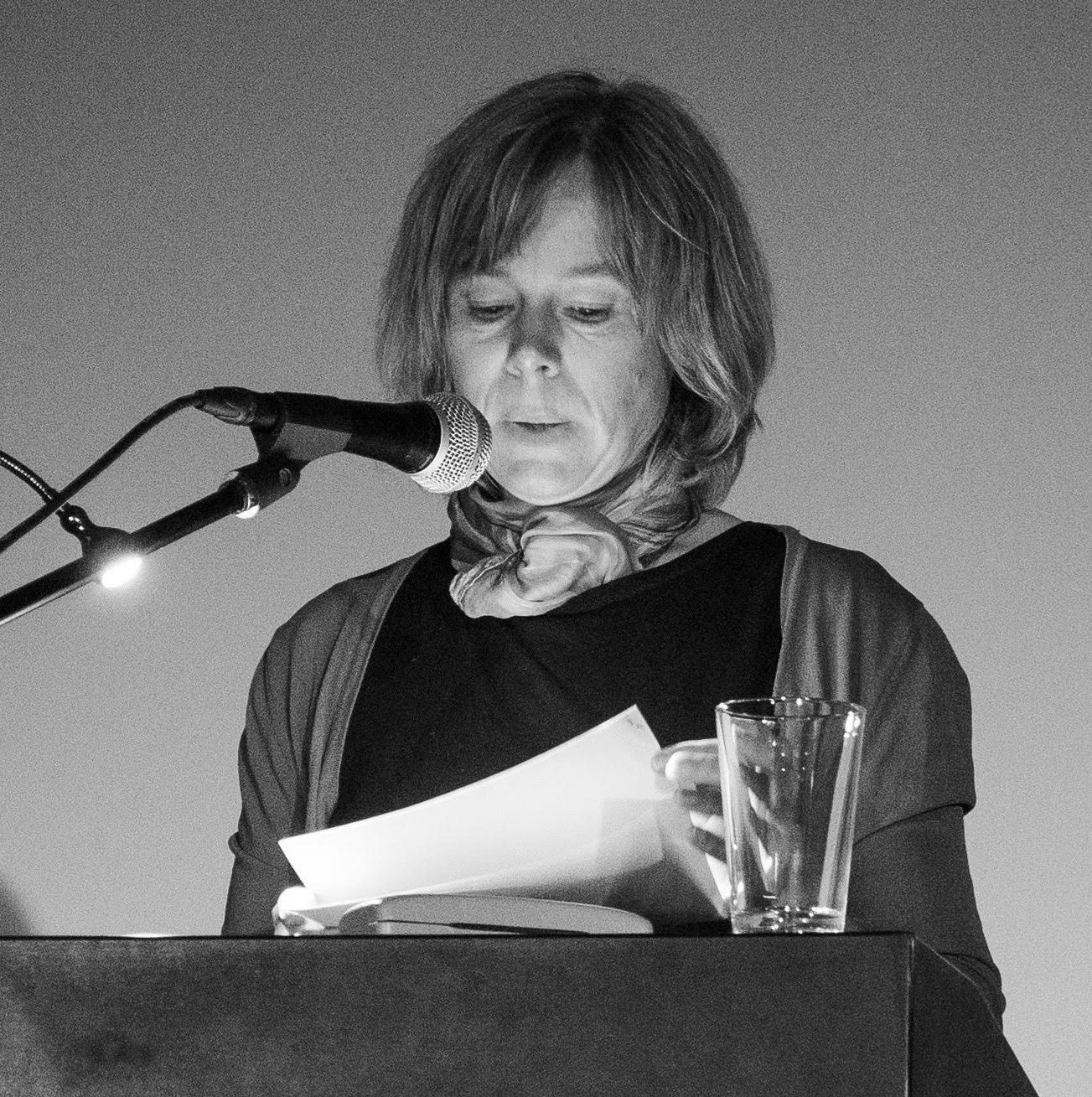
Anja Utler (b. 1973) is a German poet whose most recent work, Es beginnt: Trauerrefrain (So the Day Begins: Grief Refrain), was published in 2023. She is one of the most significant poets writing in German today and her writing has been recognized with many awards, most recently the Peter Huchel Prize (2024). Her published work includes multiple volumes of poetry as well as translations (of Anne Carson and others) and essays. Engulf –enkindle, the translation by Kurt Beals of Utler’s 2004 volume münden – entzüngeln, appeared in 2010 from Burning Deck.
✶
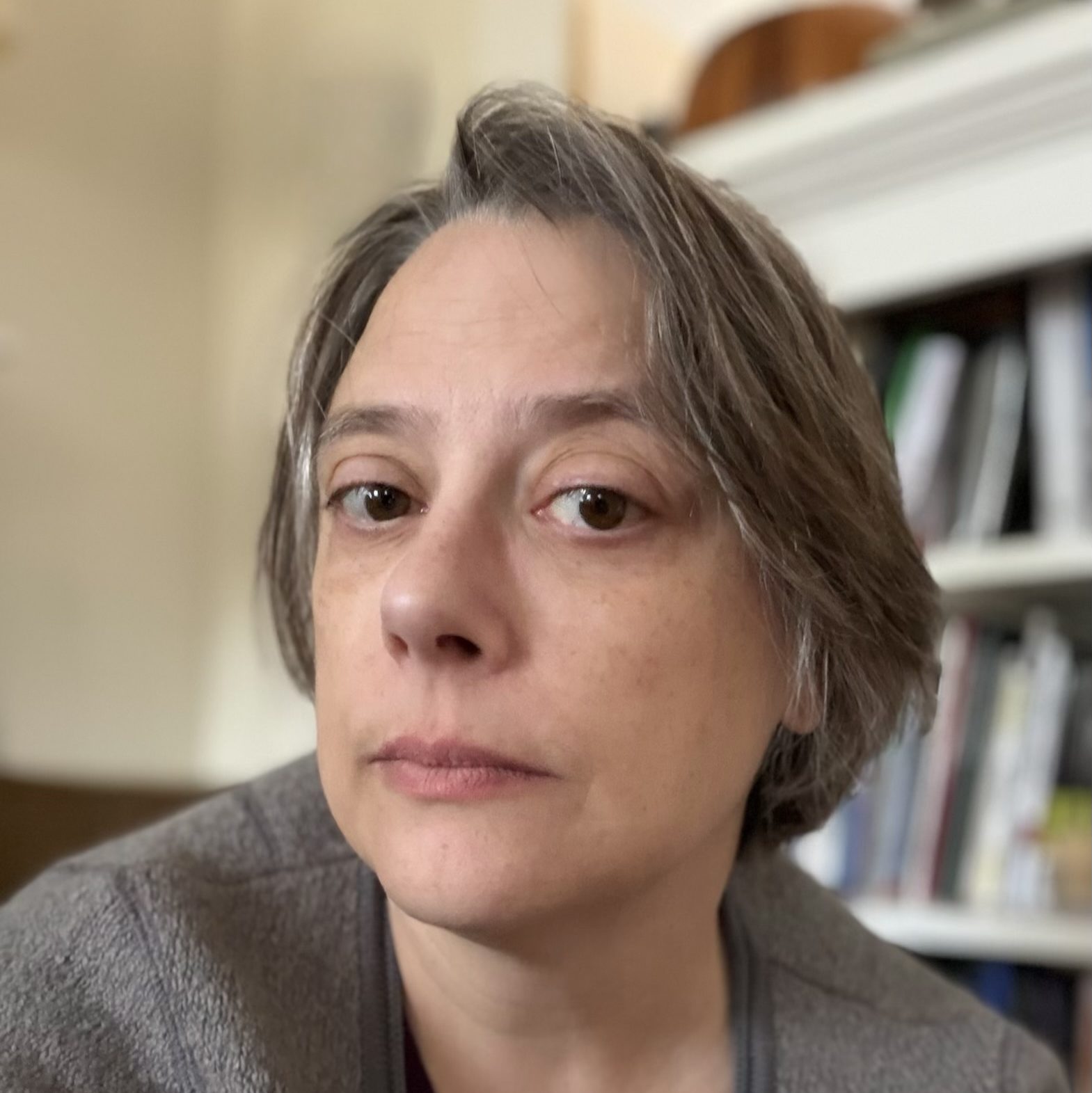
Aimee Chor is a translator of German literature and a poet. Her translations have appeared in The Opposite of Seduction: New German Poetry (Shearsman, 2025), The Paris Review, Image, Circumference Magazine, and elsewhere. Aimee holds degrees in religion from Carleton College and The University of Chicago. Her studies in Germany were supported by the Fulbright Foundation and the DAAD. Aimee lives in Seattle with her husband and their children.
✶
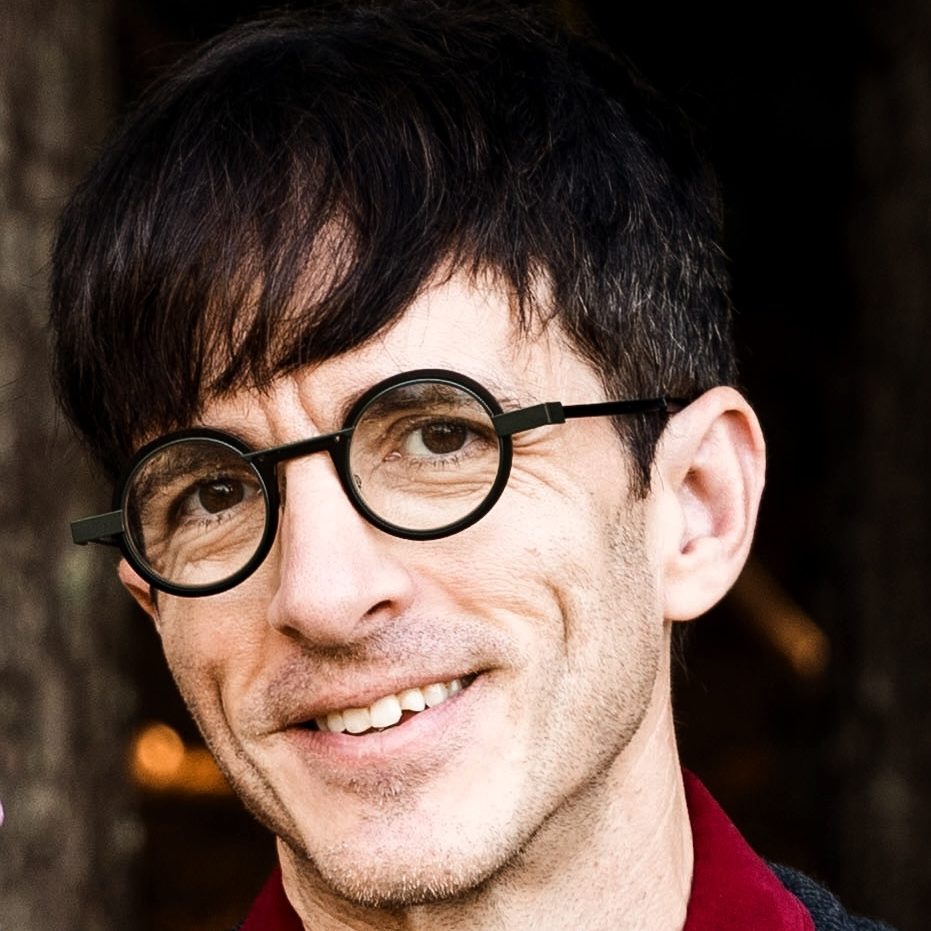
Kurt Beals is visiting associate professor of German and Humanities Fellow in Literary Translation at the University of Richmond. He was previously associate professor of German and Comparative Literature at Washington University in St. Louis. His research focuses on experimental movements in 20th-century and contemporary German literature, media theory, and translation. He is the author of Wireless Dada: Telegraphic Poetics in the Avant-Garde (Northwestern UP, 2020) and articles about authors including Max Bense, Paul Celan, Ferdinand Kriwet, and Regina Ullmann. He has translated a wide range of works from German into English. His translation of Jenny Erpenbeck’s speech and essay collection Not a Novel was included in World Literature Today’s 75 Notable Translations of 2020. Most recently, he has translated Erpenbeck’s collection of short essays Things That Disappear and re-translated two classic novels, Hermann Hesse’s The Steppenwolf and Erich Maria Remarque’s All Quiet on the Western Front.
✶

A self-taught photographer, Vishaal has an eye for quiet, still moments and a deep appreciation for nature. His photography has appeared or is forthcoming in Juste Milieu Zine, Moiramor, Ink In Thirds, Moonlit Getaway, Quibble Lit, Union Spring Literary Review, Another Chicago Magazine, Gabby & Min’s Literary Review, Paper Dragon, 3Elements Review, Eleventh Hour Literary, and The Word’s Faire.
✶
Whenever possible, we link book titles to Bookshop, an independent bookselling site. As a Bookshop affiliate, Another Chicago Magazine earns a small percentage from qualifying purchases.
 Another Chicago Magazine