
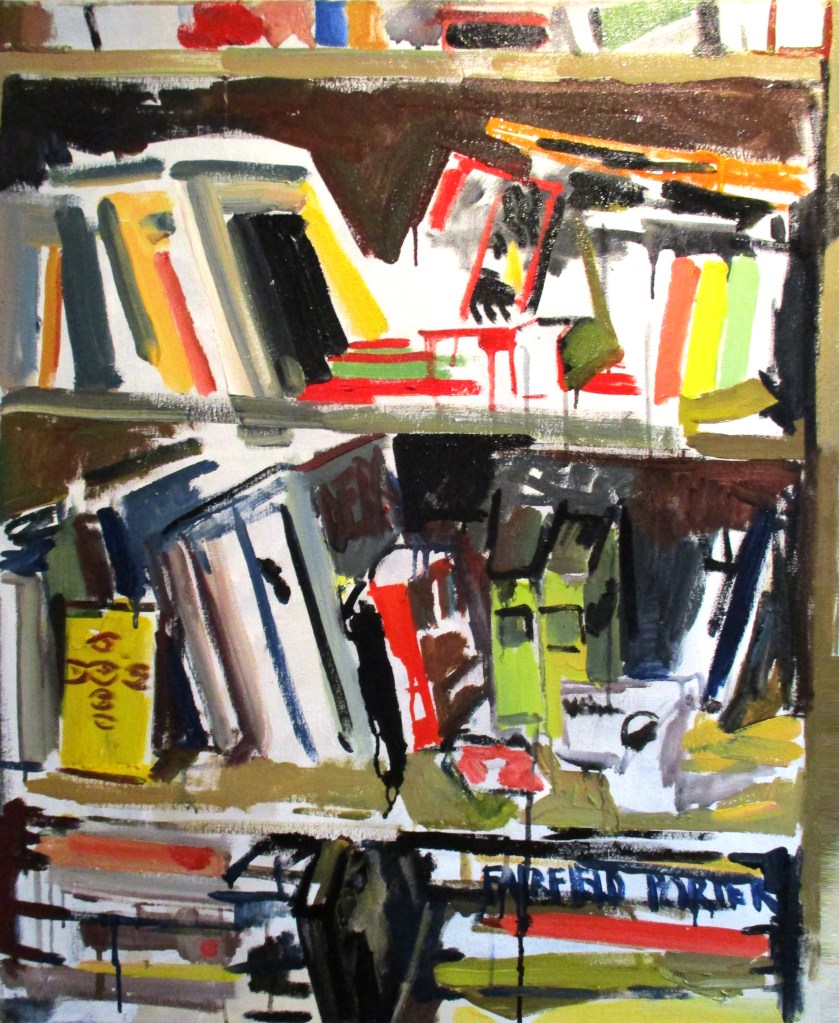
Ali is a boy with eyes like the color of the soil his mother tills in their backyard teeming with tamarind, mango, and guava trees. A boy who dreams more than he eats and eats less than he needs for a growing fourteen-year-old body he must learn how to handle. A body with hair that sprouts overnight. Every day, along with his hunched grandfather, Ali pushes the creaking wooden cart, warped with the weight of propagated branches, limbs severed from their mothers, stuck upright in old yogurt and milk containers. Walking beside his grandfather, limping and hobbling, Ali plods the skirting clay walls of Bandar. His grandfather’s raspy hollers tumble against half-open windows, “Young Trees for Sale!”
Today, Ali is alone, his grandfather battles a cough that sounds as if he is choking on sunflower seed shells. Just a quick stop, Ali promises himself when he reaches Bandar’s small library. The dust of this library, three shelves thick, feels moist with mysteries. All these lives waiting, possibilities beyond the reach of the roots of any of their trees. Danielle Steele’s Going Home, Alice Munro’s Dear Life. Richard Bach’s Jonathan Livingston Seagull. Ali flips open a moldy Farsi translation of The Three Musketeers, his eyes landing on “All falsehood is a mask” just as a slip of paper glides down onto the library’s patchy carpet.
A coded note, a hidden treasure discovered by Ali alone which he carefully tucks into his pockets, lets its possible meaning linger in his mind the whole way back home.
Two days to untangle the mesh of circled vowels, dotted sentences, backward letters: “Who’s out there?”
In Ali’s imagination, the writer of the secret message must be a girl with guava-tinted cheeks, cherry-kissed lips, a smile as sweet as sun-warmed mangoes. Her voice must reside somewhere between the vibrations of his grandfather’s setar strings.
Ali toils for five days to scribble back a coded reply, “I’m here. Who’re you?” Then an eternity seven days long to gather the courage to slip the reply into the book, a second eternity to lurk around the FOREIGN BOOKS shelf as his grandfather wrinkles into himself on the bed.
In the evenings, Ali averts his mother’s quizzical looks. “Why are the deliveries taking so long?” she asks.
He’s been waiting at the library instead, delaying his deliveries, assured that one of these days, the secret writer must materialize. Just one look, he promises himself, even if it’s only at her eyes, framed by what he imagines as the most beautiful of all burqas, its orange color shaming the sunset.
Over the weeks that follow, Ali’s patience becomes a cracked pumice stone. No other slips of paper.
What if the message was written eons ago? What if he is too late?
Summer bakes splintering cracked fingers into clay walls that reach nowhere. Ali’s mother fills fat-bellied jars with orange peels and anchovies. Jars that patiently wait in the cool storage room. Some days, Ali joins the jars too, scribbling letters to the secret writer; letters he doesn’t feel he will ever be able to send. How to reach her? One cannot stuff a library, merely three shelves thick with all these words. Too noticeable.
The secret girl also breathes the salt-licked air, knows the aches of living in this town of tight alleys. When she is ready, she will reply, he tells himself, composing poems with far too many mentions of guavas, mangoes, lips. He searches for her in the framed eyes of every girl who passes by his wooden cart but none return his gaze. His arms are too lanky, his mustache is like a protesting worm. He takes to drawing forests thick with trees, mountains piercing the sky, sights he has only known in books. Would you like to one day to climb Mount Everest with me? he writes at the bottom of one picture. He has read that corpses are strewn across the ground on the way to the top. Imagine the courage to walk by the dead, on the way to the sky.
Today, summer is showing off her powers, her heat cracking lips, blistering cheeks. Ali helps his mother bury eggshells in the soil, rescued from the neighbor’s trash. His grandfather, feeling better, strums the setar, sweat drops lodged in the folds of his wrinkles. Ali’s hands are dirt-smudged, the musty aroma both familiar and repulsive.
“What’s this garbage, Ali?” his mother asks, in her hands, his pictures and poems. His tongue turns into a dead worm, slimy, useless.
“I’m writing a book,” he stammers.
“Words have never fed anybody,” she says, the stack rolled in her hands like lavash bread. He waits for her to throw them into the garbage bag. But she doesn’t. Instead, she stuffs them in the rusty chest holding her clothes. Later when his mother has left to haggle with the farmer over wrinkled potatoes and wilted parsley, Ali snatches the papers. The thought of his mother reading words meant for the secret writer burns his face with shame.
He runs the length of the snaking alleys, his throat aching as if he has swallowed a hundred fishbones.
The seawall’s clay crumbles under Ali’s footsteps, falling into the vast stretch of blue. A seagull’s swift glide sends a pang of envy through Ali’s spine. What does it take to become a bird? He finished Jonathan Livingston Seagull last week. Would the secret writer have loved Jonathan and his insatiable quest for flight too?
Ali crumbles the paper into balls, feeds them one by one to the hungry blue. Maybe as the papers dissolve into the sea, the mighty waters will whisper his words to the girl of his dreams.
Ali’s brown eyes search through the boats bobbing up and down by the pier. What if she is already there, in one of them, waiting for Ali to leave everything behind?
What if all it takes to leave is one step into a boat?
✶✶✶✶
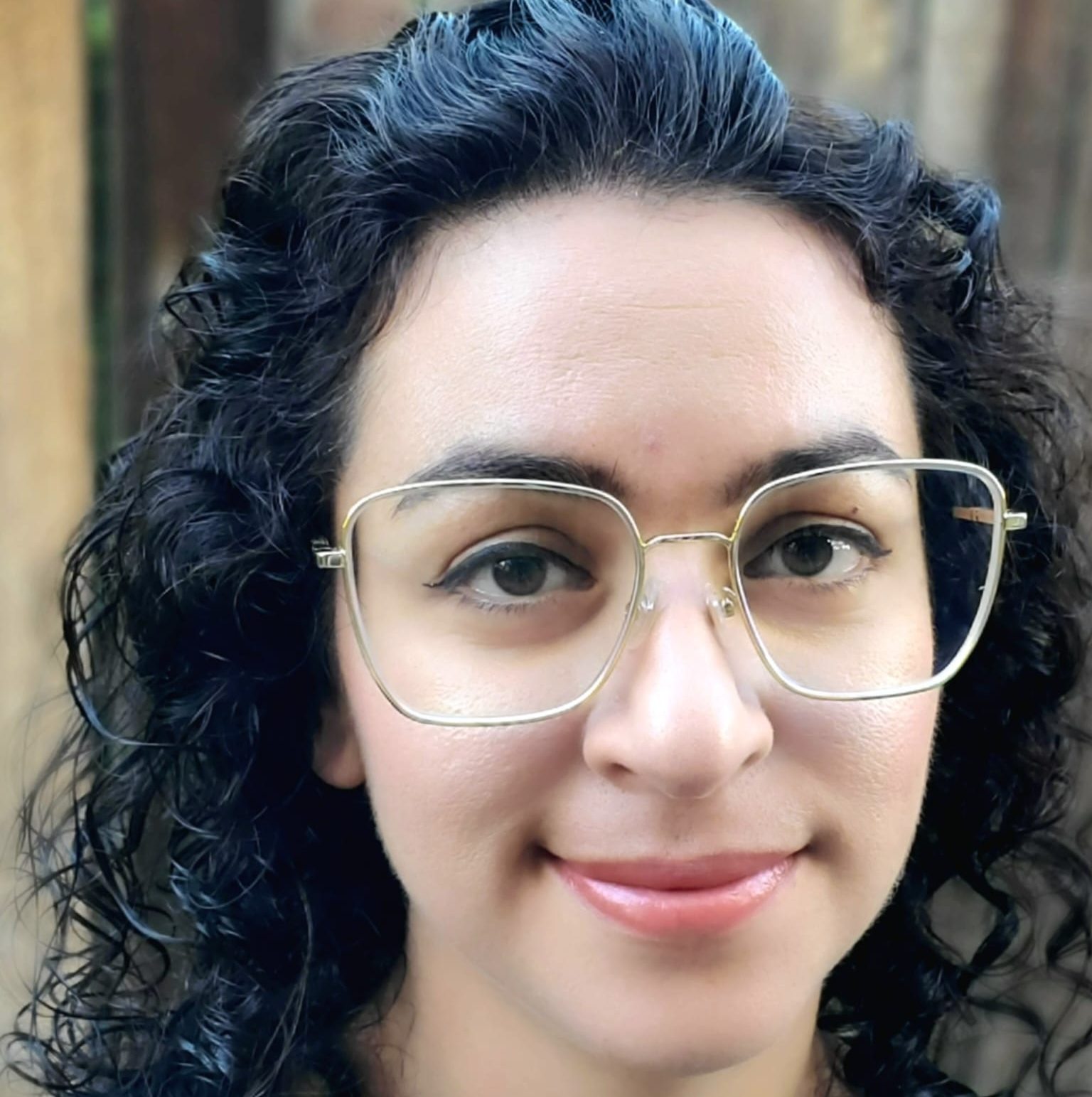
Pegah Ouji is an Iranian American writer who writes in Farsi and English. Her work has appeared or is forthcoming from Joyland, Epiphany, Fugue, Split Lip among others. She has been a scholarship recipient from Kundiman, Sarah Lawrence Writing Institute, Hudson Valley Writer’s Center, Literary Arts, Grub Street, and Shipman Agency. She was a 2024 Emerging Writer Fellow at Smokelong Quarterly. She is currently an editorial fellow at Roots, Wounds, Words where she is working on an anthology of creative work by BIPOC justice-involved and impacted artists. She is the winner of Gigantic Sequins 13th annual contest in 2024.
✶

Dmitry Samarov was born in Moscow, USSR in 1970. He immigrated to the US with his family in 1978. He got in trouble in 1st grade for doodling on his Lenin Red Star pin and hasn’t stopped doodling since. He graduated with a BFA in painting and printmaking from the School of the Art Institute of Chicago in 1993. He drove a cab — first in Boston, then after a time, in Chicago — which led to the publication of his illustrated work memoirs Hack: Stories from a Chicago Cab (University of Chicago Press, 2011) and second cabbie book from a press not worth mentioning. He has designed and published six books since. He writes dog portraits and paints book reviews in Chicago, Illinois.
✶
Whenever possible, we link book titles to Bookshop, an independent bookselling site. As a Bookshop affiliate, Another Chicago Magazine earns a small percentage from qualifying purchases.
 Another Chicago Magazine