

A typical woman’s body is less than 10% head. I know this because, in the mid-1990s, a team of researchers used a gamma ray scanning technique to gather data on the relative weight of human body segments in a sample of college-age students. My father told me about the study before dinner one evening. I was twelve years old then. To make the findings easier for me to imagine, he grouped them into general body areas and rounded the percentages. He only gave the mean figures—the typical woman—which he’d committed to memory. From the ground up, she is 18% legs, 16% pelvis, 53% torso, 5% arms, and 8% head.
I’m unsure how he found this research. He had no professional concerns related to women’s bodily structures. He was not a physician, an anthropologist, or a life insurance broker. He built houses in a small town that was shrinking. My guess is he had downtime, got an idea, and went to the library to see if anyone else wanted to find out how much of a woman each part of her should be. As a builder, it is possible his knowledge of load-bearing walls overlapped with his interest in female weight distribution, but I believe he could’ve had any job and still spent most of his time thinking about women.
Large women disturbed him the most. The way some men pursue hobbies like marksmanship, ham radio, or homebrewing, my father gathered insights into women’s physiques to expand his sense of the varieties and causes of their heaviness. His activity was not limited to the library. On the street or in crowds, he seldom passed any woman below the age of eighty without disgust reshaping his face. He also made noises that were sometimes words and more often throat sounds whose pitch represented his feelings. When he watched TV, I didn’t need to be in the room to know what size woman had appeared on screen. Cow was one of his words and a noise he made. The same with horse. I can’t recall others. They weren’t all animals, but I remember the animals, possibly because we lived in New Hampshire and our neighbors had a farm with Holsteins and a red horse I used to brush and feed apples. Or it could be I noticed the animals because, like many cows, my name is Annabelle. The farm also had sheep and chickens, but those were not among my father’s words or sounds.
I shared his interest in the bodies of women. Being twelve, I saw what the older girls at my school were becoming. My father did, too, and he expressed opinions and predictions about their sizes when dropping me off on his way to a job. One day I would be the age of those girls, making the walk to the high school entrance, and there would be crows, the same ones or their children, scanning for objects of promise within the parking lot litter in the white light of morning that made every bulge of matter visible. So I listened when we met in the dining room before dinner. The long nights of New Hampshire winters are good times for learning. When the sun drops and the home contracts around a stove or radiator, most families talk about those whose blessings, such as love, don’t align with what they deserve. My father was hard on actresses and other public women, but he was also critical of ladies in our community whose bodies I saw move through the supermarket, church, and school.
My father had opinions on the researchers’ head percentage. He found it misleading. A bunch of adult heads weigh roughly the same, but this is not true about women’s hips.
“Consider hats versus pants,” he said. “It’s hard to see differences in hat diameters, but fat pants are fat pants. You don’t have to be a deadeye to spot a wide load.”
Relative weights were useful, but only with head weight as a hard quantity. For instance, if a woman with a 10-pound head found herself at 25% pelvis, well, something had gone wrong.
He leaned back in his chair as though a huge pelvis had crash-landed onto the table in front of us. He was cleaning his teeth with his tongue. I could hear the sound of it over the fire in the stove behind me. Sometimes the teaching happened like this: A body part would throw him into a mood, and I’d need to join him in thinking about it. Ankle, calf, inner thigh, outer thigh, backside, stomach, bust, neck, chin, shoulder, upper arm, wrist, fingers—we’d been through many parts. That night, I tried to visualize a one-quarter-pelvis woman. I’d never seen how women were beneath their clothes. What I imagined was a normal lady with a smaller head and a heavy sweater tied around her waist, only the sweater was made of flesh that clapped against the backs of her legs as she walked. I knew I must have been wrong. I would have seen her before. Misshaped women were everywhere in February. My father pointed them out, the many women carrying their holiday indulgences around in their skins. He did that thing with his teeth, and I sat still, trying to think.
My mother was not in the room during these meetings. Often, I’d hear her go outside. I guessed she was getting logs for the stove. She was never out longer than half an hour, and I could see her flashlight moving in the woods around the shed where the logs were. I didn’t really know. She could’ve been checking the cold garden or harvesting pine needles and wintergreen for her teas. The neighbors’ farm was near enough that I could see their lights through the woods with the leaves down. It occurred to me they might also see her flashlight. If they noticed, they never came by or called. Probably, they assumed what I did: firewood, garden, foraging.
Her food was in the room. To save fuel, she cooked on the wood stove that heated the center of our house. It sat along the north wall of the dining room, which was why my father and I met there. She cooked stews, and her stews were always chicken or turkey because my father was afraid of a clogged heart. We were not a beef household, except when he ate it medicinally in a cold sandwich. We were also not a cheese or pork household. Fish was safe, but grocery fish cost too much for daily eating, and my father did not ice fish or have friends who knew how. The stove was iron, with small feet, a heavy belly, and a bake oven on top. There would have been bread in the oven to dip into the stew once my mother had skimmed off the surface fat with a lettuce leaf. We ate a lot of bread, whole grain without butter or salt. Fresh, it formed a ball in my mouth that held its shape as it traveled down my neck. I felt the presence of it inside me as a separate thing long after I’d swallowed it.
She had not yet come in to set the table, so what was in front of my father were his drawings of a sunroom he’d add to our house once the snow left and the ground loosened. He’d built our house, all of it, from materials he’d salvaged. It had been functional at the time of my birth, and he’d been improving it since. Much of the house was made of brick he got when an old church in Massachusetts burned. The stove came from that church, as well as some stained-glass windows. Our rooms were small, so the figures in the windows were outsized and close. The dining room window had just a portion of a scene: a group of sheep with dark heads lying on a wedge of field with sun rays angled over them. That night, the moon backlit the window, which made the scene seem cold and wet, like the rays were sheets of rain instead of light. I’d been at our neighbor’s farm enough to know wool repels water. The sheep in the window had heavy fleeces and would have been fine in that rain. I also knew you can shear a sheep and it’s still a sheep, although, by weight, it is more head than it used to be.
I asked my father how much he thought my head weighed. Given things I’d heard him say about women’s weights in general, I figured he’d be able to appraise the weight of a specific body part. Even if I’d had access to head-weighing equipment or books that quantified components of human body mass, I still would’ve asked because I loved my father. I wanted to know his assessment of me.
He was quick with his answer, his eyes on his plans as he refined the pitch of the sunroom’s roof. He didn’t need to look to conclude that, although an average woman’s head was 11 pounds, mine was safely 12, at least. Even considering the optical illusions created by my neck, which he’d long ago defined as normal-to-slim, he guessed my head was a minimum of 10% bigger than average. If I ever became 25% pelvis, well, something really had gone wrong.
This wasn’t a surprise. We knew my head was big. It had been big since before it hit air. My mother’s doctors did not even suggest a natural birth. If they considered it at all, it was probably in the breakroom and involved miming and laughter, my father liked to say. I was not a huge baby, and my mother was not tiny in the pelvis. Draw an average line through height and weight maternity statistics; my mother and I would’ve sat right on it. Except for my head. A normal baby is about 25% head. I was more head than that. I was not pathologically macrocephalic. Everything upon and within my head was proportionate. Its size was not a symptom or a cause of abnormal development. Apart from the need for a surgical birth, its dimensions caused no real problems. My father dropped me on my head a few times. In his life, he must’ve held other infants with normal weight distributions, and I balanced differently in his arms compared to what he was used to.
I grew into my head, but my head also grew. Though I didn’t remain above 25% head for long, I never leveled out to standard. I had other proportional irregularities that became apparent once I began walking. I was broad-shouldered, long-torsoed, thin-hipped, and short-limbed. These were facts of my skeleton that, by twelve, I’d had time to accept, so it didn’t hurt for my father to name any of them openly, no more than it hurt for him to joke that seeing me was like looking down on a normal child from the third rung of a ladder. Jokes can’t hurt when they’re near the truth. He had faults, too. His own head was normal-sized, but in the shape of an unshelled peanut. His arms were too long for all shirts, he had the hairless ankles of a ballerina, and his neck was the neck of a stupider man, thick and short with a horizon of sun damage. He said this about himself, and I could agree out loud.
The body of his dog was another matter. She was a basset hound called Mary whose proportions from any angle were a joke I didn’t dare tell. She was at least one-quarter head, a fraction leg, the rest of her loose skin and spit. Her ears looked like she’d angered a witch, and her eyes told the same story. We had other dogs, and only Mary’s snores were audible through walls. She smelled like an unbaked rye loaf.
But he loved Mary. It was observable.
By age twelve, I’d begun to hope love transcends ugliness. A loved body can’t repel whoever loves it. I had evidence supporting this hope every night because what Mary loved was lying on the rug by the stove with her head on his feet, her slobber soaking his shoes down to his socks, I knew, because the socks stank up the hamper. Yet as he sketched, he’d reach down to stroke the bony ridge at the top of her head whenever she released a wet sigh.
I wasn’t hoping my father would deny my head’s bigness that night or any other. In some ways, it was a relief knowing its size in the concrete term of poundage. While he busied himself with his drawings, I used the researchers’ percentages to calculate the ideal weight of a woman with a 12-pound head like mine. I showed him my work. He checked my math. It was correct. She should weigh exactly 150 pounds: 79.5 pounds of torso, 24 pounds of pelvis, 13.5 pounds per leg, and 3.75 pounds per arm.
But a woman of that weight was three Marys, he said. Her torso alone was heavier than a bloodhound. A 24-pound pelvis was a cocker spaniel-sized pelvis. He slid my paper beneath his drawings. The problem lay in the percentages, he said. The data was observational. It measured how people were, not what was optimal. I should find a better percentage for myself. When my mother came in to serve the stew, he sheaved his drawings, together with my paper, and moved them to a chair by the stove. After dinner, he glanced at my math, then put my paper in the fire.
Later that night, in my bedroom that was actually a porch enclosed in lumber because he had not designed the original house for children, I did more calculations. I had taken my weight before bed. At that time, I was 10.71% head, better than the 8% of the women in the study, but the decimal was awkward. 11% would be cleaner. My room was uninsulated and far from the woodstove, so I got under the weight of four quilts and a sheepskin our neighbors had given me, and I did some thinking.
There are two ways to manipulate the head-body ratio: change the size of the head or change the size of the body. You can’t change the size of just your head in significant ways through natural means. I’d lived with my head long enough to know that. But body weight can change without huge alterations to head weight. For example, a 50-pound overall weight loss might only take a few pounds off the head, mostly from the lower face.
I didn’t need 50 pounds. I just needed 7.
Though it was late, a light was burning in the farmhouse down the road. Our neighbors had a son, Ben, who was in my class. The light was in his window. It was often on at night, and I looked for it sometimes. What Ben loved the most was cows. A thing happened to his face whenever he saw them. It became simpler, as if a knot inside him had released. His favorite fact was that cows can analyze the contents of their own minds. They know what they know and how they know it. Maybe he was up late with one of his cow books gathering facts he would tell me the next day as we watched birds dip in and out of the cafeteria dumpsters while other kids screamed in the playground. From Ben, I’d learned cows can eat large quantities of human junk food with no bad effects. I shared some of Ben’s facts with my father, but not that one.
When I told my father of my 11% head goal, he was busy with his plans again. He’d finished the drawings and was now calculating the number of bricks he’d need for the foundation. But he did take a moment to check my work and confirm my percentage was adequate, not just for the time being, but for the rest of my life.
“Out of curiosity, what’s 10% for you in pounds?” he asked, and I could tell him without doing more math. I’d made tables.
“Well, Annabelle, that’s right on the edge of, you know,” he said, and he made a noise that was right on the edge of mooing.
He gave me an extra data point. A typical woman’s brain is about 2% of her. Weight-wise, she is 69% trunk and 31% everything else, including brain. She is mostly an enclosure for viscera, with a quartet of limbs to feed and haul her around, and a piece of fruit at the top containing the oily little nut within which she thinks.
But he didn’t say these things all the time. The percentages were a curiosity, rather than standard, as far as his interest in women’s bodies was concerned. Typically, he favored hard numbers. Outside of pregnancy, he said a woman should weigh between 115 and 120 pounds regardless of height, build, age, or occupation. We never talked about percentages after I’d achieved my goal, which took me a couple weeks of less stew, no bread, and working in the cold garden alongside my mother, but I did further calculations. I found that a 115-pound woman with an average head is 9.6% head. For a 120-pound woman, it’s 9.2%. Both are higher head-to-body ratios than the 8% in the research, but lower than what my father said I should maintain. My mother weighed 120 pounds with a normal-sized head, so I didn’t need to calculate her, though I did make several drawings of men and women with different-sized heads that, when combined, would produce offspring of my dimensions. A big head must come from somewhere.
I didn’t know of any men in our community with heads whose excess size, combined with my mother’s normal head, would produce me. Still, I wondered about her. The morning after I’d made the drawings, we were harvesting beets. She was wearing a wool coat, plaid with toggles down the front and a hood that hid her face from me as she bent over the plants.
I said, “Mom, when you gave birth to me, did Dad have questions?”
“What kind of questions?”
“The kind of questions that come up when a baby is freaky in some way.”
She sat back on her heels. Instead of looking at me, she turned toward the house. After a pause, she exhaled the breath I hadn’t realized she’d been holding.
“Annabelle,” she said. “Whatever I tell you, you’ll believe him over me. People always do. They do and they will.”
Then the front door opened, my father looked out, and my mother’s hood dropped over her face as she resumed her work with the beets.
When he died, it took him a week, and the hospital in which he spent this week had invested in high-lumen LED fixtures tuned to mimic the strong light of midday sun, so I had an extremely clear view of what was happening to him. I hadn’t seen him for decades, not since the winter of the percentages. It turned out that what my mother had been doing outside at night was stashing her belongings in the woodshed. A morning came when she told me to get in the car: My father had forgotten his lunch, and we would bring it to the condemned mill where he was bidding on bricks. We did not go to the mill, and he did not pursue custody.
Because I never looked them up, I didn’t know what percentages for the typical man the researchers reported in the 1990s study. In college, I studied art, and I became a painter. Over many hours with human models, I had discerned that the distribution of a man’s mass differs slightly from that of a woman: 1% more arm, 1% less thigh, 2% more torso, 2% less pelvis, despite having a fraction of a percentage more mass in the groin. My memories of my father’s body were not great. In the winter of the percentages, he’d worn baggy corduroys, flannel shirts, and sweaters that effaced his shape. Still, I’d always imagined him as average, a little taller with minor irregularities, but otherwise ordinary, even generic, like the men who appear in commercials for trucks. After leaving him, my mother found immediate love in a man of generational wealth who ran a pottery studio in Freeport, Maine, and she enrolled me in a boarding school not long after. I was thirteen by then, old enough to ride a bus between Maine and Massachusetts, where the school was, alone. There had been a TV in the common area of my dorm, and a Chevy ad seemed to play all the time during my first year. Kids would go around singing, “Like a rock—oh, like a rock.” In the ad, a crew of friends drove their trucks to a field where they raised the frame of a small house, and no one minded how hot and dusty the day was. They glowed with effort and goodwill. The ad ended with a man leading a woman toward the scaffold of the home beneath a pink sky as dusk blurred the land. The body of the man was nothing special—tanned, sturdy, easy in its movements. It’s possible that my sense of my father’s build was partly created by commercials like the Chevy one.
But by the time I got to the hospital, he was mostly torso, far too much torso, more torso than I’d ever seen, a yellow torso swollen tight as a blister with a rash that climbed from his hips to his shoulders. What was not abdomen was skeletal, and the percentage of him that was torso increased at an almost visible rate. I would estimate that he was 80% torso, 10% head, and 10% percent limb when he died.
He’d retained most of his hair, which was curly and auburn. He spent a lot of that week touching his hair, raking it with his fingertips and drawing it down over his forehead. I tried to see only that, the constant business with the hair. I was a painter. I knew how to center. Bring prominence to one thing, everything else recedes. But my mind fought against the torso. Perhaps his did, too. The hair proved that somewhere on his body he was still himself, so he kept his hands on it, even in those times when he pushed his face into his bed frame, releasing moans through his nose. He would leave his hair alone only long enough to taste a spoon of sherbet or sip water or grip my arm and use it to heave his shoulders up the bed, as if, together, we were working to free him from whatever had gotten inside his belly and bloomed there like yeast.
To him, I could have been anyone. I checked. This was shortly after I arrived. I asked him if he knew who I was, and he thought about it.
“No?” he said.
He raised his voice.
“No,” he repeated.
And yet once—it was the morning he died—he stopped touching his hair and stared into my eyes. He was no longer speaking by this point. I couldn’t know what he intended to happen between us, but I held the stare. His eyes were clear and blue, like a lake reflecting a sky so bright you can’t see what’s really in the lake. For how long we watched each other, I’m not sure. Minutes. Then a chickadee began singing in the tree outside the window. He smiled at that. I thought he was smiling at that until he lifted a hand and tapped my chest with his fingers.
I gave what I thought was the right answer to this.
“I love you, too,” I said.
He looked at me like he was suppressing a sneeze. No. No, that wasn’t it at all. He poked at my chest with more insistence, and I realized he was reaching for my pendant, a two-inch silver bar with ruler calibration. I put the bar in his fingers, and he relaxed, moving his thumbnail over the notches, until a nurse arrived to shift him. I began taking the necklace off so he could continue to hold it, but the nurse said that was dangerous. He could eat it.
His hand was cold against my chest, and his gaze was now swimming around the ceiling. He had forgotten the pendant. I looked at his feet, which were mottled up to his ankles.
I said to the nurse, “Would you repeat what you just said in exactly the same words?”
But the nurse had met people like me before.
“You can keep talking to him,” she said. “Hearing is the last thing to go.”
“About what? He doesn’t know me. I confuse him.”
“A calm voice and kind words are soothing, regardless of the source.”
I kept looking at his ankles. Bald and delicate, they were a thing he once invited me to mock to take the sting out of my defects. I wanted to say something about them. The right joke, he might remember who I was. A dumb thought. No. Time and the torso had digested all traces of me, and a tideline of darkness crept its way up his shins, like the torso was drawing that into itself, too. I ran my nail over the ruler. It had been a graduation gift from a professor who painted canvas after canvas of a man praying alone. That was all he painted. My mother met him. After the ceremony, he walked with us to the student gallery, where my thesis was hanging. I spent college painting animals, altering their proportions to define and intensify viewers’ sentiments. For example, most people find the proportions of youngsters endearing. I’d taken “Portrait of a Stag” by Diego Velázquez and repainted it two dozen times, adjusting the proportions of the animal’s features in each version: charming stag, powerful stag, sinister stag, pitiful stag, etc. The professor told her I was meticulous, and she agreed. After he’d gone, she said there was probably a clinical term for how my father and I were.
“Or you could just read him a book,” the nurse offered.
I inherited his property. I was the only option.
He never remarried, and he had no siblings. He could’ve named a neighbor or friend in his will, but nobody came to the hospital or left a note at the house.
He’d done nothing to the original structure, apart from cleaning and maintenance. There was no sunroom or any of the other additions he’d planned. With its stained-glass windows and miscellaneous salvaged parts, the house was peculiar, but sellable. In fact, it was already empty of furniture and objects, and he’d sanded and varnished away all marks of previous occupation, including the notches he’d cut into a doorframe to track my height.
The problem was a second structure the size of a trailer he’d built in the front yard. Windowless, brick with a slate roof and a steel door, it resembled a storm shelter. He’d built it in phases. Every few rows, the bricks were a different shade of red. There was nothing else to inherit. He had poured the contents of his bank account into this second structure, which had a chimney and a spigot, and I learned from his utility statements he’d run power to it. The door had a padlock I couldn’t find a key to, but his bills taught me he’d been living in the shelter for at least a decade. Power still ran to the original house, and so did water, and a few cords of firewood remained by the shed.
I didn’t have a fixed schedule. I had stayed in Massachusetts, where I cobbled an income from pet portraiture, mainly for rich Bostonians with estranged adult children and beloved dogs. I also supported myself with zoo commissions and signage jobs—farm, food co-op, dog salon—and by teaching classes for adults who wanted to paint their own pets. I taught my students how to manipulate shapes and ratios to convey their love for their animals. The proportions of a baby usually got the job done: 25% head, with a wide brow and small chin. I didn’t have a class on the calendar, so there was nowhere I needed to be while I figured out what to do with the property. I had to paint a cow mural for a cheese company, but not until spring, and they’d already approved my sketches. In the meantime, someone needed to keep racoons out of the house, snow off the roof, and pipes from freezing until the thaw. I called my landlord and then sealed off the original house apart from the kitchen, bathroom, and dining room. I put an air mattress where the table once was, fired up the stove, and settled in for a month of quiet.
While shopping for the air mattress, some clothes, a radio, and other supplies, I’d found myself in the aisle with the towels, toilet brushes, and bathroom scales, so I bought a set of towels, a toilet brush, and a scale I put in the old place, next to the clawfoot tub. I hadn’t had a scale for years. Because it was there, I used it. My mind made a calculation: 9.2% head. My mother had been 9.2% when she lived there. Her percentage had nosedived in the years since. She was probably under 8% now, maybe even 7%.
I didn’t check the scale for a few days. Mornings, I ashed out the stove and restarted the fire. I chopped wood and shucked icicles from the eaves. It snowed, so I shoveled the drive and the path to the woodpile and cleared the roof. At night, I drank hot water and opened closets and drawers that were empty, every single one. The next time I weighed myself, I found my head percentage had increased to just under 10. Over the following week, it climbed to 11. I tracked these changes in a small notebook with a flowered cover I’d bought from the hospital gift shop that only sold one kind of notebook, covered in flowers, for all the words and countdowns patients’ families had to write down. I also made a table in the notebook. One column listed body weight in descending increments of a pound. A second column showed what percentage head I’d be at each weight. I had no reason to believe my father was wrong about the 12 pounds. I also had no way to check. Weighing any non-amputated body part is difficult and weighing a living head poses extra challenges for someone working alone. You can’t just put it on a scale. I considered other methods, but ordinary water displacement can’t account for variations in density within a body, and I didn’t have the strength to mess with boards and counterweights for a teeter-totter method. If I’d had a fresh cow head, I could’ve used that as a guide. But I would’ve been in a different life if I’d had anything’s fresh head.
I thought about Ben a little bit. During boarding school vacations, I interned at a sanctuary for undesirable livestock, where I painted ewes and heifers too old to breed, males of various species earmarked for butchering, and a lot of injured poultry. My job was to create effective art for fundraising auctions. It wasn’t hard. Context did most of the work. My paintings of an elderly chestnut gelding in his winter field did particularly well. His color and temperament reminded me of the horse on Ben’s farm: red animal, surrounded by snow. At the auction, I overheard a lady say it made her think of an organ, newly cut from a body, arrayed on white cloth. She didn’t know where she’d hang it, but she took one, nonetheless.
Those were the days I thought about, when Ben would take a break from his cow books and we’d brush the horse together, then take him out to his field, where he’d lean his body against ours as we watched blue jays come and go from the feeder or ice skaters zip across the beaver pond below the tree line that stitched the mountains to the pale sky. When dusk fell, the horse didn’t want us to leave, but I knew Ben would take care of him. I loved the horse, and Ben knew that. His skin was very clean for a farm kid. I noticed it when the late afternoon sun came in at an angle and lit up his cheek. I never touched him, but later, drying bowls after dinner, I’d wonder if that’s how his face felt, like a freshly washed dish still warm from the dishwater.
I never wrote to him, at boarding school or later. He could’ve been anywhere. His mother might’ve done what my mother did, or maybe he left on his own, as a man. And I didn’t know if he remembered those afternoons like I did. Probably, he’d found someone to be with. Though I lived alone, I’d go to bars and bring men home. In my career, I didn’t paint humans, and there were times I missed the experience of another person’s body. They’d say things about other parts of me, but not one of these men commented on the size of my head. I thought, if they won’t say the most obvious thing, what else aren’t they saying?
When I knew him, Ben smelled like a barn, but did I tell him that? No.
There was this time he showed me his new book about cows. It was a story book, and he read it to me. We were nine or ten, sitting on his porch, and it was summer, a hot day, so his mom brought out cold Cokes and Fritos. I’d never had junk food before. She gave me the rest of the Fritos to take home. Of course, my father threw them away, but I got them out of the trash in the middle of the night and ate them in my room, with windows open so the smell wouldn’t tell on me. Maybe in his life, a woman had told Ben he smelled like a barn, like old milk and cow shit. I wouldn’t. Probably because I was hungry, but when I thought of him, I smelled Fritos and Cokes, plus the birches and hemlocks that grew near the windows, and the deeper woods coming in on the night breeze. The smell of new snow was in there, too, and the apples we fed to his horse. Also, some horse, but not in a bad way. Nothing about him was bad back then.
Above 11% head, it was harder to sleep through the night. Limbs numbed out. Knees bruised against each other. Thirst woke me, no matter how much I drank, and I didn’t like to get up at night because I got the spins when I stood. Soon, I was getting the spins for no reason. I recorded these symptoms in my notebook. They followed a pattern, growing in intensity as my head percentage rose. Some nights, my heartbeat startled me awake. I piled as much firewood onto the porch as I could while I still had the ability. From this, I gained half a percentage point.
At 12%, the circumference of my waist was nearing that of my head, and I made sketches of my new shape in the notebook. I spent the rest of my time in the bath or by the fire watching the light change the stained-glass window. Early in the day, the sheep looked young and fresh, but they aged as the sun moved behind the house. By dusk, they were merging with their pasture.
It’s not that I was trying to reach a certain percentage. There was no good percentage. Not the 8% of the women in the study, or my mother’s old 9.2%, or the 10% my father had warned me against, or the 11% that should’ve been enough for him to care when I was gone. I’d been happy as a child, but the table taught me I could not go below 15% head, the body weight of a 4th grader, without serious risk. It would be hard to survive 20%, the body weight of a 7-year-old girl whose father takes her skating on the beaver pond behind the neighbor’s farm and sits with her by the fire at night, drinking hot milk, playing a game she invented where they are the beavers, their house the beaver lodge he’s building for them. Going all the way back to one-quarter head, the proportions of a normal infant and the magic number where a pet in a painting is its most endearing, would surely be fatal. That wasn’t the plan. There wasn’t a plan. Column 1 ticked down, and Column 2 ticked up. I was aware that the shelter probably had dry goods in the cupboards, but also perishables in the fridge, dishes in the sink, trash that needed emptying. I should’ve taken care of that the first day. People cut padlocks all the time. But it had been weeks, and now the shelter would stink of spoiled chicken, old onion skins, and soured fatless milk.
What was I thinking when I decided to paint animals? I could’ve painted anything. I was a quick study in technique, praised for being teachable. I took criticism and I applied it. Once, I slept with a pianist who’d bombed out of music school when a tutor observed he was great at mimicry and that was as far as his talent went. He could imitate all the surface features of great feeling and intelligence, but he didn’t have those things anywhere inside. He told me this while we were lying in bed, so I asked what he loved the most about being a pianist. He didn’t know. I asked if there was anything he loved, and he also didn’t know.
As a kid, I would have said the red horse. But I didn’t love animals. I’d loved one animal, and I hated a lot of others. Mary the bassett hound, the endless procession of pets with special names and diets. I didn’t become a veterinarian. What I did was imitate in paint a memory of how it felt to behold another living being with love. At one point, Ben loved cows, but who knows what happened? It was possible to end up without an answer.
How would my father answer, alone in the woods all those years, as his torso swelled into the zeppelin that would carry him into the next life? Maybe that’s what the shelter was, a museum of what he loved, for an audience of just himself.
Not a museum of fatness. In the hospital, I’d observed my father wince at a nurse who mistook his expression for pain. Her body was young and soft, no sharp angles or hard borders. It radiated warmth I felt without touching her. When she bent to turn him, his mouth clutched.
No photographic panoramas of rolling flesh. No impasto murals of buttocks and thighs. No broad-hipped statues. No bosom pillows on an overstuffed sofa. None of that. Its opposite.
I imagined him on a hard bench in the center of his shelter whose walls he’d papered with his own architectural sketches. Lying amid his drawings, he would’ve spent his time dreaming of lightness, how weight could be reduced, anchored, distributed, displaced, channeled, balanced, concealed, and absorbed. Most novice artists apply pigment abundantly, but my father wouldn’t have scrupled at exposing bare white ground to denote where light touched his structures. Inside his dozens of theoretical homes, made of various line types and densities as well as the absence of any mark-making, I wouldn’t have been anywhere. He wouldn’t have pictured me. I don’t think he pictured anybody, not even Mary, who was in the earth someplace on the property, maybe in the woods where I made the mistake of releasing his ashes over snow. They left a gray shadow that darkened as more ash settled. New snow fell during the night, though.
I was 12.77% head when Ben came by. It turned out he’d never left. Though his parents had moved into a retirement community, he liked the farm too much to let it go. He had a dog with him, a young border collie who sat with us on the steps that overlooked the shelter. The dog didn’t meet new people often, so this was a chance for her to practice being calm.
“That’s fine, right? Dogs scare some people. But you guys always had dogs,” Ben said.
I explained what I did for a living. The day was cold and clear, and I pulled a blanket around myself. Not that he was looking at me. He was looking at the property, asking about the pipes. I didn’t have coffee to give him, but he’d had his coffee earlier. He told me he’d brought my father to the hospital, so we talked about that a little bit.
“His car was here, but no smoke was coming from his chimney,” he said. “I watched for a few days. Then I came by. He answered and—you know. So, I brought him to the hospital, and I told them about you. I’m the one who gave them your name. My mom said I should. Between getting him in the car and checking him in, I was making a lot of decisions. I told them about you before I really thought about it. Then I got home and thought about it.”
“Thanks for telling them. I mean I was glad to be there.”
“Yeah?”
“Sure.”
The path from the shelter to the driveway was crossed with roots of some red maples I’d planted with my father. They’d been saplings when we planted them. Now they were taller than the shelter, with roots thicker than my arms.
“It must have been hard getting him in the truck,” I said.
“It wasn’t bad.”
“The convincing or the loading-up?”
“Neither part.”
“I saw him. It would have been bad.”
“He didn’t fight me. I had to carry him, but that was fine.”
“Did he stink? Piss in your truck? Look, it’s good to see you. We’re chatting, and that’s nice, but the whole time you might be thinking about how bad your truck smelled.”
He was quiet. He had not grown into a large man, but he’d spent his life building fences, stacking hay bales, shoveling grain. He probably lifted calves often. I wondered if he’d made a comparison while carrying my father, if he’d gotten himself through the ordeal by thinking of the calves he’d held against his body as he brought them into the safety of his warm barn. The smell of the farm was in his clothes. I was right. It wasn’t a bad smell.
By then we were both just looking across the yard. A bird feeder hung from a maple near the shed, one of those long, clear tubes with holes and perches down the side. A pair of chickadees and a nuthatch were fighting for the half-inch of seed that remained at the bottom.
“Dad used to coat pinecones with peanut butter and birdseed,” I said. “In the winter, we’d hang them in the woods. He’d also smear peanut butter directly onto trees, for the deer. The dog got to clean the peanut butter jar with her tongue. He didn’t mind a fat animal. Not me. I couldn’t have any. I guess he changed his mind about the peanut butter since then.”
“Or raccoons did it for him. If you want to refill that, there’s probably more birdseed.”
“They can get their own food.”
I noticed the shelter had begun to look smaller—the whole yard, smaller, like a scene through the rear window of a car driving away at low speed.
“I used to think about licking the deer’s tree,” I said. “I just wanted to try some. It smelled so good. But in too many stories, special food is a trap. You eat it, and a witch makes your body do something weird. Or God. Although there’s nothing in the Bible about licking the Tree of Knowledge. I’m sorry. You don’t want to hear this. Look, your dog is beautiful. I can paint her if you want.”
Ben stood. I thought he might leave. Instead, he took a ball from his pocket, threw it into the woods, and watched the dog run after it. She brought it back and he threw it again. They did this a few more times. Then he started laughing.
“If you still want to lick a tree, I have peanut butter,” he said. “We can do that, easy.”
When the dog returned, we were both laughing. She dropped the ball and stared at us, head to one side, then turned to look around the yard. Seeing the birds, she tore off toward the feeder, barking, and the birds scattered into the trees. Ben began to go after her, but he stopped when he saw me.
“Hey,” he said. “Don’t worry about them. They’ll come back. I’ll get you their food.”
✶✶✶✶
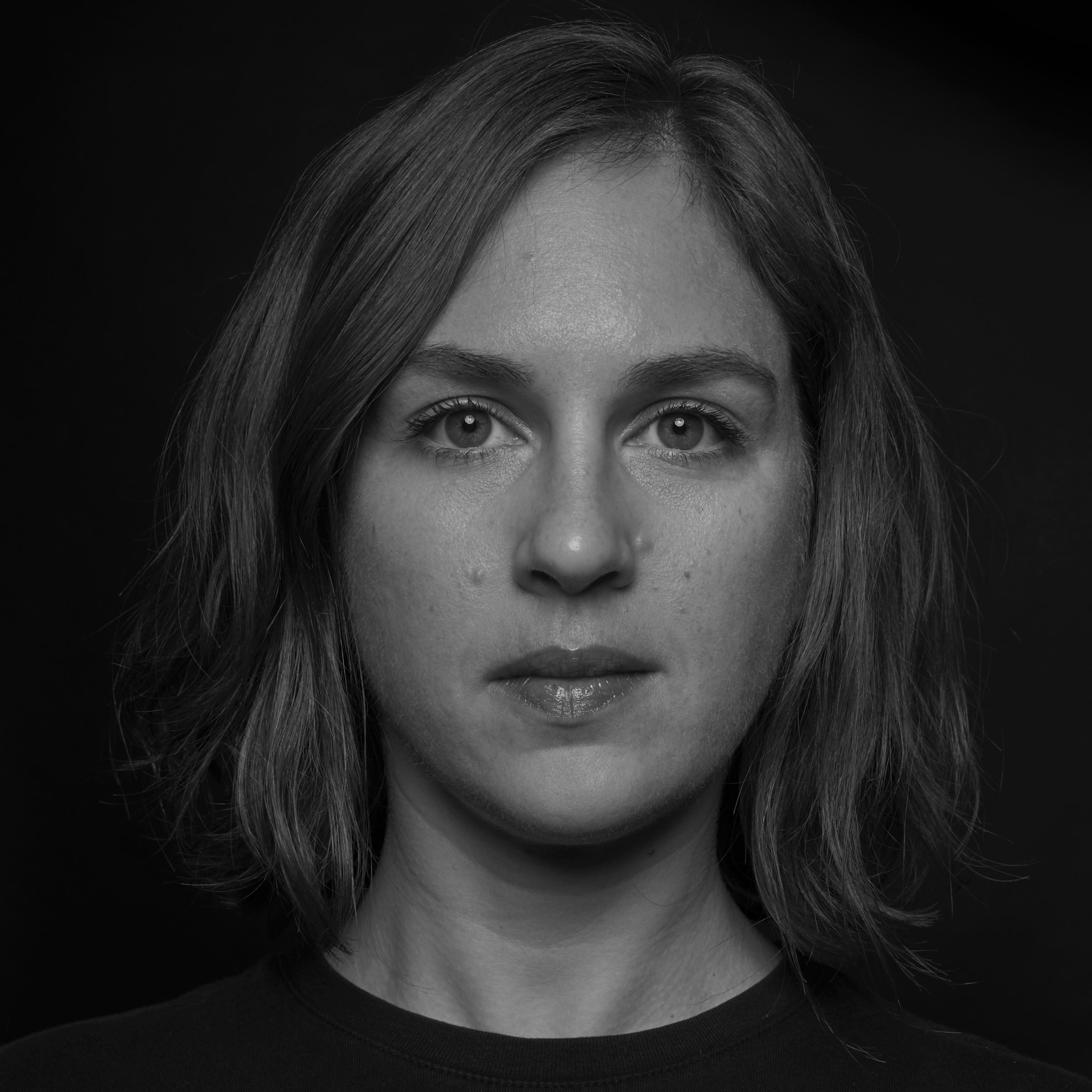
Meredith Shepherd is a writer based in Flathead Valley, Montana. She holds an MFA in Fiction from Warren Wilson College and a Professional Diploma in Dance Studies from the Trinity Laban Conservatoire of Music and Dance. Her work has appeared in Bellingham Review, Contrary Magazine, New Orleans Review, and Tilt West.
✶
Edward Michael Supranowicz is the grandson of Irish and Russian/Ukrainian immigrants. He grew up on a small farm in Appalachia, but has lived in some of the rougher parts of DC and Boston. He has a grad background in painting and printmaking. Some of his artwork has recently or will soon appear in Fish Food, Streetlight, Straylight, Gravel, The Phoenix, and other journals. Edward is also a published poet.
 Another Chicago Magazine