

The main attraction to the hole was that it could paralyze you.
On the northern end of Lake Michigan, breaking waves, winter ice, and wind-whipped rain had crashed and cut into the rocky shore, leaving a high limestone face, pocked with shallow caves. Iron-rich lake water blackened the crevices in the white stone, shading it like a dying tooth.
In the lake, barely submerged boulders made a jagged floor. At the bottom of the rock face, a single hole formed a mattress-sized pool between the surrounding boulders. The hole, visible on the few days each summer when the wind died and the breakers flattened, dropped eight or nine feet, more than the length of a teenage boy, to a sandy bottom.
You could dive off the top of the limestone into the hole, though you had to be careful as hell.
Because none of us was getting laid that summer, we watched for calm days when the water seemed like an open window and sunshine dried the limestone enough for us to hoist ourselves out of the lake. Afterward, on sunburnt evenings at Valmy’s Bar, Steve showed off the stitched-up laceration on his shin. He’d scraped his leg against a rock and it wouldn’t stop bleeding no matter how many towels we wrapped around it. At night I dreamed that the hole descended deep, deep to a cave so dark I could never find my way out, nor did I want to.
✶
Thirty years later, on an icy January morning, I took my fourteen-year-old son to the hole.
Shoved to the shore by a bitter wind, waves struck the rock face. Spray shot high into the tree branches, coating them with frost as thick as down coats. As the water surged into caves under us, the ground shuddered, and a blowhole spat so hard through the cracked ground it seemed it should whistle.
“Look at that!” I said.
“Can we go?”
If I had my way, we would stay forever.
We left.
Six miles south on the beach road, the pavement rose suddenly over a drainpipe connecting two sides of a creek. Thirty years ago, my friends and I would pile into Steve’s Buick, and, as we came to the hump, Steve floored the gas. The car seemed to fly, and we screamed like we were silly and drunk, and sometimes we were.
Now as my son and I drove from the hole, I said, “Your seatbelt tight?”
“Why?”
I floored it.
The car hit the hump, squatted down on its suspension, then sprang and flew. My son screamed like he was silly and drunk.
When I slowed, he said, “Do it again.”
✶
In Saul Bellow’s The Adventures of Augie March, old Einhorn takes young Augie to a whorehouse.
I heard the girls are nice here, Einhorn says. Pick one out.
Me? Augie says.
Do you have to be told what to do?
As I turned the car around, I told my son, “I would never do that.”
“Do what?”
We sped back over the hump.
✶
The winter after we dove in the hole, Steve’s dad gave him a deer rifle, a Winchester Model 70, bolt action. Too much gun for a boy.
We trudged through the icy woods, and when a blood-red cardinal landed in the branches of a birch tree, Steve stopped, squared the gun against his shoulder, and sighted.
“Do it,” I said.
He lowered the gun. If you shot a bird with a big-game cartridge, all you’d get were broken feathers and mist.
We walked until we came to a pond, quiet and frozen, covered with six inches of fresh-fallen. The snow was so dry and dusty it weighed little more than the winter air. As if respecting its beauty, the foxes, deer, and bobcats that lived in the woods had left no tracks on it.
“Like Cindy’s white ass,” Steve said. We still weren’t getting laid, least of all by Cindy, who turned Steve down every time he asked. He raised the rifle to his shoulder, aimed at the pond, and pulled the trigger.
The sound ripped through the woods, almost blew a hole in the sky. The crater in the snow and the black ice under it looked like a wound.
“Why?” I said.
✶
During the summer when my son learned how to swim, I tried to bribe him to jump off the high board, the last one in town after the other parks took theirs down.
“Five dollars?”
“No.”
“You’ll like it. You jump once, and I won’t be able to stop you.”
“No.”
“Ten?”
He climbed the ladder. Inched out on the board, gripping the rails. Stopped. Gazed at the water. Turned around. Came down the ladder.
My wife said, “He’s six years old, for God’s sake. What’s the rush?”
“Once they take away the board, there’ll be nowhere to jump.”
✶
As we trudged out through the woods from the pond, Steve said, “Whit raped Christina.”
Whit was his little brother, Christina a girl who lived down the road. Both thirteen years old.
“How do you—?”
He gripped the rifle around the magazine. “He told me. So I slugged him in the mouth. He said my dad told him to have sex with as many girls as he can now, before he’s old enough to get in trouble.”
“The prick.”
“I knocked him down. When he tried to get up, I kicked him in the ribs.”
✶
When I was ten, I dug a dozen holes in the backyard. Four feet down through sand, root, and clay. Why shouldn’t the soft earth embed arrowheads and hammerstones, fire rings from fires that warmed boys like me a thousand years ago?
The holes breathed damp breath that wasn’t quite alive but wasn’t dead either.
It takes little to make beauty out of wreckage, wreckage out of beauty. Winter sun gleams in the spray, constellates in the ice. A Buick skids from the road and tumbles across a bare field.
The summer after Steve shot a hole in the pond ice, Cindy came to me. What was I supposed to do? It was an asking and a taking.
✶
The rock face above the diving hole looks like the sort of geology that only a glacier could make. Layers of stone crush down more layers of stone, the sedimentary remnants of coral reefs, chalky sand, and seashells from when this part of the continent lay over the equator. But ice ages had no more to do with this place than magic or God. Thousands of years of daily weather chipped and scoured the earth. Another asking and taking.
✶✶✶✶

Michael Wiley is the Shamus Award-winning writer of twelve novels in four series, two books of literary criticism on poetry and place, and more than seventy short stories, essays, critical articles, and critical reviews. After growing up in Chicago and northern Wisconsin, he has taught creative writing and literature at University of North Florida for twenty five years.
✶
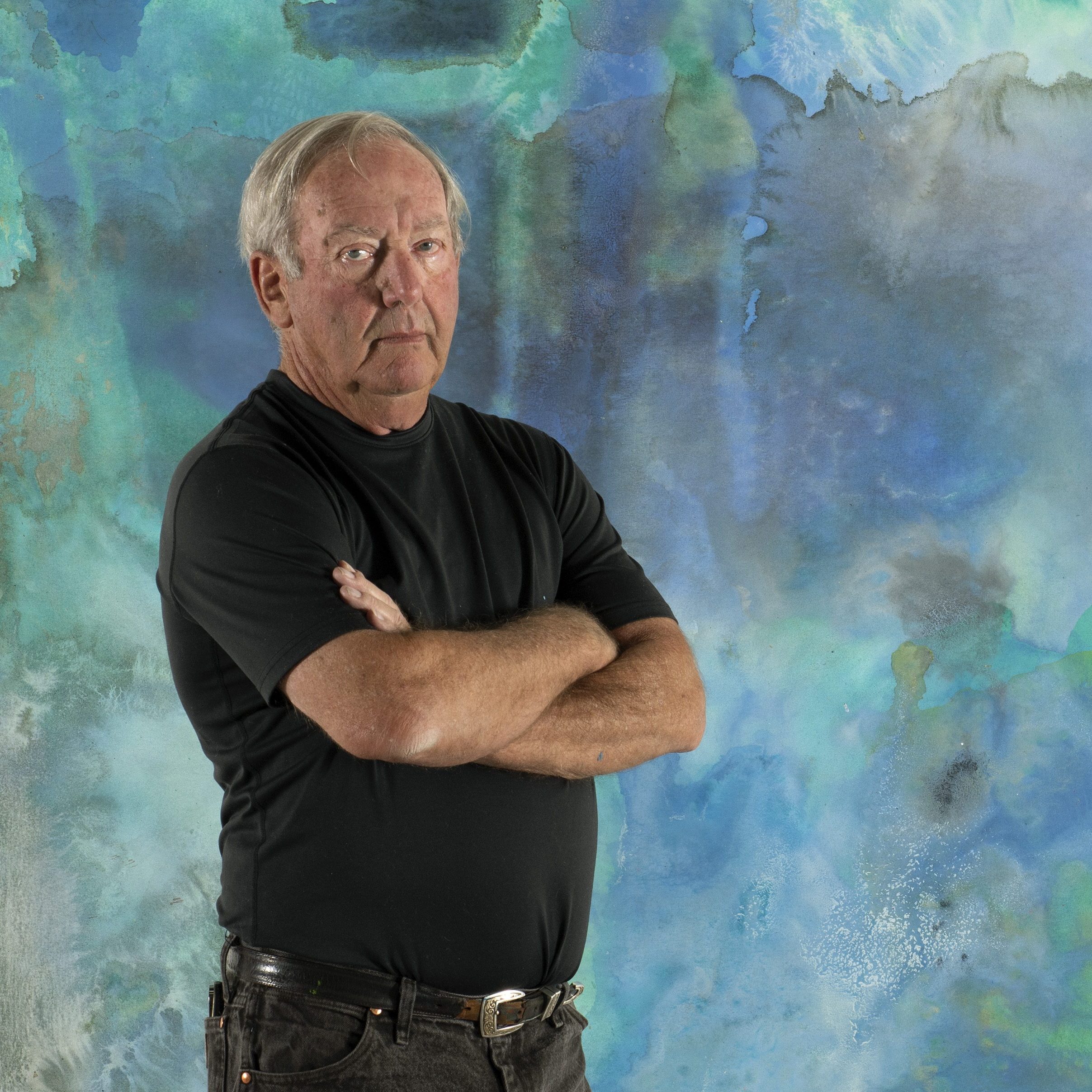
Brian McPartlon (Schenectady, New York, 1948) attended the School of Visual Arts in New York. Recent and upcoming exhibitions include Pie Projects, Santa Fe and the International Art Museum of America, San Francisco. Press includes LandEscape Art Review, Magazine 43, Dream Noir, Arkana, and Pasatiempo.
✶
 Another Chicago Magazine