
Translators’ note
Chilean poet Úrsula Starke’s poetry draws on a variety of themes: struggles with mental illness, the premature deaths of loved ones to cancer and other illnesses, and, much like her compatriot Raúl Zurita, the historical trauma of the Pinochet dictatorship. These poems come from her 2007 book Ático, which consists entirely of prose poems, a form largely inherited from Surrealists and explored by several Latin American poets. As translators we have aimed to remain quite close to the text, resisting the impulse to normalize Starke’s writing and allowing it to remain exquisite in its strangeness.
✶
I
My leg is bothering me in my sterile bed. Time hurts, horizons hurt, lights hurt – there’s room for everything, girl. I taste the apple, my gums struggling to tolerate the bite, and the poison is not even poison but boring juice, bland like moments I don’t understand but sense in the frustrated features of one drunk colleague or another. Because these times are fresh paint, fresh wax, fresh garlic. These times are new grass in the same wasteland where every spring new grass grows. But here, in my bed, where the phenomenon depresses me, metaphors are less frightening than the pack of hounds that crosses my path each morning when I lug my bag, my coins and my sleepy self toward the asphalt train station. Tonight, the slightly silky past gives off a faint smell of roses and laurels. I’m left with bits of apple between my teeth and the pathetic perfection of my poetic witches’ sabbath.
I
La pierna molesta en mi cama estéril. El tiempo duele, los horizontes duelen, las luces duelen —hay espacio para todo, muchacha—. Saboreo la manzana luchando para que la encía soporte la mordedura y el veneno ya no es veneno sino un jugo fome, desabrido como los momentos que no conozco pero intuyo en las facciones frustradas de uno que otro colega borracho. Porque los tiempos son pintura fresca, cera fresca, ajo fresco. Los tiempos que son, son hierba nueva en el mismo peladero donde todas las primaveras crece hierba nueva. Pero aquí, en mi cama, donde el fenómeno me deprime, las metáforas asustan menos que la jauría de perros que sale al paso cuando todas las mañanas acarreo bolso, sueño y monedas hacia la estación asfáltica de trenes. Esta noche poco sedosa el pasado deja su olorcillo a rosas y laureles. Me quedo con las migas de manzana en los dientes y la perfección patética de mis aquelarres poéticos.
II
I die, a fragile, liquid homicide between my legs, while the herons stab at the rough tomb. From my throat I push out flies (those bugs don’t understand the duration of the body). I die with drops of sweet blood that blossom in my ancient furrows, signs of the brittle absence of that desire, that fragrant desire of fig, sin, and the virgin girl’s tomb. With flies stuck to my knuckles, I shape the spherical psychiatry of pills without thinking about any sublime act. The sad way of the deadbolt.
II
Muero, con el homicidio frágil y líquido entre las piernas, mientras las garzas acuchillan la bóveda áspera. Empujo desde la garganta moscas (esos bichos no comprenden la perpetuidad del cuerpo). Muero en gotas de sangre dulce que florecen de mis surcos antiguos, signos de la ausencia quebradiza de esas ganas, esas fragantes ganas de higuera, pecado y sepulcro de niña virgen. Con las moscas pegadas a los nudillos, moldeo la esférica psiquiatría de los comprimidos sin pensar en actos sublimes. La triste manera de los cerrojos.
III
Because love injected into my vein gravitates toward my brain like a spasm of happiness, I don’t want to die yet, Lord, I want to enjoy myself more, fascinated, to break and slip like a deranged Madonna lily. In this suicidal summer sweetness, Lord, melancholy is a swarm of crude glitter. And he appears as an epileptic attack of grief and excess, a decayed little angel that dwells in my antagonistic presence abhorred by sectarian sisters, bitched out and humiliated by prostitutes, Magdalene-style. I become a rose in August and cautiously study the movements of the rain as it falls. The classic rain gear is what hurts. The rain does not die, she is a constant figure of the eternal, the periodic and the horrible. I don’t want to die yet, Lord, I must return to your railway platforms, unprotected and tearful, cooling my neck with your lips from other ages that corral my bucolic figure to keep me in the whitish ignorance of panting, as if I were a fleshy glass figurine. This is how you love me, Lord, this is how you teach me the candor of summer lanterns, this is how you cleanse your log book of crimes to immerse yourself in my torment as a subjugated friar. The photos of distant years live in me like never before, though they are no longer with me. I fulfill my poetic duties and speak.
III
Porque el amor inyectado a la vena gravita en mi cerebro como espasmo de felicidad, no quiero morirme aún, Señor, quiero fascinarme más, quebrarme y resbalar como azucena desquiciada. En esta dulzura de verano suicida, Señor, la melancolía es un enjambre de tosco brillo. Y él aparece como ataque epiléptico de pesadumbre y hartazgo, un angelito decaído que sobre habita en la antagonía de mi presencia aborrecida por las hermanas sectarias, puteada y humillada por meretrices al estilo magdalénico. Me pongo como rosa en agosto y estudio con precaución los movimientos de la lluvia desde que cae hasta que cae. El clásico aparataje de la lluvia es lo que duele de ella. Ella no muere, es constante figura de lo eterno, periódico y horrible. No quiero morirme aún, Señor, debo volver a sus andenes, desprotegida y llorosa, enfriándome el cuello con sus labios de otras épocas que acorralan mi figura bucólica para mantenerme en la blanquecina ignorancia del jadeo, como si fuese yo una figurita de cristal carnoso. Así me ama, Señor, así me enseña el candor de los faroles veraniegos, así limpia su bitácora de crímenes para impregnarse de mi tormento como fraile sometido. Las fotos de años lejanos me viven como nunca, como ya no son. Cumplo mis deberes poéticos y digo.
✶✶✶✶
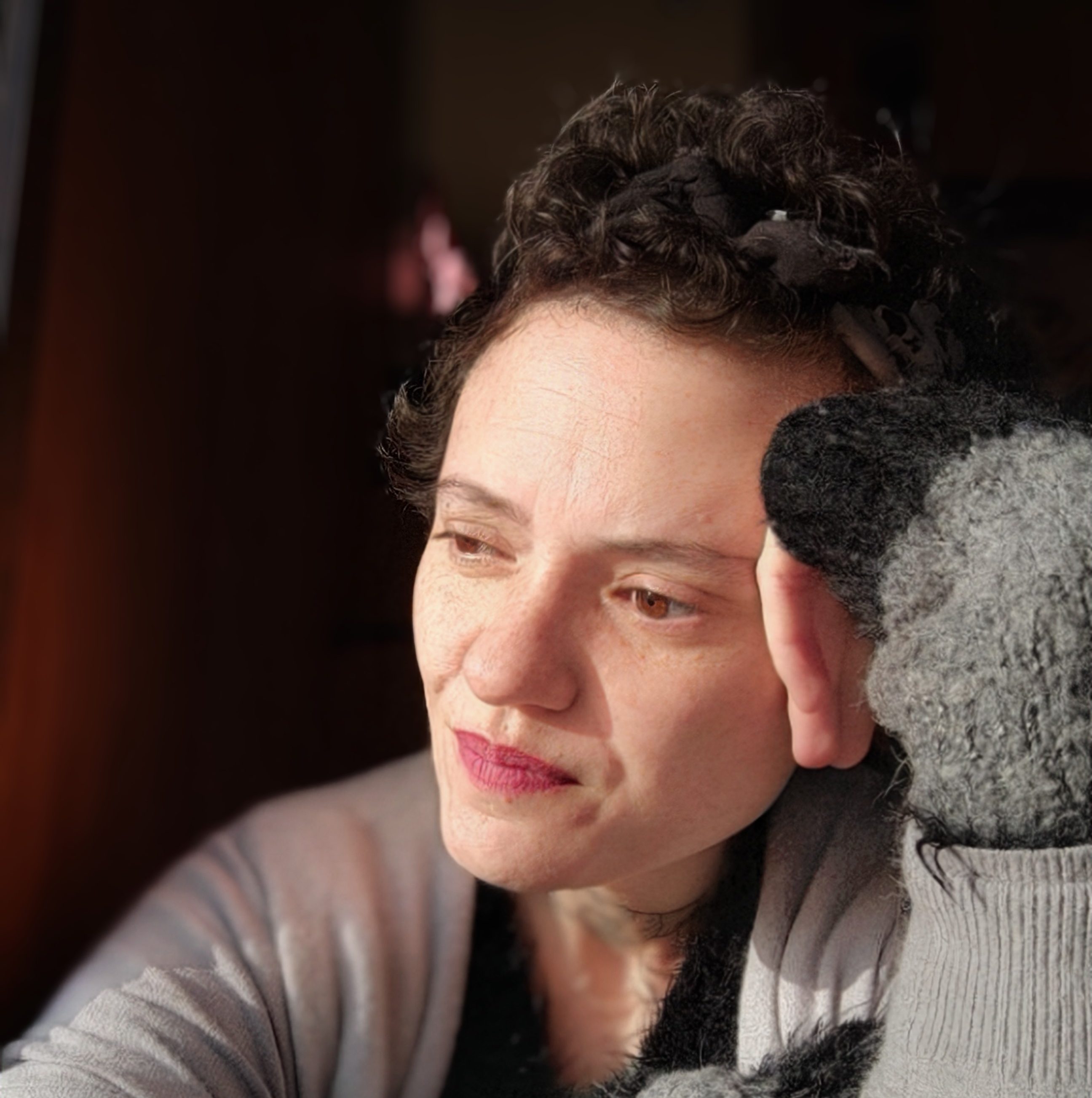
Úrsula Starke (b. 1983) began writing and publishing poetry as a teenager. Her main literary influences include Chilean poets Gabriela Mistral and Winétt de Rokha as well as Uruguayan poet Juana de Ibarbourou. Much of her work revolves around the themes of loss, both personal (in poetry inspired by the deaths of family members from cancer and Starke’s own struggles with mental illness) and collective (in the historical trauma of the Pinochet dictatorship). Taking a surrealist, neobaroque approach, Starke’s poetry ventures from intense realism into the fantastic, drawing on Roman Catholic imagery and a vast knowledge of history to create a mythology that transports its readers elsewhere while illuminating harsh realities at home. Wisteria is a compilation of the four books she published between 2000 and 2020.
✶

Jesse Lee Kercheval is a poet, writer, and translator, specializing in Uruguayan poetry. Her most recent the poetry collections are I Want to Tell You (University of Pittsburgh Press, 2023) and Un pez dorado no te sirve para nada (Editorial Yaugurú, Uruguay, 2023). Her translations include Love Poems by Idea Vilariño and The Invisible Bridge: Selected Poems of Circe Maia, both published by the University of Pittsburgh Press. She is the Zona Gale Professor Emerita of English at the University of Wisconsin-Madison and the Editor of the Wisconsin Poetry Series at the University of Wisconsin Press.
✶

Jeannine Marie Pitas is the translator or co-translator of twelve books of poetry, most recently Uruguayan poet Silvia Guerra’s A Sea at Dawn (Eulalia Books 2023), co-translated with Jesse Lee Kercheval. She is the author of two poetry books, most recently Or/And (Paraclete Press 2023). She lives in Pittsburgh and teaches at Saint Vincent College.
✶

Edward Lee is an artist and writer from Ireland. His paintings and photography have been exhibited widely, while his poetry, short stories, non-fiction have been published in magazines in Ireland, England and America, including The Stinging Fly, Skylight 47, Acumen and Smiths Knoll. He is currently working on two photography collections: ‘Lying Down With The Dead’ and ‘There Is A Beauty In Broken Things’. He also makes musical noise under the names Ayahuasca Collective, Orson Carroll, Lego Figures Fighting, and Pale Blond Boy.

