Never has poetry been closer to journalism than in today’s Palestinian writing. Rather, it is the other way around: never has poetry so completely superseded journalism. The news cannot approach it; in journalism, the truth is bent, omitted, made passive. Nothing is so dangerous as a news report wherein Palestinians die in the passive voice, the horrific violence massaged into meaningless oblivion, the perpetrators somehow irrelevant.
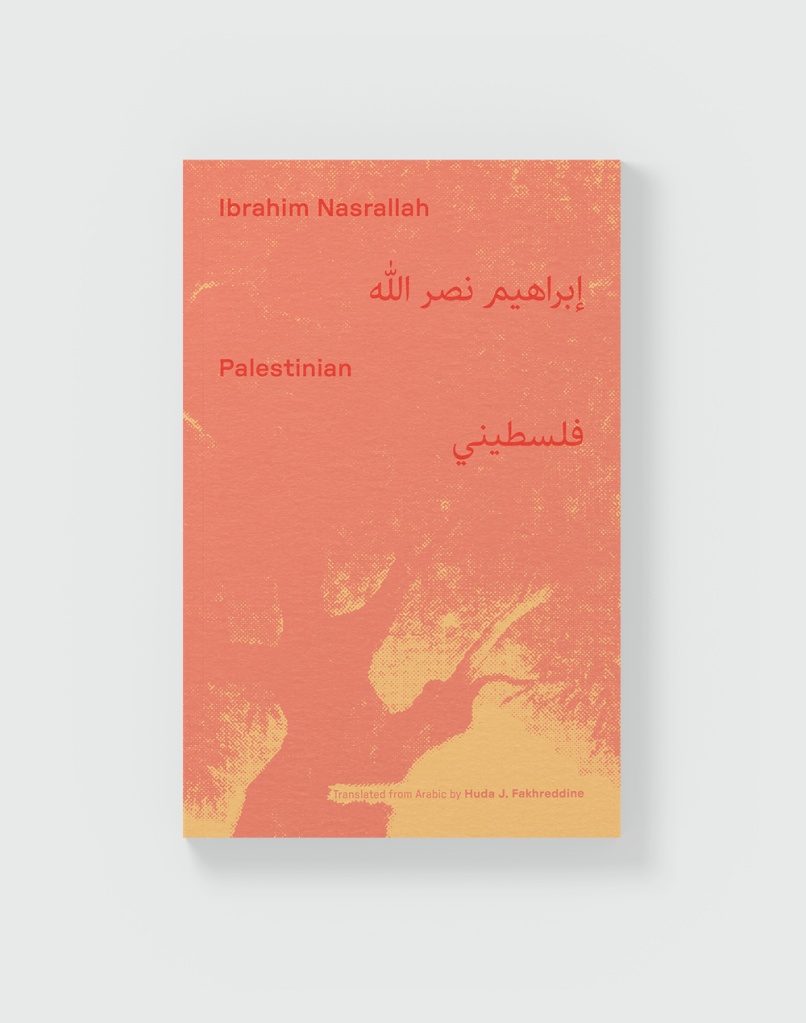
World Poetry’s bilingual edition of Ibrahim Nasrallah’s poetry provides the latest voice, joining the voices of other Gazan and Palestinian poets this year, including Mosab Abu Toha and Fady Joudah. Nasrallah, born in 1954 to Palestinian parents forced to flee in the Nakba six years earlier, is the award-winning author of forty previous poetry collections and novels. His writing vividly evokes Palestinian identity, history, and resistance, giving life to the pressing issues of today and drawing both from his own personal experience and the more general experiences of his people.
Nasrallah’s Palestinian, translated by Huda Fakhreddine, is a chapbook of four poems written out of this current moment. No poem in the pamphlet brings the cutting quality of truth to the fore more than “One Hundred Questions and More: A Child in Gaza Asks You.” The unnamed child addresses the reader, asking if there is water outside Gaza—and are there playgrounds, clouds, schools, whiteboards, and chalkboards? Are there nations? Is there happiness? “Could it be that I am freer here under siege than others there?”
Each devastatingly innocent question compels us to consider the children of Gaza, the over 14,000 killed since October 2023, and the thousands more missing and unaccounted for. Reaching the poem’s conclusion (“Will a child always be killed on command?”), a reader can’t help but be moved. The poem’s immediacy is renewed by news reports, coming one after the other, of children killed by Israeli air strikes.
Fakhreddine’s translation brings the poem to life in an effortless English that is as ungarnished as the Arabic. While Nasrallah’s Arabic is rhythmic and occasionally rhyming, Fakhreddine’s translation clean and smooth-sounding. “Among the horses my heart was a horse,” from the titular poem, is a great example of where Fakhreddine’s English uses the language’s qualities (here, its alliterative potential) to rival the Arabic’s rhythmic beauty. In places, Fakhreddine has made subtle technical decisions, such as in the placement of enjambment or the inclusion of an extra repetition of a phrase. These never bend the meaning but allow the poem to shine in its new language. For the English reader, there is incredible pathos in her translation; for the bilingual reader, the emotion is doubled.
I must admit that this review has been difficult to write. I like to read poems slowly, digesting them, giving them a chance to swirl inside of me and remake the way I see things. But these poems written during a genocide are different. The empty space between the poem and my receiving eyes is filled with the present realities. “One Hundred Questions and More” is, on my first read, asked by young Hind, who the IDF killed, along with her family and the ambulances sent to save them. On my second read, the poem was joined in my mind by the nightmarish image of a survivor in Rafah holding up a child’s incomplete body, the innocent beheaded by the shrapnel of an Israeli air strike. In my most recent read, it was impossible not to hold in my view recent reports of a fetus found in Gaza’s rubble. “In Love You Rise”—about the material afterlife, with the reassurance of a prayer and a defiant embrace of love (“In love you rise and in love you fall. / Let it intoxicate you or you it.”)—was reframed after Israel’s escalated bombing of southern Lebanon. I think of Fakhreddine, who is Lebanese, and what these poems must mean for her. I write this conscious that when it will be published, a year will have passed since this genocide began. Are my observations relevant now, and will they be in a matter of weeks?
This genocide is not a fixed point, and neither are the poems. In our safe havens, we try to be more than useless spectators, oscillating between despair and hope. Nasrallah’s poems can also be read along such an axis. In the chapbook’s first poem, “Palestinian,” Nasrallah expresses his defiance (“I gathered myself in the G and the A and the Z and the A. / I became GAZA.”) but appears to lose out to despair in its conclusion: “I lost faith and believed, lost faith and believed again, / and lost faith and believed and… / nothing came of it, / nothing.”
This cycle reaches its climax and resolution in the final poem, “Mary of Gaza,” with the anaphoric opening of its stanzas, repeating like a death knell:
“Peace on this earth is not for us.” And yet, from the futility of all that is lost, all the attempts to drive Palestinians from their land, comes hope:
I will sing in the name of twenty… thirty thousand,
killed and risen on this land of ours.
I will not say: Peace is for those who kill, uproot, and burn. […]
Peace is ours. Peace is ours.
While the first poem ends with nothingness, with an abyss, “Mary of Gaza” rises again in belief; it rejects despair and holds onto hope.
Against the abject horrors of Israel’s war crimes on Palestinians, these poems insist on being morally and spiritually better than the perpetrators of this pain. The chapbook is an anchor for us, one that we need as we enter, shockingly, the second year of this crisis. As Nasrallah tells Fakhreddine in the interview that closes chapbook:
“Today, Gaza, that small strip of land, is as large as the world, and its struggle for survival is one of the projects to liberate the world from darkness and tyranny.”
✶✶✶✶
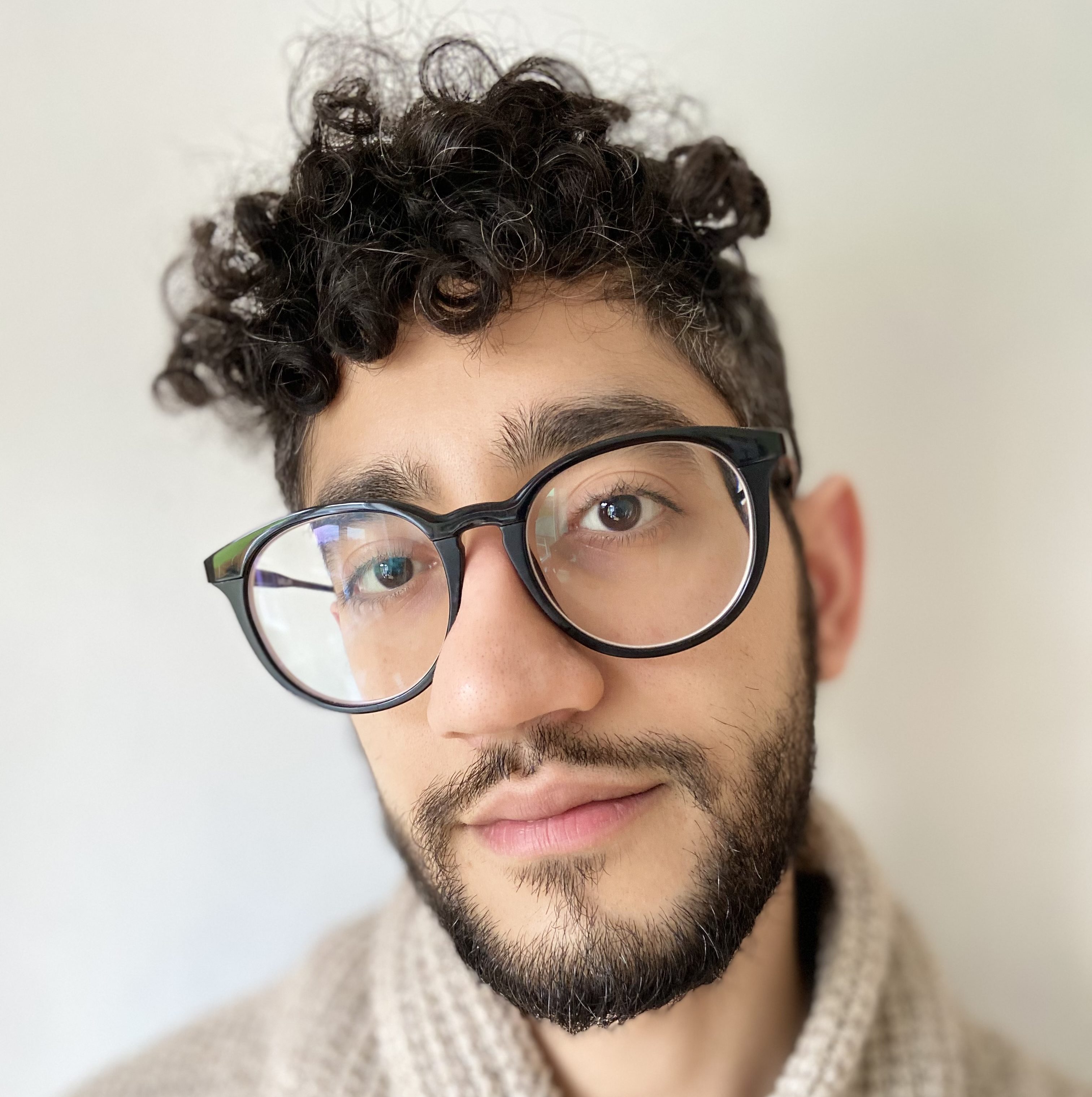
Ali Al-Jamri is a poet, editor, translator in Manchester, UK. He is one of Manchester’s Multilingual City Poets (2022-present). His work has been published in journals and websites including Modern Poetry in Translation, The Markaz, ArabLit, Poetry Birmingham, Harana and in anthologies. He has co-authored teacher texts with HarperCollins and is the editor of Between Two Islands: Poetry by Bahrainis in Britain (No Disclaimers, 2021) and ArabLit Quarterly: FOLK (ArabLit, 2021).
✶
 Another Chicago Magazine