
If I could write sex, maybe I would get out more, maybe there would be more inspiration to move from inside to out, through the skin or crawling over it, there would be more personal resources to aid in the processing of sightings of other humans, there would be more opportunities to laugh. Principally there would be more room to laugh, in the rib cage, where chuckles reside and silliness nestles just long enough to take flight, in eyes that might tear up with mirth, in the throat with a tickle and a small cough. I used to think that sex was serious business, that laughter broke the spell, carrying me, us, out of the physical and temporal present, diverting the blood to the belly rather than keeping it seething lower down, laughter rather than the urgency of the melding, the melting of all delusions of skin separating separate entities, the melting of solitude through earnest engagement, earnestness a function of youth, hence the shift. In the writing of sex I use words, needless to say, and words are always—I now know, didn’t once, thought they could reveal as well as obscure—a shroud around experience, but to write sex the words have to both unwind and penetrate, turn inside out, become both transitive and intransitive (never reflexive, never subject and object as one), in themselves and what they enter into. Being turned inside out is part of it, as is the negative space that could be left gaping or filled, the promise of fulfillment rather than just a hole here or there or in several places at once; rather a continuous corridor, with twists and turns, without any intrusion because there never was separation, this the delusion and what a lark to subvert something so readily perceived and yet not, maybe only through the power of suggestion perceived, as we wander blindly considering ourselves separate and inviolable, autonomous and free, these two pairs of words wed in someone’s sense of reality, through the funhouse mirrors of what we take to be our rational minds. But while doing or making sex—or love—while sexing—loving—when we are in no way separate or autonomous, we can still be free if we mean by that free to dip out of range of oversight, our own, of course, since we’re talking about late-stage civilization, where oversight has also been internalized, all the better in order to perform. While sexing we share space, negative and positive, inhabit the same place, inside and out, we I me thou, this isn’t personal, this isn’t about me, none of this is, it’s out and about in the netherspheres surrounding our visible lives. And then the question, if it is one, begs: what if it’s simultaneous, such as: writing melodies, the sweeter kind, unheard, while surrendering, while the body is sinking more deeply into itself with the other? Is the head part of the body? And is that where the mind is seated, like Athena in Zeus’s? The mouth is, at least, the same one that utters words, the same one in which words form and take sound shape, but it is also a gaping maw, not even a noose would stop the intake, the uptake, only push it down deeper.
Is silence the only place truth resides? But there never is, silence, that is, unless music and colors are silent, there is only the absence of words. Words aren’t the only things that clamor. Submission as strength, which doesn’t translate to the social, from the inside out, if we can distinguish the two, and celebrate the power, the agency, the redemption offered by relinquishing both; don’t shoot the messenger, I’m just trying to heal the divide, bring the sundry parts into closer proximity, sally forth—what an expression—without the cracks showing. Though, actually, not trying to do anything at all. Banish the thought, though banishment can sometimes backfire, it’s when you stop trying that things happen—swelling and swooning and sweating and swaying and swaggering…look at that s and that w how they point in different directions and move jerkily and smoothly, one flowing, the other pointedly reaching upward but both suggesting continued further movement. Words also have shapes and sizes and even textures, physicality, don’t let anybody tell you otherwise, and each language smells different. I realized this early on when I started sniffing around them, and the closer I would get the more other questions would push scent aside, texture and color would then emerge in the space I started to procure between words, in the logic of the sentence, in its own special genius. Somehow when I write about sex my focus slithers over to the words themselves, rather than remaining on what they are referring to, and that surprises me, puzzles me, until I think about the irreconcilable nature of both, sex and words, not words spewed willy-nilly from the mouth during speech, not sex for show or cruelty or power, but rather curated words in the mind or on the page, words partaking in the reworking of perception, and sex, well, sex that really is private, that really is intimate, that therefore cannot be written, alas. Both stand apart from daily life, from our socialized selves, stand apart also in terms of how the body responds to each, relates to each, how the body, which includes the mind, as some refer to wherever it is that words form, insists on keeping them separate because to fail to do so, to allow integration, would be unbearable, unthinkable. Like the moon. The moon metaphorically empties and fills, gawps and gapes. I’m talking about the act itself, the thrusting and parring, the dance of limbs and languor.
At a certain point, probably when it ceased to have any consequences for me, immediate and proximate consequences, sex became a way of luxuriating, a place and time where and when it became possible to paint pictures, pictures with words. I never willed the words to spread themselves out on the wall of my mind, but there came a point when I no longer turned my back on them. That’s what I used to do, turn my back on them, metaphorically speaking, of course, or rather push them out and away, off the wall, assuming (unspoken assumption, awareness of assumption coming now with fading clarity as eyes flicker open) that to not do so would be a betrayal, of the body, mine and the other, of the moment, of the physical reality of our merged flesh, of the faith—mine—in the body. Eyes remain open for a little longer with each flicker. Whose moment would that be, though? If the mind’s moment means enrapture in a word string instead of the sensation being evoked by another, let it be so. To turn my own back on my own mind, such as it is, that became the betrayal, the faithless act, and such faithlessness was common, not just there and then in the throes of passion but throughout the enactment of maternity and domesticity and professionalism, whenever another person was close enough to feel from the inside out, whenever I wondered then failed to know if such turning away was an escape, a relief, or a traitorous act, until the moment passed, and then it was gone, and the body, living as it uniquely does without any delusion of permanence—this, perhaps, the only enduring distinction between body and mind worth holding up—will have prevailed.
Then came aging, topical because the body, after all, and its primacy; aging, which has happened and continues to happen at an alarming rate, and can be perceived under all and any lighting conditions, so much aging in myriad ways that I can no longer keep track, corrections are now not attempted, fantasies of improvements replaced by the certain and verifiable knowledge that this, what we have today, what we see, experience, touch, suffer, hear, is as good as it is ever going to get; the knowledge that all that’s really left to do—besides the occasional and highly coveted moment of joy, expression of enthusiasm, excitement about, let’s say, a white-tailed kite’s proximity—is observe the body breaking down, taking leave. The skin detaches from the underlying sinew, hangs, stretches, as if seeking to pool, detaching from the world on the far side while breaking free from the fathomless world inside, from itself, though the body is the self, pleasure—after all—comes through the orifices big and small, from pores and nerve endings, the ones that open and close under their own volition and those we control, or must by all and any means be able to control against the onslaught of history. I ardently reject the opposition of body and mind—so much depending on that opposition, world big and small, survival of species, plural, any, some, many, and so little we can do about it—but during sex there is a function of the neural system that produces thought through language and therefore often leads to a situation in which it is more difficult to experience the body. And most of all, one’s body, my body, no longer evokes passion in me by evoking an image of passion in another, by that imagination acting as a mirror to look at the body I am feeling from the inside and also with my hands as if the other were looking and touching my body as I am doing. In the process of ageing, the body knows it is edging away from verticality, that it is, let me be blunt, dying. Trees take longer but probably also know, in their way of knowing, maybe knowing being nothing more than being able to choose, to choose, for instance, to give, share what we have with the next generation. How do we transfer what we’ve stored? I once thought words, pages, a book being a reality difficult to ignore or discard, though now only dust decides. And so the joy of abandonment in and with the body becomes more tiresome, to summon it more tedious. Never do we submit so much as when we die. Just that once. The idea of a small death is ludicrous, though I can see how that got there in between other expressions.
Maybe it has something to do with desire, its waning or waxing, but desire remains; it is the body that can no longer grapple with it, busy as it is adjusting to all the slights it endures. The waning of desire, something anybody who makes it beyond a certain age can think they know, so why do I, stubbornly, rebel against such talk, rebel against the death of desire, rebel … and off I trail. Have I forgotten the eagerness of youth? The way desire leads the way as if by magic to its object then subjects us there to ever-renewed assaults? Of course I have. I have chosen to forget, and keep on choosing every day, otherwise how could I accept the present sere state of things? At each stage we forget otherwise we could never continue, otherwise sex at twenty-five would seem so burdened with experience compared to the headlong rush of eighteen, and let us not mention, or maybe we will, sex when there are children in the next room, or sex with the same albeit extraordinary partner after twenty-five years, and then we get to the present. Is there any human experience that has been described more frequently in more forms and genres in more languages and cultures in more guises and disguises in more settings and conditions, than desire? Usually quite young desire but also old-man desire, that’s been written about a fair amount, less so old-woman desire, which overlaps with the desire of mothers, all of which is probably hard for many to swallow or rub up against. And, anyway, I’m not interested in desire as such, because it can be manufactured, so I’m talking about sex, which might or might not be coupled to desire, and might or might not be related to libido, which has nothing to do with beauty. Let’s be concrete. A young man’s hands can distract me from the highly intelligent and interesting things he is saying. I do not feel a specific physical reaction in my libidinous zones that would require me to bring myself to orgasm when once I was alone. No. But my eyes linger on his hands in a way that is not age appropriate, age being what others see not necessarily how one feels, and appropriate is a judgment. My body my lingering gaze my longing my recall of desire but now of a different kind, not ravenous but real nonetheless, possibly even retrospective, even though the man attached to those hands would not have been an object of desire years before, as if some other urge, not necessarily desire, were obscuring what has become with age the almost saintly purity of appreciation for said hands and the imaginings of them caressing a body, mine, and lingering. It’s the lingering that matters, eyes on hands, hands on other parts of the body, it doesn’t matter much, though the word itself does what it denotes, each syllable bouncing off the one before and after, rhyming with itself, the echo of the ing.
This might be the drama of a life, the working of mediocrity, the way it all simply passes away as I am so engrossed in living it that there is no time to achieve the famous detachment, which I have sought all my life without much success, even though I, one of many who have dabbled in Eastern religions, know that the concept of success, the measure of it, is antithetical. The goal, that other illusion of my Western mind filtered and critiqued through layers of skepticism, is monstrous detachment, and at the crests of the endless waves of spectacular failure—the opposite of success, trapped in the duality, no enlightenment—I would, in the past, before I accepted my mediocrity, sink into self-pity and whine silently about lacking a bigger share of the pie of the day: love, money, fame, talent, success; pies of many sizes, with different crusts and a variety of fillings; pies I wanted, then didn’t want, suddenly, when a glimmer of detachment would actually set in, at which point I might formulate a carefully worded aphorism, sometimes in the shape of a question, such as: “Is it in the nature of love to always be too much or too little?” Too much or too little. Love. Groveling comes to mind. On the edge of despair forms as an image of a balancing act. Not being able to hold onto affirmation or appreciation beyond the moment of apprehension, now there’s a leitmotiv that implies a constant state of unsettledness, of longing and requiting, of satiation and despair. What a lark that side of it can be, for it maintains alertness to disaster and a tingling of expectation. Then, of course, came brief moments of respite, glimpses at safety in reciprocity—s/t/he/y-loves/needs me-as much-as-I need/love-s/t/he/y—moments that come only after total abandonment, submission, release, surrender—synonyms, damn you straight to hell, you deflect and spread out the heat into ever-diminishing displays. Is that sex?
And although detachment, true detachment, consistent reliable detachment, might remain elusive, a question like that, about the nature of love, can circulate in my mind for hours, sometimes days, sometimes through inertia it will be carried along through the night, the dark but peopled night, the sirens or the rustling in the undergrowth, past distracting dreams and reluctant memories, into the morning, when sometimes the only way to get any relief from its continuing circulation is to write it down, commit it to paper, where it will remain, or so I used to think, until an impossible day in the imaginary future when it will be integrated into, or inspire, the one poem, that one poem, the promise of which fades then vanishes the moment it is reached for, and in the meanwhile, the words, once formed even ephemerally, begin to vibrate, gentle vibrations at first, but then instead of the waves lessening in frequency and intensity as they spread out beyond their epicenter, the words as they were arranged in mind or on notebook pages take on proportion and weight, they create their own epicentric universes, they expand. Because it is in the nature of such a question about the nature of love—really an aphorism, because it suggests a principle and is concise—to imply and invoke, but like that one poem, it is just beyond reach, though the poem is in the future and the longing in the past, both just beyond reach, as is everything of import, even the present moment which is already past, don’t let them fool you. The poem might come, who knows or ever will, between my last inbreath and my last outbreath, as clear as. One line, one stanza, maybe only a combination of vowels and consonants. There have been times between sleep and waking when I have heard it in a particular voice, especially after sex, though hear and voice are metaphors, and may that never be forgotten. For what happens behind closed eyes somewhere, apparently, in the physical head, is not related to the senses. What happens behind closed eyes stays behind closed eyes. Nor is it seen in any sense of that word or sense, but I know, when it insinuates itself even without visual clues, that the words do not fill the lines all the way from the left margin to the right, hence the sense of it as a poem. It. They. We. The voice is one voice saying something about a chorus of voices, and the sentence, or line, is infinitely tauter than this one unfolding now. Tight, like the way I grip a pen; taut, like the mind adhering closely to the sequence of words, from one to the next without looking away. To look away is to fall. Because the voices inevitably resound, echo, shudder, in that order, when no pen is in hand. Competing voices (not harmonious), each one clamoring for attention, clamoring to steal attention from the others, even though I am not, absolutely not, never have been, never will be, a poet, not even a mediocre one. And there is a realm for what is done without observers, even today, even in our own homes where we are never alone anymore, where the outside comes in and the inside is gutted.
✶✶✶✶

Katherine Silver is an award-winning literary translator and the author of Echo Under Story. She is the former director of the Banff International Literary Translation Centre. She lives in Northern California. “Sex” is one of ten essays in the forthcoming collection A Dane On a Train.
✶

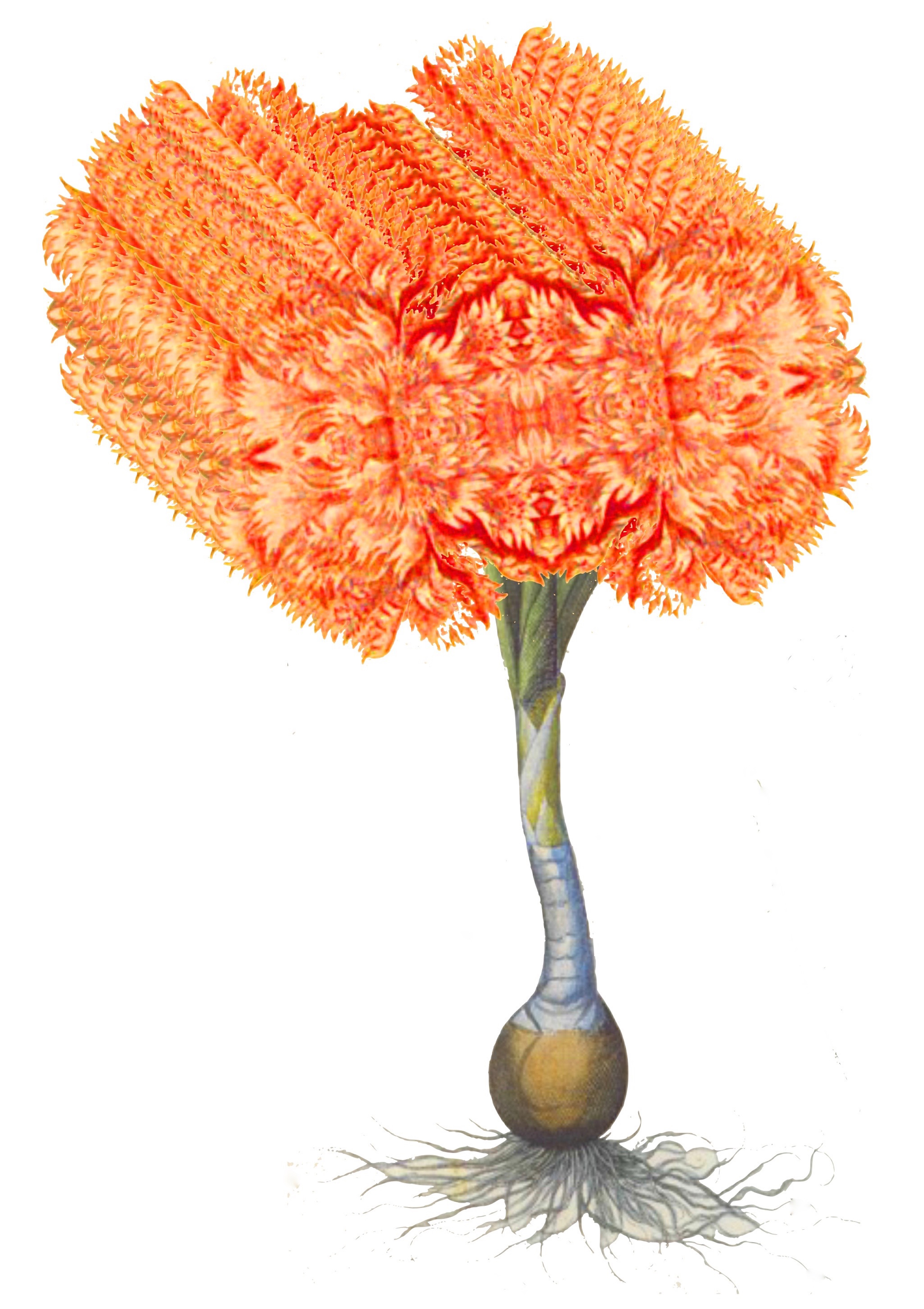
Bill Wolak has just published his eighteenth book of poetry, All the Wind’s Unfinished Kisses. His collages have appeared as cover art for Phoebe, Barfly Poetry Magazine, Ragazine, Cardinal Sins, Pithead Chapel, The Wire’s Dream, and Phantom Kangaroo. His collages and photographs have appeared recently in the 2020 Seattle Erotic Art Festival, the 2020 Dirty Show in Detroit, the 2020 Rochester Erotic Arts Festival, the 2018 Montreal Erotic Art Festival, and Naked in New Hope 2018.
✶
Whenever possible, we link book titles to Bookshop, an independent bookselling site. As a Bookshop affiliate, Another Chicago Magazine earns a small percentage from qualifying purchases.
 Another Chicago Magazine