That which presents itself
startling you
when you least expect it
must have the practised agility
of that which does not present itself
when it is expected.
(poetry/translations)

That which presents itself
startling you
when you least expect it
must have the practised agility
of that which does not present itself
when it is expected.
(poetry/translations)

So the day begins:
searchlight; flesh cannot repel
it, drinks; partakes; that
never hurt before.
So the day begins
with Big Bang light; no way to
penetrate its skin.
No tool can pierce it.
(poetry/translations)

As the title suggests, this is a book about vantage and perception. In several poems, the speaker takes an empathetic approach, trying to see the world through the eyes of her neurodivergent son. Elsewhere, she poses the question: “How can I teach my child to live through and/or in violence, without becoming violent themselves?”
(reviews)

Look! Look! Look! The dance
of these albatrosses in a sea, heaviness
like the iceberg of a frozen era!
(poetry)
The boy in the black carriage listens.
Solo in flight the starlings have no message.
They fly. He listens.
(poetry)

The book takes a historical view of global conflicts — namely World War II and the Cold War — and Lamantia’s reactions against the imperial war machine, both in the United States and within globalized systems, emerge as a precursor to the apocalyptic themes often present in Western poetry.
(reviews)
the opening of a cut grape
the butterfly
if it were to lightly rest upon the extremity of the grape
and pretend to drink
if it wasn’t drinking
what was to be done then?
I would have to
improve how well I see, with these eyes
improve how well I hear sounds
and so, employing my hands
I noticed
the smallest of movements
(translations)
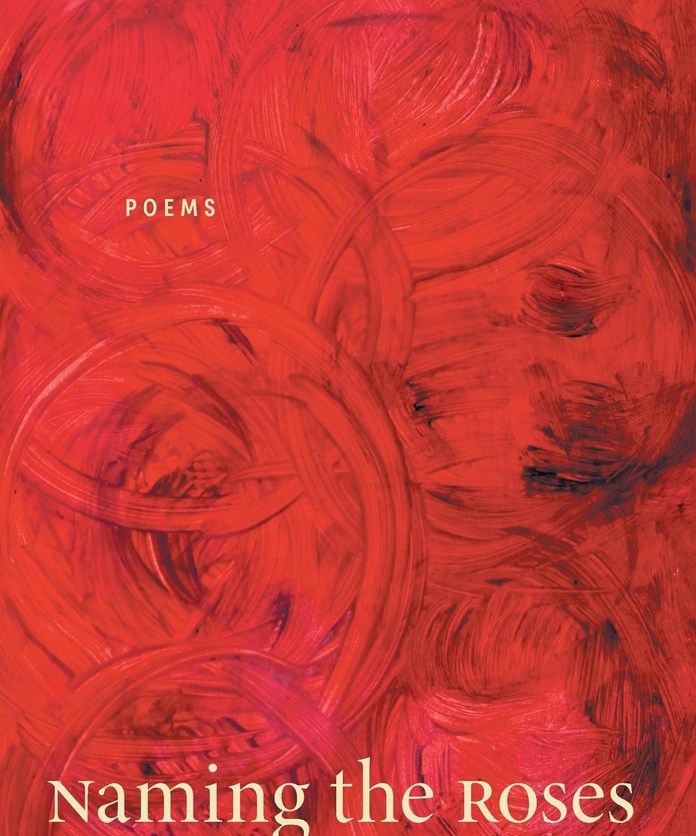
The poems in Naming the Rose draw from vulnerable, autobiographical elements mixed with the obliviousness of those around the speaker. The two-sectioned poem “The Light of Day” contrasts loving memories of pumpkin carving by the speaker’s daughter with the fear of the speaker-mother as her partner and the father of her daughter, “drunk,” “too drunk,” “rid[es] down the highway at 90 miles an hour” with “a huge stolen pumpkin on [her] lap.”
(reviews)

This collection of poems explores the fracture of a marriage after a secret is revealed—a husband’s closeted homosexuality, at odds with his religious upbringing and the life he has built. Set against the pastoral backdrop of stables and gardens, canning jars and roving horses, tether & lung traverses the landscape of loss and longing with striking vulnerability.
(reviews)

I am sorry to say this, but what if You made a mistake?
What if You took the wrong kid?
I heard You took two more kids today from Askar’s middle school.
Are the soldiers working for you?
(Palestinian Voices/ fiction)

