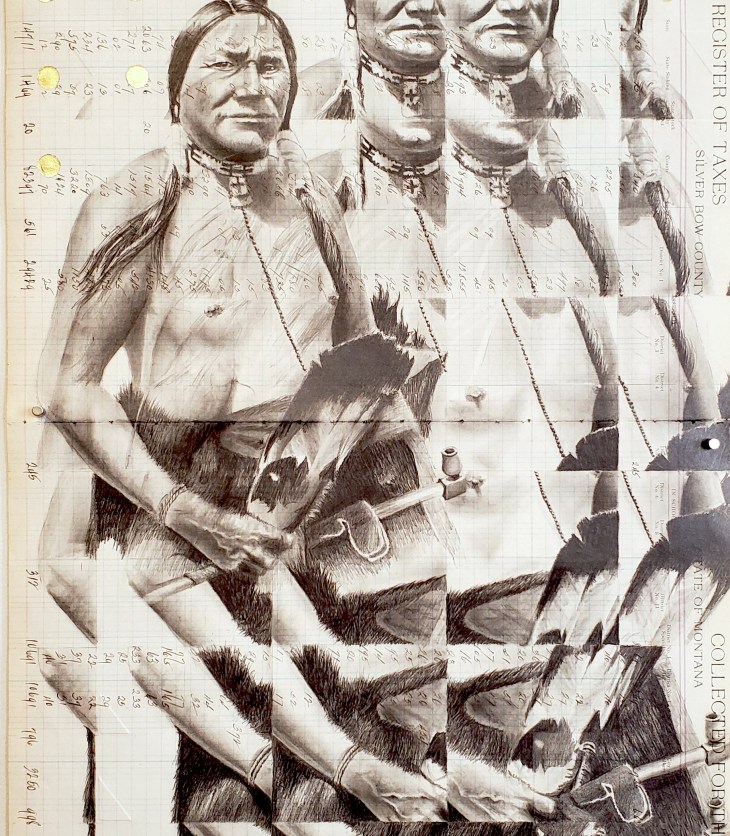
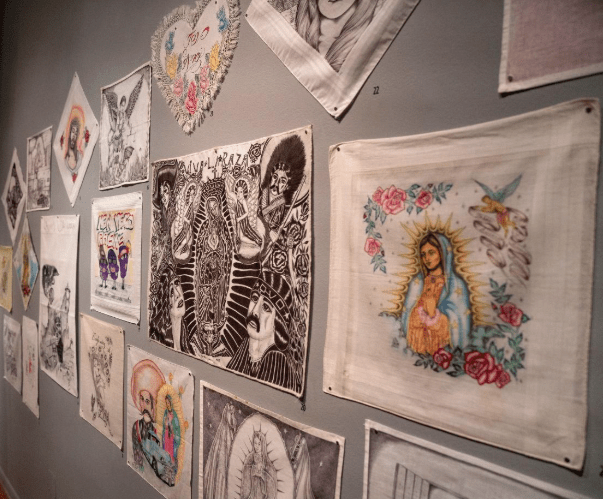
“One of the overwhelming and heartbreaking themes of mass incarceration is dehumanization. Time and time again, these stories of what happens to prisoners in any of these systems gets buried under all of the legal jargon. And the back and forth in courts, the many steps that happen take power away from the incarcerated and erase the story of the individual,” Chloe Accardi tells ACM.
Author: Another Chicago Magazine
Part of a series of Native poetry collected by Mark Turcotte.
Your kitchen is transfigured, is wild rice soup and Lil Nas X
Your porch, a portal, re-applying lipstick
between each press to cigarette filters, to skin,
to handcheekforeheadjaw, to make sure you leave marks
(poetry)
And mirrored in the dilated,
upturned eyes, can you, she asks, see a room’s
bright window, panes of light. And can you see
how the selfsame light pours into us,
the shine of attention, of tenderness.
(poetry)
She used to talk nonstop, now she calls so little, asking strange questions. One time she asked him about that Wednesday morning in 1976. He was just fifteen then. She wasn’t even born yet! Crazy girl, cried over dead communists. What has she been doing in America? Countries kill their people all the time.
(poetry/No Place is Foreign)
Part of a series of Native poetry collected by Mark Turcotte.
I sat at his grave,
rearranging ever-present anger and decades old resentments into
drunken one night
stands, warring
with abstract and weak forgiveness.
(poetry)
“An eleven-year-old girl sees something no child should—and keeps her silence. In a world of broken promises and simmering class tension, what she witnesses becomes a secret weapon in a household on the brink.”
(fiction/No Place is Foreign)
This week, ACM is posting book reviews every weekday.
Focused primarily on her childhood, Kercheval’s memoir is told in a series of seventeen fanciful chapters—ranging from four to twenty pages each—on subjects including her parents, her imagined worlds, her body (as well as the bodies of others), and the events, people, objects, and entities that shaped her. Shifting metaphors abound.
(reviews)
This week, ACM is posting book reviews every weekday.
The book, at its core, follows the speaker’s daily journeys along a rugged mountain road over the course of a year, with the gravel thoroughfare and its environs serving much the way Thoreau’s Walden Pond once did— fueling reflections on humanity in general, and the present moment more specifically.
(reviews)
This week, ACM is posting book reviews every weekday.
Supposing there was any lingering hope that the modal interventions of capitalism might deliver us, as a whole, into a brighter, more sustainable future, well, Gilbert’s poems are here to announce the ethical insolvency of that hope—or, not only are we totally, irrevocably fucked, but the severe degree to which we are fucked has already reshaped our ecology, our futurity, our reality.
(reviews)
This week, ACM is posting book reviews every weekday.
Catrileo’s florid, visceral writing traverses the centuries—from the so-called Conquista, Spanish term for the brutal colonization of the Americas, to the modern-day capital city. It is a lyrical and nonlinear chronicle that spans the arrival of invaders armed with “old maps” and “steel fire” to urban streets studded with bars and patrolled by police known for their brutality.
(reviews)