
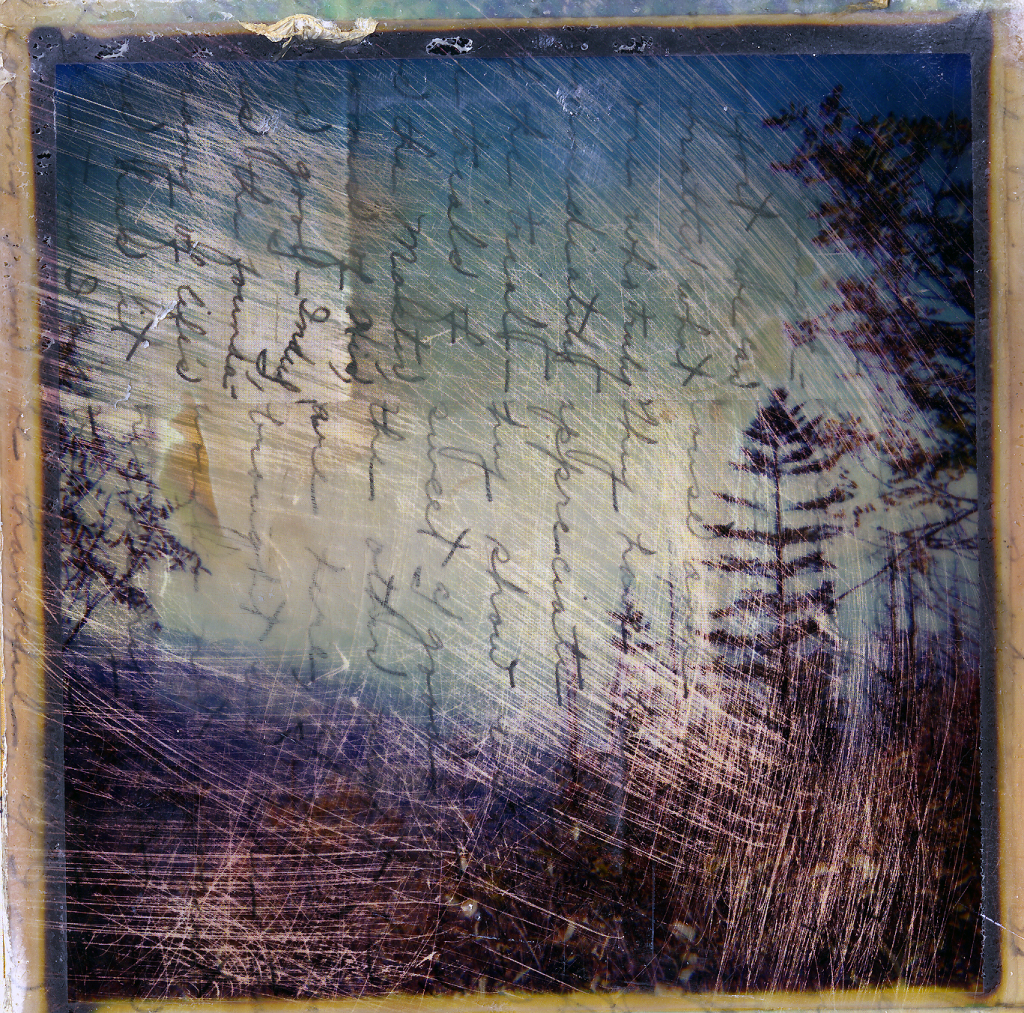
The publication of this translation came about through a program of the American Literary Translators Association: the 2024 ALTA Emerging Translator Mentorship. Sophie’s mentor was Madeleine Stratford.
✶
Walking around the hospital, clinging to the hallway walls, nauseated by all the signage, scanning words like radiology, oncology, intensive care. A multi-lane highway. Ending up in front of the same vending machine twenty times, refusing to eat the sandwiches inside, ham sandwiches, they can’t possibly stay fresh that long. Then resigning yourself to drinking weak coffees, too strong or not strong enough, but always served too hot in Styrofoam cups. One after another, downing them like shots. Burning your esophagus. Gnawing the Styrofoam, tearing pieces off. Throwing the rest in a trashcan full of tissues. Sometimes, without noticing, blowing on a coffee that’s already cool, cold even. Staying alert. Not feeling the seconds passing anymore. Not feeling anything at all anymore except for your belly swelling. Evacuating all the liquid you absorbed. Developing a technique to avoid sitting on toilet seats. Nearby, there’s a cord to pull on if you need assistance. Pull for help. I have no reason to use it.
No, let me start again. I would need help to enter, hesitatingly, into my mother’s sick body, to bite into her cancer, twist it every which way, let it melt on my tongue like a communion wafer, pierce it with my teeth and let out all its juice, its pus, lick my fingers. It would definitely taste like something unfamiliar, but I’d continue, that’s how the abscess would burst, how I’d heal my mother, how I’d heal from my mother, it would be enough for me to swallow her whole, she would be in me, and I’d spit her out again to rid myself of her.
I often had to take breaks from her, from the image of her sick body, her pricked arms, the nurses always praised her veins, not hard to find at all, very cooperative even, nice and round and juicy. Except for her swollen legs and feet, bursting with blood from always being in the same position, my mother was very thin, her body a rugged landscape, her bones giving form to her skin. I helped her with her compression stockings, starting from her ankles I unrolled the non-elastic beige material, I had to tuck away the odd flabby fold of skin as I went, gathering it as if it were a sleeping bag I was stuffing back in its sack. When her limbs were very swollen, I felt like I was running them over with a steamroller.
Her eyelids fluttered randomly, as if she had eye cramps. And while her eyelashes trembled, fighting against a gaze that never succeeded in landing anywhere in particular, other wrinkles were forming. I had given her her fair share of wrinkles, I had made her live through all kinds of emotions, really put her through the wringer. You could say it was because of me that she looked the age she was, plus ten years. The years, in any case, had really shaped her, wrinkled her. You could say that she looked like her life, exhausted. So that I didn’t have to look at her, I’d leave her room and spend long minutes in the hallway, away from her.
Once, a patient who had been sitting right next to me for a while got up and began to scream in agony. I started. The staff tried to ignore her, but it was impossible, she was crying loud enough to shred her vocal cords. I couldn’t help looking at her, but the eyes that looked back were blank. A nurse brought a wheelchair and forced her to sit down in it. He gave her some pills in a little paper cup. I thought, as a kid I used cups like that to hold candy from the vending machine at the mall. He left. She fell silent. She swallowed the pills one by one, without water. She had understood that no one would listen to her.
When I couldn’t listen to the racket in the hallways anymore, I’d go back to my mother’s room, I hung out there sometimes without saying a word, and she didn’t say anything either. I’d space out, look into the distance, over toward the window, the outdoors couldn’t break through and spread into the room. There were only impassable, inescapable windows, no possibility of existing beyond the spaces drawn by the walls. I never saw any flies. Nothing flew. Nothing defied gravity.
My mother’s neighbor was also in front of me, so I turned away, didn’t want her to feel observed. When I looked at my mother again, when she started to yawn saying I think I might go to sleep, I’d start to make an inventory of all the things that had, over time, fallen from or been taken away from her. Here, a little bit of her kidney, there some parts too broken to be repaired. And I, in turn, dismantled my mother to then fill her with cement. Solidify her. The space inside her seemed large, immense. There was a stagnant, bloody liquid that had been there for a long time, from the outside you couldn’t see that she’d been filling up for years without ever being emptied and now, with her kidneys affected, it was worse. My mother was taking on water, had an abandoned pool in her flesh. I could see her rusted frame, the reddish water.
She turns over and her sorrowful face brings me out of my waking dreams. It’s the same face she was wearing one morning before we took her to her doctor. I’ve just been sick as a dog my whole shitty life. It’s the body of a little animal curled up around itself that’s here in front of me, paralyzed by a light sleep, waiting for someone to finish it off, begging in the void for the last trap to finally shut on it. It was torture, my mother wanted for so many years to end it, to break free, but this, you had to read it between the lines, in the way she numbed herself with pills, in the wishes she made at 11:11, she’d say I hope that they’ll come get me, I asked her who they were, she shrugged, never answered. I didn’t dare tell her that wishes you say aloud never come true, but maybe she knew that and preferred to play with chance without abandoning herself to it completely.
Drowned inside herself, she was dying little by little.
I was a wreck abandoned on the edge of a cliff, crushed by the force of too big a landslide. My mother had come crashing down on my head.
At the end of her stay in the hospital, after making the trip to her room three times that week, I wondered if it was all worth all the trouble. I thought I might faint. I felt like I couldn’t breathe anymore. With the smell of her body stuck in my nostrils like that, I was suffocating, suffocating from seeing her there, immobile. She was grey even though she’d always had a dark complexion, terracotta skin, and the amount of white in her hair had tripled, she who refused old age by hiding it beneath excessive applications of drugstore dye. Together, at the hospital, we were caught unawares in a time accelerator, shown only in our ravaged bodies.
I should really go. I left her, as always, with a kiss on the forehead, murmuring see you soon. I was lying. I was leaving her behind, this time I wouldn’t turn around.
I wouldn’t see her again. I’d turn my back on her. It had already started, as soon as I had crossed the threshold, as soon as she’d fallen asleep again. She won’t die from this cancer. They probably won’t tell me when she lets out a last, long breath, when she expels this whole shitty life. I won’t know what she dies of. Another illness or an accident. I won’t be at her bedside. Won’t wring my hands. Won’t watch over her. Won’t pray she’s able to go peacefully, without suffering. I don’t know what heaven she’ll go to or even if she’ll still believe that the afterlife is a game of chance, a lottery, void if removed. On earth, her heaven always seemed to me to be on the verge of exploding, of coming apart.
I headed towards the hospital exit.
I won’t be at her funeral, whenever it takes place. It’ll have to be organized without me, I won’t help. I won’t carry her coffin. Will I be entitled to one of her memorial cards? Will she leave me in mourning? I’ll refuse her inheritance, whatever it might be. I don’t want anything.
My search engine results include dozens of death notice websites. I’ll come across her death by chance, browsing through obituaries.
Once I was outside, I watched the spots that darted and danced in the corner of my eyes, replacing tears that didn’t come.
I won’t watch myself growing up through my mother. I won’t get any answer from the future. She’s who I’ll never be.
If I meet her, in the street or elsewhere, I’ll pretend to be someone else.
Mourning is on death’s side. I’m pulling it towards life.
Sitting in a café with V., I tell her things she’s already guessed. I tell her my mother isn’t dead yet, she’s still alive, but I don’t see her anymore. She can live without me. I don’t know if I’m really living though. You know? Does she forgive me for having left? Does she forgive herself for having put up with so much violence and having done nothing to stop it? Sure, there’s always the risk I might run into her somewhere, on the subway, at the grocery store, on a bus, but it hasn’t happened. In ten years. I often passed by her house, there were lights on, obviously, I could see her shadow, but it’s like she didn’t exist anymore, one day, poof!, just like that, I made her disappear. I think even if she were right here in front of me, I wouldn’t see her. That’s how you protect yourself, by not seeing everything, otherwise living would be unbearable. Seeing everything, hearing everything. I couldn’t do that, I can’t do it anymore. Could you?
I think out loud, I ask V. a stream of questions, I know I’m bombarding her, that I’m overwhelming her with my barely audible words, muttered, really, because I don’t know how to talk about her, about my mother, and I’m ashamed. In all those years, I never once felt like calling her, writing to her, actually, one time, yes, I wrote the words I forgive you on a blank piece of paper, stuck a stamp on the envelope. I tore it to pieces. I never wanted to know if she was doing ok and, in front of V., I felt like I needed to explain.
My arms talk faster than I do. I spill sugar on the table, draw circles in it absentmindedly. The grains meet the hard skin of my fingers. Unconsciously, I’m tracing protective circles against evil spirits.
The noise of the café settles into our silence sometimes, I look around us. In front, a woman in a black suit gesticulates and her friend comforts her, placing a hand on her arm. She moves her fingers slowly as though petting something skittish. I smile at this chance, at the idea that they are a reflection of V. and me. An employee folds a piece of paper and puts it under the leg of a table to stop its wobbling. A baby cries, its cheeks red and a little puffy, it must be teething. At the next table, an older gentleman reads the paper and whistles, it’s not a happy tune, it’s sort of melancholy, the notes are lost in the cacophony of the café, only the opening of his mouth betrays him. Maybe he has trouble breathing. My grandfather whistled a lot too, out of good humor we thought, but maybe it was to hide the uncontrolled, irregular vibrations of his breathing, the sound of air drawn through his throat, a clogged pipe. Maybe this man in the café can’t let the air inside him anymore either. The simplest things sometimes become the most difficult.
I tell V., I feel like I’m tearing myself from the present because as a kid, I didn’t know how to exist. Do you know how to be here, now, in flesh and blood? The questions I ask her don’t always lead to answers, I wait, word them differently, start again. I touch my throat, stretch, try to relax my muscles. I swing my head like a pendulum, left right, right left. I add, what’s crossed distance and time is that smell that we breathe every morning, afternoon, and night, my body’s overload, my efforts at keeping all the fragments of my memory together.
We have another coffee. I want to dig deeper.
✶✶✶✶
Circuler dans l’hôpital, s’accrocher aux murs des couloirs, avoir la nausée des indications topographiques, lire rapidement les panneaux sur lesquels sont inscrits des mots comme radiologie, oncologie, soins intensifs. Une autoroute à plusieurs voies. Se retrouver vingt fois devant la même machine distributrice, refuser de manger les sandwichs qu’il y a là-dedans, du jambon, ça ne peut pas être frais aussi longtemps. Se résigner alors à boire des cafés trop dilués, trop ou pas assez caféinés, mais assurément servis trop chauds dans des gobelets de styromousse. L’un après l’autre, les caler comme des shooters. Se brûler l’œsophage. Mordre dans la styromousse, en arracher des bouts. Jeter le reste dans une poubelle pleine de mouchoirs. Sans s’en apercevoir, parfois, souffler sur un café déjà froid, glacé. Rester en éveil. Ne plus sentir les secondes. Ne plus rien sentir du tout sauf le ventre qui se gonfle. Évacuer tout le liquide ingéré. Développer une technique pour ne jamais s’asseoir sur les sièges des toilettes. Tout près, il y a un cordon. Il faut le tirer si on a besoin d’assistance. Pull if danger. Je n’ai aucune raison de m’en servir.
Non, je reprends. Il me faudrait de l’aide pour avancer à tâtons dans le corps malade de ma mère, prendre avec mes dents son cancer, le tordre dans tous les sens, le faire fondre sur ma langue comme une hostie, le percer pour faire sortir son jus, son pus, m’en lécher les doigts. Ça allait forcément goûter quelque chose que je ne connaissais pas, mais je continuerais, c’était comme ça que l’abcès crèverait, que je guérirais ma mère, que je guérirais de ma mère, il suffirait de l’avaler au complet, elle serait en moi et je la recracherais pour me débarrasser d’elle.
J’avais souvent besoin de prendre des pauses d’elle, de l’image de son corps malade, de ses bras piqués, les infirmières vantaient tous les jours les mérites de ses veines, pas fuyantes du tout, même très coopératives, bien rondes et juteuses. Ailleurs que sur ses jambes et ses pieds enflés, gorgés de sang à force de rester dans la même position, ma mère, très maigre, était un relief accidenté, ses os donnant forme à sa peau. Je l’aidais, avec ses bas de contention, je déroulais le tissu beige non élastique en partant de ses chevilles, il fallait ranger le peu de gras en cours de route, ramasser la peau comme s’il s’agissait d’un sac de couchage à écraser dans sa housse. Quand les membres étaient très enflés, j’avais l’impression de passer sur eux avec un rouleau compresseur.
Ses paupières s’agitaient pour rien, comme si elle avait des crampes aux yeux. Et pendant que ses cils se secouaient, se battant contre un regard qui ne parvenait pas à se poser sur quelque chose en particulier, d’autres rides se formaient. Des rides, je lui en avais donné, des émotions différentes, je lui en avais fait vivre, de toutes les couleurs. On pouvait dire, à cause de moi, qu’elle faisait l’âge qu’elle avait, plus dix ans. Les jours, de toute manière, l’avaient bien sculptée, l’avaient bien fripée. On pouvait dire qu’elle avait l’allure de sa vie, exténuée. Pour ne plus la voir, je sortais alors de sa chambre et restais de longues minutes dans le couloir, loin d’elle.
Une fois, une patiente assise tout près de moi depuis un moment déjà s’est levée et s’est mise à hurler de douleur. J’ai sursauté. Le personnel a tenté de l’ignorer, mais c’était impossible, elle criait à s’en déchirer les cordes vocales. Je ne pouvais m’empêcher de la regarder, mais ses yeux, à elle, étaient sans réponse. Un infirmier a apporté une chaise roulante et l’a forcée à s’y asseoir. Il lui a donné des médicaments dans un petit contenant de papier. J’ai pensé enfant, je prenais ce genre de contenant pour mettre les bonbons de la machine distributrice au centre d’achat. Il est parti. Elle s’est tue. Elle a avalé les médicaments un à un, sans eau. Elle avait compris qu’on ne l’écouterait pas.
Quand je n’étais plus capable d’entendre le vacarme des couloirs, je retournais dans la chambre de ma mère, je demeurais parfois là sans dire un mot, elle ne parlait pas non plus. Je tombais dans la lune, je regardais au loin, là où il y avait la fenêtre, le dehors n’arrivait pas à percer et à s’étendre à l’intérieur de la pièce. Il n’y avait que des fenêtres sans traversée, sans échappée, aucune possibilité d’être au-delà des espaces circonscrits par les murs. Je n’ai jamais vu de mouches. Rien ne volait. Rien ne défiait la gravité.
Devant moi, il y avait aussi la voisine de chambre, alors je détournais le regard, ne voulais pas qu’elle se sente observée. Lorsque je portais de nouveau mes yeux sur ma mère, qu’elle se mettait à bâiller en disant je vais peut-être dormir, je commençais à faire l’inventaire de toutes ces choses qui, au fil du temps, étaient tombées ou avaient été enlevées d’elle. Ici un petit bout de son rein, là d’autres pièces trop brisées pour être réparées. Je défaisais à mon tour ma mère pour ensuite la remplir de ciment. La solidifier. Son espace intérieur avait l’air grand, immense. Il y avait un liquide stagnant, saignant, c’était là depuis longtemps, de l’extérieur on ne voyait pas qu’elle avait passé des années à se remplir sans jamais se vider et là, avec les reins affectés, c’était pire. Ma mère prenait l’eau, avait une piscine abandonnée dans la chair. J’apercevais sa charpente rouillée, l’eau rougeâtre.
Elle se retourne et son visage triste me fait sortir de mes rêves éveillés. C’est le même visage qu’elle portait un matin avant que l’on aille chez son médecin. I’ve just been sick as a dog my whole shitty life. C’est ce corps de petit animal recroquevillé sur lui-même, paralysé au sein d’un sommeil léger et qui attend qu’on l’achève, qui supplie dans le vide qu’enfin le dernier piège se referme sur lui, que j’ai devant moi. C’était de la torture, ma mère voulait depuis tant d’années en finir, en sortir, mais ça, il fallait le lire entre les lignes, dans sa manière de s’engourdir de médicaments, dans les vœux qu’elle faisait à 11 : 11, elle disait j’espère qu’on va venir me chercher, je lui demandais c’était qui le on, elle hochait les épaules, ne me répondait jamais. Je n’osais pas lui dire que les vœux répétés à voix haute ne se réalisent pas, mais peut-être qu’elle le savait et préférait jouer avec le hasard sans s’y abandonner complètement.
Noyée en elle-même, elle mourait à petit feu.
J’étais une épave laissée sur le bord d’une falaise, tassée par la force d’un trop grand éboulement. Ma mère m’était tombée sur la tête.
À la fin de son séjour à l’hôpital, après avoir fait le trajet trois fois vers sa chambre cette semaine-là, je me suis demandé si tout cela valait la peine. Je pensais m’évanouir. Je ne respirais plus bien. Avec l’odeur de son corps, l’odeur prise dans mes narines comme ça, j’étouffais, j’étouffais de la voir là, immobile. Elle était grise alors qu’elle avait toujours eu un teint foncé, une peau de terre cuite, et le blanc dans ses cheveux avait triplé, elle qui se refusait la vieillesse en les dissimulant sous des applications abusives de teintures de pharmacie. Ensemble, à l’hôpital, on était prises dans un accélérateur temporel, on ne le savait pas, il n’y avait que nos corps ravagés qui pouvaient en témoigner.
I should really go. Je l’ai quittée, comme toujours, en l’embrassant sur le front et en murmurant à bientôt. Je mentais. Je la laissais derrière moi, cette fois sans me retourner.
Je ne la verrais plus. Je lui ferais dos. Ça avait déjà commencé, dès que j’avais franchi la porte, qu’elle s’était rendormie. Elle ne mourra pas de ce cancer. On ne me le dira probablement pas lorsqu’elle expulsera un long et dernier souffle, qu’elle évacuera toute cette merde de vie hors d’elle. Je ne saurai pas de quoi elle mourra. D’une autre maladie ou d’un accident. Je ne serai pas à son chevet. N’aurai pas les mains nouées. Ne veillerai pas sur elle. Ne prierai pas pour qu’on la laisse partir en paix, sans souffrance. Je ne sais pas quel ciel elle gagnera ni même si elle croira encore que l’au-delà est un jeu qui fait appel à la chance, un jeu de loterie, nul si découvert. Sur terre, son ciel m’a toujours semblé sur le bord d’éclater, de se déchirer.
Je me suis avancée vers la sortie de l’hôpital.
Je ne serai pas à ses funérailles lorsqu’elles auront lieu. Il faudra les organiser sans moi, je n’aiderai pas. Je ne transporterai pas son cercueil. Aurai-je droit à son signet de décès ? Me laissera-t-elle dans le deuil ? Je refuserai un héritage d’elle, quel qu’il soit. Je ne veux rien.
Mon moteur de recherche comporte des dizaines de sites d’avis de décès. Sa mort, je tomberai dessus par hasard, en consultant les rubriques nécrologiques.
Une fois dehors, j’ai regardé les mouches qui virevoltaient et dansaient dans le coin de mes yeux pour remplacer les larmes qui ne coulaient pas.
Je ne me verrai pas grandir à travers ma mère. Je ne recevrai aucune réponse de l’avenir. Elle est celle que je ne serai jamais.
Si je la croise, dans la rue ou ailleurs, je ferai semblant d’être quelqu’un d’autre.
Le deuil est du côté de la mort. Je le tire vers la vie.
Assise dans un café avec V., je lui dis des mots qu’elle devine déjà. Je lui dis ma mère n’est toujours pas morte, aujourd’ hui elle vit, mais je ne la vois plus. Elle peut vivre sans moi. Moi, je ne sais pas si je vis réellement. Tu comprends? Est-ce qu’elle me pardonne d’ être partie? Est-ce qu’elle se pardonne d’avoir enduré tant de violence sans avoir rien fait pour l’arrêter? Il y a toujours le risque que je la croise quelque part, dans le métro, à l’ épicerie, dans un bus, mais ce n’est jamais arrivé. En dix ans. Je suis repassée souvent devant chez elle, il y avait de la lumière, forcément, son ombre, je pouvais la voir, mais c’est comme si elle n’existait plus, un jour, pouf !, comme ça, je l’ai fait disparaître. Je crois que même si elle était là, devant moi, je ne la verrais pas. On se protège comme ça, on ne voit pas tout, sinon vivre serait insupportable. Tout voir, tout entendre. Ça, je ne pourrais pas, je ne peux plus le faire. Toi, tu pourrais?
Je réfléchis à voix haute, je pose des questions à V. sans prendre de pause, je vois bien que je la bombarde, que je l’étourdis avec une parole en réalité à peine audible, marmonnée, parce que j’ignore comment parler d’elle, de ma mère, et que cela me fait honte. Durant toutes ces années, jamais je n’ai eu envie de l’appeler, de lui écrire, en fait, une fois, oui, j’ai inscrit les mots I forgive you sur une feuille blanche, mis un timbre sur l’enveloppe. J’ai tout déchiré. Jamais je n’ai eu envie de savoir si elle s’en sortait et, devant V., j’ai ressenti le besoin de m’expliquer.
Mes bras parlent plus vite que moi. Je renverse du sucre sur la table du café. Je m’amuse à y faire des ronds. Le grain du sucre rencontre la peau dure de mes doigts. Je trace, sans le savoir, des cercles de protection contre les mauvais esprits.
Le bruit du café se dépose parfois dans notre silence, je regarde autour de nous. Devant, une femme en tailleur noir gesticule et son amie la console en déplaçant sa main sur son bras. Elle bouge les doigts lentement comme si elle caressait quelque chose qui ne doit pas être brusqué. Je souris de ce hasard, de l’idée qu’elles soient le reflet de V. et moi. Un employé plie un bout de papier et le met sous la patte d’une table pour qu’elle cesse d’être bancale. Un bébé crie, les joues rouges, un peu enflées, ses dents poussent sans doute. À la table voisine, un monsieur âgé lit le journal en sifflant, ce n’est pas un chant heureux, c’est plutôt mélancolique, les sons se perdent dans la cacophonie du café, il n’y a que l’ouverture de sa bouche qui le trahit. Il a peut-être de la difficulté à respirer. Mon grand-père sifflait beaucoup aussi, on le disait de bonne humeur, mais peut-être que c’était pour cacher les vibrations incontrôlées et irrégulières de sa respiration, le bruit de l’air étiré dans sa gorge, tuyau obstrué. Peut-être que ce monsieur, au café, ne sait plus, lui non plus, comment laisser l’air entrer en lui. Il arrive que les choses les plus simples deviennent, un jour, les plus difficiles.
Je dis à V. j’ai l’ impression de m’arracher du présent parce que dans mon enfance, je n’ai pas su comment exister. Toi, tu sais comment être là, en chair et en os? Les questions que je lui pose ne mènent pas toujours à des réponses, j’attends, je reformule, je reprends. Je touche mon cou, fais des mouvements pour essayer de décoincer les muscles. Je tourne la tête comme un balancier, gauche droite, droite gauche. J’ajoute ce qui a traversé la distance et le temps, c’est cette odeur que nous respirons chaque matin, chaque jour, chaque nuit, la surcharge de mon corps, mes efforts pour retenir ensemble les fragments de ma mémoire.
On reprend un autre café. Je veux creuser plus loin.
✶✶✶✶
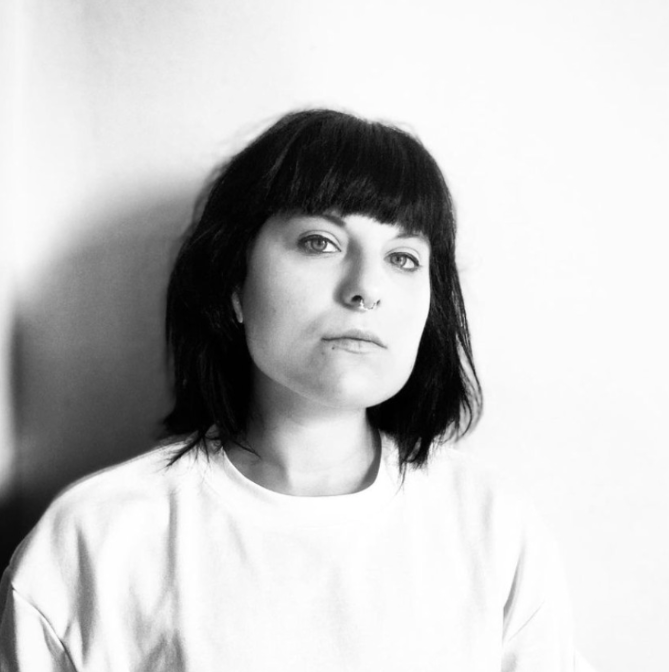
Jennifer Bélanger is a writer and literary scholar from Montréal. Menthol, her semi-autobiographical debut novel, explores the fraught relationship between a mother and daughter and the narrator’s challenging experience of chronic illness. Menthol was a finalist for the Governor General’s Award for French Language Fiction.
✶
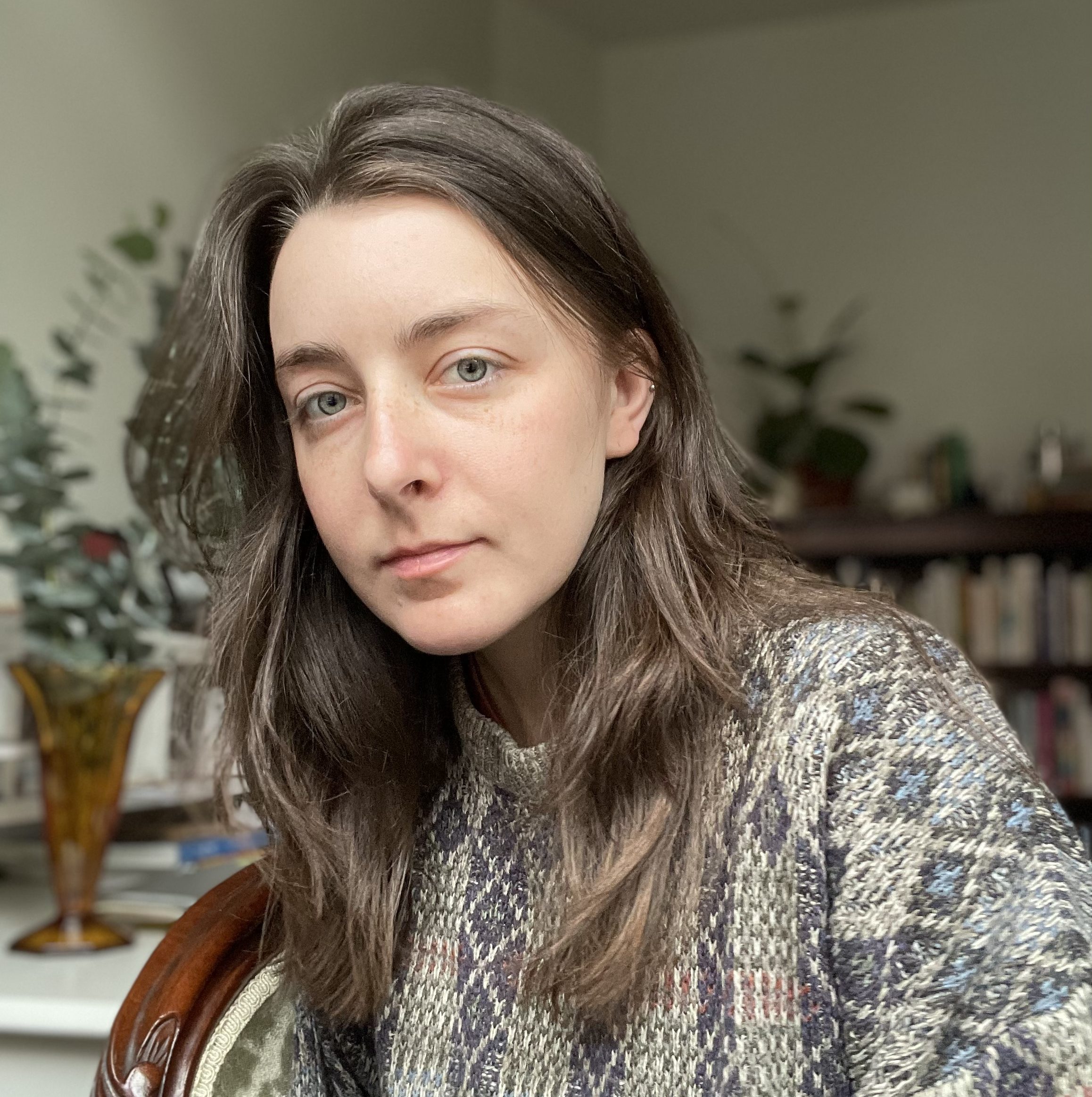
Sophie Grace Lellman is an editor, translator, and teacher based in New York City. She received her MA in Comparative Literature from King’s College London in 2022 and was the 2024 American Literary Translators Association Emerging Translator Mentee in Literature from Québec. Several of her translations from Portuguese are forthcoming in the anthology A Very Brazilian Christmas.
✶
Patty Paine is the author of Grief & Other Animals, The Sounding Machine, and three chapbooks. Her writing and visual work have appeared in Blackbird, The Denver Quarterly, Gulf Stream, Waxwing, Analog Forever, Lomography, The South Dakota Review, and other publications. She is the founding editor of Diode Poetry Journal and Diode Editions and is Director of Liberal Arts & Sciences at VCUarts Qatar.
✶
Whenever possible, we link book titles to Bookshop, an independent bookselling site. As a Bookshop affiliate, Another Chicago Magazine earns a small percentage from qualifying purchases.
 Another Chicago Magazine