

The information contained in this article is subject to change as we are still gaining new information on the incident. Some facts here may later be unproven when more is brought to light.
The first time the great Zimbabwean medium Mbuya Nehanda returned from the dead, the situation was resolved quickly. One village chief reported to the government authorities that there was a young woman claiming to be Mbuya Nehanda, and she was going around announcing that the fight for independence was not yet done. This is the only time she has mentioned independence since her return from the dead, so we are still not sure whether she meant what she said or if she was suffering from temporal confusion. She might not have known that the colonists had since been defeated and that Zimbabwe had been independent for decades. Whatever her reasons for saying such a thing were, the government could not take any chances, so they allegedly sent officials to apprehend her, and she was beheaded. It is unclear if the government truly believed Mbuya Nehanda came back or if they were on their usual guard against insurrection.
Since we have been accused of being unfair to the government in the past, (we are aware, some government officials have accused us of being a front for colonial agents.) Apparently, our obsession with criticizing the government that gave us our independence is a sign that we are stooges of the West who are being paid to lay the groundwork for them when they eventually come and invade again. To prove our accusers wrong, we will give them a fair shake here. Since there are those that go through our articles with a fine-tooth comb, we want to clarify that this is not a confirmation that we have been purposely unfair to the government in the past. To be clear, we are not giving the government a fair shake because we are trying to prove ourselves. Taking the risk of sounding grandiose, we do not need to prove ourselves to anyone. We are an establishment that has been dedicated to unbiased journalism for the past forty years. Our reasons for hearing the government out are the same reasons we apply to anyone we write about. We are against writing single narratives and aim to ensure that all sides are represented in whatever we report. So, if it appears like we have been largely negative when it comes to the government in the past, it means we had nothing positive to write about. Maybe it is high time the government holds itself accountable instead of throwing accusations at us.
As far as this case is concerned, a couple of things do not add up. Firstly, although our government is not above killing “enemies of the state,” it usually takes a little more than simply proclaiming that the revolution was not done for them to start paying attention. Mbuya Nehanda had hardly amassed a large enough following to trouble the government when she was talking about the revolution. Questions have also been asked about the supposed method that the government agents used to kill Mbuya Nehanda. This is the first time we have heard of the government killing someone by beheading. However, it is important to recall that the government has been known to outsource some of its tasks to local groups for plausible deniability. These locals often do not possess sophisticated weaponry, nor are they supplied any weapons from the government, as that would defeat the purpose of plausible deniability.
In any case, Mbuya Nehanda did not stay beheaded. A week later, she appeared in another village, complaining that the beheading was uncalled for. Given that the villages she appeared to were far apart, the villagers in the second village were quite confused about the beheading she was referring to. The first thought, of course, was that the history books got it wrong. We were always told that Mbuya Nehanda was hanged by the colonists, but it is within reason to believe she could have been beheaded as well. It became clear, however, that the beheading she was talking about had been done recently. She described in explicit detail that men in suits had come and taken her under the pretense of seeing the leader of the country, only to cut off her head in a jungle. Given that all the information surrounding these early encounters is hearsay, no one can fully explain how Mbuya Nehanda knew what a suit was, let alone describe it. The leading theory is that given that the dead are never really dead, Mbuya Nehanda’s spirit kept watching over Zimbabwe, so she was aware of all our progress. This has never been confirmed, as Mbuya Nehanda has remained somewhat vague when asked about the afterlife.
Because of her claims that the government knew that she was back and had supposedly conspired to kill her, Mbuya Nehanda was able to gain a more sizable following on her second return. Once again, word was sent to the authorities, and two officials were sent to meet with her. The government was courteous enough not to send the two agents that had killed her the first time. This time around, they also did not go straight for the kill. They first requested a sit down with her. They mostly wanted to know what she meant when she said the revolution was not done. No one knows what happened in this meeting because they met in secret. All we know is that after the meeting, Mbuya Nehanda was shot dead. Of course, people did not know that she had been shot then. All they knew was that Mbuya Nehanda had disappeared. It was Mbuya Nehanda herself who provided the details on her third return.
It was in the period between the second and third appearance that word about Mbuya Nehanda reached the cities. At the time, no one gave heed to the villagers who were claiming that they had seen Mbuya Nehanda and she had disappeared after meeting two government agents who had probably killed her, given that they had beheaded her the first time. The truth is most people in the cities did not even know who Mbuya Nehanda was. Her efforts in the liberation struggle were described as minimal at best. As far as most people knew, our current government officials and our current president had done the heavy lifting during the liberation struggle. Even if Mbuya Nehanda were such a respected entity, city folk would have still dismissed the stories because to believe that a medium that had died more than thirty years ago would come back to life was the sort of absurd superstition city people believed the rural populations were susceptible to believe.
From a journalistic point of view, the second killing also raises some questions about the authenticity of Mbuya Nehanda’s claim. Our government officials may be brutes, but they are not idiots. They would have known that killing Mbuya Nehanda the second time would have been too obvious. Previous killings by the government (which they deny to this day) are always made under the radar without spectacle. People simply disappear or have car accidents. Now, all of a sudden, the government was beheading and shooting the same person in the space of a week. The only thing that can explain the government’s sudden change of MO is that they know something we don’t know about Mbuya Nehanda. It has long been speculated that the government employs several mediums that work in secret to ensure that the officials stay in power. Right now, the leading theory is that the government mediums could sense that someone more powerful than all of them combined was coming. Someone who could potentially topple the government, and they told them that this person, whoever they were, had to be killed immediately. This was no time to be subtle.
The third appearance happened in another village. Once she was discovered, word was immediately sent to journalists from the city to come and capture the moment, and for the first time, there was a picture of her. An article was published placing the new picture and the only surviving picture we have of Mbuya Nehanda side by side. Even the city skeptics had to admit that whoever this woman was, she had an uncanny resemblance to Mbuya Nehanda. This was also a time when conspiracy theories started to spring up, the lead theory being that the new Mbuya Nehanda was actually an alien who had been sent to learn our ways and prepare for its species’ eventual invasion of Earth. Not to say that we believe this theory, but if aliens are to choose a place to lay low and observe, Zimbabwe might be the best place to do so, since the world rarely pays any attention to us.
No government agents were sent to her this time. All efforts were thrown into disqualifying her claims. The main stumbling block was the resemblance the current Mbuya Nehanda had with the original version. Government officials were now claiming that the original Mbuya Nehanda could not be photographed, and every time the colonists tried, the picture would come off blank. They ended up taking a picture of a random lady and lied that she was Mbuya Nehanda to quell the mysticism surrounding the medium.
Not that we agree with the government or think their explanation makes sense, but it should be noted that this is not the first time Zimbabwe has had an incident involving someone claiming to be a dead public figure from the past. In the past ten years, we have been visited by Jesus and numerous biblical prophets. Dr. Maria Gapara, a prominent psychoanalyst, has claimed that the number of people claiming to be some version of a person coming back to life speaks to a state of depression that has taken over our nation. She asserts that the emergence of these figures and the public’s ready receptiveness to them is a sign that the public is willing to attach themselves to savior figures to escape their daily hardships.
Dr. Gapara’s effort to rationalize these resurrections has come with its fair share of criticism. Dr. Kangozi the leading Zimbabwean anthropologist, has argued that Dr. Gapara’s argument works with an already accepted notion that Zimbabwean spirituality is nothing but a fantasy and does not pause to reflect if, indeed, such encounters are true. Dr. Kangozi argues that African spirituality has always pushed back against the hubris of Western thought by showing that their way of understanding the world does not provide all the answers. He goes as far as to state that the ancestors are mocking Western rationale through these resurrections, showing them that there have a lot to learn about the world.
As far as Mbuya Nehanda herself is concerned, we are still unsure of her plan or if she has a plan at all. The only thing she has said after the third appearance has been to instruct people not to call her Mbuya Nehanda as she is not that old to be called grandmother. She has since told people to call her by her first name, Nyamita Nehanda. She has not yet elaborated on what she meant when she said the revolution is not yet done, and we are still yet to see why the government mediums (if that theory is true at all) are so afraid of her. She continues to add more to her following, but so far, she has done nothing. She does not preach; she does not give any decrees. She goes about her normal daily activities. Maybe this is a period where she tests the nations’ faith. Will they still believe in a year’s time or two years’ time if she does nothing? Would they still believe that she will come back if she dies of natural causes this time? For now, the government continues to watch her. We all continue to watch her. For the past three months, everyone has been watching her and waiting.
✶✶✶✶
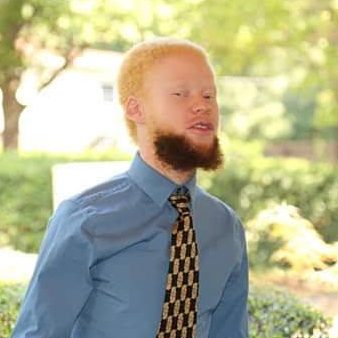
Tawanda Nyahasha is an emerging writer whose fiction and nonfiction embody the spirit of his country, Zimbabwe. He pulls heavily from Zimbabwean traditions and considers the sound of the story being told as he writes it, all the while ensuring that Zimbabwean people are always placed at the center of the text. His stories are filled with the resilience of a Zimbabwean population that finds humor in spite of hardship, joy in the face of poverty, and a soft underbelly to structurally induced violence. He recognizes the adversity faced by Zimbabwe and chooses to shine a light on all that is good in his world. Tawanda earned his BA in psychology at Johnson C Smith University and his MA in creative writing at the University of Alabama at Birmingham. He is currently pursuing a Ph.D. in creative writing at the University of Southern Mississippi.
✶

Bill Wolak has just published his eighteenth book of poetry entitled All the Wind’s Unfinished Kisses with Ekstasis Editions. His collages have appeared as cover art for such magazines as Phoebe, Barfly Poetry Magazine, Ragazine, Cardinal Sins, Pithead Chapel, The Wire’s Dream, and Phantom Kangaroo. His collages and photographs have appeared recently in the 2020 Seattle Erotic Art Festival, the 2020 Dirty Show in Detroit, the 2020 Rochester Erotic Arts Festival, the 2018 Montreal Erotic Art Festival, and Naked in New Hope 2018.
 Another Chicago Magazine