
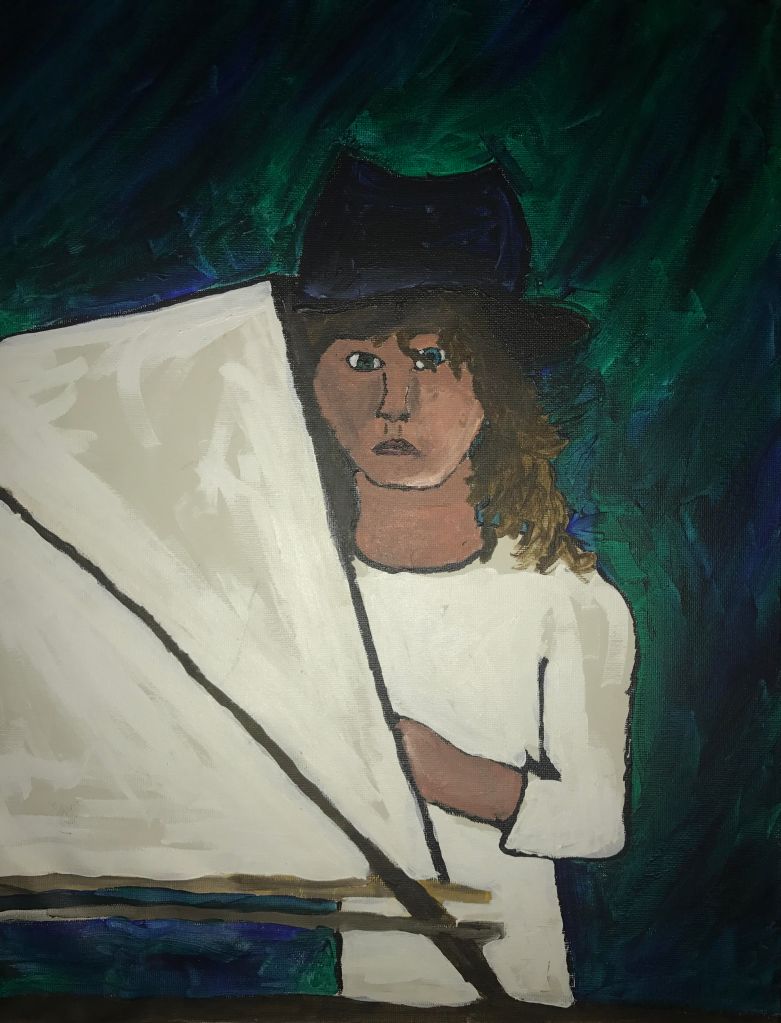
Tabi ni yande/ Yume wa kareno wo/ Kake meguru
sick on a journey/ my dream goes wandering/ on this withered field
-Matsuo Basho
Are you hapa?
He lets the question seep in, like late rain in dry soil. He knows the answer to the question, yet he is unable to articulate the sentiment. Of course, he thinks he knows how to reply, but there are so many layers to the moving parts of a whole person. He digs chopsticks through his katsudon tofu over rice. Golden flakes of panko crumble into smaller pieces. The waitress places two plates of torikatsu sandos across from him. The waitress smiles, bows, and silently slips back into the restaurant.
He isn’t hapa.
His mother finally breaks the silence, while chewing the crunchy chicken sandwich. Her friend Sheila, who asked the question, scrunches her face in confusion. She lowers her square glasses to the bridge of her nose, giving a closer examination. His mother’s response paralyzes him, as if he had been living a lie his entire life and was caught slipping.
You look hapa to me.
Sheila would know, she is hapa herself. His mother is too, but to him they are Japanese, living in America. The comment secretly elates him. He is a spitting image of his mother. His older brother, though, inherited their father’s genes. A family split in two. Sheila and his mother were childhood friends in Kanagawa. A place he doesn’t know personally but has researched extensively. Just as he has investigated the Buddha’s feet, which was his first identity marker thanks to his brothel-raised-turned-war-bride-turned-hermit-nun obaachan.
Are you sure you’re not hapa?
Sheila gives a rough laugh. His mother tells Sheila he is thirty-five percent. Sheila, unable to calculate the mathematical division, drops the subject. His mother unsettlingly returns to her meal. Any mention of his father causes a timeline that never existed. For him, the mention of his father causes competitive memories, past recollections only father and son addicts can understand. He sometimes wonders if the unseen inheritance is greater than the external. Mental afflictions opposed to dark thick hair and crescent-shaped eyes. Does the fact he shared needles with his father make them closer than he is to his mother? These are questions that often keep him awake during the midnight silence.
This is one of my favorite shokudōs in Little Tokyo. What do you think, Betty-chan?
Cherry blossom shadows sprinkle lily pad shapes across the sidewalk. The next table over someone is pouring tea, two fingers beneath the spout, left hand floating through the handle. A group of charcoal-shaded pigeons peck for crumbs in the gutter. Sheila and his mother reminisce about their childhood in Japan. School field trips to Mt. Fuji, dried squid snacks at lunch, mothers cut off from family—either from the very recent experience of Hiroshima and Nagasaki or their own severing ties. They talk of the luck that both their families immigrated to the same small coastal California town, just in time for them to start high school. A period of time they both share painful memories of assimilating in.
Do you remember when we were arrested in tenth grade for shoplifting and decided to drop acid before turning ourselves in?
His mother doesn’t respond right away. He’s heard this story before but never from the perspective of the other party. His mother is a secluded person, something he attributes to the traumas she’s never dealt with, the only thing his mother and father had in common other than two children. This is the first time since he was an adult that he’s spent time with one of his mother’s friends. When he was younger there were family friends who were also Japanese, but after the constant relocations and embarrassing conflicts between his parents, those relationships withered like end-of-summer chrysanthemums. Witnessing the interaction between Sheila and his mother reinforces his sense of identity.
I remember you had a bad trip because you decided to drink a forty beforehand.
His mother delicately picks up a pickled plum with her chopsticks, letting the salty brine drip onto the mamezara. She crunches loudly, revealing a slight frown as she begins to remember the past. A group of businessmen huddle around the hostess podium while the crash of a plate dropping echoes through the street. His mother explains that she was put in solitary for the weekend because the PO smelled alcohol on her breath. He’s never heard this part of the story. Sheila smacks his mother’s shoulder and boasts about what wily teenagers they once were.
Nihongo hanasemasu ka?
He shakes his head. Although he knows how to answer this with body language, he is unable to respond in his mother’s tongue. Somewhere down the line his grandfather forbade speaking Japanese in the household. He learned of this rule after his grandfather’s death; resentment soon followed. Was his grandfather ashamed of his foreign family? His half-this-half-that children? Is this why he drank at the legion hall every night once they moved to the United States? His mother will never speak ill of his grandfather, who would take him as a child to get haircuts and candy at the military base commissary every few weeks. Lemon Drops always in full abundance in his glove box. When they scattered his grandfather’s ashes into Monterey Bay, he was injecting cocaine in the boat’s bathroom. He was thirteen. Maybe this is where his resentments lie.
I need to stop at the temple for hamaya. It’s been a tumultuous year.
Sheila leads them through the pavilion past dumpling shops, noodle houses, and knick-knack emporiums. The smell of sesame oil traverses the brick-layered path. Someone bought a new pair of getas and small children are throwing noisy poppers against a water-less fountain. In the far corner, near the parking garage entrance, two men lie slumped against the concrete, a fifth of clear alcohol between them. He pauses and stares in their direction. His mother and Sheila keep walking, reminiscing about the past. A sudden realization hits him; he hasn’t reflected for quite some time on the life he is living today, but for some reason the sight of these two downtrodden men makes him remember he is no longer living in the gutter himself, boiling the contents of a spoon, or robbing unsuspecting Samaritans at gunpoint out of desperation. Perhaps the sudden intrapersonal contemplation is due to one of the drunks resembling his mother’s recently deceased brother, who happened to be his favorite uncle and whose death was only a month ago. Untreated cirrhosis. No one in the family had spoken of his passing. The recliner he died in still held the newspaper he was reading, wedged into the arm.
Akemashite omedetou gozaimasu. Three Hamaya please.
Sheila holds her palms together and bows to the temple caretaker. He and his mother mirror the posture. The smell of sandalwood permeates the altar room. Scrolls of kanji hang next to statues of the Buddha and Kanzeon. Freshly-cut tulips and lilies vibrate in the sunlight piercing through large windows. Sheila explains to him the importance of purchasing arrows every new year to ward off evil energy and to enter the new year with pure intent. The caretaker returns with three arrows and a small sutra chant book. Sheila hands her a few extra bills, and the caretaker places a fortune in each of their palms, bowing slightly, then shuffling away into another room. They follow Sheila to the courtyard, where she faces a large standing Buddha statue. She claps three times and bows three times. He and his mother mirror the gestures.
Let’s go over to Kinokuniya. It’ll really remind you of back home, Betty-chan.
Sheila leads them upstairs, above Marukai Market. As soon as she steps through the door, his mother is consumed by nostalgia. Her great aunt owned a neighborhood stationary store in Tokyo, which turned into a local bar at night, which was and still is a rarity in Japan. She stayed with her aunt when her father became explosive, which was often. The notepads and calligraphy pens remind her of the lessons her aunt would give her when she became withdrawn. Sheila breaks her out of her silent past and tells them her son is visiting from Kyoto and she needs a stationary gift for her mago, who she nicknamed natto since his favorite food was fried egg with natto. His mother tells Sheila the only food she could get him to eat as a child was natto, which she disliked because of the slimy texture. Unless one is used to eating fermented soybean, it is an acquired taste. Sheila pats him gently on the back like an oba, as if they have known each other for decades, and tells him he must be Japanese if he liked that stinky shit. Because it is an early weekday afternoon, Kinokuniya is manageable inside. A few groups of teenagers are browsing manga in the back, an older woman flips through calendars of haikus paired with woodblock prints, and a woman in her early twenties at the magazine rack holds a stack of fashion articles.
I’m going to go ask if they have Tokyo Revengers. Hopefully they have it in both languages.
Sheila goes over to the front counter and leaves them near the cookbooks. He and his mother slowly walk up and down the aisles, reveling in all the Japanese literature and colorful pop art. His mother has lived in a tiny West Coast town since she arrived in the late 70s soon after her mother remarried to an army officer; she grew up believing he was her father. Walking through Little Tokyo with her son and childhood friend seem to bring memories she never thought would surface again. His mother picks up a copy of The Tale of Genji, delicately flipping over to read the back cover. When she lifts her eyes, her son is reaching for a newly translated Basho, Narrow Road to the Interior.
Oku no Hosomichi. Your great-grandmother knew that entire poem by heart.
His eyes widen as if a family secret had been relocated. His mother told him her grandmother would read Basho to her every night before bed when she was a child, when her grandmother would try and read something else his mother would throw a fit until her grandmother caved in. His great-grandmother lived as a groundskeeper at a Shinto temple after her husband died near Yosuka overlooking Tokyo Bay. His grandmother and great-grandmother didn’t speak to one another for nearly ten years, until his mother was born. When his great-grandmother learned her daughter now had a daughter, she would travel to Kanagawa every month to stay with them for a week. They moved to the United States shortly after her departure from this world. His mother puts The Tale of Genji back on the shelf and took a step back. It is the first time she notices how much he resembles her grandmother, slightly darker skin tone and pronounced cheekbones that make them appear as if pouting their lips. Even their noses are the same, slightly tilted to the left but you would never know it because of how small they were, you’d have to look at their faces a million times. His mother was stuck staring at these two people in one, her dead grandmother infused with her living son, a spiritual inheritance that found a conduit.
Your great-grandmother believed in reincarnation and invisible spirits all around us all the time.
They stand in silence for a few minutes. Then his mother, in a whisper, exhales shaman, elongating the last syllable as if blowing cigarette smoke into the air. She startles him with her cut through the stillness. He is slowly absorbing the terms reincarnation and shaman, concepts and ideas he had been interested in but never had history behind. They walk down to the end of the aisle to the bookshelf containing historical novels on samurai, the Meiji era, and illustrated companion books on kodama and obake folklore. Sheila soon joins them with both English and Japanese mangas in her right hand. The bookstore is beginning to fill up and he tells the two women he needs to go outside for fresh air. As he walks past the counter, the woman behind the cash machine smiles widely and wishes him a good day and to come back soon. He stands at the double-door entrance, takes a deep breath, and extends his left arm to push the handle open. The door is heavy, unusually weighed down and not the door he, his mother, and Sheila walked through earlier. He looks back at the cashier, who is still smiling. He takes his right hand and grabs the handle together and tries to push it open. Again, the door is too heavy. He looks back again and the store is empty. Not a single person browsing literature, flipping through magazines, or trying out calligraphy pens on complimentary paper. His mother is gone, Sheila is gone, the only person left is the woman behind the counter. Smiling. Nodding slowly. He doesn’t feel threatened by the cashier, nor does she make him feel like he is in danger. But nonetheless he begins to panic. His palms clammy and his shirt collar constricting his throat. He flexes every muscle in his body and pushes the door open with all his strength.
✶
(One week before)
How are you feeling about going home?
He lets the question seep in, like dawn light in an open curtain. He knows the answer to the question, yet he is unable to articulate the sentiment. Of course, he thinks he knows how to reply, but there are so many layers to the moving parts of what constitutes a home. He takes a ramen package from the box beneath his bunk. He flips it over three times and tears the corner, slowly breaking off pieces of dried noodle. He chews small bites while sitting cross legged on his thin and faded turquoise cot. He takes the powdered flavoring and places it neatly in a small bag next to a dozen other unopened packets. Shrimp. Chicken. Miso. Oriental.
I know if I was going home next week, I would beg my mother to make a week’s worth of pho nam.
They both sit in silence. Lost in an edible fantasy. Home-cooked meals from their mothers’ homelands occupy all concentration. His are filled with yaki-soba, pickled plums, natto, and sukiyaki. His cellmate’s are filled with cha ca, banh xeo, and mango sticky rice. All they want is to magically appear in their childhood kitchen and pretend they are their mothers’ children again. Unfortunately, time doesn’t work that way; they are growing older between concrete walls and narrow corridors. Time is progressing, but they have lived as if frozen in a far-out compound, unseen from a society living their lives without them. Without knowledge of what occurs behind the sign that reads CORRECTIONAL FACILITY. Without knowledge of a community maneuvering within a sustainable state-operated machine.
For real though, what are you going to do first when you get off that bus?
His concentration on a warm cooked meal is broken. The words trailing from the top bunk and dripping onto the cold, grey floor. A hard, sideways rain is falling outside and the low temperature is causing their cell to feel like an icebox. He places his palm in front of his mouth, breathing long and slow. A cloud of condensation meets his hand, the tingling sensation travels to his elbow. The corners are slowly leaking. He thinks of the question but can’t pinpoint any concrete idea. He has been in this cavernous place almost three years and thought he’d grow to be an old man here. But current laws changed for teenagers, and he is getting a second chance. He never had time to think about outside because it was never an option, he thought only of surviving and mentally preparing oneself for a life of incarceration. He was too busy sculpting his thin physique and absorbing the old timers’ mentorship on navigating politics, something he still hasn’t quite understood in nearly one thousand days.
Where you being released to? You going back up north or have to stick around L.A.?
After the question, his cellie hops off the bunk, stretches his arms straight up, and releases a low groan. He takes out his tiny handleless toothbrush. While his cellie squeezes out the last contents of his toothpaste, he stares for a minute or so and realizes he will no longer have to use such a tiny toothbrush. In a week he will be able to have a toothbrush he can fully wrap his fingers around. When his cellie spits and rinses out his mouth, he tells him he will be stuck in LA. He says his mother is moving down and will be renting a room from her childhood friend, whom he has never met. She transferred grocery stores and will be working and living near Little Tokyo to help him adjust.
What I wouldn’t give to live near my moms again. She’s crazy, but I really put her through the wringer.
Me too, he replies. He hasn’t seen his mother since his first court date. Before that she made him move in with his father in the city. He was getting in too much trouble in the small coastal town north of Big Sur. In a small town, his mother explained to him once, you have to be unnoticeable, because there are no hiding spots in such places. She went on to say, You are a mirror of the community you live in, or else you get shunned, like I did when we first moved to this country. He was too young when she first told him this, but as he got older, he realized the same teachers and counselors were always resorting to law enforcement and probation officers when he was called into their offices. Once you are referred to probation, you are always referred to probation, he learned. After the last violent altercation between his parents, his father moved and his mother was left with him and his older brother. Without a high school diploma, his mother did various jobs, such as sushi bar hostess, house cleaner, and golf caddy for the rich politicians he never had interactions with in his town. Eventually his mother got a stable job at a local grocery store working graveyard shifts.
Did you hear about what they did to Dragon last time we went to the yard?
His cellie is referring to an OG who was using more than he was selling. The worst part was he wasn’t being honest about it and was trying to lie to the crew about where the product was going. He hadn’t heard or seen what happened, and he isn’t interested in the details. Since being here, he has been in a low-key riot, which sounds like an oxymoron, but it wasn’t comparable to the tension between races a decade earlier. He has seen dudes get shot by bean bags, pellets, and a sniper in the tower once killed a man not thirty yards from him near the basketball court. He has seen a grown man get mad over a card game and stab the player sitting across from him in the cheek and rip his flesh till his mouth opened. He still can see the flap of gums when he shuts his eyes. He’s been in multiple fights of his own over arbitrary interactions, some beginning as capriciously as when he accidentally stepped on someone’s heels when they stopped too quickly in the chow hall.
Hello? Where you at, bro? You’re always staring off into the distance in your own little world.
His cellie is done with his first rep of burpees. They are on lockdown after a piece of metal from the gate surrounding the yard was found beneath someone’s bunk. During lockdown they have no programming and have to work out in their cells. They have a rigid schedule for both of them, to keep their endorphins up, and now is his cellie’s designated workout time. I’m here, he says. But I’m not here, he says to himself. He is trying to remember what his mother’s face looks like. He has no photos and throughout the years in this place his memories of people faded like forgotten hydrangeas in direct sunlight. All he can remember is his mother’s voice singing to him as a child: You are my sunshine/my only sunshine/you keep me happy/when skies are grey. In this place, he thinks, the sky is always grey. The walls are grey. The floor is grey. What they make us wear is grey.
✶
(Three years before)
You’re just like your mother, you know that?
He lets the question seep in like dark green sencha floating in a clay-fired kyusu. He knows the answer to the question, yet he is unable to articulate the sentiment. Of course, he thinks he knows how to reply but there are so many layers to the moving parts of what constitute the inheritance from mothers. He is a miniature version of his mother. So much so that his father resents his physical appearance. They, father and son, share no physical traits besides deep blue eyes. Even though they live in the center of a metropolis, a woman once asked his father if he had other adoptees and said he was so charitable for taking in a needy stray from one of those Asian countries.
What do you want to do with your last night, son?
Although they bore no resemblance and his father was in and out of his life, with periods of years-long absences, his father loved him. His father came from a line of absentee fathers. Fathers who lived near railroad tracks and watering holes. His father’s father was the first from northern Europe to be born in this country, and his father’s grandfather was the youngest of fifteen and so on and so on. His father used to tell him he came from a lineage of Vikings who traveled the entire planet in deep exploration. He enjoyed hearing these stories contrasted against clans of samurai from his mother’s side, and when he was younger, he would pretend he was a ship-sailing samurai with a hammer like Thor’s. But now he is a teenager and both of his parents are unable to understand his quirks and peculiarities. This is his first time living in a large city. To make matters more complicated, he and his father are more like distant cousins attempting to cohabitate. He is unable to understand why his mother sent him away.
I know of this great ramen spot near the marina. I used to take your mother there before your brother was born.
This is the first time he’s heard about an endearing moment between his parents. Though he can’t say for sure, his father’s face bears a nostalgic beam that says he misses the days before children. They drive through the wide streets of the Mission, hang a right on Market and then another left down a nondescript road into the part of the city where the brick buildings block out the stars. His father lights another cigarette while he watches all the city lights pass him by like the Star Trek Enterprise in warp speed. Tents line street corners, groups of men in suits cross north, a lone trumpet player blows his lungs from an open window. His father played the saxophone and was once in a promising quartet, but he was arrested for narcotic distribution. While his father was incarcerated, the band went on a national tour and got a record deal, eventually going overseas. His father talked jazz, but never picked up the brass instrument again. They pull over a few blocks from the restaurant. His father puts out his cigarette in the center console ashtray and lights another cigarette for the walk.
I know it was a hard adjustment moving here from the small coastal town. Maybe when you get out it’ll be easier to adapt.
Even though neither mentioned the next morning he would be turning himself in for a lengthy sentence inside an adult facility, the conversations are tense with uncertainty. When he was sent to live with his father after his first juvenile hall experience, his father opened up about his own experience growing up in a reformatory in Washington and eventually his battle with the revolving door of the adult justice system. Of course, his father is still using, and he is in the thick of his own addiction. This exchange doesn’t bond them, but it does open up a comfortability at the house that quashes their awkward relationship of strangerhood. His father no longer hides his track marks, and he is collecting his own scar tissue. At first, his father told his mother there was no way he was going to take him in and it would only harm him more. But she pleaded that she had her hands full and his father knew first-hand the trouble their son was getting into. As soon as she began itemizing the long list of misdeeds and unfaithful performances, his father caved in and agreed to open his home. His older brother wanted nothing to do with their father, and his father eventually started to think he could turn things around with him. But that soon changes after this last arrest, and his father knows he won’t see his youngest son until he is an old man or worse, he won’t ever see him again.
I think I’m going to get the chashu ramen with a side of extra noodles and karaage.
His father’s pronunciation surprises him. He repeats the words silently to himself and opens the wooden chopstick package in front of him. He puts the chopsticks in his waterglass and leaves them there. His father pours green tea in both of their cups. Not drinking tonight, he says, then they’d have to take two of us in tomorrow instead of one. His father’s face flushes red, and he grows silent as soon as he makes the joke. He keeps silent. A live band is playing in the restaurant connected to the ramen shop. A blues guitar wails, a whammy pad distorts, and a low hi-hat beat keeps the rhythm. He and his father look at each other, then burst into laughter. They laugh so hard his father has to wave to the waitress to come back. This is the first time he’s ever laughed with his father. He can’t remember a single time anything genuinely funny or sincere happened between them. The waitress comes back and takes their order. He orders double his father’s order and mochi ice cream for dessert. The streets outside are filled with people going somewhere and coming from someplace else. He watches them through the big glass window until they reach the solid wall painted with a chaniwa garden wallpaper and disappear into the night.
✶✶✶✶

Tony Koji Wallin-Sato is a Japanese American who works with formerly and currently incarcerated students in the California State University System’s Project Rebound. He is also a lecturer in the Critical Race Gender and Sexuality Studies department at Cal Poly Humboldt, facilitates
Buddhist and mindfulness programming in youth and adult facilities, and is a teaching artist for WJA’s Arts in Corrections. His chapbook, Hyouhakusha: Desolate Travels of a Junkie on the Road, was published through Cold River Press. His first book of poems, Bamboo on the Tracks: Sakura Snow and Colt Peacemaker was selected for the 2022 Robert Creeley Award. Okaerinasai, his second book of poems, is available October 2024 through Wet Cement Press. His work is featured in the Haymarket Books We The Gathered Heat: Asian American and Pacific Islander Anthology, as well as Konch Magazine, Yellow Medicine Review, New Delta Review, LIT Magazine, and AAWW’s The Margins. All he wants is to see his community’s thoughts, ideas and emotions freely shared and expressed.
✶

