
In my student’s short story, the protagonist visits each of her professors who had given her anything less than an A (which was all of them), and at each house or apartment, the protagonist slits the professor’s throat or shoots him or her with an NAA-22S, a pistol small enough for the shooter to hide in the palm of her hand. My student had done her research. Maybe she actually owned the gun.
A week ago, a student at a Virginia college killed thirty-two people. He was armed with a 9-millimeter handgun, a 22-caliber handgun, and hundreds of rounds of ammunition. He was an English major.
I’m reading my student’s story in my university office. The six-by-nine room doesn’t look like the professors’ offices you see in television series—no mahogany wainscoting or Persian rugs. Assistant professors like me with only one book, a meager Instagram following, and no international reputation toil in these offices until we prove our worth and get promoted. I’m in the “probationary period” of my employ.
The professors in our department tell me I dedicate too much time to my students, that I’m sacrificing my career by spending too much time poring over their manuscripts and writing excessive feedback, that I should hurry to finish my second novel if I want a permanent position. But if you do the math, each time my class meets it costs a student $681. Each meeting! Okay, an accurate calculation would deduct the university’s other benefits like library privileges, camaraderie, events, one-on-ones with professors, but you get the idea—each hour is pricey. So I feel compelled to give my students their money’s worth, and I do need the promotion. I help pay for my Los Angeles sister’s chemotherapy. And yes, I’ll admit I need the validation that comes from earning an income related to my vocation. Who doesn’t?
The murder-minded student is enrolled in my extension class, basically continuing education or the courses that don’t require admission into the fancy university, though some cheaters stick the course and university name on their resume without adding “extension.” Full-time professors are sometimes given the choice to fill out their semester’s classes with one extension course, and I jumped at the chance. Imagine the difference between a story written by a seventy-year-old war veteran vs. that of a nineteen-year-old Scarsdale valedictorian. Okay, the Scarsdale girl might come with ample trauma to write about, maybe her father sunk his hedge-fund earnings into a failed startup and the family was evicted with nowhere to live because their extended family hated them because the father was stingy, but my point: In the extension courses, the stories and ensuing discussions sizzle because of diversity in age, privilege, and background.
So here I am in my cramped office reading a draft of this terrifying story. The protagonist’s first victim was a meek, sixty-something mathematics professor who had given the protagonist a D+. The protagonist shot him in the face. The student wrote her most precise descriptions when detailing the wounds: the splintered cheekbone, the bullet that blasted a cavern exposing the math teacher’s mouth and teeth, the contrast of his white hair against blood that was seeping onto shiny hardwood…. I stare at the bare trees through my one window, hoping for something or someone to acknowledge that I should be very, very scared. Is the student angry that I’d given her a C+ and B- respectively on her drafts of the first assignment? Both grades were generous. Is this new, violent story a copycat tale? The trees stand stiff. The gray sky is equally unsupportive.
The course, “Intermediate Fiction,” requires students to submit a writing sample to be considered for enrollment, the only way to determine if a student qualifies for “intermediate.” Let’s call the student Eveline, which is not her name but helps me see her as a multi-faceted young woman not privileged with a solid education (“solid” as defined by the elite American institutions of learning) rather than as a lazy, conniving, or depraved kid.
On the first day of class, thirteen students sat around a long conference table. The class limit was twelve. I took roll. She was not on the roster. Further, she had not submitted a writing sample before class.
“And you are?” I asked her.
“_____,” she said, but let’s pretend she said “Eveline.”
“Uh, Eveline, I don’t believe I received your writing sample before today,” I said.
She sat there, silent. Skinny, somewhere between twenty and twenty-five years old, she wore an untucked plaid flannel shirt and no jewelry or makeup. Her heavy eyebrows gave her a stern expression. Her large eyeglasses were not yet back in style. And her small nose ring contradicted the young-librarian look. She did not smile. She barely moved.
The other twelve students, all of whom had been selected from the twenty who submitted their work in advance, looked at her, then at me, then back at her. The group seemed a mix of European (aka “white”), Indian (from Asia), and maybe Middle Eastern people in their twenties. Eveline’s heritage was hard to discern—maybe African, potentially Latinx. Her complexion was about as dark as mine. My skin color might be why I have this job. I’m a Sephardic Jew. Both of my parents come from São Paulo. They were second cousins. It’s a wonder I don’t have three arms.
Only twelve students are allowed in this class, I wanted to say, and everyone here except for you followed the rules. Instead, to unforthcoming Eveline I said, “Let’s talk after class, OK?”
She nodded curtly.
I taught the first class, which was well received because the students were in that honeymoon phase before discovering that creative writing requires attention to structure, characterization, and brevity—the dreamy time before realizing that they’ve been using “lie” and “lay” all wrong or that writing two adjectives instead of one well-chosen noun is like propping up a ghost with two drunks (not my simile, my mentor’s), so they leave class high on the possibility that they’ll soon join those magicians whose names are printed in a larger font than the book’s title.
“In this course,” I said in my closing remarks, “you have total freedom to write whatever it is you need to write, freedom to choose whatever you feel is important—love, betrayal, injustice, longing, or even trees. Writing your story is power. If you write well, you have the power to change minds and hearts.”
Many gazed at the middle distance, a sign that they were thinking about this, or were glazing over, imagining the wine waiting for them at home. “Okay, that’s all I’ve got,” I said, and all the students clapped, all except for Eveline. I reminded them of the reading assignment and a one-to-two-page paper requiring them to reflect on a short story. It would be due in a few weeks. I erased the white board, pressing hard to expunge the specter of someone else’s writing—careless users of magic markers and not Dry Erase—and hoped Eveline would disappear forever. A couple students asked me questions as I cleaned, “So you expect us to rewrite our stories for the final?” Yes, of course. “Can we write a story we’ve written in another class?” No, of course not. Eveline stayed in her seat.
“Let’s talk out there,” I said to Eveline, motioning to the hallway area outside the classroom. It was banked with cushioned seating and three doors to other classrooms. Ours seemed to be the last class of the day; there were no loitering students.
Eveline hefted her enormous backpack and walked out carefully, as though afraid of waking people. She plopped her backpack on one of the cushions and stood, waiting.
“Eveline—am I saying that right? Eveline?”
“No. It’s Eveh-lyn, not Eveh-line,” she said.
“Ah, I see. So the last part isn’t spelled like a straight line? Like a line you don’t cross?” I said, trying to get chummy.
She did not smile back.
I explained how each of the other students had submitted their samples two weeks ago and how the course limit is twelve students, therefore I could not admit her to the course.
“I need to take this course,” she said, monotone. She looked at her red converse high-tops as she spoke. “It’s my last course for my certificate in creative writing, and if I don’t take it, I don’t get my degree.”
“Might there be other, similar courses that are still open?” I said, deliberately cheering up my intonation.
“No,” she said flatly.
Neither is mine, I wanted to say, but something about her dejected posture gave me pause.
“I read your story in Gigantic Sequins,” she said, still admiring her sneakers, “and I liked it so much, I hoped I could take this course with you.”
What a suck-up!
You found that story?
Good for you for doing your homework!
I spoke none of these thoughts but rather: “Tell you what. Why don’t you send me one of your stories now; I’ll read it tonight and let you know if you can join the class. If you qualify, I’ll make an exception to the class limit, okay?”
She nodded, still looking down, and started to walk away.
“My email is on the syllabus,” I said to her back. “Send it as a Microsoft Word attachment, OK?”
She seemed to be nodding as she passed through the double doors, swinging them open only enough to slide her thin frame through. I swore to myself that I would not admit a thirteenth student. I needed every minute to finish my second book.
I checked with the extension school administrator. Eveline was not lying. She did need this course to receive her certificate and all the other courses were filled. So I read her story sample. It surprised me. It was decent. In close third person, it told the story of a thirteen-year-old girl who lived with a foster family and awaited adoption. The character won my sympathy because of her desperate desire to be loved, her passion for birds, and her wish to spot an indigo bunting. The narrator’s voice was precise and detached enough to observe what an adolescent could not.
I checked my implicit biases—was I evaluating her story “blind”? Was I inflating my opinion of her prose because she was a person of color? Yes, maybe a little, but that was the point of affirmative action, no? Eventually I assured myself that Eveline’s story was as strong as those written by the skilled students in my class, that the course might help elevate her natural skill, and that admitting Eveline would offer a diverse perspective to workshop discussions. I emailed that she was admitted to the class. “Thank you,” was all she wrote back.
In the next few class meetings where we discussed stories in terms of point of view, choices of tense, voice, and tempo, Eveline contributed nothing. Her reflection paper on James Baldwin’s “Sonny’s Blues” could have been written by ChatGPT. Her first story and its second draft, which, as I previously mentioned, earned her a C+ and B-, were noticeably unlike her sample with imprecise prose and flat characters—essentially a loud polemic. In the story, the protagonist is outed by her girlfriend, leaving the protagonist alienated from her parents who force her to attend an Evangelical Christian summer camp that’s actually a front for conversion therapy. I wrote ample feedback, careful not to judge the subject. I felt a dreadful deduction grow in my brain: Her sample story had been written by someone else.
I googled “story about a girl awaiting adoption” but found no exact matches. I resorted to the university’s plagiarism-checking program. Nothing. Nonetheless, I felt duped. This was not because of internal biases; this girl had earned my distrust.
Then the Virginia college massacre saturated the news.
And then Eveline handed in her bloodbath story, banking on shock value with no attention to characterization or quality of language, all of which could, if significantly improved, persuade me that the murders were justified because, let’s be real, how else were millions of readers seduced into reading Nabokov’s Lolita?
So here I am, staring at the uncommunicative trees outside my office, afraid that this student will kill me if I don’t give her an A, and I can’t die because, in addition to my human survival instinct, I’m helping pay for my sister’s chemo.
Did I mention the grade inflation luncheon the first week of the term? As we ate our “glazed chicken breasts over greens” or “marinated tofu over salad,” the department chairs of English and history made a case for “true” grades. “This means that C is truly average,” the English chair said. “Average is not a B. And A is truly superlative. If we inflate grades, students’ admissions into this university become a rubber stamp of their worth. And we can’t have that—either in the university proper or with the extension students.”
He must have been aware of those cheaters who omitted “extension” from the university’s name when listing a course or degree.
“We will be reviewing your grade averages every semester,” he continued. “We’ll need to discuss with you any classes that are A-heavy.”
That luncheon lecture is now freaking me out.
I call my department chair who eventually calls me back and after hearing me out recommends, with the bizarre calm of a man recommending the shrimp scampi over the salmon, that I email the dean of students. Email? I call the dean, and he asks to see the entire story and within forty-five minutes of emailing him Eveline’s pages (titled “Enough, Already”), he calls me back.
“I’ve arranged for a guard to sit outside your class for its 120-minute duration and then walk you back to your car or to the T station, if you’re using public transport.”
“Is this necessary?” I ask, hoping he will say that it is.
“No question.”
This makes me feel important. But I push the issue, just to be fair. “I mean, a lot of kids write for shock value, you know?”
“Hopefully not like this.”
“Okay, but what if she comes to my house? You can find anyone in an online search these days.”
My apartment is a fifteen-minute drive from campus, easily accessible by public transport.
“True, but I can’t help you with anything off campus,” he says. “Just make sure to use your peephole. And if you don’t have one, get one installed.”
I wonder if the tenured professors would be granted a guard at their house rather than peephole advice.
“Will you let my department chair know of the situation?” I ask him, for obvious reasons.
“I’ll let you do that,” he says.
Damn, it would have been far more legitimate if the dean told my chair, “Don’t punish your professor for inflating the grade written by the writer of the murder story. She needs to protect herself.” I email my department chair. I receive nothing back.
The owner of my apartment initially refused my peephole request. I explained Eveline’s story and the university’s response. The peephole was installed the next day.
✶
It is the afternoon of our next class meeting and a stocky man, forties, sits on one of the cushioned benches. He wears a beige down jacket even though it is seventy-five degrees outside. He approaches me before I enter the classroom. “Professor Pereira?”
“Yes.”
“I’m Jake from security. I’ll be sitting here during your class. Please leave the door open.”
“OK,” I say. “But it’s a two-hour class.”
He shrugs.
“Do you have something to read?” I ask.
“I’m not here to read,” he says. “I’ll need you to identify the person in question.”
I step inside the classroom and notice that Eveline is still not there. In the vestibule, I sit beside Jake and tell him I’ll signal him when she walks in.
“Signal me?”
“You know, some motion so that she doesn’t know we’re singling her out.”
“What motion?”
“I don’t know. How about I scratch my arm?”
Jake rolls his eyes a little and immediately after, Eveline walks past us, toward the classroom doors and I scratch myself savagely, as though I’d been attacked by a wasp. She steps into the classroom, and I look at Jake.
“Why didn’t you just say she was the only Black kid?” he asks.
I have no answer. “I’m going to start class,” I say. “I’m going to talk with her privately during the break. Just in the corner here.”
He stuffs his hands into his puffy jacket and watches me walk away. He has positioned himself so that he can see me and half of the room through the open door.
In class, we discuss a story by George Saunders and for the first time Eveline comments: “I thought it was beautiful,” to which I ask, “Why?”
“Because even if the guy was a dick,” she says, actually looking at me, “sort of a failure, you know, everything he did came from love.”
This launches a discussion about why readers can still root for unsympathetic characters after which we take our break and I ask Eveline to step out with me. We move into a corner of the sitting area. Jake sits in the other corner, pretending to read his phone. I hold the pages of Eveline’s murder story. I wrote remarks in the margins plus two pages of feedback that tried to point out the strengths (there were a few) before guiding her through the flaws.
“Is there anything you’d like to discuss with me?” I ask.
“No.”
“Are you sure?”
“Yup.”
“Do you feel like you’re getting what you want from this class?”
“Yeah. For sure. Your feedback and the group’s workshop discussion on my last story were helpful. I’m still rewriting it.”
“This new story is very disturbing,” I dare.
“That’s the point,” she says, flexing her nostrils. Maybe the nose ring was itching.
Jake in his puffer jacket sits a mere twenty feet from me, swiping at his screen. Swiping?! Swiping! What if she pulls out that pistol right now?
“Yes, but you won’t get readers unless we sympathize with the protagonist,” I offer, my voice shaky. “And it’s hard to connect with someone who’s, uh, well, you know, killing all these innocent people.”
“Maybe you see them as innocent. But other readers might not.”
“Because?”
“Because it’s a revenge story. Everyone can relate to revenge.”
I look at my sensible black flats. Her red Converse. I should just keep my mouth shut. “If you ever want people to read this,” I say, “like in a magazine or literary journal, most editors won’t consider a story with a protagonist who goes on a killing spree this savage, especially if we don’t know the protagonist.”
“Then those editors are cowards,” she says and crosses her arms.
I glance at Jake. He’s finally watching us. He scratches his arm. Is he joking with me?
“How about you go a bit deeper with the character’s motivation?” I ask. “I mean, we’ve all gotten bad grades at some point in our lives, but we don’t go out and, well, uh, I mean, murder people.”
She smiles a little, and my stomach clutches.
“She’s a victim of the system,” she says. “That should be obvious.”
“But I don’t think it is. At least not yet.” Stop it! Just stop it, I tell myself. Give it up!
“You’re just one reader,” she says.
“True.” OK. I’ll write her off. This discussion might anger her further, so why the fuck am I gassing on? Why try to help a young woman who’s resorting to exploitative bloodshed, who probably plagiarized the story that earned her admission to this course and might kill me if I don’t grant her a good grade?
There must be some dysfunction in my survival instinct. Because I can’t stop myself. I say, “I think any reader would like to know your character a little better.”
She uncrosses her arms, stretches, and refolds them. Her body says she’s in control. “If a story is going to be realistic, you gotta leave some mystery, right? Otherwise, a character feels overexplained and unreal. Like when I used to use all the paint colors in preschool and everything turned brown. In real life, we never really know each other, do we?” she asks.
“You make a good point.”
For what seems like the first time in our talk, she looks straight into my eyes. “Freedom isn’t the power to make choices,” she says. “Freedom is the power to create them.”
“Who said that?” I ask.
“I did,” she says, triumphant. “After thinking about what you said that first day.”
I hadn’t said anything about freedom. She was thinking about freedom.
I hand her the pages I’ve been holding, my hands trembling slightly. “I hope my remarks can be useful,” I say.
She flips past my marginalia and two pages of feedback and stares at the last line: B-.
“Maybe you don’t know,” she says, carelessly gesturing with the slim stack of pages, “but if I get a B- or less in any of my classes, I can’t get my certificate.”
I didn’t know. “Okay. You consider my suggestions, and I’ll keep that in mind.”
I return to the classroom, my hands still wobbly. Eveline skinnies through the double doors of the sitting area. I figure she’s left forever, trucked across the Massachusetts border to New Hampshire to buy that teeny-weeny gun. But she returns for the second half of class. I try to focus on what I’m saying, on what the students contribute, but I’m prepared to duck under the conference table in case she pulls out that pistol.
When Jake from security walks me back to my car that evening, he initiates no conversation. “Have you worked here for long?” I ask.
“Seven years.” Like a tic, Jake looks behind us and to each side of the street every ten seconds.
“Have you ever been called upon to do something like this?”
“Oh yeah.”
“Did you read the story that woman wrote?”
“Yes.”
“So what did you think?”
“Definitely not Hemingway.”
I turn to study him.
“For Whom the Bell Tolls was my favorite,” he says, his Boston accent slipping through.
“I guess I meant, did you think, from her story, that this student is dangerous?”
“It is a fiction class, right?”
“Well, yes.”
He shrugs under his puffy jacket. “Ya never know. That’s why I’m here.”
“Thank you,” I say.
He nods and we keep walking across the uneven brick sidewalk.
“You wearing that big jacket because…?”
He doesn’t answer.
“Do you have a weapon in there?”
“It’s my job,” he says.
He waits at the driver’s side of my car and looks everywhere before tapping the car roof twice, I guess a signal that I can go.
I roll down my window, “Thank you!”
“Roll your window back up until you’re a good hundred yards out, okay?”
Yaaaahds, he says.
I roll up my window.
✶
I pause here because I’ve told you little about myself. If you don’t know enough about me, the protagonist, to relate or sympathize, why would you care whether my student slaughters me after the end of the term when she receives, in all likelihood, a poor grade? Does it matter if I reveal that: I’m happily single after my previous partner slept with my good friend, that I won’t tell my mother about my sister’s cancer because she wants Mom to enjoy her time in Greece, that on the weekends I make my legendary cinnamon rolls and invite the retired state senator on floor two up to my kitchen so we can eat them and sip coffee together, that I love Dickens more than these edgy, contemporary writers even though that’s the sort of stuff that’s getting published these days, that my mother is living on the island of Rhodes in Greece for a year because she needed a fresh start after she finally figured out that my father was a self-absorbed asshole, and that I don’t make enough money to fly out to see her though I would really love to because I miss her terribly?
Or is it simply enough to know that I’m trying really hard to teach well and that my life is in danger?
I believe the latter; in which case, I should delete the previous paragraph.
But a more important question: Am I validating structural racism by denying Eveline the role of protagonist in this story, by choosing to be the narrator/protagonist when she’s the more compelling character? As she said, “Freedom is the power to create choices.” Eveline has created some tough choices for me, but she’s not the protagonist because her decisions aren’t steering this story, are they? Consider The Great Gatsby. Nick told that story, and he wasn’t the protagonist, was he? Nick used Gatsby to heighten the drama of his own story. I am using Eveline similarly.
✶
It is the second to last class. Eveline has remained mostly quiet.
For the last two class meetings Jake perched in the sitting area, not reading anything. The students knew each other well enough to speak honestly and kindly joke about their colleagues’ writerly habits: “Why are all your female characters ‘pretty without knowing it?’” “Is it too easy that all your characters are abused children?” Eveline offered one comment: “The moles in that character’s garden, that’s foreshadowing. That girl is going to die. Underground and all that.”
Were all Eveline’s characters destined to die? Was I? I glanced again at Jake, wanting to lift my eyebrows signaling “orange alert!” but he was staring at his shoelaces.
We are now workshopping a student’s short story, and Eveline speaks up: “That character isn’t profound, he’s craaaazy. I mean, was he snacking on paint chips, or what?” Everyone laughs. The student who wrote the story smiles like it hurts his face.
Time for our break. Most of the students step out of the classroom. I walk to the semi-circled brick steps in front of our building. Students chat, smoke, or read their phones. Eveline holds her phone up to the sky, waits, and then checks it. After checking her phone a second time, she turns to a sixty-ish woman standing beside her and says, “It’s a red-winged blackbird. A female chack call.” The older woman smiles and nods. “Oh, thank you! I thought it was a northern mockingbird!”
I remember the character in Eveline’s sample story, the expert birder.
The last class ends uneventfully. Everyone including Eveline hands me their revised final work and thanks me for the course. I assure them that they will receive their grades and feedback in a week.
Two of the students whom I had almost written off wrote such moving rewrites that one of them brings me to tears at my kitchen table. Eveline’s rewritten massacre story is only slightly improved. The protagonist is now saturated with injustice: cancer, racial slurs serenading her walk home from the bus, and the last straw—the math teacher giving her last year’s syllabus but everyone else receiving the current one. The killings, however, remain as brutal as they had been in the first draft, now occurring the day after the killer received her final grades. What disappoints me most (I know, I know) is that Eveline resorts to a cliché ending. As the protagonist watches blood ooze from her last victim, she wakes up and says to the ceiling: “Maybe in my next life!” Middle schoolers write “it was all a dream” endings! I think Eveline wants me to lower my guard.
On the last page of Eveline’s printed homicide story, she has scribbled, “The story might not follow the rules, but I got your attention, didn’t I? You’ll always remember me. Maybe you’ll also remember that no one really has freedom or power until they can create their own rules.”
✶
It is the week after students have received their grades. When I buzz friends into my building and hear their knock at my door, I watch for Eveline. I browse the web. I search for Eveline. I find nothing.
I’m hoping Eveline has spared me because she was allowed to deliver her message about freedom and power. And that was satisfaction enough. Perhaps it’s because I resisted giving her the C- she deserved. I elevated Eveline’s course grade to a B, weighing her “effort” percentage more heavily than I should have. “Everywhere I go I’m asked if I think universities stifle writers,” Flannery O’Connor once said, and added, “I think they don’t stifle enough of them.” Look what I’ve done: Eveline is out there in the world, calling herself a writer, proving O’Connor’s theory.
I’m remorseful and confused. By granting her a B, which signifies “above average” and not “worse than below average, tending toward genre fiction (horror),” which is my actual assessment, have I helped or hurt this young woman? Have I given her false confidence and set her up for a cascade of disappointment?
✶
It is the fall semester. My new contract specifies I’m tenure-track. Eveline’s undeserved B didn’t matter. My course evaluations were excellent even if one student wrote, “I was freaked out by this one chick’s [sic] horror story and surprised the teacher allowed it.” Maybe at the luncheon my department chair spouted that admonition about grade inflation but never truly cared. Maybe his stated intention to diversify admissions was similarly performative.
Nonetheless, when I sit in my office (still no Persian rug), when I exit the stall of the nearby bathroom or step out of a classroom, I sometimes watch for Eveline.
✶
Winter break. I cheerfully bring my mom and her suitcases from the Prius into my apartment after not having seen her for over a year, and I forget to watch for Eveline.
✶
It is two years after first reading Eveline’s massacre story.
I’ll bet, as you read this story, your rubber-necking instinct is still waiting for Eveline to show up at my door. Waiting for that incident that both surprises and feels inevitable. Maybe she’s knocked at my door, holding a literary journal with her published story plus a homemade blueberry teacake, a gesture to thank me for all I’ve done. A surprise that validates my generosity and also shames me for my anxiety. Or maybe through the peephole I see one hand behind her back, Eveline insisting she knows I’m in here, yelling that I’d better open the door and explain why I gave her a lousy B and sabotaged her future, and I call the police and get a restraining order but live the rest of my days in fear.
I apologize if this ending disappoints. I haven’t spotted Eveline anywhere.
I am again searching for her online and finally find Eveline’s LinkedIn profile: “Creative Writer, Pipefitters Union Local No. 436.”
Outside my window, a bird sings. I hold up my phone with its bird-identifying app. It is a female red-winged blackbird.
✶✶✶✶
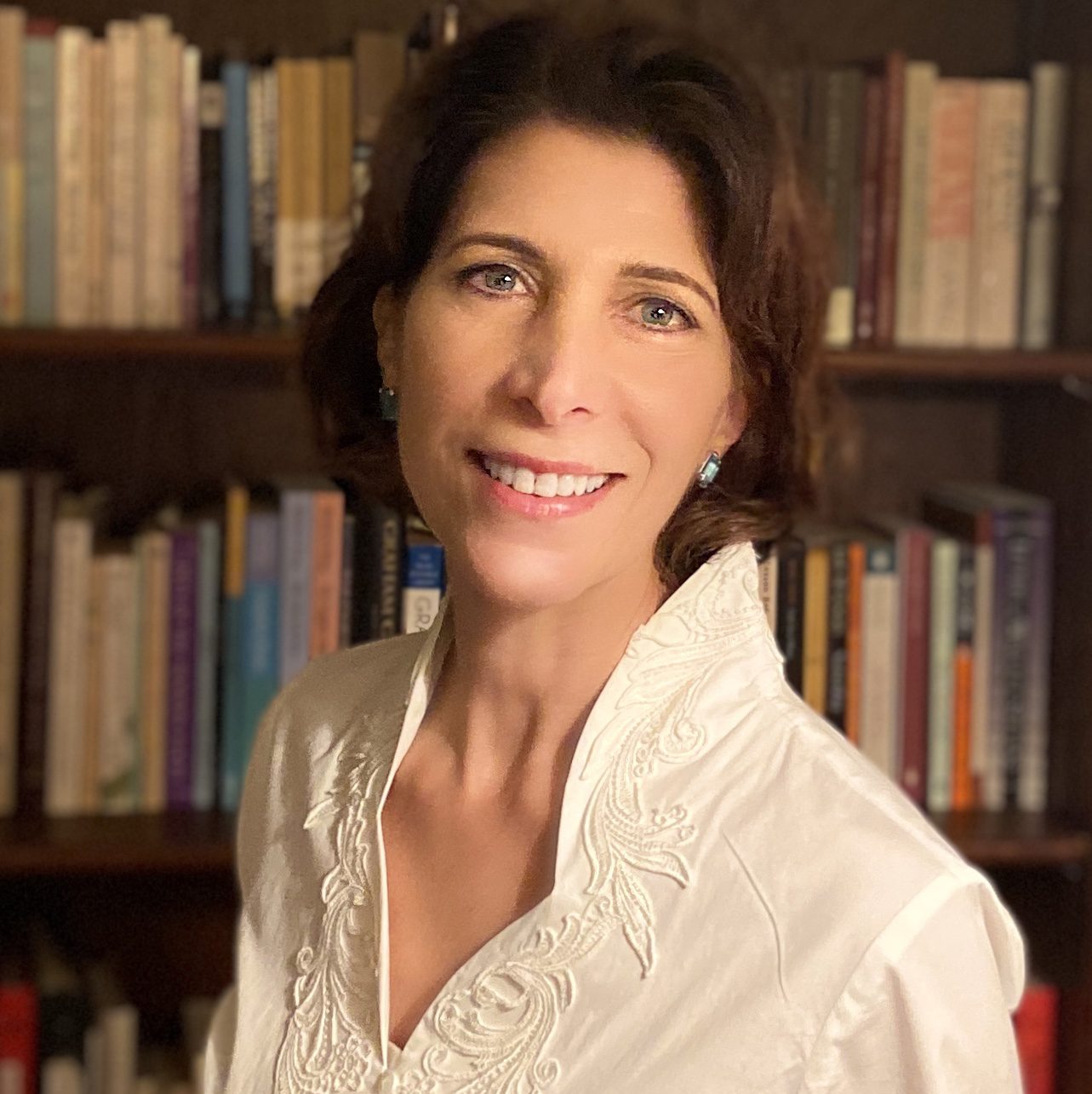
Debbie Danielpour writes screenplays, libretti, fiction and nonfiction. She has been a professor of fiction and screenwriting for over twenty years—at San Francisco State University, Emerson College, Harvard University, and now at Boston University. Her fiction has been published in AGNI, Lilith, Salamander, Natural Bridge, and Women’s Words; her nonfiction and academic work in several books and journals. Her seventh screenplay, We’re All Here, will be shot this year. She collaborated on the libretto for Margaret Garner with Toni Morrison, wrote a musical adaptation of the young adult novel The Great Good Thing, and the farcical musical “The King’s Ear” based on the biblical story of Esther. Professor Danielpour has an AB from Harvard College, an MA in film production and screenwriting from San Francisco State University, and an MFA in fiction and literature from the Bennington Writing Seminars.
✶

Dmitry Samarov was born in Moscow, USSR in 1970. He immigrated to the US with his family in 1978. He got in trouble in first grade for doodling on his Lenin Red Star pin and hasn’t stopped doodling since. He graduated with a BFA in painting and printmaking from the School of the Art Institute of Chicago in 1993. He drove a cab—first in Boston, then after a time, in Chicago— which led to the publication of his illustrated work memoirs Hack: Stories from a Chicago Cab (University of Chicago Press, 2011) and second cabbie book from a press not worth mentioning. He has designed and published six books since. He writes dog portraits and paints book reviews in Chicago, Illinois.
✶
Whenever possible, we link book titles to Bookshop, an independent bookselling site. As a Bookshop affiliate, Another Chicago Magazine earns a small percentage from qualifying purchases.
 Another Chicago Magazine