
Ukrainian wheat has arrived again. Our baguettes are made of Ukrainian wheat flour. They are white as snow, light as a feather, a delicacy at the breakfast table.
—Pre-World War 1 advertising in France and Germany.
Ukrainian wheat went to all Europe.
Its ears ripened on the rich black soil in the scorching sun in the vast fields, stretching for
hundreds of kilometers. The wheat was so high that a man could hide in it.
Ukrainian corn ripened and looked like pure gold. It was tall. It was magnificent.
Tomatoes, watermelons, sugar melons with a wonderful scent filled endless fields.
The soil of Ukraine was rich and generous.
Until it wasn’t.
The years 1921 and 1922 will be written into the history of Ukraine in black for tragedy and in red for bloodshed. The lives of hundreds of thousands of citizens were lost. Revolution, civil war, fratricide, robbery, looting: the cities of southern Ukraine collapsed.
The little the peasants had hidden in the ground, they kept to themselves. We sacrificed everything: gold watches, furs, family treasures, clothes. Everything for a couple of kilos of rye
flour. For my mother’s last fur coat (I have never seen a more beautiful one) she received a whole pud (16 kilos) of rye flour.
Never did bread taste so good. After that, no more bread for many months.
In Ukraine, after the oil has been squeezed out, the shells of sunflower seeds are made into a cake, normally used by the poor to light their stoves. Happiness for us was one of those cakes to eat.
Our pharmacists extracted oil from apricot kernels. Many people died from eating the remains.
There was no bread, no coal, no soap, no kerosene. Nothing. People crowded together to protect themselves from the cold, lots of people crowded into tiny rooms. They warmed the rooms with their scant body heat.
Bandits came and took from the poor what little they had. The poor were too weak to defend themselves.
No coal, no heat. If you didn’t die of starvation, you froze. Every morning, the half-dead pulled those who had died during the night out of the house and deposited the bodies in the street.
Hunger drove people mad. They wandered aimlessly around the streets. Or they lay in the dirt with their faces pressed to the ground. They dug into the ground, which had nothing for them.
They screamed and moaned and died.
Family after family was wiped out.
After the winter’s snowstorms came torrential rains, making the roads impassable. A severe typhoid epidemic broke out. Those who survived the cold and the hunger succumbed to typhoid.
My beloved Angelika, my older sister, fell ill. She needed care. I was still weak after pneumonia. Since I had had typhoid the year before, I had no risk of infection, and I took care of her. I sat by her bed day and night. I had sworn to defeat death. I told myself that God would not take my beloved sister away from me. She was the mother of five children. She was thirty-five years old. No! It could not be God’s will to take her away from us, and I fought the battle. Weeks passed, I did everything I could. My sister burned with fever. I gave her water, wiped the sweat from her angelic face, the one I loved so much. I was powerless and yet in a way I was not. Still, I became weaker and weaker from the anxiety, hunger, the sleepless nights.
A farmer came into town with milk for our mother. My little sister Ljuba suggested that the two of us go out to the country with the farmer to try to bring something home for mother, for all of us. We thought we had friends in the country who would help us. Our grandparents had once provided an entire dowry to a niece of our njanja (nanny). We hoped this neice would have something for us. Perhaps flour, perhaps potatoes, perhaps we could eat bread again. The farmer took Ljuba and me with him. We rode for half a day, then had to walk. The farmer said he was in a hurry and had to get home.
We were too weak to walk. The day was black and gray. The road was like a black bottomless porridge. Soft, muddy, dirty. Our shoes, which were barely shoes to begin with, kept getting stuck in the porridge. Every step of this morass was difficult for us. I felt that every gust of wind could have knocked down our weakened bodies.
My sister was only fifteen years old and had always been very small. Now she was standing in front of me like a skeleton. I was seized by fear. A rainstorm came and night fell. We did not expect the road to ever end.
Soaking wet, tired, exhausted, we struggled to walk.
When you have been starving for a long time, your thoughts revolve only around food. You become a belly, the belly of a great abyss that thinks it can devour everything. But as we stood on that country road, we no longer felt hungry. We only had one wish, and that was to sleep. Sleep would have meant death to us, and we did not want to die. We walked, occasionally getting mired in the porridge, but we kept walking.
Suddenly, I had lost Ljubochka, I no longer felt her hand in mine. Then I saw a light. I heard Ljuba shouting, “My sister is so weak. Her lungs are so bad. Please do something. Please.”
I stumbled toward the light and shouted, “Ljuba, Ljubochka.”
I heard her shout my name.
The farmer’s wife, Dasja, lay in bed. She had just given birth to her fourteenth child. The farmer was a sly fox. He had nothing for us. We were not welcome there. His eldest daughter said, “You look starving. We don’t have enough food for us. Much less you and your sister.”
My sister wrapped her arms around me. I did not cry. I felt nothing.
✶
When I opened my eyes again, I was lying on a sofa in my brother Michael’s room. I hardly recognized the many people in the room. My mother fell to her knees, and kissed my hands. My brothers and sisters cried with joy. Ljuba and Maria and my mother all wore a kind of turban on their heads. I had had one after the typhus because they shaved the hair off my head.
Alexei Mikhailovich, our family doctor, stroked my cheeks and kissed them. Then he lifted my mother to her feet and told her that it was over, the rest was up to her. I did not ask for Angelika. If she had been alive, she would have been there.
My friend, Sjura, Alexei’s son, had also died.
Alexei said, “Forgive me, my child.” He put his hand on my head, as if in blessing. “I am a bad doctor. I could not save my own child from the jaws of death.”
He turned to my mother. “Madam, your daughter is saved.”
✶
Michael had brought us home from the farm.
Ljuba took a month to recover from typhus. I hovered between life and death for two months.
Everything around me was in ruins. Half of our city’s residents had died of typhus.
Only food parcels from an older brother in America had rescued us. Too late, though, for Angelika.
For me the loss of my beloved Angelika and of Sjura, my first and perhaps only love, were too overwhelming.
I could not bear to see the suffering and grief of my mother.
And so I left home, left Ukraine, hoping to begin again.
✶✶✶✶
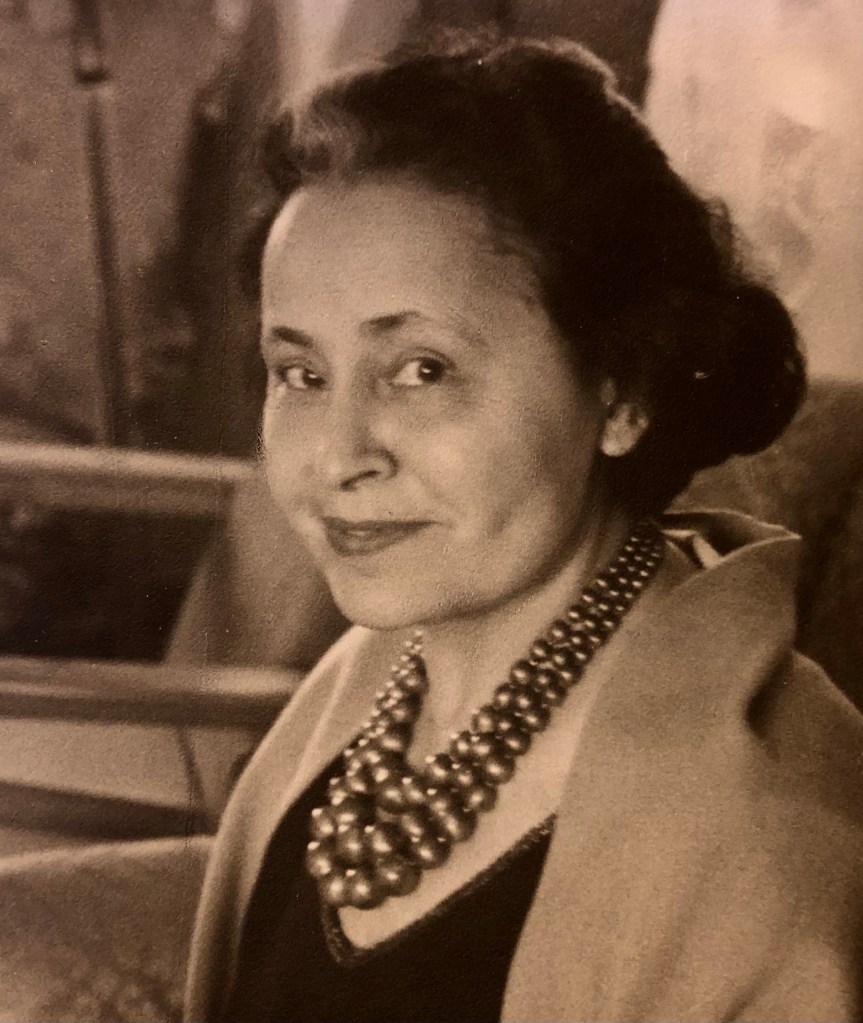
“Wheat” was written by Rachel Shiriak Ellström (1903–1968), translated by her nephew Ben D. Shiriak. He surmises that the food parcels mentioned in the piece were sent by his father, the only Shiriak (then a Watson), in America at the time. After the Russian Revolution, some of Ellström’s siblings remained in the Soviet Union. One went to Argentina. Ellström went to Sweden. Samuel, Ben’s father, roamed from London to Toronto to New Jersey to Japan. Ben D. Shiriak is a retired New Jersey lawyer.
 Another Chicago Magazine