

Mad Creek Books, 2022, 220 pp.
Rebecca Bernard’s eleven stories bury us in the earth of shame, annotate the anatomy of shame, drag us through the agony of shame. Grief, loneliness, and mental illness texture and complicate the shame. Transgressions, real and imagined, are thoroughly wrought, and often disturbing. Our immersion in these uncomfortable spaces repels us. But Bernard won’t let us turn away. She makes us look closer, and we find ourselves identifying with, and rooting for, her broken, twisted heroes, hoping they heal.
A yearning for absolution permeates the collection. The sins vary, from clearcut offenses like incest, voyeurism, and domestic battery to more nuanced transgressions. If voices tell you what to do, who’s to blame when you do it? If your husband urges you to have an affair to expiate the sin of his own, are you really “even” after the deed is done? How wrong is it to wait until after you’ve slept with someone before telling them you spent most of your adult life in prison for murdering your father?
In each story we see the suffering in intimate detail. In “In the Family” the widowed mother who slept with her son loses him, and suffers the scourge of her neighbors. Alone in his room, “[s]he closes her eyes, feels her guilt like the thick loam of the earth mounting her, piling around her in thick, confusing agony … and she calls his name, both their names, sweet tendrils of sound, of longing, rising upwards in her otherwise empty home.”
In “First Date” Jamie is trying dating sites after decades in prison for patricide and ends up sleeping with a new love interest before coming clean about his past. He’s learned to exclude it from his app profile and from first-date chitchat, but he hasn’t mastered when to share the burden of his truth without sabotaging a chance for genuine intimacy. Poignantly, Bernard locates Jamie’s shame in this striving for connection against impossible odds rather than in the murder itself. We wonder with Jamie if there’s a way “to be a person first … without the blood ruining it all.” We’ll never find out, though, because we remain in the not-telling throughout.
Bernard buries shame deeply in her characters, so they wrestle privately with their guilt until something forces it to the surface. In the collection’s title story, six middle-aged siblings gather around the deathbed of a seventh, and family stories pour out, as they recount her cruelty and attempt to make sense of it. Most of these tales have been oft repeated, but Claire’s is new: she admits to setting her sister up for sexual assault years earlier. Her confession eases her toward the observation that “‘We’re all evil.’” Claire’s cynical catharsis frees the siblings from guilt and accusations, “somehow weaving us together, our own weaknesses perhaps just now coming to light. We wait for her to die, but now, in this room, we stand together living.”
“Gardening” is another shame-fest. Jason cheats on narrator Sophia and asks her to cheat to square things. “I’d like to know the pain you felt, Sophia. I’d like to have an inkling of how badly I’ve made you feel, sweetheart.” He ignores Sophia’s needs entirely, so when she goes through with it, the result is queasy irresolution rather than reconciliation. In an apostrophe to the husband, Sophia concludes, “See, Jason, how violence grows like mulberry, like kudzu, like desire—like something we cannot or will not control.” The garden Sophia tends moves us toward hope: “Please remember, Jason. What comes after rot is always something living.”
The characters of Our Sister Who Will Not Die are exquisitely chiseled, the situations nauseatingly challenging, the language delightfully direct and emotionally wise—so the results are refreshing and painful at once.
✶✶✶✶
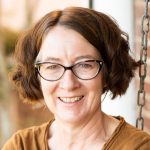
Jody Hobbs Hesler lives, writes, and teaches in the Blue Ridge Mountain foothills. Her debut story collection What Makes You Think You’re Supposed to Feel Better is forthcoming from Cornerstone Press this October, and her novel Without You Here is forthcoming from Flexible Press in November 2024. Her words also appear in Necessary Fiction, The Millions, The Rumpus, Atticus Review, Pithead Chapel, Gargoyle, Arts & Letters, and many other journals. She teaches at WriterHouse in Charlottesville, Virginia and reads for the Los Angeles Review.
✶
As a Bookshop affiliate, Another Chicago Magazine earns a percentage from qualifying purchases. This income helps us keep the magazine alive.
 Another Chicago Magazine