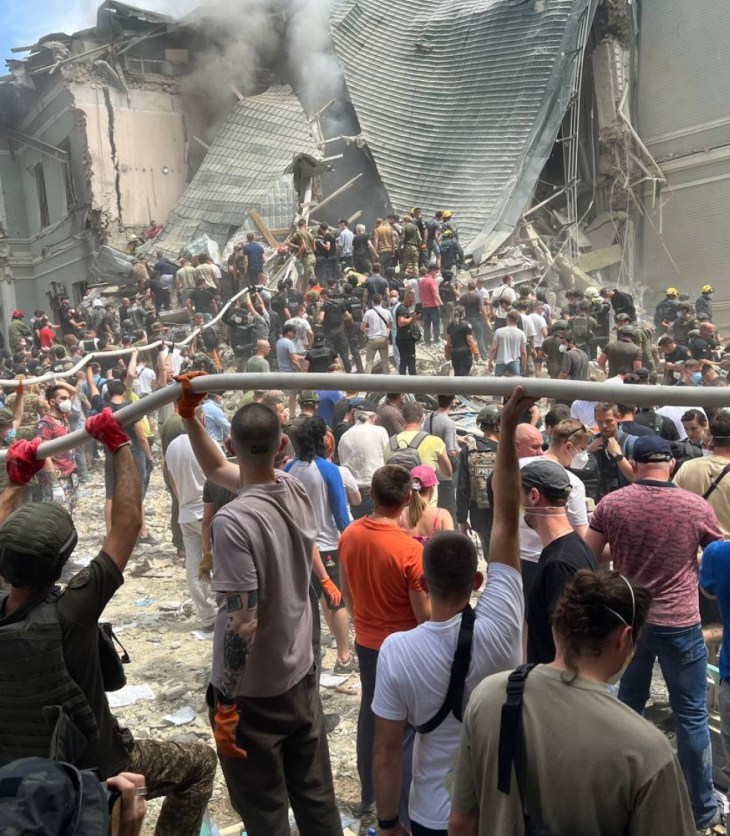
I WhatsApp my cousin on his jubilee. He was born the day after the Yom Kippur War started, and here again: rockets, hostages, my aunt fainting. Can we celebrate anything without a backdrop of mourning, or—unlike the other day in Ukraine—even mourn, not adding at the memorial half a village to the slain?
(Ukraine)
Tag: poet
That which presents itself
startling you
when you least expect it
must have the practised agility
of that which does not present itself
when it is expected.
(poetry/translations)
So the day begins:
searchlight; flesh cannot repel
it, drinks; partakes; that
never hurt before.
So the day begins
with Big Bang light; no way to
penetrate its skin.
No tool can pierce it.
(poetry/translations)
the opening of a cut grape
the butterfly
if it were to lightly rest upon the extremity of the grape
and pretend to drink
if it wasn’t drinking
what was to be done then?
I would have to
improve how well I see, with these eyes
improve how well I hear sounds
and so, employing my hands
I noticed
the smallest of movements
(translations)
Can violence be made into beauty? Can beauty be used to dignify the stain of violence? Sloan seems to suggest so, perhaps, by conceiving of Ophelia’s body as part of nature—indistinguishable from it.
(reviews)
This week, ACM is posting poetry every weekday.
we’d just torn out not the eyes but the reflection in the eyes
while culture hanging on the media’s fangs was dying there
no more tongue-in-cheek now and above the vulgarity of
doing cartwheels thinking thus to prove its legitimacy
doesn’t the assassin push forward by brandishing his knife
(poetry/translations)
This week, ACM is posting poetry every weekday.
And they continued with more world history examples
where a victim lived happily ever after next to her executioner,
having forgiven and forgotten.
(poetry/translations)
This week, ACM is posting poetry every weekday.
I’d tell you to be careful, that everything here is lousy with history, from the first megafaunal
extinctions to those buffalo carcasses rotting in heaps after the last of our Transcontinental
massacres.
(poetry)
Shiki wrote haiku—tens of thousands of haiku—elevating himself to the immortal ranks of Bashō, Issa, and his personal hero, Buson. However, Shiki did not want to go back to the past and its masters; he wanted to reinvent what he believed was a dying art.
(reviews)
The book, at its core, follows the speaker’s daily journeys along a rugged mountain road over the course of a year, with the gravel thoroughfare and its environs serving much the way Thoreau’s Walden Pond once did— fueling reflections on humanity in general, and the present moment more specifically.
(reviews)