The latest in our FORTHCOMING series of excerpts from new and recent books:
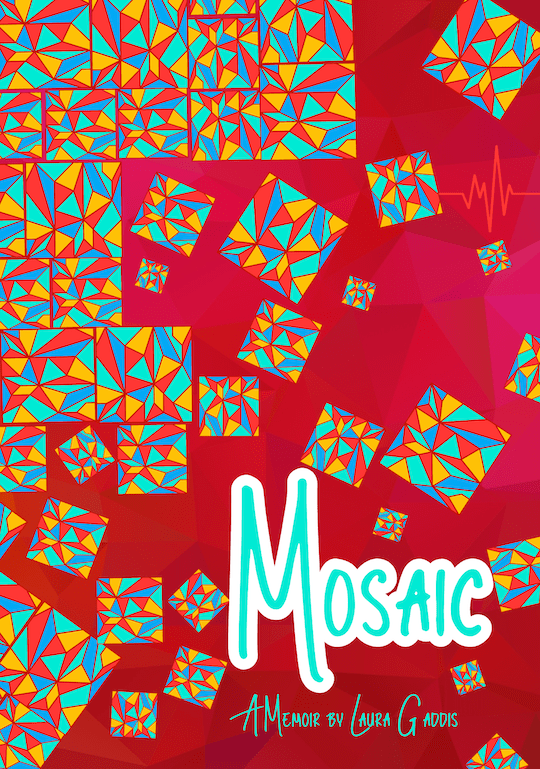
Unlike dementia, infant loss doesn’t induce a lingering forgetfulness. The pain of the birth, the fear of seeing Sophia’s tiny red body, the way her skin tore as she rolled on my chest, the slowing of her chest rising and falling, the doctor calling her time of death—remembering it all again was torture.
Tag: Another Chicago Magazine
Hoffman’s stories revolve around a sense of being adrift. We drive, but go nowhere. We make loops and return to where we began. We are trapped within our decaying bodies, caught in systemic poverty, and broken by familial rupture.
(reviews)
Someone is calling to you from the sea,
beating the heavy waves with his tired hands.
(poetry/translations)
Shulman’s collection guides readers through the ideological formation of American Jewish children, teenagers, and young adults, showing how they are carefully acculturated to conflate Judaism with Zionism—a fusion designed to keep dollars and political will flowing toward Israel, no matter how ferociously it attacks or constrains the people who also occupied the land now called Israel before 1948.
(reviews)
In Kiefer’s Maine, the trucks, soon to contain slaughtered chickens, have “waiting mouths,” “the air [has] feathers”—as if all that’s left of that life is scattered to the wind. Kiefer braids losses throughout the book; it can feel as if loss, like farm grit, “filters into every soft thing.”
(reviews)
“We live in a world of translation—and mistranslation, as between the coexisting people and languages there’s a lot of noise—meaning, all the elements that don’t let the message from the source be appropriately received,” Dimitris Lyacos tells interviewer Toti O’Brien.
jail bars no stars no cars
just jail bars hard time
in the pen no friends cuz
they will do you in hard
time in the pen no friend
that what you get out of
doing hard time hard time
-Carvis Johnson, anthologized by Louis Bourgeois
(abolition/carceral state)
“As it relates to Unit 29 specifically, writing offered a rare opportunity to convey a message that would actually be read. For some, it was an opportunity to attempt something they never tried before. The act of writing and the program itself allowed for a structure by which they could order their lives in a chaos that barely ever sleeps,” Louis Bourgeois tells interviewer Mike Puican.
“Book bans have existed as long as there have been books, throughout history, just like war. It’s a form of war; part of war; part of politics and power grabs; part of trying to keep the population ignorant and deny people books. It’s also part of antisemitism and racism and every other oppressive movement you can think of,” Donna Seaman tells interviewer Carol Haggas.
suns as yellow as ours
gleaming suns
from lives like matches
atrocious explosions
scattering ashes
like bright corollas
(translations/ poetry)