“An eleven-year-old girl sees something no child should—and keeps her silence. In a world of broken promises and simmering class tension, what she witnesses becomes a secret weapon in a household on the brink.”
(fiction/No Place is Foreign)
Tag: acm
This week, ACM is posting book reviews every weekday.
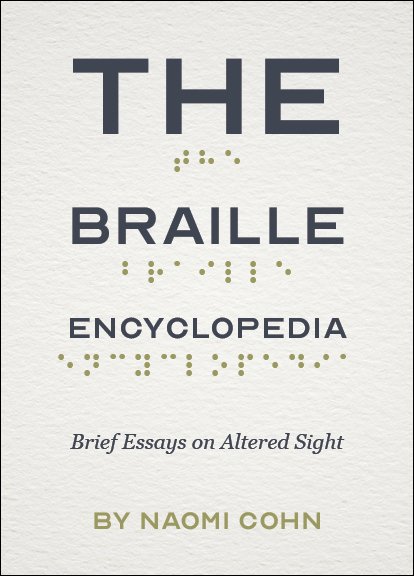
Focused primarily on her childhood, Kercheval’s memoir is told in a series of seventeen fanciful chapters—ranging from four to twenty pages each—on subjects including her parents, her imagined worlds, her body (as well as the bodies of others), and the events, people, objects, and entities that shaped her. Shifting metaphors abound.
(reviews)
This week, ACM is posting book reviews every weekday.
The book, at its core, follows the speaker’s daily journeys along a rugged mountain road over the course of a year, with the gravel thoroughfare and its environs serving much the way Thoreau’s Walden Pond once did— fueling reflections on humanity in general, and the present moment more specifically.
(reviews)
This week, ACM is posting book reviews every weekday.
Supposing there was any lingering hope that the modal interventions of capitalism might deliver us, as a whole, into a brighter, more sustainable future, well, Gilbert’s poems are here to announce the ethical insolvency of that hope—or, not only are we totally, irrevocably fucked, but the severe degree to which we are fucked has already reshaped our ecology, our futurity, our reality.
(reviews)
This week, ACM is posting book reviews every weekday.
Catrileo’s florid, visceral writing traverses the centuries—from the so-called Conquista, Spanish term for the brutal colonization of the Americas, to the modern-day capital city. It is a lyrical and nonlinear chronicle that spans the arrival of invaders armed with “old maps” and “steel fire” to urban streets studded with bars and patrolled by police known for their brutality.
(reviews)
This week, ACM is posting book reviews every weekday. This is the first.
The volume opens with an epigraph quoting Toi Derricotte, the co-founder of Cave Canem, an organization dedicated to the future of African American poetry: “Joy is an act of resistance.” We learn through these poems of the sheer joy of Black woman creativity, as well as the power of women speaking out against injustice and evil.
(reviews)
The latest in our FORTHCOMING series of excerpts from new and recent books:
Blair emerged otherworldly in his cloud of sawdust,
but wheezing and sucking for air. Over his head,
centerfold pin ups in every garage door panel
were framed by black tape. They hovered like angels.
“See, that’s the thing, my little ningning.” He booped my nose and grinned even more. “It doesn’t always have to end with death. Minsan, the greatest sacrifices come from living.
(No Place is Foreign/fiction)
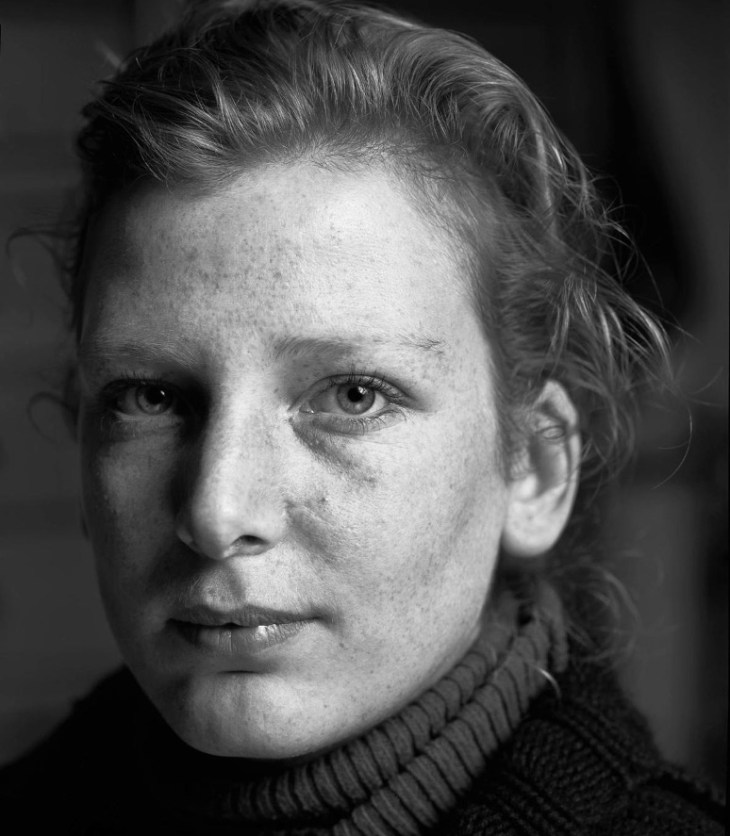
I’ve never thought of myself as someone with a scar, but in this portrait, the damage from a dog bite is clearly visible next to my nose. A dent, a scratch, and a bump, a kind of trinity.
(fiction)
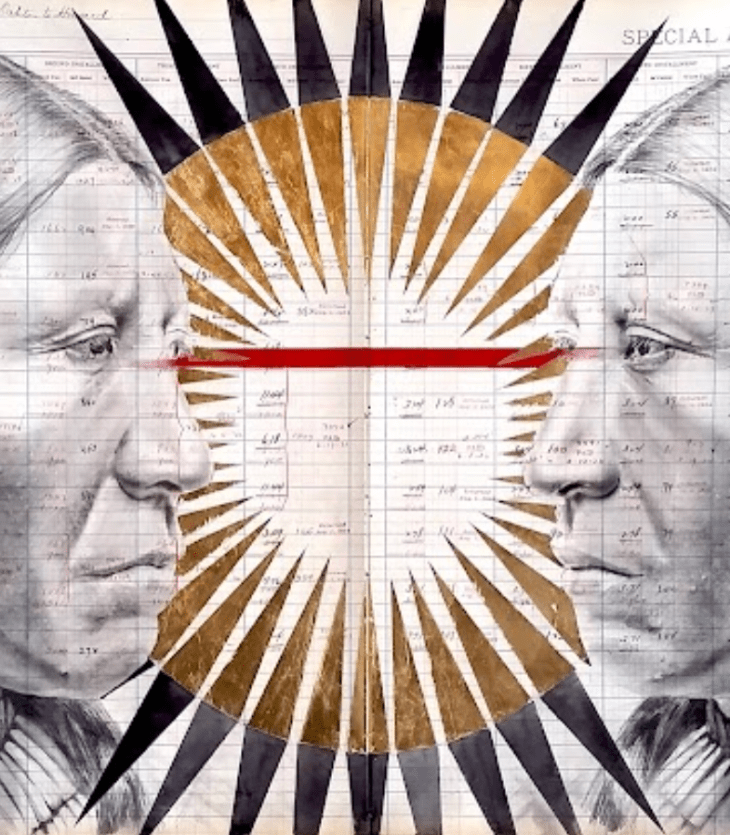
Part of a series of Native poetry collected by Mark Turcotte.
to hold sky, rain, all
beloved creatures born to climb.
And I, earthbound, earth-bonded,
a troth renewed with each step.
(poetry)
Between the chapters of the hazy hospital days, Youngblom recollects stories of her son’s childhood and his dreams of becoming a marching band director. She savors the moment Elias first learns to ride a bike and his need for her to hold onto the seat. As the chapters travel across time, the structure captures Youngblom’s stream of consciousness and memories of Elias as gentle and thoughtful.
(reviews)
I tried to envision walking down old cobblestone streets, but my memories drowned in darkness: My brain clasped shut. The doors that were so hard to close when I was leaving twenty-two years ago were even harder to reopen now. But I had to. I had to go back and face the ghosts and the memories. Had to shine a light into all corners of the old dark closet. I was planning a trip to visit my mother in Russia, and as the trip got closer, I decided I was ready to go home. I tacked on a few days in Kharkiv.
(nonfiction/Dispatches from Ukraine)
Part of a series of Native poetry collected by Mark Turcotte.
they built the mall of america
like a curse over the convergence
of our dreaming
they carved their brave explorers names
all men
into our mother’s tongue
(poetry)
This is the first of a series of Native poetry collected by Mark Turcotte.
My father. I am your only son.
Look. In my hands I hold a name.
Ours. This proper noun we share.
Oh how you follow me still.
(poetry)
I have missed the predictable angles
of houses & the swollen arms
of buff dads. & these buff dads’
sullen children, their sullen faces
frowning across the road.
(poetry)
The latest in our FORTHCOMING series of excerpts from new and recent books:
A cloud spills grey
oil over their guns
They aim at a wolf
who, a second ago,
was someone’s son.
The world seems full of mystery, her best friend seems an exquisite one, and makes her feel as though, at forty-six, while life is often mundane and monotonous, full of the known and expected, somehow, you could find yourself emerging from an inflatable vagina, really, that’s what this thing was, in a haunted house in the middle of Iowa.
(fiction)
One way to change history for yourself is to gather new information that changes your understanding of the stories you’ve always told yourself, whether it’s about the disturbing sexual politics of Yaddo or your family’s relationship with Head Stooge Moe Howard.
(reviews)
You cannot remember your very first bed, yet its quality defines the rest, because the slats of milk-tasting slumber, though they may bend, buckle, and widen with time, never disappear.
(No Place is Foreign)
The latest in our FORTHCOMING series of excerpts from new and recent books:
Unlike dementia, infant loss doesn’t induce a lingering forgetfulness. The pain of the birth, the fear of seeing Sophia’s tiny red body, the way her skin tore as she rolled on my chest, the slowing of her chest rising and falling, the doctor calling her time of death—remembering it all again was torture.
Hoffman’s stories revolve around a sense of being adrift. We drive, but go nowhere. We make loops and return to where we began. We are trapped within our decaying bodies, caught in systemic poverty, and broken by familial rupture.
(reviews)
Someone is calling to you from the sea,
beating the heavy waves with his tired hands.
(poetry/translations)
Shulman’s collection guides readers through the ideological formation of American Jewish children, teenagers, and young adults, showing how they are carefully acculturated to conflate Judaism with Zionism—a fusion designed to keep dollars and political will flowing toward Israel, no matter how ferociously it attacks or constrains the people who also occupied the land now called Israel before 1948.
(reviews)
In Kiefer’s Maine, the trucks, soon to contain slaughtered chickens, have “waiting mouths,” “the air [has] feathers”—as if all that’s left of that life is scattered to the wind. Kiefer braids losses throughout the book; it can feel as if loss, like farm grit, “filters into every soft thing.”
(reviews)
“We live in a world of translation—and mistranslation, as between the coexisting people and languages there’s a lot of noise—meaning, all the elements that don’t let the message from the source be appropriately received,” Dimitris Lyacos tells interviewer Toti O’Brien.
jail bars no stars no cars
just jail bars hard time
in the pen no friends cuz
they will do you in hard
time in the pen no friend
that what you get out of
doing hard time hard time
-Carvis Johnson, anthologized by Louis Bourgeois
(abolition/carceral state)
“As it relates to Unit 29 specifically, writing offered a rare opportunity to convey a message that would actually be read. For some, it was an opportunity to attempt something they never tried before. The act of writing and the program itself allowed for a structure by which they could order their lives in a chaos that barely ever sleeps,” Louis Bourgeois tells interviewer Mike Puican.
“Book bans have existed as long as there have been books, throughout history, just like war. It’s a form of war; part of war; part of politics and power grabs; part of trying to keep the population ignorant and deny people books. It’s also part of antisemitism and racism and every other oppressive movement you can think of,” Donna Seaman tells interviewer Carol Haggas.
suns as yellow as ours
gleaming suns
from lives like matches
atrocious explosions
scattering ashes
like bright corollas
(translations/ poetry)