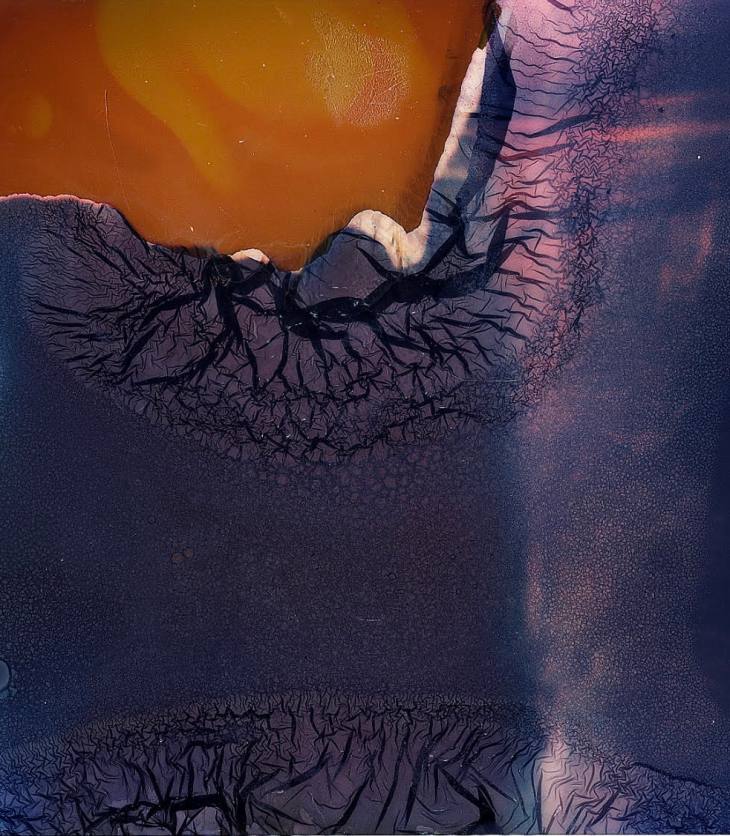
“Firing Squad, Convergence, Jackson Pollock”
“Metronome Maple & Betye Saar”
“A Late Exam at the River Lethe”
“Palinode”
“Canto XXXIII”
“Canto XXXVI”
From up where we were, we hadn’t noticed the defeathered bird corpses littered down below…This friendly bird graveyard was never swept away, probably to teach us all a moral lesson. (TCTC translations/nonfiction)
You grow very sleepy. / Then, like a breached ship / on a darkening sea, / you slip out of sight.
teach me to hold truth between my teeth / like a hard lump of Russian sugar, / suck in the sweetness of integrity / with every sip of strong black tea (Jewish poetry)
Every day she must locate herself, / as her neighbors need not who can lean on a world of words. / Poetry is a land she must not enter / is she is to keep her abandonment complete. (Jewish poetry)
We ask for bread and are not / satisfied. We ask for stone / and sand runs through our fingers. (Jewish poetry)
That’s how it is with my kind: our own body betrays us / our own tongue turns us in to the authorities. (Jewish poetry)
1. In a commercial, a Chinese-American laundry owner promotes an “ancient Chinese secret” and his wife…
there is // rushing wind at my ears and feet / as the ceiling glides above me. (Jewish poetry)
yet sometimes a child’s song, key to something / that is not, surely not, nothing, as after Patroklos is speared. (Jewish poetry)
So why had she made such a fuss in the first place? Plus weren’t they both growing old? Surely, a dribble here or there shouldn’t seem such a big deal. (fiction)
In the old language / we told the best stories of your life, / and for the first time in my life / I felt I really understood you.
(Jewish poetry)
Two white haired ladies / miles from Memphis. / Would apologies be offered / for words only one / remembers?
(Jewish poetry)
One by one by one / our bones come to meet you— / it’s an open house day, / we meet-and-greet new guests
(Jewish poetry)
Do you see the world / as anything more than a translucent sheet lifted / by Divine breath?
(Jewish poetry)
“Really it was like possession . . . Renata is her own complete being as far as my psyche and processes know,” Frank X. Gaspar tells Millicent Borges Accardi.
“Hosking writes about her father,” says reviewer Catherine Faurot, “but his presence is felt more as a fading afterimage, a hole in the film burning incandescently.”
(poetry review)
“My son’s mind had turned against him but the need for process moved him through a different portal,” Miriam Feldman tells Tanya Ward Goodman.
[More than a year after COVID’s US arrival, ACM looks back.]
I can tell you that I saw an old couple walking their dog. Have I never seen this before?
(nonfiction)
His guilt was such a constant companion that a serious argument could be made for the carpool lane, the last few days rushing him like oncoming cars.
(fiction)
content warning: rape and other violent assault
At the toll, I ask, Is the tunnel very long? I’m claustrophobic in tunnels, enclosed spaces. Can’t even drive a car into a car wash.
(nonfiction)
My peoples came in on the Salvation Army ticket, right? Two rooms and a toaster, that’s about it.
(drama)
in the center of my heart they buried a limewood carving of a bird.
(poetry)
“Ghost poems of a haunted landscape, told in almost hypnotic lyricism, somehow bleed seamlessly into haunted writers and artists suffering in landscapes far from the West,” writes Sadie Hoagland.
(poetry reviews)
[A year after COVID’s US arrival, ACM looks back.]
We found a way of existing where we didn’t have to know who lived and who died.
(nonfiction)
With each video, I knew Pete was getting closer to his death. I never believed he would make it out alive.
(nonfiction)
“I overcome the tension of trying to write by cooking. Next to smell, taste is the strongest sense in terms of conveying emotions,” Maggie Kast tells Jan English Leary.
[A year after COVID’s US arrival, ACM looks back.]
It’s not as if we don’t all know what we’re there for.
(nonfiction)