

Alex Poppe is an award-winning fiction writer, essayist, and educator who’s lived and worked around the world—Chicago to New York City, Ukraine to Iraq to the West Bank, Germany to Spain to Tulsa, Oklahoma. Her new memoir, Breakfast Wine, is about her life-altering years in the Kurdistan region of Iraq, in both Erbil and Sulaymaniyah, teaching young people at an international school and a private university.
Told with humor, grace, and humility, Poppe’s stories reflect the differences—and astounding similarities—she encountered across cultures. At the book’s core is the love she developed for her students, on whom she had a lifelong impact.
We spoke about what drew her to Iraq; the inner conflict between leading a traditional or unconventional life; her efforts to attain full personhood as a woman; and how the US isn’t as different from the Middle East as many would like to believe.
This interview has been edited for length and clarity.
Meredith Boe: In 2011, you were living in New York City, sleeping on a leaky air mattress, working for an internet startup, and waiting tables. You felt like your friends had moved on, buying property and starting families, and they were asking you why you hadn’t done those things. In witnessing a former classmate’s success you thought, “I had been the top grad of my university’s undergraduate business school—where had I derailed?” Can you talk more about how those circumstances led you to this new adventure in a country that many would have considered dangerous?
Alex Poppe: A friend had contacted me on Facebook out of the blue, and she’s like, “How has your life turned out?” She had been, in 2004, Advertising Age’s Woman to Watch, and she worked for Coca-Cola Asia Pacific, lived in Hong Kong, and was super successful. I’m basically lying on the floor on this air mattress, scrolling through her Facebook thinking, fuck.
When I explained my circumstances, she said, “You’re the whole reason I went to China! You gave me that encouragement. What happened?”
I was sitting there thinking, yeah, what did happen? Where did I derail? I had pursued my dreams. I hadn’t pursued a career. I had been a business analyst with Mobil Oil when I decided I wanted to be an actor because I hated the corporate life. And I couldn’t believe that I had worked so hard at university with really good internships, and then I went to this Mickey Mouse dumb job at Mobil Oil with a really masculine, toxic culture.
So, I did pursue my dreams as an actor, and at the same time, you know, my friends were starting their careers and becoming successful, and at some point, it’s not easy to hang out if you don’t have that kind of money. So that makes it harder to keep your friends. I realized that I had been trying to shoehorn myself into this idea of what life should be like—you should get married, you should have children, you should own property by now. And then I realized, that’s where I derailed. I hadn’t been on that path for those career-building years, and in my mid-forties, I was suddenly trying to wedge myself into that kind of mold. And of course it didn’t fit.
I had started writing and taking classes in 2010. I met Jere Van Dyk, who was kidnapped by the Taliban and wrote a book about it called Captive, and I met him at his book launch. He became a mentor, and I remember having dinner with him—my favorite person to share a meal with because he has the best stories—and listening to his stories, I thought, I still haven’t attained that. I had already worked abroad, but I hadn’t had that kind of adventure and sense of brethrenship.
And so why Iraq?
I’ve always been very interested in the Middle East. And I saw a job advertisement for an international school. I was curious, and I still wanted to segue into humanitarian aid. Naked Angels at Nine was this reading series for actors and screenwriters. And when I was there, there was a guy who wanted to be a director/writer, and his fiancée was best friends with Kofi Annan’s press secretary’s fiancée, and so he introduced me to the press secretary, Nick. Nick was like, “Go get a master’s in international relations or apply through the UN website. Or go put yourself where the aid workers are, befriend them, and volunteer.”
But I wasn’t brave enough just to plop myself down somewhere. I thought the teaching opportunity would provide structure and a sense of safety. Someone would meet you when you landed in-country and you’d have a place to live. Then, I could still try to find the aid folks and volunteer, which is what I did.
The topic of motherhood comes up a lot in your book, and people love to ask you about not being a mother. There’s the whole ideology of, “You won’t be fulfilled as a woman unless you are a mother.” You say you probably wouldn’t have had the experiences you did had you married, and you write, “Unfortunately, there’s no parallel control group as we experiment with how to live.” Do you wish that there were, and do you think men get asked the same questions about parenthood?
I definitely wish there was a control group for how to live because that would mean you get to live more than one life.
I don’t think men ever get asked that question. My friend started having children when we all lived in Iraq. And her husband is amazing, but if he changes a diaper, everyone’s applauding, you know. Meanwhile, he can’t, like, pack the to-go bag with diapers and what you need if you want to take your kids out for the day. But he does just one diaper and he’s the best man alive. Walking on air. Whereas women do everything, you know?
I think about whether I should have had kids. I especially loved the teens and young adults that I worked with in Iraq. And I’m still in contact with a lot of them. Last week, when I was posting pictures from the international school, one of the girls sent me several emails about what a profound effect I had on her life. She finally pursued her dream to be an artist, and she said, “I remember I was struggling with those SAT words, and you understood that I learned differently and told me to make cartoons for them.” She said, “You always had patience and recognized that my mind worked differently.”
When I get those emails, they are so amazing—because right now, I’m unemployed and I’m feeling like I’m just killing time between meals, looking for that purpose again. I’m very proud of what I did there. I miss having that sense of purpose and agency, but I don’t think if I had been a mother, I would have had it.
In our country, where there’s so little support, it really forces you into a context that is confined because you have to care for a child. You put a life into the world that needs guidance. And it just wouldn’t have been enough for me, I think. But I mean, I’ve never known that kind of unconditional, sustained love that mothers say they have for their children, and fathers too. I don’t know it, and I’ll never know it. In some ways, I do wonder what I’m missing out on, but I wouldn’t have had the amazing experiences I’ve had if I had been married with a kid. You can’t have all the lives at once.
I love the essays about your students, too. But in that culture, a horrific reality is the practice of honor killings, and you write that “men’s honor must be protected at all costs, and women are responsible for preserving that honor with their bodies.” A woman is better off dead if her virginity is violated or is suspected to be violated. Talk about what you saw from your female students who will maybe never be able to reach, as you put it, their “full personhood” in a culture like that.
I mean, I would say we don’t have full personhood here. We don’t. I think it comes down to not hypocrisy, but moral distance. The people who make the laws hold a huge moral distance between themselves and everyone who has to follow the laws. And we see it in states where we have no access to reproductive choice or care.
In a hurry to roll it out and to show, like, We, the men, can do it, they’ve put women who want their babies, who experience an emergency in pregnancy, in a very vulnerable, precarious position. In Texas, after reproductive choice was abolished, the maternal mortality rate went up by 60% around births because it was so carelessly implemented. You have to be so far into danger before you can receive care because people are afraid they’re going to be criminalized for providing you that care.
So, I would say we don’t have full personhood here. I don’t have agency over my body. I don’t have full personhood, and yet I look at leadership at the federal level, and you have people in those positions, credibly accused of sexual assault, rape, sex with a minor, and trafficking. And yet no one’s putting any restrictions on their personhood, although their conduct might suggest they need some. And yet because I’m a woman, there is that restriction. So, I don’t have to look at my students. I can look across the street, in my community.
I don’t want to tell someone how to live. I want everyone to have the ability to live so that they can reach their full potential as people. And if I had students that never wanted to work, they just wanted to be moms, I still want them to be able to take in information and decide what’s true or false and articulate an opinion about it, because that’s a life skill. And that’s really useful when you’re trying to take care of your family in a pandemic and the information ecosystem’s rife with disinformation. Am I going to drink some bleach and think my COVID will go away? I mean, I’m sort of satirizing it, but media literacy is more important than ever, and we’re highly polarized—sitting in our own silos, and not talking to each other anyway. If I showed my female students alternative ways to live, that they could want something for themselves beyond the roles that had been prescribed by society, then I’m happy.
I had another student email me on my birthday to tell me, “You were so unapologetically who you were. And that’s why I was able to press my parents to let me go to med school abroad, and I’m a doctor now.”
For the young men and women I was teaching in the 2010s and 2020s, it was a time when things were changing in that country. In northern Iraq, there was a boom in prosperity from 2009 to 2013, while sectarian violence was dividing the South. But the North was peaceful, and the climate’s better. There’s an abundance of natural resources, so if you owned land, you were wealthy. People weren’t in survival mode from civil war or from the genocide carried out by Saddam a few decades earlier. So, they were able to kind of see other choices for their future.
That changed with the resurgence of ISIS, and then the price of oil and COVID and infighting between the political parties. It’s not as prosperous as it was back then. I remember National Geographic had listed it as one of the top places to visit in 2011—because it’s beautiful. A lot of it is unspoiled nature.
We took a road trip from Erbil to Sulaymaniyah, the city near the Iranian border. There’s very little infrastructure set up for tourism, so we hired a driver. I wanted to use the bathroom, and there was no bathroom that I could use, because I’m female. In some ways, it was beautiful and the nature was pristine, but in other ways, because of gender, you’re just like, not included in society.
It’s kind of like when I started at Mobil Oil Corporation in 1989—the head of HR talked about the glass ceiling she had bumped her head on, but that, when she started, there wasn’t even a women’s bathroom in the building.
In the U.S., we have this picture of what it’s like in the Middle East for women. It sounds like you’re saying we’re not that different.
Oh, no, we’re so much the same. Every parent wants their kid to live in safety and security, with opportunities, access to education, and healthcare. I don’t care where you are in the world—everybody wants that for their kids.
There’s more infrastructure there now—there are toilets—but I also lived in these bubbles. The international school was on a piece of land gifted by the present government, and all the kids there were offspring of the elite, so the wasta there was incredible—the power of who you are, granted by your last name.
And then in Sulaymaniyah, it was, again, a private university, and the founder of the university was the current president of Iraq. So, I’m already living in a kind of rarefied bubble. Within my bubbles, it was, you know, normal. On campus I couldn’t show my arms. I had to wear a skirt that covered my knees. But nobody’s walking around in a burka.
We weren’t actually allowed to speak about it at the time, but we took in a bunch of students, mostly women from the American University of Afghanistan in Kabul, when the government fell in 2021. I overlapped with them for a week or two on campus. I was desperate to teach them. Those women were very keen students. They were more covered—maybe wearing a hijab, you know. But they wore makeup, they read, they watched TV, they knew every lyric to every song.
I can’t remember where we were going on this school-sponsored bus trip at the international school, but I was with one of the other teacher chaperones, and all our high school kids were dancing and singing all these lyrics that were dirty. I was like, do they realize what they’re saying? But we were the same way at that age. You don’t care, you’re just feeling alive in the moment. They’re just being kids. They do the same dumb stuff.
They’re just like us. That’s what I really hope people who read Breakfast Wine understand—that the folks being othered in our current discourse have so much more in common with us than we think. The book celebrates women and youth resilience post-conflict. And maybe if you read it, you might think about refugees and camps and immigration in a different way.
When teaching a book like The Handmaid’s Tale to those kids, which you did, is there anything you did differently than if you were teaching it to, say, a group of American students?
I inherited that syllabus from the school’s leading feminist, so they were a couple weeks in already. I truthfully hadn’t taught an undergraduate literature class yet. I didn’t know what the parameters were, what nuances I should explain or not.
The first day, it’s ceremony night in The Handmaid’s Tale. If you don’t know, ceremony night is when the commander basically has ritualized sex with the handmaid as she’s lying in the cradle of Serena Joy’s legs, the commander’s wife. Basically, it’s a threesome.
It was so quiet in that classroom. Nobody would answer questions. I was blushing, you know, the alleged adult in the room, and I’ve got these big hamburger sweat stains under my armpits, super embarrassed. I’m finally like, OK, let’s just all agree we’re going to be embarrassed sometimes.
I fumbled my way through teaching, I would say. In the book, I talk about the engineers in the back of my classroom who were required to take the class. When they graduated, a couple of them were like, “That was the best class I’ve ever taken here.” And I was like, “Really? Just because of all the innuendos I explained to you?”
I had another kid come up to me and say, “With people, now I’m curious, like, what their story is when I meet someone who’s different from me.”
But at the same time, a couple weeks into that class, there was an honor killing in a local park.
I’m not sure that I could have gotten away with what I did there in a US classroom. At one point, I had one of the poems based on John and Lorena Bobbitt, and I had to say the word “penis” and everybody snickered. So I was like, “All together now, we’re all going to say the word ‘penis’ and get it out of our systems.” Could I have done that in a US classroom? I don’t know.
Your essay “The Second Wife” is about attending a conference in Baghdad and interacting with Dr. Obedi, an educated, well-spoken Arabic woman. But she doesn’t support equal rights, and says, “Not all progress benefits society.”
With your students, you talk about trying to instill the idea of measuring their worth according to their own values and discovering who they really are as people. Did you ever feel defeated trying to teach young girls and women these things, and then observe someone who’s so educated saying that she doesn’t support equal rights?
I think it was, all the time, a reckoning with my own limitations. I’ll just say that. When Dr. Obedi said not all progress is good—I’ve heard this from many people who live in the South. Kurdistan is northern Iraq, and then anything in the South is south of the Kurdish region. But the US’s 2003 invasion and the toppling of Saddam did not make their country better. And when I lived in Erbil from 2011 to 2013, it was common to hear people who were Syrian Christians from the South long for the time of Saddam because the country functioned better.
I think post-invasion, there was so much sectarian violence in 2008, 2009, and 2010 that people like Dr. Obedi remember that violence. Husbands of the women on her staff had been disappeared. For them, the country functioned better under Saddam, just in terms of public services and utilities, garbage collection, water, and electricity. Post-invasion, these have never been consistently available. So, I understand why she says all progress isn’t good.
It was another level of disappointment to hear it from Kurdish students later at the University of Sulaymaniyah, circa 2017, during a period of intense infighting between the two major Kurdish political parties, which caused the central government in Baghdad to cut budget payouts that kept the Kurdish economy afloat. It really affected Sulaymaniyah because over 60% of the people were public sector employees. Often, teachers and medical personnel would go months without being paid, and they wouldn’t receive their full salaries. Electricity was inconsistent. If you didn’t have a generator, life was pretty hard in the North. And so, to hear Kurdish kids say they even kind of miss the time of Saddam, given that Saddam was trying to commit genocide on all the Kurds, was really heartbreaking.
I think I looked horrified, so they went on to say, “What if they could get a benevolent dictator in to make the country right?” And I think about that a lot as we see authoritarianism and authoritarian leaders being voted into democracies. We see this in our own country, someone who’s promising to reduce the price of eggs while he eviscerates human rights and the rule of law. It’s never a good idea. The price of eggs is probably not going to come down, and you’ll have to work really hard to regain all the rights you’ve lost, and you probably won’t regain all of them.
Your identity will influence your viewpoint. I would say at least a third of our country still really likes President Trump and thinks he’s doing a great job. I am not one of them, and I think if you’re a white man or a white Christian man who thinks the system has been rigged against you and you rightfully deserve to be, like, king of the hill, you’re probably pretty stoked to have President Trump at the helm.
Dr. Obedi also said she didn’t need to have equal rights because she was allowed to live her life the way she wanted to, to be educated and work. And I think I might actually have people in my own family who don’t really support equal rights.
I will probably never stop complaining about the fact that I don’t have agency over my body because it’s the one thing I own, no matter how rich or poor I am. It’s the one thing that’s mine. I should get to say what happens to it. And my hair is on fire even having this conversation because we don’t.
I wanted to ask more about wasta. Can you talk more about that concept? Did your view of what that meant change the more time you were there, witnessing how it functions in the culture?
Wasta is the power of your last name. If you have the right last name, the rules really don’t apply. It’s like carte blanche. It’s really hard when you’re teaching offspring of the political elite, who are failing, and realize that their allowance is bigger than your salary, and they know it, which allows them to buy your exam from a corrupt administrator—four kids chipping in a grand each to buy the midterm, and two of them still fail it.
But I also benefited from wasta. After I was on a term break, I went to Spain for an art residency, and I was flying to Chicago to see my mom for her 80th birthday. One of my bags was stolen in the airport that had my computer, my passport, my phone, all my money, a bunch of Mac lipstick—still angry about that—everything. I only had a week in the States before I had to go back to Iraq. The Spanish police were very kind and drove me to the consulate, and then I got a temporary passport to board the next day. I didn’t have my Kurdish residency card, and I didn’t have my Baghdad visa, which was really difficult to get at that time. I only got them because the president of Iraq was the founder of the university.
When I came back to Iraq from Christmas in the States, I was at O’Hare, and they said, I’m sorry, we’re not able to let you board this flight. And there was this head of security who was our “fixer,” and his brother or cousin had taken a bullet for the president, so this family had huge wasta. He had called or messaged the airlines, and then they were like, “Oh, yes, yes, you can board.”
Later, when I was in-country, they needed a teacher to come down and train these teachers for the Ministry of Higher Education, who were setting up a learning institution, and I didn’t have my visa anymore. The man with all the wasta flew down with us, and he walked me across the border, basically, through immigration, and they hand wrote a visa in my passport. And that’s wasta. It only happened because this man was with me. So I’ve benefited from it.
You light up when you talk about your students and your time in Iraq. Do you miss it?
Yeah, I miss it. But I can’t go back. I think COVID really destroyed education and institutions where, you know, they needed to keep tuition dollars flowing and they sacrificed learning outcomes. I think it’s not great.
During my last experiences teaching there, we were in the classroom unless we had to shut down for a few days—but we were at a place where students were woefully ill-prepared. I taught the academic reading and writing program they took before they went to university, where they wrote an essay, a thesis statement, and citations. Some of them couldn’t do it. So that took a lot of joy out of the classroom for me.
That university had a lot of USAID funding, and it has lost grants. Last I heard, there are very few native speakers teaching in the academic prep program.
I think it would be lonely to be there because local women socialize only in ways that their society permits. They will go out with their families, or they’ll go out with other local married women. But I never made Kurdish female friends that were my age unless they were teaching at the university. Whereas, when I lived in Ukraine, all my friends were locals. I had very few American or British friends. So, if I were to go back to northern Iraq, I think it would just be very lonely, and then Sulaymaniyah’s economy isn’t as booming as Erbil’s. You don’t have the influx of NGO [non-governmental organization] workers and reporters. If they’re in the country, they’re in Erbil. It would just be kind of boring.
I also think you can’t go back. I miss New York too, but the New York I left isn’t the New York that’s there anymore. I think nostalgia is a little bit like grief in that way. I miss that we all lived together in one building, kind of this arrested development, and we were all really good friends. I miss that sense of community.
The students in both [Iraqi] cities were incredibly sweet, and there was just a sweetness in that region of the world that I haven’t encountered anywhere else. I’ve taught in a lot of contexts, and I think students are great everywhere—it’s the institutions around them that succeed or fail. But there’s a real sweetness to those kids and young adults. Maybe because these Iraqi societies are set up less individualistically and more about the community. I’m not saying it’s better because, you know, with that sense of community and caring about someone to the left or right, you also have the underbelly of reputation and then honor killings. So, I’m not saying one’s better than the other, but maybe because they’ve had so many wars, they put people first. In our culture, we put profit first. Our whole geopolitical conduct has now become quite transactional. If you say [Trump] is a mandate from the American people, then that’s saying something about the values of voters. Which also makes it kind of isolating to be back here.
✶✶✶✶
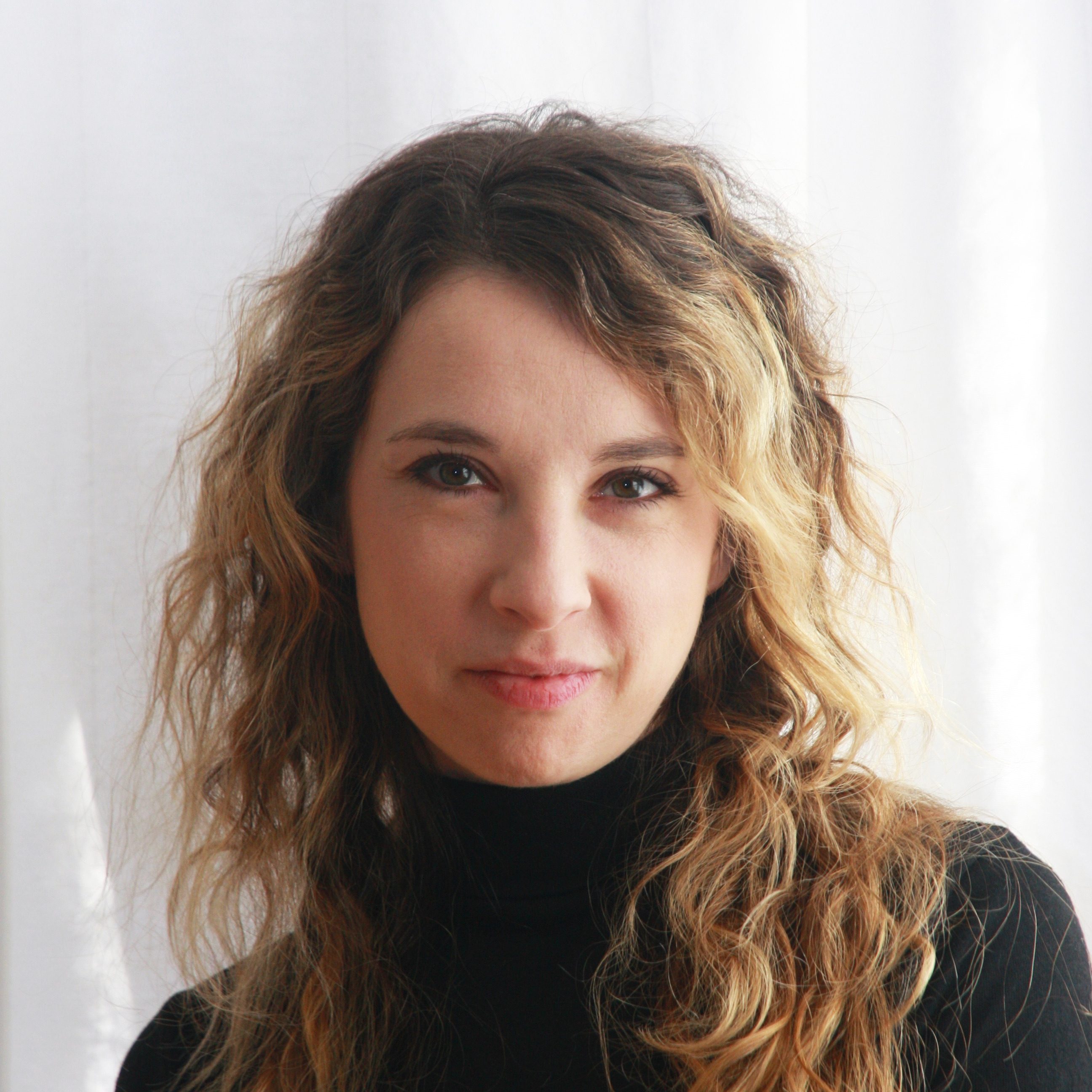
Meredith Boe is a Pushcart Prize–nominated writer and poet. Her short prose collection What City was a winner of Paper Nautilus’s 2018 Debut Series Chapbook Contest, and her creative work and critique have appeared in Sad Girls Diaries, Passengers Journal, Newfound, Chicago Reader, After Hours, and elsewhere. She contributes to The Chicago Review of Books and The Pickup.
✶
 Another Chicago Magazine