

On my eighth birthday my family was living in Geneva, Switzerland, where Dad worked for the U.N. as an economist. Mom described his job as “a pencil pusher,” and Dad described it as “writing reports that my boss never reads.” After blowing up balloons for my birthday party, he wrote the phrase: “Who loves you, baby?” on one with a felt tip marker. I didn’t recognize the quote. I had no working memory of living in the States, having moved away when I was three, much less of watching American TV. Mom said it was a quote from Kojak, a gritty detective show set in New York City, but I still didn’t get it. It pointed to my deep lack of American cultural knowledge.
Other things I didn’t know: who Scott Baio was; that Harley Davidson is a motorcycle–not a person; and that nine years old was considered too old to watch Scooby Doo, at least in the fourth grade at P.S. 321, where I was enrolled when I returned to Brooklyn with Mom and my sister. My parents said Dad would be joining us in a couple of months.
On his first visit back to Brooklyn, Dad climbed up the stairs to my bedroom on the third floor of our Park Slope brownstone to talk to me about the divorce, but to Dad’s surprise – and Mom’s – I already knew. Most of my friends at P.S. 321 had divorced parents, and I figured that’s what had happened with mine.
Later that year I traveled as an unaccompanied minor to see Dad in Geneva. He took me to the Bistrot du Boeuf Rouge, a Lyonnaise restaurant in the center of Geneva a few blocks from Lac Léman. I was struck by the old world feel of it: the high-backed wooden booths with art nouveau style windows that separated one booth from the next; the collection of antique ceramic mugs that lined the walls; and the chalkboard menu, in handwriting that was as legible as it was elegant.
At the Boeuf Rouge, Dad encouraged me to order the quenelle de brochet, something I hadn’t tried before. It was served to me in a white, wide-lipped ceramic bowl with a fork and a soup spoon. Inside the bowl was a single large dumpling covered in a cream sauce, and a side of white rice. The dumpling was made with pike, heavy cream, egg whites, cayenne pepper, and a dash of nutmeg and black pepper. My fork slipped into it easily and it smelled like cream and seaside air. It tasted like a savory donut covered in sauce, but with a finer texture, and the pike gave it a subtle freshwater fish taste. I left nothing in the bowl.
Something else I didn’t know: my sister and I were half-siblings. After Dad’s first visit to Brooklyn I asked Mom how long she’d been married to Dad. “Twelve years,” she said. Then I asked why my sister was fifteen.
Once a year Dad visited me in Brooklyn, and once a year I visited him in Geneva. When he traveled to New York, we’d dine in restaurants I’d never been to, a reprieve from the Stouffer’s frozen dinners and Birds Eye boil-in-bag meals that I cooked for myself as a latchkey kid. He introduced me to sushi, teaching me to use chopsticks to pick up individual pieces and dip them into horseradish-infused soy sauce before popping them into my mouth. Eating sushi felt like a ceremony. He bought me Hong Kong egg tarts from Chinatown bakeries, which I ate standing on the sidewalk while they were still warm. When I traveled to Geneva, no matter what else was on the agenda, a reservation at the Boeuf Rouge was required. I never changed my order from quenelle de brochet. I looked forward to the quenelles more than any other part of my visit; they were a reliable, savory anchor in my itinerant young life. I had lived at ten different addresses before I turned eighteen, but the Boeuf Rouge remained on rue Dr. Alfred-Vincent, where the menu never changed, nor the waitstaff.
Other things I didn’t know: the street numbering system started with First Street, and ascended numerically; it was important to have my address and phone number memorized; it sounded snobby to refer to family vacations taken in France.
After my visits with Dad I’d go back to my daily life of attending public school, where I acclimated slowly, had few friends, and was always culturally behind the kids who’d grown up in the neighborhood. It didn’t help that in addition to being essentially foreign, I was also essentially alone. Dad lived thousands of miles away, and my contact with him was limited to missives he typed from his office on airmail letters, light and crispy as onion skins, and handwritten letters that I sent to him in return. Mom was busy working overtime at a law firm in Manhattan and drinking scotch from a coffee mug that she kept in a desk drawer at work, and from a glass tumbler that she kept by her bedside, slick with the condensation of melted ice cubes. My sister had her own struggles.
As an expat American kid in Geneva, I had belonged to a subculture of English-speaking foreigners. American expats made up a small part of that subculture. On Halloween, Mom drove me and a couple of my American-born classmates to other American households in the area so that we could participate in the candy-themed holiday, and the most prized treats were those that had been imported from the motherland: Tootsie Rolls, Bazooka bubble gum, and candy corn. No matter that we lived in the land of chocolate, these treats were imbued with an aura of cool that could only come from America. On Thanksgiving we gathered with our fellow American expats to eat turkey, pumpkin pie, and cranberry sauce–which was hard to come by in a non-cranberry-growing country.
Other things I didn’t know: The Pledge of Allegiance; that Elvis was dead; that the Rolling Stones were British (they try so hard to sound American). On the surface these seem like minor details, but the knowledge we gain of our birth culture is, at root, from details like these, and my foreignness emerged like a pool buoy when they were referenced in my presence.
When we moved back to Brooklyn I became an alien, the kind who blends in with everyone else, but just below the surface is different. My brown bag lunches frequently included slices of red bell pepper, a decidedly foreign food in a cafeteria full of Twinkies and peanut butter and jelly sandwiches, the shocking bright color and loud crunch drawing unwanted attention. I’ll never live down not watching The Day After when it aired in 1983 because I didn’t know it was on TV, much less that it was important to watch it. I wasn’t living in the States in 1976, which seems to have been when a lot of the proof that America is the best country in the world to live came from, or at least when it became imprinted on the minds of kids of my generation.
I didn’t have a lot of clothes, and this was noticed. I didn’t shower every day, which was also noticed. P.S. 321 had more students than all three campuses combined of the international school in Geneva, and, far from being a place where cultural differences were celebrated, conformity ruled. Wearing the wrong clothes, eating the wrong foods, and watching the wrong TV shows were all reasons for ostracism, and I soon found myself lumped in with the other outcasts.
I had imagined that if my family ever moved back to the US, I would be welcomed as a white-hatted hero returning from an odyssey away from the motherland. Instead, I was nicknamed “Fannie Farmer” because I wore the same two pairs of corduroy overalls to school repeatedly–one in rust orange, the other a dark blue; I was picked last or second-last in anything that involved choosing teams; and I got heat rash in the summer, having never experienced that climate–even my skin showed signs of foreignness.
As time wore on, my relationship with Dad changed; where I had once been on my best behavior because I saw him only twice a year, I became sullen and angry because I only saw him twice a year. I called him out when he said things that sounded manipulative to me, like: “I don’t get to see you very often.” I told him he could get a job closer to Brooklyn if he wanted to see me more. “Do you have any idea what you’re asking me to sacrifice?” he’d ask. “There’s a U.N. in New York.” I’d respond.
When I was nineteen, weary of going through the motions of what felt less like European vacations and more like an exercise in reliving the trauma of my parents’ divorce and returning to my homeland as an alien, I stopped traveling to Geneva to see Dad. I was no longer a minor, so I had a say in the matter.
The flights on SwissAir had become the best part of those trips, hovering in space over the Atlantic Ocean where neither of my parents could claim me, where even the time of day was subject to where the craft happened to be at any given moment. The individual flights blended into each other, with little to distinguish one from the next. I wore a lanyard around my neck that designated me as an unaccompanied minor, and looked into the stoic faces of Swiss customs officials before saying, in perfect French, “Rien a declaré” before getting my passport stamped.
The trips themselves had begun to blend into each other too. Dad never took pictures – he didn’t own a camera, and it was hard to distinguish one trip from another without photographs as a reference point. We tended to visit the same spots repeatedly, making the trips even more indistinguishable. Dad had a lot of parameters around travel, and one of them was where he was willing to venture. I was a teenager during the Glasnost era, and wanted to see Eastern Europe. “Can we visit Poland?” I’d ask, “Or East Germany?” Dad would wave his hand dismissively, wrinkle his brow and grimace. “The food’s terrible,” he’d say.
In the air I was treated with the same deference as any other SwissAir passenger; when it was time for dinner impeccably coiffed flight attendants wheeled carts through the aisles and used gleaming tongs to hand passengers hot, wet towels that had been rolled up into tight little knots so that we could wash our hands before dinner. Meals always included Swiss chocolate – sometimes full-sized bars, and the duty-free shopping was beyond belief, not that I ever bought anything. If I’d had the money I could have bought anything from a Swiss Army knife to a silk Cartier scarf.
When I landed – wherever I landed, I removed the lanyard from around my neck, although it made no difference; I was always an unaccompanied minor.
Like so many decisions I’ve made before and since that moment: leaving Mom’s house at fifteen for boarding school; moving to Chicago at twenty, midway through my junior year of college; and getting married at thirty; ending my annual visits to see Dad in Switzerland wasn’t something that I discussed with either of my parents, nor was it something they challenged me on. I simply decided that I’d had enough of being carted around Europe by a man whose defining characteristic was his absence from my life. While Dad continued his annual visits to see me in the States, I wouldn’t make the return visit until I was thirty, married, and had made a kind of peace with our connection.
I wish I’d kept one of those unaccompanied minor lanyards. It would be like having a clipping from my first haircut or having my first pair of shoes bronzed – an emblem of what I used to be, evidence that I was once small and solitary, and that at 30,000 feet above the earth, I belonged to no one but myself.
✶
When I first had a kitchen of my own as an adult, I looked up a recipe for quenelle de brochet. The ingredients were simple, but the method involved a food processor, a fine sieve, a saucepan set on ice, and poaching. It was a far more involved recipe than I had the equipment for, and I was intimidated by the complexity of the method. I looked for it on menus in bistros that featured Lyonnaise cooking, but to this day I haven’t found any that serve it, at least not in Chicago, where I’ve lived since I was twenty. I’ve looked up the recipe a few times since then, but always come to the conclusion that my novice attempts would only make me pine for the Boeuf Rouge.
Something I learned: Watching Kojak is a soothing and nostalgic viewing experience for me as an adult, a window into a New York that I never saw first hand, the series having ended before my parents split and I moved back. It allows me to believe that I can fill in all the gaps in my American cultural knowledge just by watching Kojak hunt down criminals in his fedora, wide lapeled trench coat, and 1973 Buick Century. No matter how elusive the criminals were, he always cracked the case.
I’ll always be a little bit foreign in the land of my birth, but these days I can crack most American cultural mysteries that come my way.
Last year I visited Dad in Geneva for his eighty-fifth birthday. He doesn’t travel to the States anymore; he married a woman who has a host of health issues about fifteen years ago, and doesn’t like to travel far from her. I manage to scrape up the resources and time off to visit him about once every two years. Visiting him now is different than when I was a kid: I stay in a hotel or an Airbnb instead of sleeping on a foldout cot in the living room of the one-bedroom apartment he’s lived in since he and Mom split; I can explore the city on my own; and I’m no longer dependent on him for money.
He made our reservation for the Boeuf Rouge months before I arrived, and I knew what I’d order before we were seated. The quenelle came to our table steaming hot, and a rush of comfort filled me as I sank my fork into it. The only thing that made that particular meal at the Boeuf Rouge any different from my first was the bottle of red wine that Dad and I split. Before we left I thanked the waiter in my best French, saying that every time I visit Dad we share a meal at the Boeuf Rouge, and every time it’s perfect. I left nothing in the bowl.
✶✶✶✶
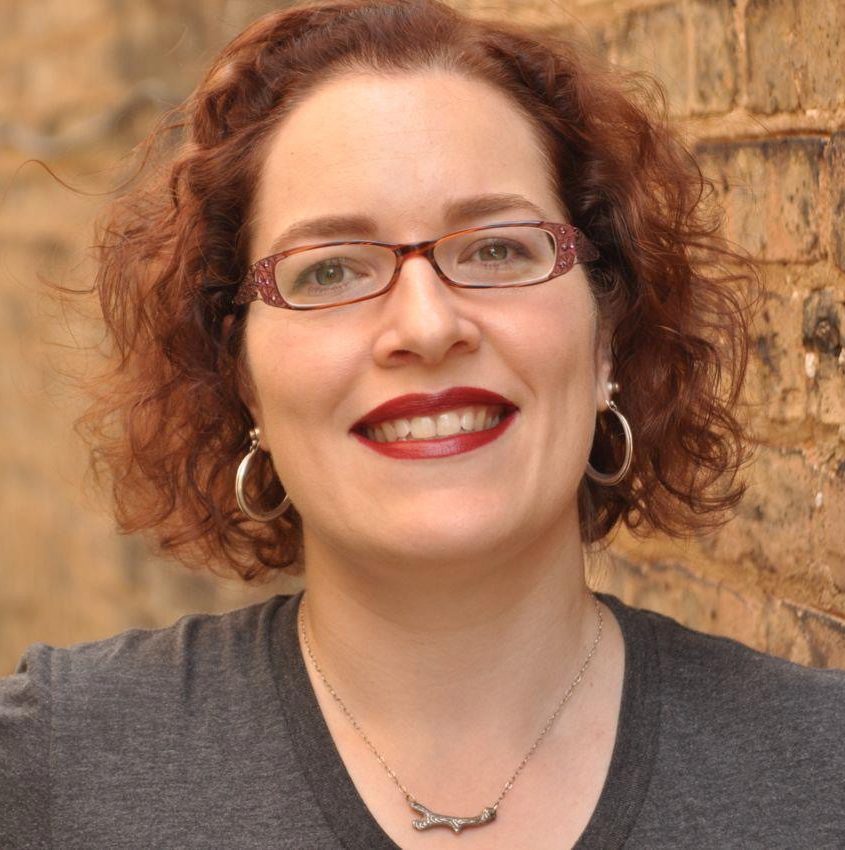
J.H. Palmer is a Chicago based writer. She earned an MFA in creative nonfiction from Columbia College Chicago in 2017, and produced the nonfiction literary series That’s All She Wrote from 2012 to 2017. Her work has appeared in Hypertext Review, Chicago Story Press, Belt Magazine, Defenestration, and The Toast. She is currently working on a collection of essays.
✶
Patty Paine is the author of Grief & Other Animals, The Sounding Machine, and three chapbooks. Her writing and visual work have appeared in Blackbird, The Denver Quarterly, Gulf Stream, Waxwing, Analog Forever, Lomography, The South Dakota Review, and other publications. She is the founding editor of Diode Poetry Journal and Diode Editions and is director of Liberal Arts & Sciences at VCUarts (Virginia Commonwealth University) Qatar.
✶
Whenever possible, we link book titles to Bookshop, an independent bookselling site. As a Bookshop affiliate, Another Chicago Magazine earns a small percentage from qualifying purchases.
 Another Chicago Magazine