
✶
In Our Long Walk, My People Came On Ships
Across an ocean of lakewater,
the wind gave her blessing.
The waves swayed. met
rock and sand, wayohneka·kále
like applause, yohnekayéshuheˀ,
laughing water, yohno·tés, deep water,
plunk!
slosh—
tiss—
shonk!
the boat
like to overturn,
plunk!
slosh—
flutter—
hiss—
the pebbled beach woven,
loomed in view—like
the good sound
of a canoe in the shallows
past rapids and rainbows’ dens.
But the brookies were here, first,
to feast on mayflies, caddisflies,
stoneflies, midges, anything
caught in the eddies;
destined to survive
by whatever survival
requires. For as the boats lit out
into vast water-sky,
the nets raised up
walleye, brookies,
small and largemouth bass
gulping sculpins, gizzard shad,
several species of shiners,
and the bones were given back
to the skin of the water,
so that the whole thing began, again,
depth-dwellers to star-minders
to leaping clear in the air—and
where stars did guide them,
my people carried with them, too,
their smaller lakes, crossed the Greats,
to the land of mound-builders,
near Millioke, the good land,
yohwʌtsi·yó. The water, too,
a longhouse. A path.
A cornstalk inviting
all her sisters.
The shoreline
already harboring light.
No tear trails,
but a ship sailed toward a horizon
so distant, and so dear.
Forest Bathing
I thought the earth
remembered me, she
took me back so tenderly
— Mary Oliver, “Sleeping in the Forest”
Supplicant among sentries,
I enter the woods—
susurrus of leaf-kindred
casts emerald, aventurine,
burnished gold crown
for my crown, mantle
for my wayward, and roots tangled
clutch the core of her, core of me.
Dancers in perfect repose
extend the lines of spindled
arms to splayed fingers,
elbows’ purposed deviations,
each mitre’d joint a tack
in rough winds, bowed
to hold sky, rain, all
beloved creatures born to climb.
And I, earthbound, earth-bonded,
a troth renewed with each step.
Each time I touch her face,
I am learning to be moved;
breathe in her breathing,
what I will become.
✶✶✶✶

Mark Turcotte (Turtle Mountain Band Anishinaabe) has been an active member of Chicago’s thriving poetry scene for some 30 years, and was just named as the sixth Illinois Poet Laureate. He is the author of four collections, including The Feathered Heart and Exploding Chippewas. His poetry and prose have appeared in national and international journals and magazines, and are included in the first-ever Norton Anthology of Native Nations poetry. He has received awards and recognitions from The Lannan Foundation, the Wisconsin Arts Board, and the Wordcraft Circle of Native Writers & Storytellers. His poem, “The Flower On,” was part of the Poetry Society of America’s inaugural Poetry In Motion project, which placed poetry posters on public transportation in cities across the United States. The PoetryUnbound podcast, hosted by Pådraig Ó Tuama, recently featured his prose-poem, “Dear New Blood.” He served as 2008-09 Visiting Native Writer at the Institute of American Indian Arts in Santa Fe and has since been teaching in the English Department at DePaul University, where he is Distinguished Writer-in-Residence.
✶

Kenzie Allen is a Haudenosaunee poet, multimodal artist, and author of Cloud Missives (Tin House, 2024). An inaugural Indigenous Nations Poets fellow and finalist for the National Poetry Series, she is a recipient of the James Welch Prize for Indigenous Poets, a 92NY Discovery Prize, and the 49th Parallel Award in poetry. She is a first-generation descendant of the Oneida Nation of Wisconsin. Born in West Texas, she lives in Toronto.
✶

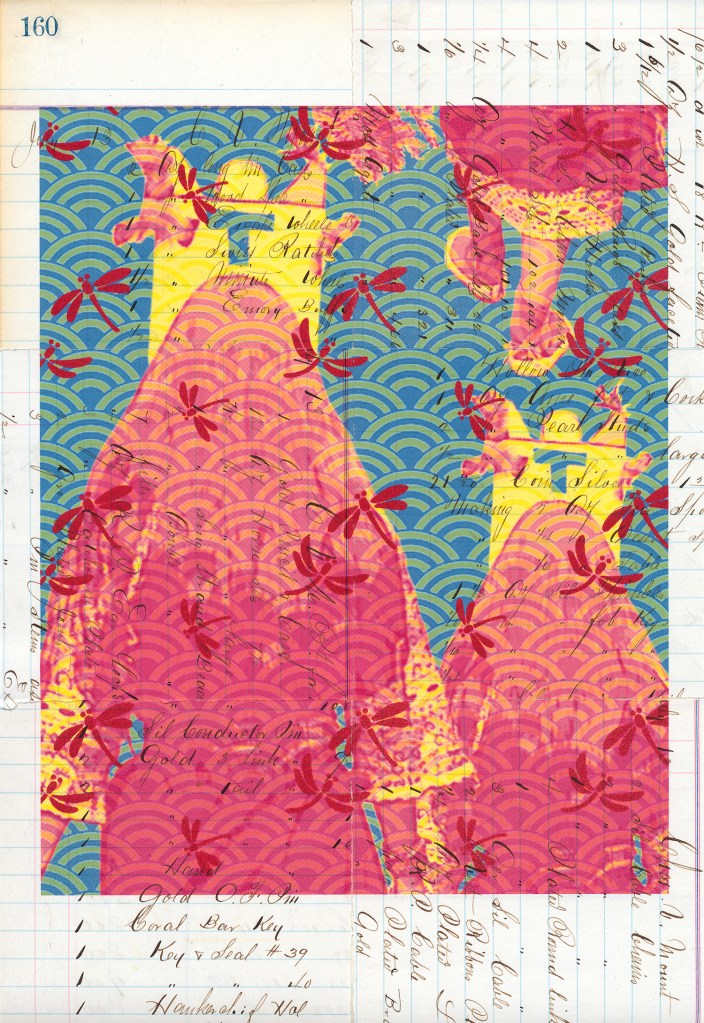
Debra Yepa-Pappan (Jemez Pueblo/ Korean) is an internationally acclaimed visual artist. Her multimedia practice, combining digital collage and photography, centers on themes about her mixed-race identity as she incorporates symbolic imagery influenced by her cultures and the urban environment where she was raised. Her artwork has been exhibited worldwide and featured in numerous publications. It can be found in museum collections such as the Museum of Contemporary Native Art in Santa Fe, the Schingoethe Center in Aurora, Illinois, and the British Library in England.
Yepa-Pappan is currently the director of exhibitions and programs at the Center for Native Futures (CfNF) in Chicago, a Native art space she co-founded to support Native artists. Through her artwork and work at CfNF, she is committed to advocating for positive representations of Native people and providing a safe and welcoming environment for Native artists to gather, exhibit, and be in community with each other. She currently lives in her hometown of Chicago with her husband, artist Chris Pappan, and their daughter Ji Hae Yepa-Pappan, an emerging professional dancer.
✶
Whenever possible, we link book titles to Bookshop, an independent bookselling site. As a Bookshop affiliate, Another Chicago Magazine earns a small percentage from qualifying purchases.
 Another Chicago Magazine