

This piece is a part of our Palestinian Voices series, featuring work by Palestinian writers and artists, including people who are part of the Palestinian diaspora.
No one’s ever confused me as being white, I mean I’m mixed but there’s no chance. This name, my dark hair, dark eyes, my features—my grandmother says I look like the women of my grandfather’s tribe. That the mole under my chin is the same one his sister, the one with the tattoos on her face, and her mother both had. She says this would have meant something to the Bedouins but she doesn’t know what. My grandfather isn’t alive to ask and it seems like an obtuse thing to bring up to my cousins during a genocide.
I’ve been hearing from friends who are now strangers. “I can’t believe this is happening,” or, “How are you coping?”-type messages. It’s like they learned where Gaza is or finally understood that a Gazan outside of Gaza, one that sees adulthood, is rare.
It’s happening on dating apps, too. I have a Palestinian flag in my bio and I thought that would be enough but it wasn’t because people are stupid and can’t tell it apart from the Sudanese flag if they can guess it at all. So next to the flag I wrote, “I’m Palestinian leave me alone if you’re not down with the cause.” Half the time they’re still like, “Save Darfur.”
It’s resulted in a lot of messages from white men marveling at my bravery for existing, people apologizing for the horrors of colonialism. I’m just trying to get my back blown out without being hate-crimed.
I went on a date with an old man. He chose a dive bar and when we got there he told me that he was sober and had quit his full time job to become a stand-up comedian. He had a faint German accent. He told me I looked less Arab in person and thanked me for wearing my socks and Mary Janes for him like it was something we had discussed. I said, “Thanks but, uh, I don’t know, I’ve been wearing this shit for, like, thirteen years,” and he said, “That’s cute.”
After we fucked he tried to run me through one of his bits. I wasn’t confident in my fake laughter so I fidgeted anxiously and tugged at my socks. He said, “I like these. What do you call them?”
“Lettuce-edged socks, I think.”
He took one of them off, and brought my foot close to his face. “Arab women always have good feet. Slavic and Nordic women… their feet are out of whack. The middle toe is always longer than the rest and the knuckles bulge out but you… you always have perfectly proportioned feet. Your toes get descendingly smaller like stairs and your knuckles, you can’t even see them. Your feet look like they were molded out of clay.”
A German giving me a fetishistic breakdown of my feet kind of sucked but I’m rethinking my stance on the whole exoticism thing. The genocide and the extinction of my species has made me valuable to be around, to be inside of.
I squirmed and said, “My feet are ticklish.” I think they’re like this because of that summer in Gaza. My cousins ran barefoot in the sun and I ran after them barefoot, too. But the sand was too hot and my feet started to burn. I spent ten seconds too long deciding between running to the shade of the vineyard or back into the house. I chose inside, and cried while my grandmother iced my feet.
✶
After that I rekindled things with exes, hoping that, having known me before, they wouldn’t see me as a novelty. Ben texted me. He didn’t say anything about life post-October, he just wanted me to come over.
He was too broke to Uber me to his place and I wasn’t going to take the train to the last stop on the subway to get dicked down by an unemployed thirty-something-year-old with three roommates. So he came over.
I don’t remember if we ever had much to talk about but we had even less now. I moan when he becomes a cliché—all he wants to talk about is the genocide but reciting the number of martyrs is tiresome, explaining the different ways, tedious.
But I show him a photo of my cousin Bilal wrapped in white burial cloth, the blood still fresh, seeping through the fabric. He was martyred in a drone strike, his location revealed by Whatsapp. We received the news through a Telegram channel that posts information and photos of the martyrs, asks for help identifying them. Bilal and I, all of my family, we have the same face.
I feel like I need to show the photo to make this real to him, like he won’t believe it without some sort of evidence. Maybe if he sees someone with my face dead in the rubble he’ll do something about it. But this has been live streamed for a year—broadcast for decades—and still, the mound of our carcasses has never ceased to grow.
He says the sympathetic things, “I’m sorry for your loss,” “I can’t imagine what you’re going through.” And I tell him I don’t want to talk about it anymore.
I ask, “How’s your drawing stuff going?” He asks, “Are you still not on birth control?”
I put on Father John Misty—I can’t think of another artist as innocuous for background noise during sex. His voice is easy and doesn’t interrupt my fixation on the naked lightbulb overheard. When will I finally get around to fixing it? It’s annoying that Ben insists on having the lights fully on, it feels like being in a hospital. I don’t want to see everything but I am tired of being difficult so I let it go. The sweat is getting sticky and my thighs are getting sore, so I fake an orgasm.
Some of my friends chastise me for these performances. “You shouldn’t do that for him, for men, you should let them know.” But it’s not for him, it’s for me. And it’s not exactly their fault—it’s not his fault— that I’m on three antidepressants. Plus—have you ever tried to tell a modern man who grew up with the hashtag #makehercumfirst, have you ever tried telling him it’s not gonna happen? It puts him into overdrive. He’ll do whatever it takes. He doesn’t “wanna be like other guys” and by the end you can’t tell if he’s fingering your labia or the fold between your knee and your thigh.
We are lying in bed and I realize my brain was briefly empty when he brings up the fundraiser I’m organizing to evacuate some of my cousins from Gaza. Twelve of them wanted to leave and the cost was exorbitant—$5,000 per adult, and $2,500 for my two-month-old niece—$57,500.
✶
By February of 2024, my cousins were in the Rafah camps and didn’t have cell service. They would walk six miles to the Egyptian border to check in with us and stay there for as long as they could bear the cold– jacketless and in layered sweaters, in case we had news. They saw the fundraiser on Instagram and they thanked me for trying but continued to look for alternatives. No one was going to give me $57,500 to give them. They said the world turned its back on them seventy-five years ago. It didn’t come to their aid then and it wouldn’t now.
✶
Raising the money felt like a miracle, like every small and even stupid decision in my life had paid off. But we weren’t happy and we weren’t going to be until they were out of Gaza, alive. They went silent after telling us they had crossed the border and were getting on the bus to Cairo. We feared the worst, but their bus had only broken down in a tunnel. They couldn’t see either end of it. When they got to Cairo Ahmed told me he thought they had died. That he was waiting in the tunnel, waiting for god to read him his sins and deeds.
Ahmed thanks god a lot. He thanks god that he’s in Egypt, in a studio apartment with the eleven others that escaped with him. He says god and I saved him but I am not assimilated enough into Arab culture to know if he really means it in the religious sense or if it’s just part of the language, the way I throw god around in every other word without thinking about whether I truly mean it or not.
Is he talking to god? Who is the god he prays to? Maybe my cousins don’t believe in god, but they talk about him often. I’ve started talking to god too, asking him for more, praying to him, I guess, or just praying.
They keep thanking me for all the help. They say they don’t know where they’d be or if they’d be alive if it wasn’t for me but we are now at forty-three martyrs or is the number forty-six? I can’t keep track. If we had been faster at raising the money, we’d have fewer martyrs. Maybe Othman, now a paraplegic, wouldn’t be the only survivor of the blast that killed his parents, grandparents, pregnant wife, and four-year-old son. Or Omar, his wife, and six kids wouldn’t have been sheltering in his restaurant when it was attacked, first by drones then by tanks.
Right now we only talk about these recent martyrs. My uncle Talal was shot on the bluff near our house during the 2009 invasion. I sent Ahmed photos from the summer my siblings and I were there and then felt bad. Is it painful to see his dad smiling on the beach where he was executed? Sometimes I feel like a fraud mourning people I only met once though it was a long and beautiful summer.
But Ahmed doesn’t respond with anything negative, he never says anything negative. He says, “Thank god you came that summer, thank god your dad left Gaza when he did.” When I ask him how he’s doing he always answers, “I am good because of god’s care,” so when he asks me the same question I say, “Thank god I am good,” even though I’ve been kept alive for the last decade with two antidepressants (three since the genocide) and a benzo.
Hanadi, my closest cousin, said that though she wants to leave, she won’t because my great uncle, the last of our living tribal leaders, refused to. He said he needed to stay with the land, that if you cut down a tree and try to replant it somewhere else will it not die? I don’t know enough about nature to answer that but I cry because I am watching them die via Whatsapp messages when they tell me they are starting to see the bones of their children.
The other group of cousins FaceTime me from a restaurant in Cairo. They say sorry for not calling earlier. They are breaking their fast. If I had gone through what they had, I wouldn’t be fasting. I’m pretty sure god is going to let them into heaven either way. I don’t tell them that but I say, “Are you sure you should be fasting? I’m sure god would excuse you, you need to get your health back.” But they say either way their bodies are not used to eating food so often.
On the phone, Jawhara tells my siblings and me to hurry up and visit before they go back to Gaza. Does she actually think she’s going back, or is this like when she says, when they say, “God will sort everything out”?
Before they hang up they say, “Sorry for dragging you into the trenches with us.”
And I tell them, god willing, I’ll speak to them soon.
✶✶✶✶
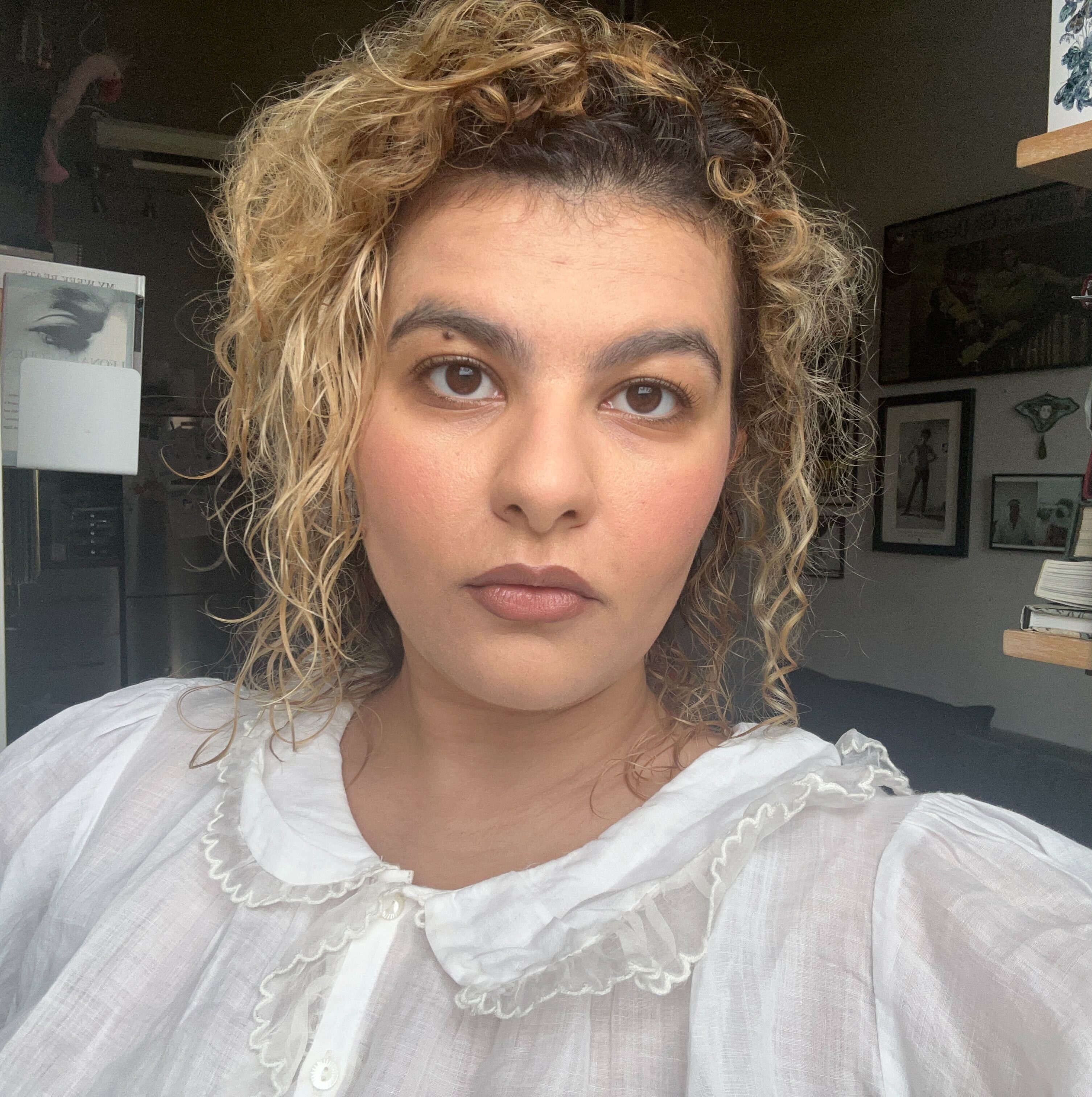
Tamim Khalanj is a Palestinian-American writer who lives (and will die) in New York City. Her work has been featured in Nylon, Bustle, Channel Void, Mini Mag, Shadowbanned Magazine, and more. She is on Instagram and PI.FYI.
✶
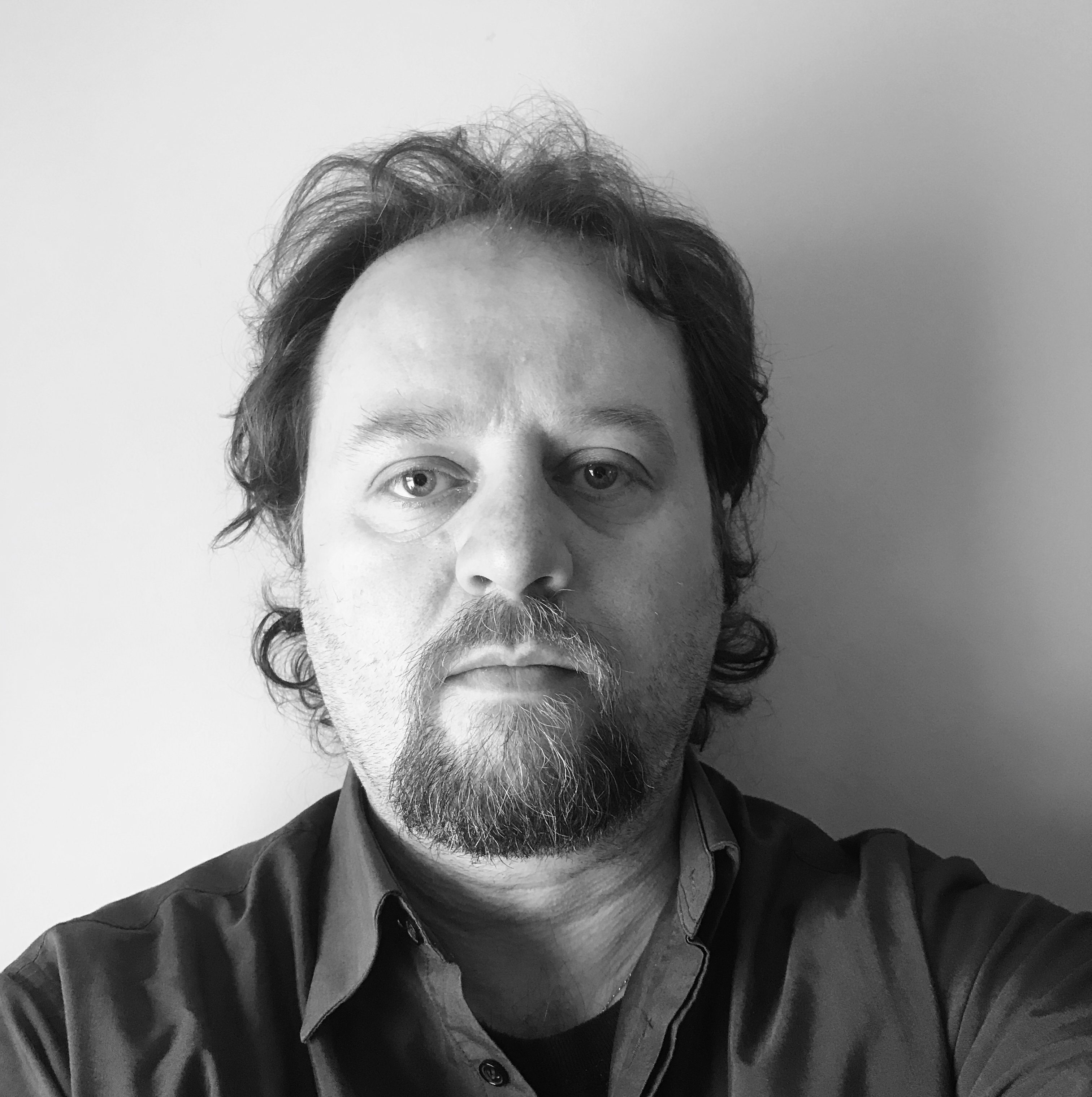
Edward Lee is an artist and writer from Ireland. His paintings and photography have been exhibited widely, while his poetry, short stories, nonfiction have been published in magazines in Ireland, England, and America, including The Stinging Fly, Skylight 47, Acumen and Smiths Knoll. He is currently working on two photography collections: “Lying Down With The Dead” and “There Is A Beauty In Broken Things.” He also makes musical noise under the names Ayahuasca Collective, Orson Carroll, Lego Figures Fighting, and Pale Blond Boy.
 Another Chicago Magazine