

Archipelago Books, 2024, 152 pp.
“I sometimes wake up and realize that what’s going to happen has no name.”
Fine Gråbøl published her first book of poetry, Knoglemarv lavendel (Bone-marrow Lavender), in 2018. Three years later, she published her debut novel, What Kingdom, which was well-received, earning Gråbøl a Bookforum Debutant award. Three years after that, Martin Aitken translated What Kingdom, which was released in the United States and select European countries.
What Kingdom is a ghostly tale of a nameless female patient’s day-to-day life at a residential facility in Denmark meant to transition troubled young people back into the world. Outside of a few references to hip-hop artists (50 Cent and The Game) the time of the novel is never clarified. The novel consists of the young woman’s observations on daily living, with some entries warranting multiple pages, and others only a few words. The novel is stamped with an epigraph: a quote from “Everybody Wants to Rule the World” by Tears for Fears. There’s an alchemy between the novel and the song that should not be overlooked—it adds an eeriness to Gråbøl’s profound yet distant prose as if the true emotion of the writing has been blunted by fear or pills.
It’s not that I’m hungry, it’s just that our daily routines are our best illusions of new beginnings, a new cycle. As if I can build on top of this broken world, these interior ruins; as if I had the strength.
Each brief chapter reads like a journaling assignment given by a staff member at the facility. Tacking from daily observations of other patient’s routines to sudden lucid moments of insight, “I have no plants, out of principle I own nothing that might die which is a challenge, because what lives forever, I don’t know”), the narrator seems to want to get better through sheer force of will; the very act of entry-keeping cries, “I want to get better.” But the seemingly endless monotony of each day, and the relative comfort of the environment, stifles that desire.
The narrator and the other floormates depend on the facility, fearing the time when their stay comes to an end, “When eventually my accommodation offer came and I started readying myself for the move, I felt scared, scared of the armorless world outside.” Some floormates try to play the system to stay in longer—getting arrested or hospitalized—because, while they are perpetually exhausted by their afflictions, the thought of losing the small slice of normality the facility offers is overwhelming. The narrator reflects on past suicide attempts and an extended recollection of when she was hospitalized for an eating disorder, before going into the murky aftermath of electroconvulsive therapy (ECT): “I received around twenty ECT treatments three times a week for several weeks when I was eighteen…I remember the ice-cold sensation of anesthetic in my veins; suddenly being brought down, letting go, drifting away, wonderful…I remember not being able to remember.”
However, the ceaseless march of the story meanders with no discernable arc other than the changing of the seasons and the various chores the patients must complete. Grocery shopping, listening to music, cooking meals, and smoking countless cigarettes—all are suddenly interrupted with grim moments of sheer terror and confusion. Together the scenes hold a light under an often glossed-over dimension for individuals struggling with mental health: the exhaustive effort it takes to get through every day, punctuated with moments of attempted or temporary escape, and how, whatever form that may take, will seem at the moment the only way out. But not all of What Kingdom is bleak. There are moments of beauty and hope—albeit few and far between—that can catch a reader off guard with their simplicity: sharing a cigarette while walking back from a corner shop; spending too much money on candy; or playing music with friends. Ultimately, the novel places little victories amidst the swirl and roil of nationalized mental health services, further critiquing the finer points that show—while they may be lost on an American audience—that even one of the world-leading examples of health care still have room for improvement.
What Kingdom is based on Gråbøl’s personal experiences, but she still considers the book fiction. The nuances of her experiences show clearly when she goes outside of the narrator’s day-to-day observations and into the more macro insights on mental health:
We know what sort of diagnosis a person’s got even before they’ve mentioned it: boys are schizotypal, girls are borderline or obsessive-compulsive. Eating disorders are easily spotted. The grammar of the ill is gendered, but also a matter of economics; the curable versus the chronic, benefit rates and supplementary payments, diagnoses, and deductibles. Cash assistance subsidies, invalidity pensions, disability supplements. The fatalism of psychiatry. Our tired voices.
Gråbøl’s prose reads like Anne Sexton’s “You, Doctor Martin,” but told from the perspective of a patient underneath that same plastic sky. The nameless narrator also warrants a glancing comparison to the stoic Chief Bromden from Ken Kesey’s One Flew Over the Cuckoo’s Nest–both distant and placid on the surface yet with deep swirling grief below. What Kingdom is a solid debut novel from an incredibly talented poet; one can only look forward to whatever project Gråbøl decides on next.
✶✶✶✶
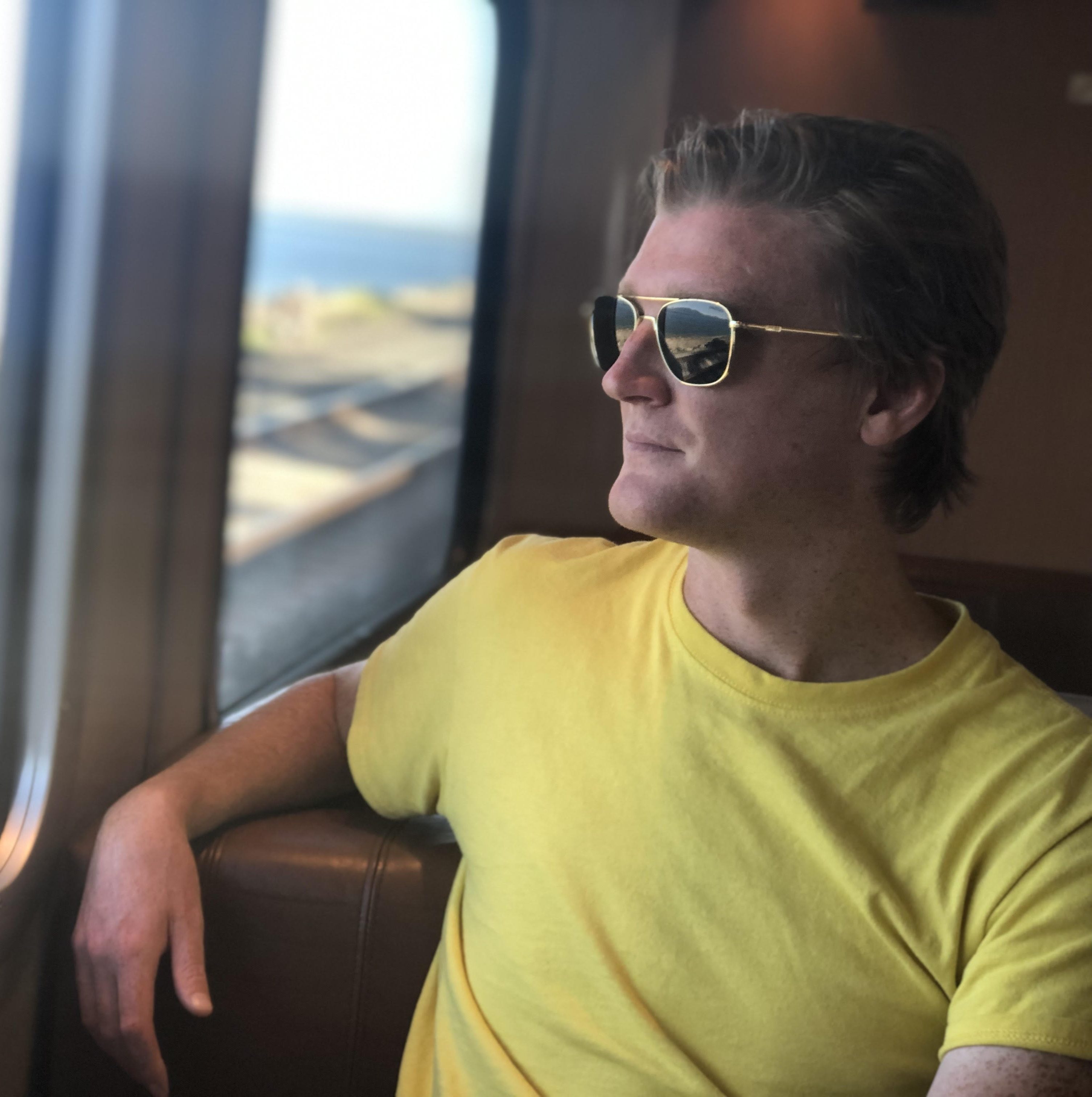
Michael Gawdzik is a freelance writer based out of Indianapolis. He is the creative nonfiction editor for the Indiana Writers Center’s literary magazine Flying Island, as well as an editor for the sports-centered literary magazine Sport Literate. He’s covered topics such as amateur boxing, the 2022 FIFA World Cup, and when he was a drag queen for a day. In his spare time, he teaches high school English.
✶
Whenever possible, we link book titles to Bookshop, an independent bookselling site. As a Bookshop affiliate, Another Chicago Magazine earns a small percentage from qualifying purchases.
 Another Chicago Magazine