
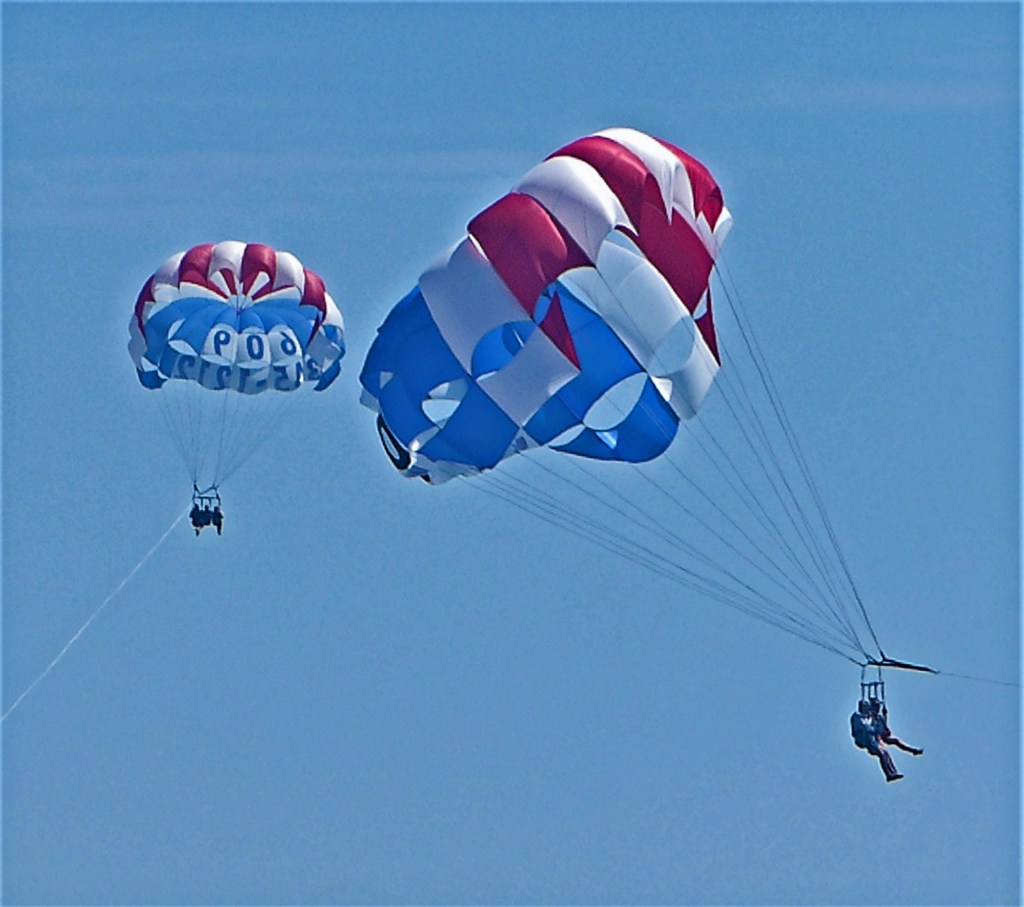
There I stood before my last remaining client, the sole person on Earth who still had faith—however misguided—in Double Take Creative’s cutting-edge brand strategies and results-driven marketing campaigns. In moments like these, I found myself reminiscing about the glory days of my agency, days when we sat at the precarious heights of a sleek, glass skyscraper, sighing contentedly while we took in glittering sunrises and pristine lake views. But in the way of glory days, ours faded with scarcely a tattered photograph to commemorate their passage. Now, Double Take was relegated to a windowless room above a Spam factory, which emitted not so much a smell as a blanket of hot, meaty air.
My intern Raphael dimmed the lights and fired up the projector. For weeks, the pressure of the presentation had placed me in the shackles of writer’s block. Finally, the night before the big meeting, I broke free with a bump of Raphael’s Adderall. While I sat hunched over the slide deck, sleepless and high out of my mind, I believed in one moment my pitch was a staggering work of genius and the next it was dogshit personified. When I passed out on my keyboard at the break of dawn, my opinion rested somewhere in the middle. Now, I cleared my throat and straightened my tie. It was showtime.
At the other end of our “boardroom table” (three rickety card tables pushed together), sat our remaining client, Hans Crisper, owner of Crisper & Sons Funeral Arrangements. As far as I knew, Hans didn’t have any children, leading me to conclude he was one of the titular “Sons.” Though it was hard to imagine Hans had ever been a kid—the guy was so ancient his AARP card had an AARP card. You got the feeling that if you bumped him, he’d combust into a cloud of dust.
I cleared my throat and began my pitch as I began all pitches: by extolling the virtues of traditional advertising and condemning NostalGen™ technology. Once that was established, I moved into the particulars. “Death is never an easy topic to discuss,” I said, “especially for a brand. Which is why, should you choose to renew your contract with Double Take, we pledge to always treat it with the tact it deser—”
A cartoon “boing” cut me off. I turned to discover, to my horror, that a corpse had popped out of the casket graphic on the screen. It waved to us, a chilling grin plastered across its face. I shot Raphael a scowl that, I hoped, would communicate the rage smoldering in my chest, a rage so white-hot it threatened to turn my corporeal form to ash. But the clueless bastard met my gaze with a giddy thumbs-up.
Raphael, regrettably, was my lead graphic designer. His sharing a namesake with the famous Renaissance artist, I admit, played a role in my hiring decision. Though the bigger factor was that he was willing to work for credit hours. The kid wasn’t the most skilled designer, but what he lacked in talent he also lacked in work ethic. He routinely longboarded into work hours late, blue mohawk flying in the face of our professional dress code. When I broached the subject, he told me he didn’t subscribe to the concept of “time.” It was a capitalist construct created to, like, keep us down, man.
In the end, I had only myself to blame for the blunder. I should have been more prescriptive in my design brief; I knew better than to trust Raphael’s judgment. Praying that Hans hadn’t noticed the graphic, I clicked ahead, trying to find a non-macabre slide. My efforts were in vain, for the following slides depicted, respectively: a zombie doing the Macarena, a group of banshees cancanning, and a skeleton playing its ribcage like a xylophone. Simultaneously, the air thickened with the stink of Spam. I ignored the stinging in my eyes for as long as I could, but, eventually, I was forced to affix my emergency clothespin.
With a sigh, I wrapped up my presentation. I was certain all was lost, that the curtain had been lifted to expose Double Take Creative for what it truly was: a two-bit operation run by a misty-eyed has-been and his oblivious minion. I bowed my head, bracing for rejection.
To my surprise, I was met with applause. With a fair amount of difficulty, Hans rose to his feet. “A swan song of a presentation, sonny boys,” he said, tears welling in his eyes. “The animations were marvelous, like the picture shows of my youth.”
Raphael bowed with a flourish of his right hand.
I, likewise, bowed, thinking of my wife Cynthia resting peacefully in her hospital bed. She was once my most full-throated cheerleader, but for the past three years her larynx possessed no room for words of encouragement—it was occupied by a big, rasping ventilator. I wished, more than anything, that she was with us. That, like the good old days, she could share in our triumph.
“But…” Hans continued, his conjunction hanging ominously in the air. “I’m afraid I cannot renew with Double Take.” His face darkened. “I’ve received a counteroffer from Ubiquitous.”
It dawned on me that Cynthia’s coma was not, as I had previously believed, a smiting doled out by a cruel God. I saw now that her condition was a form of mercy. At least, in her current state, she couldn’t see how far I’d fallen. What a pitiful charade my life had become.
✶
The headquarters of Ubiquitous Advertising cast a shadow over not only my physical form but also my psyche. The structure thumbed its nose at the city’s zoning ordinances, towering over the boarded-up warehouses in the meat packing district. Its erection, I imagined, had required a series of backroom dealings, off-the-books rendezvous rife with cigar smoke and the exchanging of envelopes. The owner of Ubiquitous, after all, would’ve paid any price to taunt me. To shove his big, phallic skyscraper in my face.
Once a coworker at Double Take, David had become my mortal enemy. I cursed him each night when he made unwelcome cameos in my dreams, for it was he who had banished me to my purgatory above the Spam factory. On the surface, he was an innocuous fellow, an almost offensive caricature of a middle-aged father—he sported white New Balance sneakers, transition lenses, and a cell phone clip on his belt, which, after a valiant struggle against his beer gut, had started to disintegrate. Each of his slide decks contained an insufferable quantity of dad jokes and puns. To differentiate him from the other Daves who worked at Double Take, we dubbed him “D Mac.” I realize now that his milquetoast persona was a calculated choice; he was a venomous reptile in camouflage.
In brief flashes, D Mac’s true nature revealed itself. During brainstorming meetings, he threw out ideas that were, to put it lightly, morally dubious. E.g., he pitched campaigns marketing power tools to children, candy cigarettes to diabetics, and opioids to, well, just about everyone. When I called him out, he would tell me to take the stick out of my ass; he was only joking. The room, charmed by his charisma, would eat it up. But we both knew that, had I not been there to intervene, D Mac would’ve acted on his ideas. And that’s why he resented me—I was the only one who could see that beneath his well-mannered façade lurked a remorseless sociopath who lusted for power.
Three years ago, when I went on leave to care for Cynthia, D Mac took over our most important accounts. On the first day of my absence, he sent out a company-wide memo that painted me as a “dinosaur” who kept Double Take mired in the Cretaceous period of advertising. Only through his leadership, he wrote, could Double Take rocket ahead to the space age. What was so preposterous about this line of attack was that I was, in fact, a decade younger than D Mac. Regardless, the memo planted a seed of doubt about my leadership, which D Mac nurtured at client meetings, applying air quotes to the term “leave of absence.”
Eventually, through some Machiavellian maneuvering with the board of directors, D Mac stole the agency from under me, transforming it into a cold-blooded operation unbound by the tethers of morals, ethics, and common decency. He rebranded it as “Ubiquitous Advertising” and, in short order, hired a team of neuroscientists to devise NostalGen™, the most diabolical idea his twisted brain had ever conceived.
After D Mac poached our last client, he swiftly added insult to injury, mailing me an information packet for NostalGen™. The pages depicted a series of smiling participants, one from every racial group and age demographic. The marketing copy touted a “substantial cash incentive” for participation, one that would erase my financial woes for the foreseeable future. But there was something deeply unsettling about the brochure. It wasn’t that the participants sported bald, glistening heads. That, I knew, was a standard part of the procedure. It was their eyes that made my skin crawl. They were vacant, devoid of cognition. These were not thousand-yard stares; they were thousand-mile stares. They had seen the face of oblivion.
With a shudder, I tossed the brochure on my coffee table, where it was engulfed by Cynthia’s hospital bills. The bills turned to past-due notices as the leaves changed, sick with the jaundice of autumn. I called my insurance company, only to be trapped in a purgatory of staticky hold music. Your call is very important to us. Finally, they patched me through to an agent who told me, in the politest possible terms, to go fuck myself. Soon after, the bank foreclosed on our home. I was banished from the fireside of our beautiful living room and cast into the chill of the harshest winter I had ever known.
With nowhere else to turn, I pitched a tent beneath the underpass. No sooner had I driven in the stakes than a pack of hounds encircled me. They materialized from the shadows, snarling menacingly, flashing fangs that gleamed like daggers in the night. After years of working above the Spam factory, the stench had become embedded not only in my clothing but in every fiber of my being, down to the last hair follicle. This was what had drawn the beasts. And they wouldn’t rest until they got a taste of it.
✶
Early in our relationship, Cynthia and I flew to the Caribbean on a whim. See, when a brochure for Paradise Palms gusted over to us, I’d insisted it was photoshopped—there was no way the ocean could be so crisp and turquoise. Cynthia said not everything was a marketing gimmick. She whipped out her phone and bought two plane tickets. I loved her spontaneity; she was like a beautiful tin can blowing in the wind. I also loved her long, bronzed legs, the way she wrapped them around me when we made passionate love on the resort balcony, listening to the waves crash against the shoreline. The sea was even more dazzling than the brochure had promised—it shimmered like a brilliant crystal, flanked by a row of billowing tangerine trees. Admiring it in my post-coital bliss, I realized my life had become a Sisyphean slog through my daily routine. But my sweet, sweet Cynthia had helped me throw aside my proverbial boulder and break free. I squeezed her tight and promised myself I would never take a single shining day with her for granted.
I recounted our Caribbean adventure to Cynthia as I sat beside her hospital bed. All I had left of her now were memories. Each night, I clutched her hand in mine and reminisced about the fleeting moments of joy we’d shared before her accident. The doctors said Cynthia could hear me, that my bedside ramblings would reassure her she wasn’t alone. I hoped, more than anything, that this was true. But when I gazed at her expression, an expression so impassive it almost seemed callous, I often doubted it. As the seasons changed and her bouquets wilted, I began to think my words were just bouncing around in the abyss.
A part of me was thankful Cynthia hadn’t chosen that snowy December evening to awaken. I’d gone from looking temporarily unhoused to downright homeless. I wandered the cold streets lined with kitschy nativity scenes, lit by seizure-inducing Christmas lights, searching for somewhere to lay my head. I subsisted on brief naps behind various dumpsters, for the beasts never stopped hunting me. Their howls pierced the silent night, keeping me forever awake, forever vigilant.
If Cynthia opened her eyes now, she wouldn’t see her husband. She would see a man with wild, bushy hair and a matted beard. A man as gaunt as Jesus on the cross, flesh ravaged by dog bites. A man shunned from polite society and snickered at on the street. A man to whom yuletide carols meant nothing—they reverberated forevermore through the dark and empty chasms of his soul.
✶
I took the elevator up to the top floor of D Mac’s corporate office, determined to face him. I stood just outside the boardroom, with its floor-to-ceiling windows overlooking the city skyline. I lowered the brim of my cap and kept to the shadows as D Mac preached to his subordinates. While I’d withered away to flesh and bones, the bastard’s beer belly had swollen to the size of a celestial body. The number of disciples in his orbit, likewise, had grown. Sycophants packed the room, hanging on his every word, transcribing meeting notes as if they were gospel. When the morning sun cast an aura around D Mac’s khaki-and-New-Balance-clad frame, I found myself similarly enraptured. A single pane of glass separated me from the false prophet.
With fire and brimstone in his voice, D Mac declared himself the way, the truth, and the light of advertising. Non-believers, he warned, should repent before it was too late. He paused for a swig of coffee, a twinkle in his eyes. This was the telltale sign that he was about to unleash one of his trademark zingers. “Our investors say NostalGen™ is like a jackhammer. Do you know why?” he asked, scanning the room expectantly. “It’s a groundbreaking invention!” He cackled at his own punchline.
His followers let out a collective groan. Said groan, I couldn’t help but notice, contained no weariness—only admiration. Even now, after D Mac had usurped me and erected his new office, a profane temple festooned with ergonomic furniture and unsightly postmodernist sculptures, his disciples couldn’t see past his façade.
In my darkest hours, while I lay among the roaches and vermin, I rehearsed a speech to expose him. My soliloquy laid bare his treachery and plumbed the depths of his depravity. It shone a light on his cold black heart, a vascular organ devoid of compassion, impervious to ethics. It painted me as the last of the righteous, a martyr who would stand alone against the heresy of NostalGen™.
It felt surreal that the hour of reckoning was finally at hand. Outside the boardroom, D Mac’s drones seemed to sense the anticipation crackling through the air. They stopped clacking their keyboards and looked up at me, the voyeur hovering by the boardroom door. If any of them recognized me, I couldn’t tell. I wiped my sweaty palms and reached for the doorknob.
“Are you lost, sir?” one of D Mac’s cronies asked, jolting me from my trance.
I watched his eyes take in my haggard visage, dog bites and all. The absurdity of my plan suddenly dawned on me. I was an outcast, a leper dwelling on the fringes of society. D Mac, the exalted one, would have a field day with me. Well, well, well, if it isn’t Oliver Cyst.
The crony guided me away from the boardroom, where D Mac was sharing quarterly projections so high, they threatened to induce fainting spells. Before I could protest, he deposited me in the elevator and pressed the button marked “NostalGen™ Lobby.” This plunged me into the depths, the very bowels of the skyscraper. I watched the numbers descend, dread creeping into the pit of my stomach.
The doors swung open, and I stepped out into a waiting room. At first, I was repulsed by the patrons inhabiting it. In my mind, they were sellouts, depraved souls prostituting themselves for a quick buck. But as I lingered there, I began to feel a kinship with them. They sported all manner of working-class garb: scrubs, hairnets, coveralls, nametags, and steel-toed boots. They spoke wistfully of what they would do with their participation incentives: paying off liens, credit cards, and medical bills. Their desperation, like mine, was palpable.
One of them, a sick old woman, spoke of the legacy she wished to leave for her family. “I want them…” she began, pausing to catch her breath. “To be taken care of…” she paused again. “When I’m gone.” The man beside her patted her back as she hacked blood into a Kleenex.
I couldn’t help but think of Cynthia. If she awoke from her coma today, what would be waiting for her? A tin of anchovies and the world’s soggiest mattress. D Mac, I realized, was not my enemy. My true foe was the last scrap of pride I clung to.
I strode to the reception desk and filled out a sign-up sheet.
✶
The other patients filtered out as the afternoon wore on. My only companion was the tri-fold brochure in my lap, informing me that Fanta had purchased my NostalGen™ rights. Women in orange bikinis filled the glossy pages, pressing their lips to sweating glass bottles. They struck scintillating poses in various tropical locales, each more exotic than the last. I pushed myself to the brink of madness searching their bodies for a single blemish or stretch mark. But their flesh was utterly immaculate.
At last, the technician approached. His footsteps were as cold and calculated as an executioner’s. Fear gripped me when I contemplated what awaited me. I squeezed my eyes shut, praying for quick deliverance. When I finally dared to open them, a familiar face stared back at me.
“Raphael?”
“Fancy seeing you here, Boss,” he said. I almost didn’t recognize the kid. He’d shaved his mohawk, cleaned up his facial hair, and removed his piercings. Instead of one of his threadbare band T-shirts, he was dressed in a lab coat.
“I was about to say the same.”
An awkward silence fell between us. Raphael checked his shiny new watch and produced a phrase I’d never heard him utter: “Time’s a-wastin’!”
My former protégé led me down a long, narrow hallway. When he opened the door to the operating room, my breath caught in my throat. Before me was a NostalGen™ pod. Once only an abstraction, a sketch on a bar napkin, the pod had crawled from the depths of D Mac’s dastardly imagination and into grim reality. To the casual observer, it was simple, unassuming—it looked like a salon chair topped with a hooded hair dryer. But its machinations were, as D Mac would quip, “far more wigged out.”
Raphael didn’t offer a single word of comfort. Instead, he did something totally out of character: his job. He handed me a clipboard, where I jotted down the memories I would sell to the Fanta brand—the more treasured, the higher the premium they would pay. He procured a pair of clippers and, with remarkable efficiency, shaved my head clean, sending tufts of my greasy, matted hair crashing to the floor. When he was done, and my cranium was naked as the day I was born, he affixed the nodes to my scalp and perused my notes on the clipboard.
There was a loud, metallic whir and a series of blinding white flashes. Then, all was still.
✶
Cynthia was aging. For years, she seemed to exist in another plane, a realm impervious to the sands of time. She was like a museum exhibit, a relic from the golden age of our courtship. Under cover of darkness, nursing assistants preserved her, trimming her nails, cutting her hair, and cleaning her teeth. While I grew older, her angelic face remained unchanged. That was, until tonight. A single strand of gray hair descended from her scalp, glinting in the moonlight.
Father Time, meanwhile, had been less than kind to my sorry ass. My hairline never fully recovered from my NostalGen™ procedure the year prior, but my bank account sure did. With the participation incentive from the procedure, I’d procured a studio apartment where I took regular showers and nursed my dog bites. I decorated the place with so many photographs of Cynthia that it resembled a celebrity shrine. I kept the kitchen stocked with her favorite snacks—figs, cottage cheese, and salt and vinegar potato chips—after subsisting on an IV for all those years, she was sure to have worked up an appetite.
Cynthia did not awaken to claim her figs. I left them sitting on her bedside table where they would surely rot. But my resolve was unfettered; I remained at her bedside with the devotion of a monk. Though, rather than a vow of silence, I’d taken a vow of long-windedness. I was determined to recount every beautiful, sun-kissed moment we’d shared at Paradise Palms.
See, all my other memories of Cynthia had been desecrated. The women from the Fanta brochure traipsed through our first date, first kiss, first fight, first declaration of love, clad in orange bikinis, singing Don’t you wanta wanta Fanta? Their siren song drowned out all else, pulling my gaze to their hips, shapely as the glass bottles they peddled. They danced provocatively, grinding on whatever extras happened to be present—pedestrians, waitresses, bus boys—though, eerily, no one reacted.
The dancers were mercifully absent from some memories, but the Fanta brand found more insidious ways to insert itself. On our wedding night, for example, Cynthia and I toasted not champagne but that cursed orange elixir. When we visited our cottage in rural Michigan, we picked not apples but clementines. On the magical evening we first made love, Cynthia invited me upstairs not for a “nightcap” but a “thirst-quencher.” Every time I tore off her clothes, her lingerie was bright orange. After I daydreamed about those moments, I snapped back to reality parched as a backpacker in Death Valley.
Paradise Palms was the one remaining refuge in my mind. No matter how much D Mac’s cronies offered, I refused to sell that last inch of billboard space.
I gripped Cynthia’s limp hand and recounted our Jet Ski misadventure. When she mounted that watercraft and wrapped her arms around me, I told her, I felt invincible. Rather than following the prescribed route, a snooze-fest through the canal, I veered into uncharted waters. I gunned the engine, weaving between the mangroves, spraying Cynthia with mist. She giggled like a schoolgirl and squeezed me tighter. I smiled so hard my cheeks hurt.
Once the sun sank low in the sky, I decided it was time to turn back. I whipped the Jet Ski around, but I couldn’t see the shore—a maze of mangroves stretched infinitely in all directions. Moments later, our engine sputtered to a halt. We were castaways. I expected Cynthia to cry, but, instead, she fell unnervingly silent. I held her tight and told her everything would be okay. Never had the platitude felt emptier than it did at that moment, our busted Jet Ski swaying precariously on the open water. After I let a few more clichés fly, I realized Cynthia wasn’t looking at me. Her gaze was fixed over my shoulder.
I turned to behold the most majestic vista that had ever graced my corneas. The sun was setting over a tropical island, bathing everything—the wispy clouds, the angelic sand, the swaying palm trees—in marigold. In that utopia, the jungle brush grew wild and vibrant, unacquainted with the bite of machetes; iguanas basked in the last precious glimmers of daylight; pelicans dive-bombed just offshore with the grace of pirouetting dancers. I remember the ocean breeze on my face, the scent of Cynthia’s citrus perfume, and the vow I made to myself: should I survive, I would cherish this moment for the rest of my days.
✶✶✶✶
Derek Andersen is an Illinois Wesleyan alum working as a copywriter in Chicago. His short stories have appeared in Arts & Letters, Barrelhouse, Catapult, Columbia Journal, and elsewhere.
✶
Jim Ross jumped into creative pursuits in 2015 after a rewarding career in public health research. With a graduate degree from Howard University, in seven years he’s published nonfiction, fiction, poetry, photography, hybrid, and plays in over 175 journals and anthologies on five continents. Photo publications include Barnstorm, Blood Orange Review, Bombay Gin, Burningword, Camas, Cold Mountain Review, Columbia Journal, Feral, Friends Journal, Manchester Review, Memoryhouse, Montana Mouthful, Rat’s Ass, Saw Palm, Stoneboat, Stonecoast, Typehouse, UU World, and Whitefish. Photo essays include Amsterdam Quarterly, Barren, DASH, Kestrel, Ilanot Review, Inklette, Litro, New World Writing, Roanoke Review, Sisyphus, Sweet, and Wordpeace, with Palaver, Paperbark and Typehouse forthcoming. Jim and his wife—parents of two health professionals and grandparents of five little ones—split their time between city and mountains.
 Another Chicago Magazine