
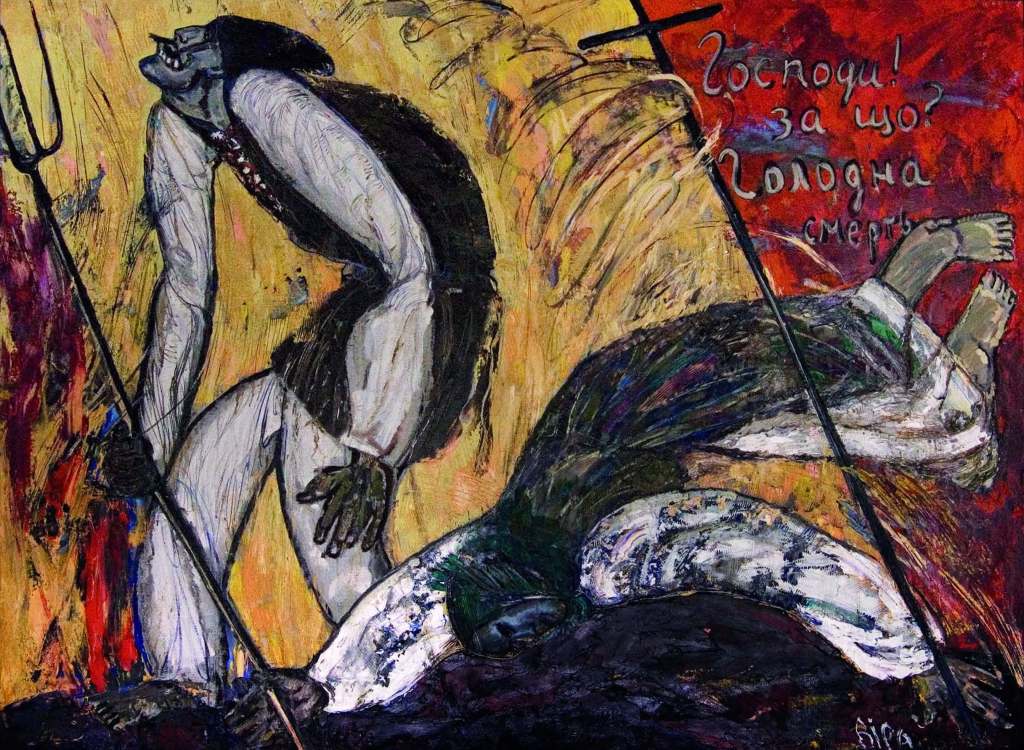
This is the fifth of a series of interviews about the war in Ukraine, which began February 24, 2022, with the Russian invasion. Laura Swart interviewed doctors, nurses, hospital patients, security personnel, humanitarian workers, and pastors. The speakers are not identified for security reasons.
✶
Part Five. Holodomor
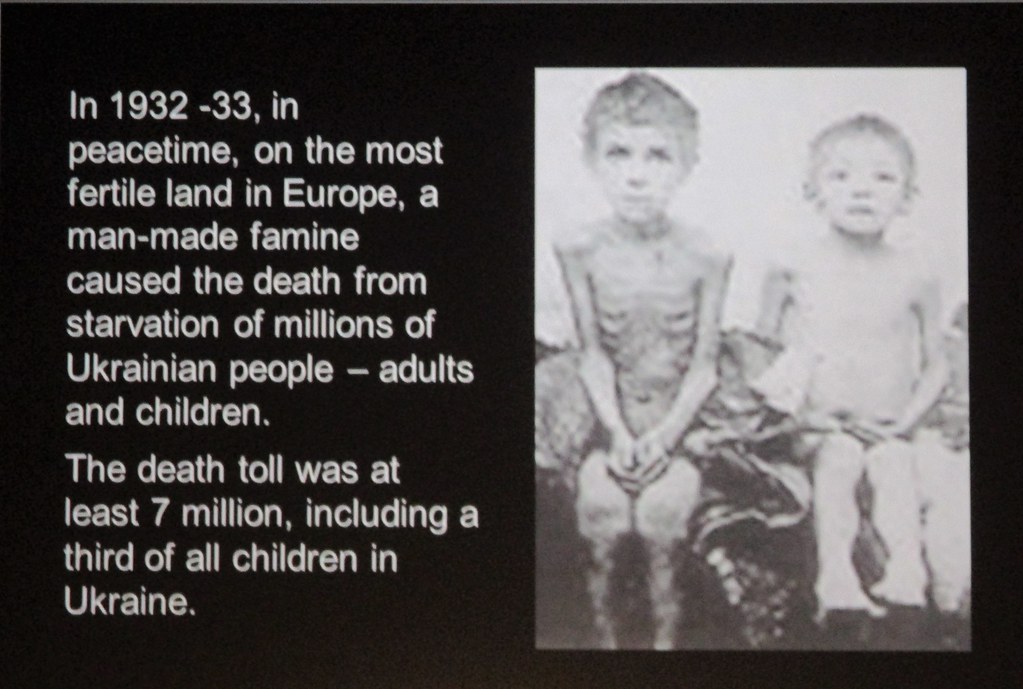
In the 1932-33 famine, or Holodomor, four million Ukrainians died, according to Anne Applebaum, author of the 2017 book Red Famine: Stalin’s War on Ukraine. The estimates vary widely.
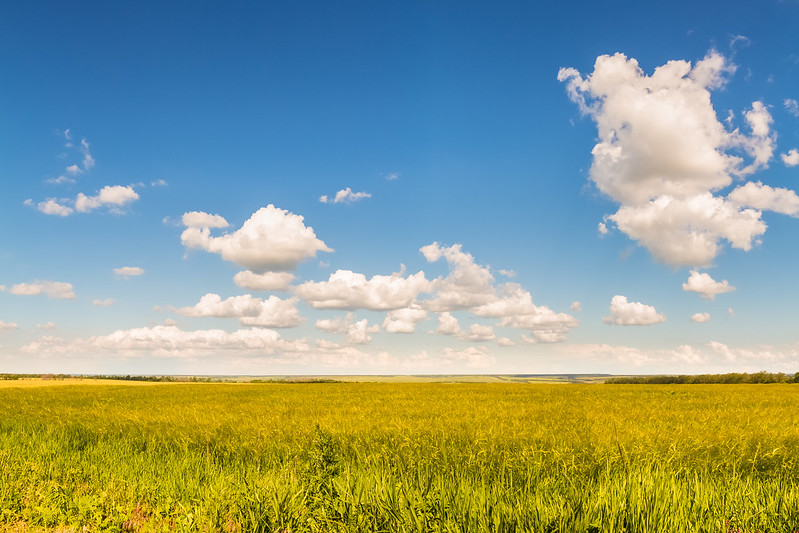
In the genocide of 1932-33, the high estimate is eleven million people died, the low is four million. It was an attempt to destroy the Ukrainian people. Stalin said he would deport them all like he deported the Crimean Tatars during the Second World War—he sent them to Central Asia and killed half of them through starvation and freezing on the train ride there. He couldn’t do that with the Ukrainians; there were too many of them. So he starved them to death in the fall of ‘32. He took everything away. Holodomor. It means death by starvation. Just like we use the word Holocaust for the destruction of the Jews.
Raphael Lemkin, the fellow who coined the term genocide, used the destruction of the Ukrainians in 1932-33 as the example of genocide. But you know, Moscow’s tune is still, Yeah a lot of people’s suffered and whatnot, yada yada, but this was not genocide. But the man who coined the term used the Holodomor as the example of genocide; he didn’t use the Armenian Genocide—he used the Ukrainian genocide. And the Serbs are traditional allies of Moscow, and they said it was all staged. They were all actors. And now, you know, you got the same thing—Russian people who watch Russian state television, they say, You know, Putin’s a good guy. He’s doing the right thing. They believe this shit.
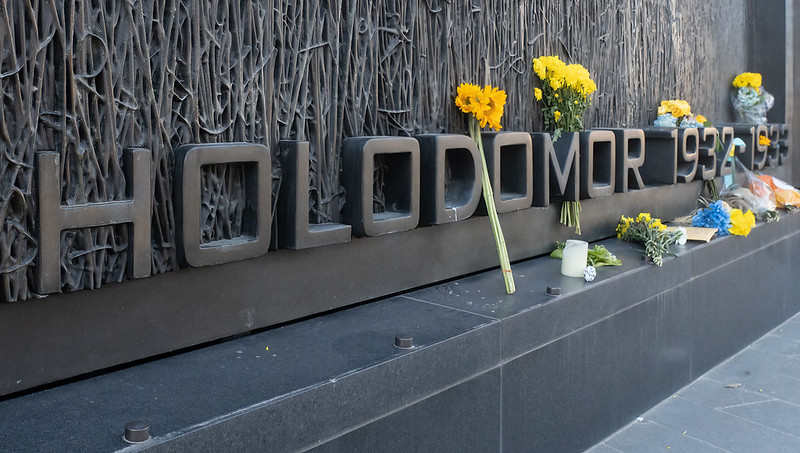
So in Ukraine, we have one official flag, blue and yellow. Blue is the sky and yellow is our fields. But also we have another flag: red and black. It’s a non-official flag, it’s the flag of the Ukrainian Insurgent Army. This flag was created in 1932. It symbolizes Ukrainian blood and black Ukrainian earth. It’s fields—but with blood. It’s our history. And it’s also about famine because we have three histories of famine in Ukraine. The most severe was in 1932-1933, a manmade famine called Holodomor: genocide of Ukrainians. Soldiers from the Soviet Union confiscated food and grain from the people, didn’t allow them to leave their villages, refused to provide relief, and killed them. They killed the people, political leaders, and they killed culture. Four million Ukrainians died, and they also died from the hands of Russian soldiers. It’s our national pain. And now we have a more severe fight with these people. But I, I can’t call them people. You can’t call them people. Because if you want to fight, okay, it’s bad. It’s really bad. It’s not a good thing. But fight with soldiers, fight with people who have weapons, with people who have protection. But if you fight with women and children? It’s awful.
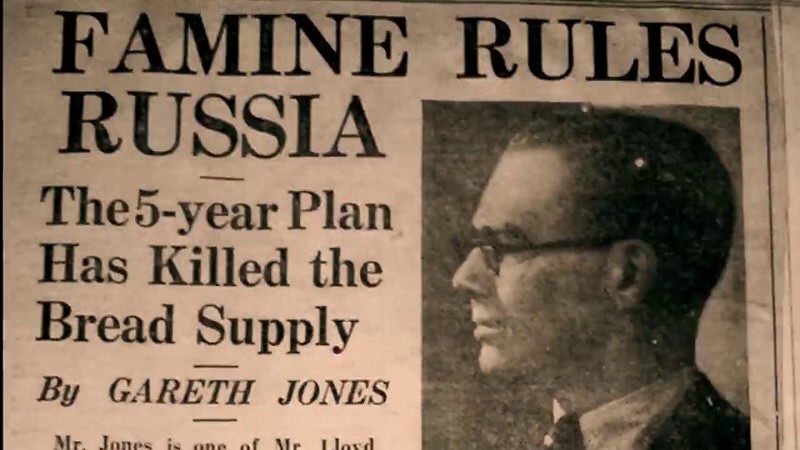
My great grandma, she was alive up until I was five, I think. She survived Holodomor. Basically, the soldiers would collect whatever people gathered that year, and then nothing was left for the people themselves; they would even take away their personal food. There’s a story of a four-year-old boy with a baked potato he tried to eat, and a soldier slapped it out of his hands. So that’s why it’s kind of baffling to me that there are still countries that don’t think of Holodomor as genocide. When my family was escaping, they were on a stock train, one that carried animals, and my great grandmother saw as they were passing the sea that all of the grain that was collected from them was being thrown in the sea. It was not even getting used. It was not getting sold. They just threw it out. And if you’re a starving child seeing that, it’s traumatizing. It’s hard to forget those stories.
I don’t need scary stories to keep me awake at night. My grandmother told me stories that actually happened to her.
✶✶✶✶

Laura Swart is a novelist, poet, and playwright. She has taught creative and critical writing to adults for over thirty years, encouraging students to find and raise their writing voices. Her humanitarian work around the world—most recently in Ethiopia and Ukraine—have shaped her thinking, her teaching, and her writing.
From Laura Swart: My profound thanks go to the men and women who shared their lives and their stories with me. Thank you also to those who translated during interviews. Finally, Borys Sydoruk, chairman of the Ukrainian Canadian Civil Liberties Foundation, spent several hours teaching me about all things Ukraine. Thank you.
✶
If you would like to support Ukrainians who are helping Ukrainians, consider donating to Dental Hope, which provides free dental work to victims of the war throughout Ukraine.
[These interviews were further edited and arranged by ACM‘s S.L. Wisenberg.]
✶
The artwork by Vira Baronya-Kylebais is reprinted courtesy of the artist and of Morgan Willams, founder and trustee, Holodomor: Through the Eyes of Ukrainian Artists.
 Another Chicago Magazine