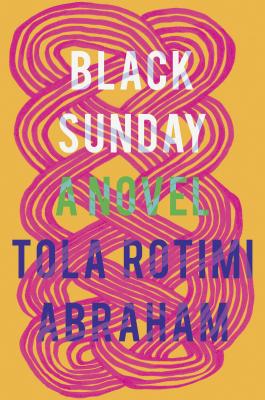
“At a time when the world’s focus is drawn to the humanitarian crisis of children wrenched from their parents at America’s southern border, the damage that is being done to these young psyches is immense and unknowable… Abraham’s gripping tale of innocence lost in contemporary Lagos could just as easily be set in these migrant prisons,” writes Carol Haggas.
(review)
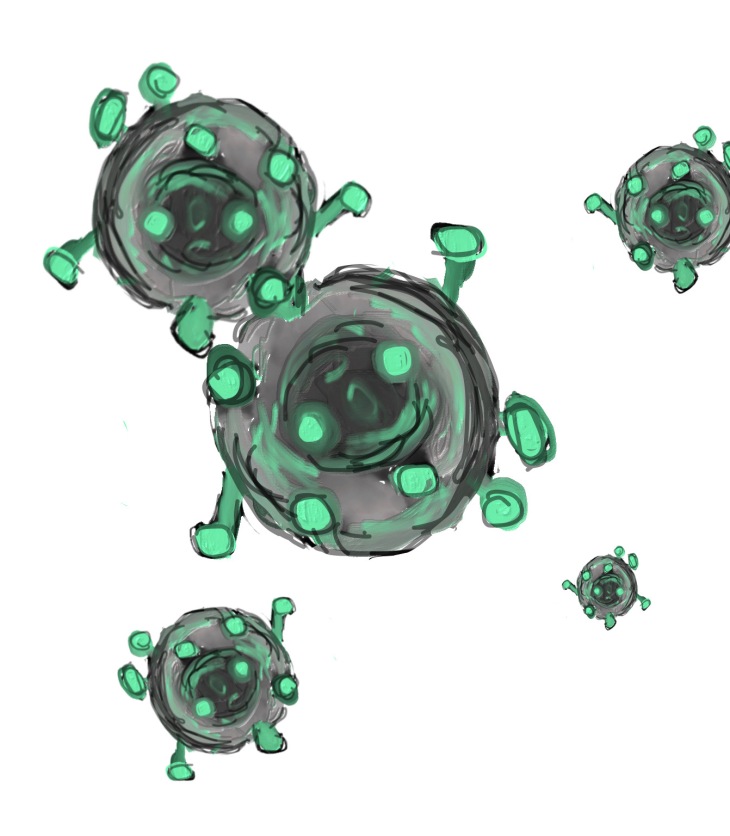
What if, having escaped Hitler, Gidon is killed by a microscopic bug?
“If I had been chewing gum, I would’ve swallowed it right there,” Jefferson Navicky writes upon reading Maureen Seaton.
(review)
Each panel felt a little like The Decameron, where we listened and told stories while the weight of the plague swung over us like a poorly-anchored chandelier.
(nonfiction)
“Whether V’s and June’s story is your or my family story,” writes Chelsea Biondodillo, “it is still our story and it should rattle and anger even as it hollows out a soft spot in the heart for these fierce and sorrowful unsung stories.”
(review)
“Love As The World Ends”
“If This Next Apocalypse Gets Canceled Or Postponed”
(nonfiction)
Michael McColly writes: “Farber states what is obvious for anyone who’s spent any time or been affected by America’s massive prison industrial complex: ‘Sometimes, we need to stare at the drear reaches of our national soul to understand who we are and who we wish to be.’”
(review)
“Would you like to go for a dinner, let’s say in one or two months, if restaurant will be reopened by that time?” I imagine he would ask.
(nonfiction)
And I was looking for barbarians. I still am. I always am. I’ve seen so many. Haven’t you?
(The Loop)