
✶✶✶✶
(poetry)


Fast-forward twenty-something years and here I am, with my own children on the block and a refrigerator full of herbs, greens, fruits, and vegetables.
(nonfiction)
He isn’t here today, and his empty desk seemed emptier than all the other empty desks, where half of the students saw an opportunity to capitalize on tragedy and get a day out of school.
(nonfiction)

“Roberts has described her work as “vignettes of meaningless experiences,” but this meandering, nonlinear work feels honest in its making mountains out of molehills” write reviewers Nora Hickey and Amaris Feland Ketcham.
(graphic nonfiction review)
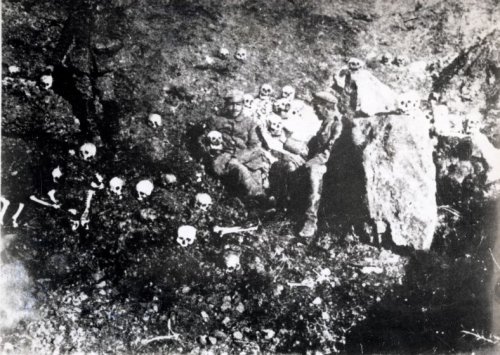
If my father wanted me to know about Armenia, why hadn’t he said, “Here, Peter, read this,” or “Son, did I ever tell you what happened to Armenia?”
(nonfiction)

In both cases—the poem and the trembling couple—I seem to love the very thing that raises questions for me in my own life: I love how settled the pizza eaters and the bean eaters are with each other.
(nonfiction)

“In Stepanova’s voyage there is life and death, silence and narrative, memory and oblivion” writes reviewer Marek Makowski.
(fiction review)

My job is this: be what the others are not.
(drama)

Most of the lies were about my mother, but I only learned about the lies years later at my mother’s deathbed
(fiction)
“Can we go to your place?” I asked at the coffee shop after he said that Blue Nights was Didion’s magnum opus. I argued in favor of Magical Thinking but he said the most feverish hallucinations of grief shone through her later work.
(nonfiction)

To know how to exploit the weaknesses in human nature in order to best serve Christ is one of the paradoxes of the inquisitor’s calling.
(fiction)
After the woman / tells him how that first night really went. After months pass, / and this child is born. After this child’s first birthday, / first day of school, First Communion, first love, / first loss, first child, that child’s first introduction to Grandpa.
(nonfiction)

“Faces”
“In Contemplation of an ‘Ornamental’ Banana Tree on the Grounds of a Resort While Vacationing”
“Antoine’s Graft”

“A Quiet State After Some Period of Disturbance”
“Exalted or Worthy of Complete Devotion”

“I often wondered about the effect of living with no windows.”
(fiction)


“A Late Exam at the River Lethe”
“Palinode”
“Canto XXXIII”
“Canto XXXVI”
From up where we were, we hadn’t noticed the defeathered bird corpses littered down below…This friendly bird graveyard was never swept away, probably to teach us all a moral lesson. (TCTC translations/nonfiction)

You grow very sleepy. / Then, like a breached ship / on a darkening sea, / you slip out of sight.

Every day she must locate herself, / as her neighbors need not who can lean on a world of words. / Poetry is a land she must not enter / is she is to keep her abandonment complete. (Jewish poetry)

teach me to hold truth between my teeth / like a hard lump of Russian sugar, / suck in the sweetness of integrity / with every sip of strong black tea (Jewish poetry)

there is // rushing wind at my ears and feet / as the ceiling glides above me. (Jewish poetry)

yet sometimes a child’s song, key to something / that is not, surely not, nothing, as after Patroklos is speared. (Jewish poetry)

Do you see the world / as anything more than a translucent sheet lifted / by Divine breath?
(Jewish poetry)

One by one by one / our bones come to meet you— / it’s an open house day, / we meet-and-greet new guests
(Jewish poetry)

“Really it was like possession . . . Renata is her own complete being as far as my psyche and processes know,” Frank X. Gaspar tells Millicent Borges Accardi.

“Hosking writes about her father,” says reviewer Catherine Faurot, “but his presence is felt more as a fading afterimage, a hole in the film burning incandescently.”
(poetry review)

“My son’s mind had turned against him but the need for process moved him through a different portal,” Miriam Feldman tells Tanya Ward Goodman.
 Another Chicago Magazine